

Table of Contents
- Start With the Big Pieces: Layering Furniture and Large Decor
- Essential Bookshelf Styling Rules for a Relaxed Feel
- How to Arrange Books and Decor Without the Clutter
- Best Decorative Objects for Bookshelves That Add Personality
- Creating Negative Space and Visual Breathing Room
- Budget-Friendly Sourcing and Functional Storage Solutions
- Conclusion
- Frequently Asked Questions
Last Updated: September 26, 2026
Start With the Big Pieces: Layering Furniture and Large Decor
Learning how to style bookshelves for a lived-in look starts with one rule most people skip: place the large items first. A lived-in bookshelf is a display of weight, texture, and memory, not a perfectly balanced showroom piece. At Le Rouge Tete, we have watched shoppers freeze in front of empty shelves, and the fix is always the same. Build from big to small, and the rest falls into place.
- Large vases, baskets, or ceramic pots
- Stacked art or oversized books
- Framed photos or leaning artwork
- A small lamp or sculptural piece
Take a photo of your shelf before you start. It is easier to spot what looks off in a photo than in person.
Essential Bookshelf Styling Rules for a Relaxed Feel
The core bookshelf styling rules for a lived-in look come down to balance, not perfection. Symmetry looks staged. Slight asymmetry looks like someone actually lives there. A common mistake is filling every gap. Leave small spaces open so the eye can rest.
Follow these rules:
- Group items in threes or fives, not pairs
- Vary height across the shelf
- Mix textures: wood, glass, fabric, metal
- Keep one focal point per shelf
- Let a few things sit slightly off-center
The Rule of Three and Why Odd Numbers Work
Odd numbers create natural movement. The rule of three works because the eye cannot split three items into equal halves, so it keeps looking. Two objects feel static. Four feel crowded. Three, five, or seven feel balanced and alive.
Try this on one shelf:
- Place a tall object on the left
- Set a medium object in the center
- Add a short object on the right
That simple triangle creates a focal point without effort.
How to Arrange Books and Decor Without the Clutter
When you arrange books and decor, treat books as texture, not just storage. Stack some flat. Stand others upright. Lean a few against the back of the shelf. This mix is what separates a styled shelf from a storage unit.
Here is a simple system:
| Method | Best For | Look |
|---|---|---|
| Vertical row | Series, matching spines | Clean, orderly |
| Horizontal stack | Art books, heavy volumes | Cozy, layered |
| Leaning books | Oversized or worn covers | Relaxed, casual |
| Mixed grouping | Any collection | Lived-in, natural |
Do not stack more than four or five books flat. Tall stacks look messy and can damage spines over time.
Vertical Stacks vs. Horizontal Stacks: Mixing Both
Mixing vertical and horizontal stacking is the fastest way to a lived-in feel. Use vertical rows for most of the shelf. Break them up with one or two horizontal stacks. This adds height variation and stops the shelf from looking like a library wall.
Best Decorative Objects for Bookshelves That Add Personality
The best decorative objects for bookshelves are the ones that mean something to you. Mass-produced filler looks generic. Personal mementos, travel finds, and handmade pieces make a shelf feel lived-in.
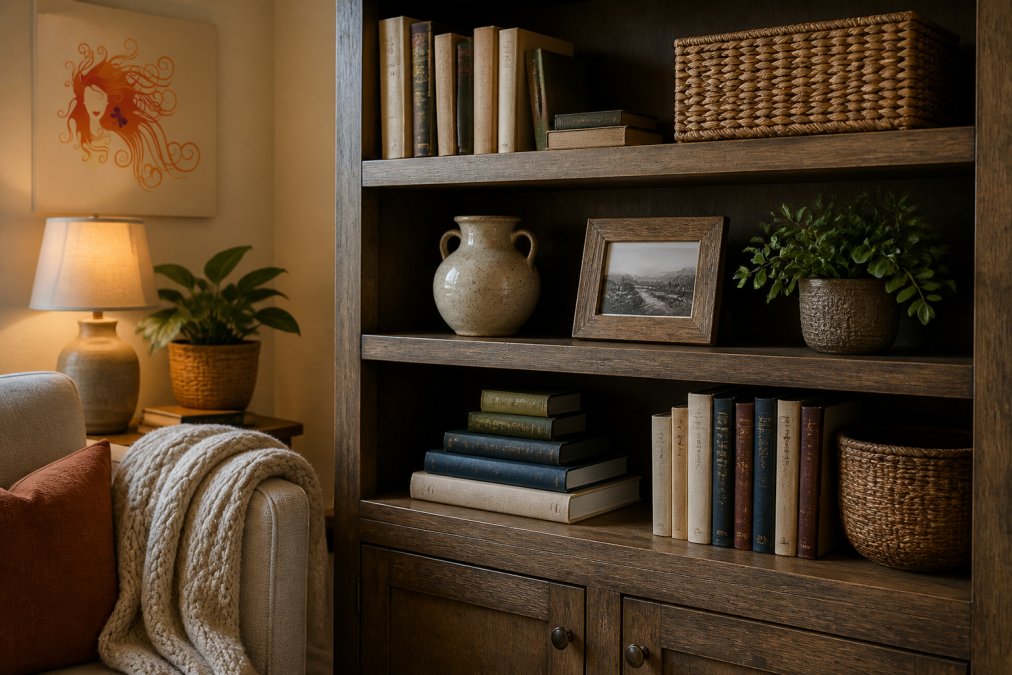
Look for pieces with texture and scale:
- Ceramic vases and bowls
- Woven baskets for storage and style
- Framed photos and small art
- Candles, small clocks, or trays
- Natural items like driftwood or stones
Personal items beat store-bought filler every time. A shelf full of your own memories reads as lived-in without any extra effort.
Creating Negative Space and Visual Breathing Room
Negative space is the empty area around your objects, and it does as much work as the objects themselves. A shelf packed edge to edge feels heavy and staged. A shelf with open gaps feels calm, cozy, and, counterintuitively, more expensive. The empty space is what tells the eye that each object was chosen on purpose.
How much empty space to leave
Aim for roughly one-third of each shelf to be open. That is a starting point, not a rule. On a deep shelf, you may need closer to half. On a narrow shelf, a quarter can be enough. The test is simple: if you cannot slide your hand between two objects without moving them, the shelf is too full.
The mechanics of visual weight
Visual weight is how heavy an object feels to the eye, and it is not the same as physical weight. A large white ceramic vase can read lighter than a small dark bronze bookend. A few factors drive it:
- Size. Bigger reads heavier.
- Color. Dark and saturated reads heavier than pale and muted.
- Texture. Rough, matte surfaces read heavier than smooth, glossy ones.
- Density. A solid mass reads heavier than an open or airy shape.
Building negative space on purpose
- Leave the ends of shelves partly open. Corners are where clutter accumulates. Keeping them clear makes the whole shelf feel lighter.
- Skip a shelf entirely. On a tall bookcase, one open shelf breaks up the mass and gives the eye a rest.
- Group items to one side. A cluster on the left with open space on the right reads more relaxed than a centered arrangement.
- Vary the depth. Push some objects toward the back of the shelf and bring others forward. This creates shadow and depth that a flat row cannot.
- Let one object stand alone. A single piece with space around it becomes a focal point without any extra styling.
Balancing weight across the whole unit
Do not balance each shelf in isolation. Balance the unit. If the top-left shelf is heavy, make the bottom-right shelf heavy too. Then reverse the pattern on the shelves in between. This diagonal rhythm is what makes a tall bookcase feel stable and lived-in rather than top-heavy or lopsided.
Empty space is not wasted space. It is the frame around every object you chose, and it is the fastest way to make a full shelf look curated instead of crowded.
Budget-Friendly Sourcing and Functional Storage Solutions
Most styling guides quietly assume you will buy new decor. That is the fastest way to make a shelf look staged and expensive. A lived-in look actually comes from mixing price points and eras, and the two problems you are solving at once are cost and clutter. Budget-friendly sourcing and functional storage are the same project.
Where to source pieces that look collected, not bought
- Thrift and consignment stores. Go on a weekday morning when new donations hit the floor. Shop for shape and material, not color, a ceramic vase or wooden bowl can be spray-painted or waxed at home.
- Estate sales. The last day is usually half-price. This is where you find real brass, hand-thrown pottery, and hardcover books with cloth spines that read as lived-in immediately.
- Yard and garage sales. Best for baskets, trays, and frames. Check that frames have intact glass and that baskets have no active pest damage before you bring them inside.
- Facebook Marketplace and local buy-nothing groups. Search “bookends,” “baskets,” and “decor lot” rather than browsing. Lots are often priced to move.
- Your own home. Shop other rooms first. A bowl from the kitchen, a candle from the bathroom, and a frame from a closet shelf can restyle a bookcase for zero dollars.
A useful rule: for every new piece you buy, pull one item off the shelf and store it. This keeps the shelf from creeping toward clutter and keeps your budget flat.
Making the shelf work for daily life
A lived-in shelf has to survive actual use. That means designing storage into the display instead of hiding it behind it.
- Baskets and lidded boxes absorb remotes, chargers, kid toys, and mail. Choose one material (all woven, or all wood) so the storage reads as decor.
- Decorative bookends hold vertical rows steady and double as sculpture. Heavy stone or brass bookends do the job better than lightweight ones.
- Trays corral small items like keys, glasses, and candles so they look intentional rather than scattered.
- Lower shelves are the right home for the things you touch daily. Keep the top shelf for display only.
- One “working shelf” rule. Pick a single shelf for pure storage, bins, office supplies, whatever you actually need, and style the rest. This is the single biggest fix for a shelf that keeps sliding back into mess.
A realistic budget breakdown
You do not need a decor budget to get this look. A common pattern among people who style shelves on a tight budget is to spend nothing on the first pass and only buy to fill a specific gap:
- Pull 10 to 15 candidate objects from around your home.
- Arrange them using the big-to-small method above.
- Identify what is missing, usually one texture, one height, or one color.
- Buy only that one piece, secondhand if possible.
tips for shopping secondhand furniture from Apartment Therapy
Photograph your shelf after each change. A phone photo flattens the arrangement the same way a stranger’s eye will, so problems show up faster than they do in person.
Conclusion
Styling a shelf that feels lived-in takes practice, not a big budget. Start with the big pieces, mix your stacks, and leave room to breathe.
Frequently Asked Questions
How do you style a bookshelf to look lived-in rather than cluttered?
Start by grouping items in odd numbers and varying heights. Mix vertical book stacks with horizontal ones, and leave about 30% of each shelf empty. Add personal items like framed photos or small ceramics to break up rows of books. The goal is intentional imperfection: a few leaning books or an off-center vase reads as lived-in, while perfectly aligned rows look staged.
What is the ‘rule of three’ for bookshelf styling?
The rule of three means grouping decorative objects in threes. Odd numbers create visual interest because the eye doesn’t pair them symmetrically. Try a tall vase, a medium book stack, and a small figurine on one shelf. Vary the heights and textures within the group. This simple bookshelf styling rule keeps arrangements from looking rigid or overly matched.
Should I organize my books by color or size for a lived-in look?
For a lived-in look, avoid strict color-coding. Instead, mix book sizes and spine colors naturally. Arrange some books vertically and lay a few horizontally with a small object on top. Group books by subject or author if that helps you, but let the arrangement feel organic. A few mismatched or worn spines add character and make the shelf feel collected over time.
What are the best decorative objects to add personality to bookshelves?
Look for items that tell a story: travel finds, vintage bookends, handmade pottery, family photos, or a small plant. Mix textures like wood, ceramic, metal, and woven materials. Avoid buying matching sets; instead, choose pieces that reflect your interests. Thrift stores and consignment shops often have unique objects at lower prices than retail.