

Table of Contents
- What the Collected Home Aesthetic Really Means
- The Essential Elements of a Curated, Collected Home
- Best Ways to Mix Wood Tones in a Living Room
- Mixing Vintage and Modern Furniture for a Cohesive Look
- How to Style Shelves Like a Designer
- How to Avoid Clutter When Building a Collected Home
- Sourcing, Budget Strategies, and Caring for Vintage Finds
- Frequently Asked Questions
Last Updated: September 27, 2026
What the Collected Home Aesthetic Really Means
The collected home aesthetic is a design approach where a space is built gradually over time from meaningful, often secondhand pieces rather than purchased as a matching set. This style is the opposite of walking into a showroom and buying everything on the floor.
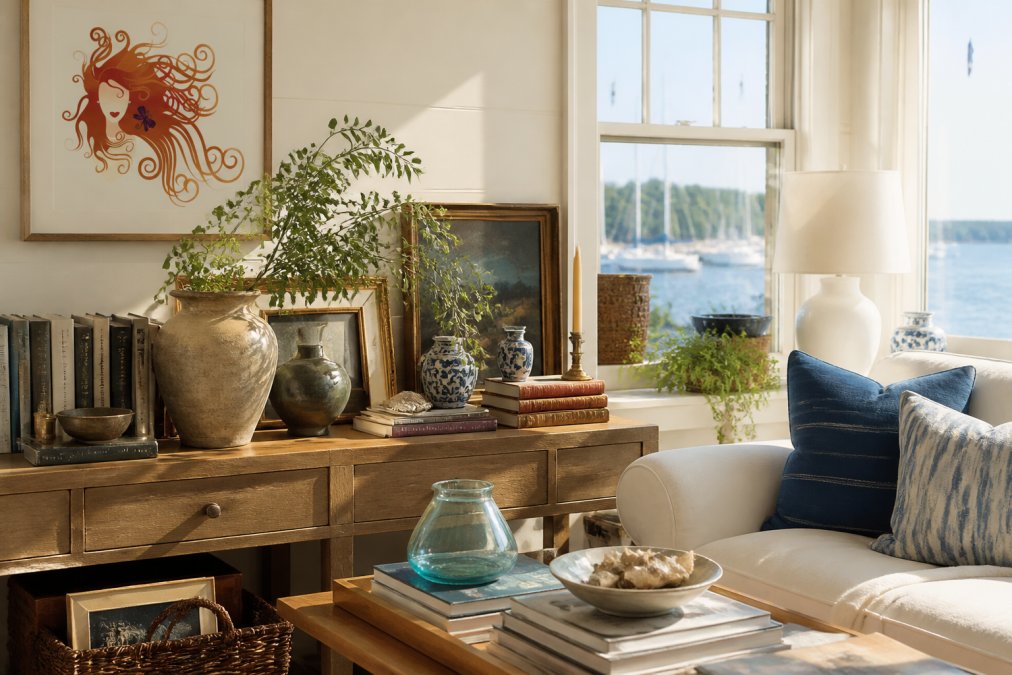
Collected vs. Eclectic vs. Minimalist
Eclectic means mixing styles, but it can still be bought all at once. Minimalist strips a room down to essentials and keeps surfaces bare. A collected home sits between them: layered and full of character, but edited so it never tips into chaos.
The Essential Elements of a Curated, Collected Home
Three elements separate a genuinely curated room from a cluttered one: storytelling, texture, and restraint. Get those right and the rest falls into place.
Personal Storytelling and Meaningful Collections
A collected room tells you who lives there. Group objects by story, not by color: travel finds on one shelf, family heirlooms on another. A common mistake is buying “instant character” decor that has no history behind it. It shows.
Layering Textures and Materials
Mix at least three textures in every seating area. Pair a linen sofa with a wool throw, a leather ottoman, and a woven jute rug. Texture is what makes a room feel warm in photos and in person. Smooth surfaces alone read as cold.
Best Ways to Mix Wood Tones in a Living Room
The best ways to mix wood tones in a living room start with one rule: pick a dominant tone and let the others play supporting roles. A warm walnut coffee table can sit beside lighter oak floors if you repeat each tone once elsewhere in the room.
Pull one small wood accessory, like a bowl or picture frame, in each tone you’re using. Repeating a tone three times makes the mix look deliberate instead of accidental.
Mixing Vintage and Modern Furniture for a Cohesive Look
Mixing vintage and modern furniture works when you balance visual weight. A heavy antique dresser needs a light, clean-lined modern chair nearby to keep the room from feeling dated.
Balancing Different Eras and Styles
Choose one era as the backbone and accent it with another. If mid-century modern pieces dominate, add a single Victorian side table as a focal point. The contrast reads as curated when the ratio stays roughly even.
How to Style Shelves Like a Designer
To style shelves like a designer, work in odd-numbered groupings and vary the height of every object. Start with books stacked both vertically and horizontally, then layer in one large piece per shelf as an anchor.
Follow these steps:
- Clear the shelf completely and decide its purpose
- Place large anchors first: a vase, a framed print, a sculpture
- Add books in mixed stacks and rows
- Fill gaps with small objects, leaving breathing room
- Step back and remove one item per shelf
How to Avoid Clutter When Building a Collected Home
Clutter happens when you keep everything instead of choosing. The fix is a one-in, one-out rule and a strict editing pass every season.
- Cap each surface at three objects
- Keep collections to one category per shelf
- Store the overflow and rotate pieces quarterly
- Ask of every item: does this earn its space?
Buying faster than you edit is the fastest way to turn a collected home into a cluttered one. If you can’t name why a piece is there, it’s clutter, not character.
Sourcing, Budget Strategies, and Caring for Vintage Finds
Budget-friendly sourcing is where a collected home becomes affordable. The trick is not shopping less, it is shopping on a schedule that matches how each channel actually prices its inventory.
Where to Source, and What Each Channel Is Actually Good For
| Sourcing Option | Best For | Typical Price Position | Watch Out For |
|---|---|---|---|
| Consignment stores | Curated, inspected pieces | Mid, seller sets the floor | Limited stock per visit; turnover is slow |
| Estate sales | Heirlooms, one-of-a-kind finds | Low on day three, high on day one | Higher competition; final-day markdowns are where the deals are |
| Thrift stores | Low-cost accents, ceramics, books | Lowest | Hidden wear, missing hardware, smoke or pet odor |
| Online marketplaces | Wide selection, specific eras | Wide range | No inspection before buying; shipping damage risk |
| Facebook Marketplace and local buy-nothing groups | Free or near-free furniture | Lowest to free | First-come pickup; you supply the muscle and the vehicle |
| Auction houses (local, not national) | Statement pieces, art, rugs | Variable, often below retail | Buyer’s premium and pickup windows add cost |
A common pattern among collectors is to run two channels at once: one slow channel for statement pieces (estate sales, auctions) and one fast channel for accents (thrift, marketplace). The slow channel builds the backbone; the fast channel fills gaps without blowing the budget.
Budget Mechanics That Actually Move the Number
- Shop the last day of estate sales. Most estate-sale companies mark down 25-50% on the final day to clear the house. Arrive early on day one to scout, return on the last day to buy.
- Ask about the consignment floor. At consignment shops, sellers often set a minimum they will accept. If a piece has sat for more than 60 days, ask whether the seller would consider an offer, many shops will relay it.
- Bundle at thrift stores. Managers frequently have discretion on multi-item purchases. Three ceramics at once often costs less than three separate trips.
- Set a per-piece ceiling before you leave the house. A workable rule is to cap any single accent at the price of a mid-range new equivalent, and reserve the larger budget for pieces you will keep for a decade.
- Factor in the fix. A $40 chair that needs $120 in upholstery is a $160 chair. Price the repair before you commit, not after.
Keep a running note on your phone with three columns: what you need, the maximum you will pay, and the measurements of the spot it has to fit. Most regretted purchases are the ones that were the wrong size, not the wrong price.
Condition Checks Before You Buy
Run the same five-point check on every piece:
- Wood: press a fingernail into an inconspicuous spot. If it dents easily, the finish is failing. Check for wobble at the joints, not just the surface.
- Upholstery: lift the cushions and smell the deck. Musty or smoky odor usually means the foam needs replacing, not just the fabric.
- Ceramics and glass: run a finger around the rim and base for chips. Hold it up to light, hairline cracks show as a faint line.
- Metal: test any moving part. Drawer pulls, hinges, and lamp switches are the most common failure points and the cheapest to replace.
- Rugs: flip a corner. Look for dry rot, moth damage, and whether the fringe is original or re-knotted.
Caring for Vintage Finds So They Last
Preservation is what protects the patina that makes older pieces worth owning.
- Wood: dust with a dry microfiber cloth weekly. Condition with a paste wax or a linseed-oil product once or twice a year, not monthly. Over-oiling softens the finish and attracts dust.
- Upholstery: vacuum monthly with a brush attachment. Rotate cushions every few weeks so wear is even. Spot-test any cleaner on the back of a cushion first.
- Ceramics: hand-wash. Dishwashers strip glaze and can crack older pieces along existing hairlines.
- Textiles and rugs: vacuum without a beater bar on wool. Rotate the rug 180 degrees every six months so sun fade is even. Store folded, not hung, and never in plastic, cotton and wool need to breathe.
- Metal: leave patina alone unless it is actively corroding. Polishing brass or bronze removes the very finish collectors pay for.
Frequently Asked Questions
What does “collected home” mean?
A collected home is a space built over time with pieces you genuinely love, not a room bought all at once. It mixes eras, textures, and personal finds like heirlooms, thrifted decor, and artisan pieces into a cohesive whole. The result feels authentic, inviting, and layered rather than showroom-perfect, because every item carries a story or a memory.
How do you achieve a collected look without making a room feel cluttered?
Clutter comes from pieces with no home or purpose. To avoid it, group items in odd-numbered arrangements, leave negative space on shelves, and anchor each vignette with one focal point. Rotate seasonal decor instead of displaying everything at once, and use trays or baskets to corral small objects. The goal is intentionality: every piece should earn its spot.
What is the difference between an eclectic style and a collected home?
Eclectic style mixes styles and eras for visual impact, sometimes with bold, high-contrast choices. A collected home is more personal and slower to build. It can be eclectic, but its defining trait is meaning: heirlooms, travel finds, and thrifted treasures that tell your story. Eclectic is a look; collected is a process and a philosophy.
How can you mix vintage and modern pieces for a collected aesthetic?
Start with a neutral foundation like a modern sofa or simple shelving, then layer in vintage pieces such as a patina-rich wood table or an antique mirror. Repeat one or two materials, like brass or walnut, across both old and new items to tie them together. Keep proportions balanced: pair a heavy vintage piece with a lighter modern one nearby.
What are the best ways to mix wood tones in a living room?
Choose a dominant wood tone for large pieces like flooring or a coffee table, then add one or two secondary tones in smaller doses. Tie them together with a shared color palette or repeated textures. A warm walnut next to a painted or weathered oak works when a rug or upholstery bridges the tones. Avoid more than three distinct wood finishes in one sightline.
How does the collected home aesthetic differ from minimalism?
Minimalism strips a room down to essentials, favoring empty space and a limited palette. A collected home embraces more objects, but with intention. It layers textures, mixes eras, and displays meaningful collections. Both value intentionality, yet minimalism edits out, while the collected look curates in, as long as each piece adds visual interest or personal narrative.
How can you style shelves like a designer for a collected look?
Start with books as anchors, stacking some horizontally and others vertically. Add one or two art pieces or framed photos, then tuck in small objects like ceramics or a thrifted find. Leave about one-third of the shelf empty. Group items in threes, vary heights, and repeat a color or material across shelves to create cohesion without symmetry.
Can you scale the collected home look for small spaces?
Yes. In small spaces, focus on vertical styling with wall-mounted shelves and lean art rather than filling floor space. Choose multi-functional vintage pieces like a trunk that doubles as a coffee table. Use mirrors to add depth, and keep the color palette tight so layered textures don’t overwhelm. Rotate decor seasonally to keep the look fresh without adding bulk.