

Table of Contents
- Why Furniture Sales Descriptions Matter More Than You Think
- Step 1: Start With Benefit-Driven Headlines That Grab Attention
- Step 2: Use Best Adjectives for Furniture Listings to Create Sensory Appeal
- Step 3: Include Accurate Dimensions and Technical Specifications
- How to Describe Furniture Condition Without Hiding Flaws
- Using Furniture Sales Description Templates to Speed Up Your Process
- Mobile-First Optimization and AI Tools for Better Descriptions
- Conclusion
- Frequently Asked Questions
Last Updated: September 30, 2026
Why Furniture Sales Descriptions Matter More Than You Think
A compelling furniture sales description is the difference between a piece that sits in inventory and one that sells within days. Most sellers treat descriptions as an afterthought, a missed opportunity.
The right words transform how people perceive furniture. When you describe a piece well, buyers visualize it in their homes, feel confident about the purchase, and pay closer to asking price. Poor descriptions create doubt and leave pieces unsold.
A well-written furniture sales description addresses specific buyer pain points: Will this fit my space? Is it in good condition? Does it match my aesthetic? Will it last? Your description must answer these questions.
Step 1: Start With Benefit-Driven Headlines That Grab Attention
Your headline determines whether buyers scroll down or move on. A benefit-driven headline shows what they get, not just what the item is.
Weak headlines focus on the item itself: “Mid-Century Sofa,” “Dining Table,” “Leather Armchair.” These don’t tell buyers why they should care.
Strong headlines focus on the benefit or lifestyle the piece offers:
- “Vintage Sofa That Turns Any Living Room Into a Showstopper”
- “Solid Wood Dining Table That Seats Eight Without Wobbling”
- “Leather Armchair Built for Hours of Reading and Relaxation”
The second set tells a story and creates desire by showing buyers themselves using the piece.
The formula is simple: [Item Type] That [Specific Benefit or Outcome]
Buyers want the life furniture represents. A table is family dinners and hosting friends. A chair is comfort after a long day. Your headline should speak to that emotional need while staying grounded in what the piece actually delivers.
Step 2: Use Best Adjectives for Furniture Listings to Create Sensory Appeal
The best adjectives for furniture listings help buyers feel the piece before seeing it in person. Different textures and finishes trigger different emotional and practical responses in buyers.
Most sellers use vague adjectives like “nice” or “good.” Buyers skip past them.
Specific, sensory adjectives make furniture come alive:
For comfort and texture:
- Sink into, plush, sink-in cushioning
- Buttery soft leather
- Worn velvet with a lived-in feel
- Sturdy, high-back support
- Cloud-like seating
For visual appeal:
- Rich chocolate tones
- Warm honey wood grain
- Sleek minimalist lines
- Ornate carved details
- Timeless neutral palette
For durability and craftsmanship:
- Solid hardwood frame
- Hand-stitched upholstery
- Dovetail joinery
- Mortise and tenon construction
- Kiln-dried wood
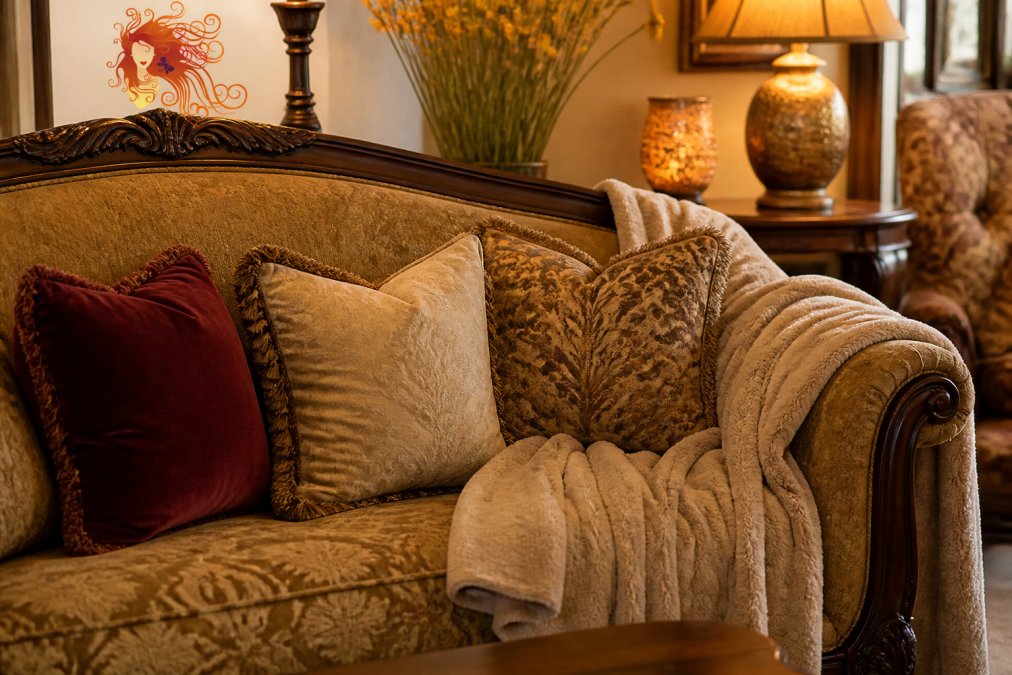
Be specific. Instead of “comfortable,” say “sink-in cushioning that cradles you after a long day.” Instead of “nice wood,” say “warm honey-toned oak with visible grain.”
The Psychology of Material Choice in Furniture Buying
Different fabrics and finishes carry psychological weight that influences perceived value and buying behavior.
Leather vs. Fabric: Trust and Longevity
Leather signals durability and luxury, emphasize patina and longevity. Fabric signals comfort and approachability, emphasize softness and everyday usability. A leather sofa is something you own and preserve; a fabric sofa is something you live with and enjoy.
Velvet vs. Linen: Luxury vs. Authenticity
Velvet reads as indulgent and formal, emphasize richness. Linen reads as authentic and understated, emphasize natural character. Velvet says “I’m a statement piece”; linen says “I’m timeless.”
Wood Finish: Warmth vs. Modernity
Warm wood signals comfort and tradition; light wood signals modernity; dark wood signals formality. Match your adjectives to the emotional response the piece is designed to trigger.
Matching Adjectives to Material Psychology
Identify what psychological response the material naturally triggers, then choose language that reinforces it. When you align adjectives with the material’s natural psychology, buyers feel the rightness of the piece.
Avoiding Mismatched Adjectives
Don’t use luxury language for budget materials or casual language for premium pieces. Let the material and style guide your adjective choice. Mismatched language creates doubt; aligned language creates confidence.
Sensory Language That Converts
When selecting the best adjectives for furniture listings, match them to the actual piece. The strongest descriptions explain what the material does and how it feels. “Buttery soft leather” is good; “genuine leather that softens and develops a rich patina over years of use” is better because it connects the material to the buyer’s long-term experience.
Step 3: Include Accurate Dimensions and Technical Specifications
Dimensions are non-negotiable. Always include width, depth, height, seat height, and assembly requirements in inches.
Here’s the format that works best:
Dimensions: Width 42″ × Depth 28″ × Height 32″
Seat Height: 18 inches
Material: Solid oak frame with upholstered cushions
Condition: Excellent with minor wear on lower legs
Assembly: Requires two people; legs attach with bolts (tools included)
Include material composition. Be honest about condition-related details, transparency builds trust and prevents returns. For furniture sales descriptions, technical accuracy filters out incompatible buyers and saves time for both sides.
How to Describe Furniture Condition Without Hiding Flaws
Frame flaws as part of the piece’s story, not as defects.
Instead of: “Worn leather with tears”
Try: “Vintage leather with authentic patina and character marks that add to its lived-in charm”
Instead of: “Scratched wood top”
Try: “Solid wood surface with patina that shows its history and natural aging”
Instead of: “Faded fabric”
Try: “Soft, naturally faded upholstery in muted tones that work with any decor”
You’re reframing, not hiding. A scratch becomes patina; fading becomes a neutral palette; wear becomes character. Never misrepresent condition. If a piece has structural damage or needs repair, be clear. Buyers respect honesty.
Match your description to a condition category (Excellent, Very Good, Good, Fair, Poor), then explain what the wear looks like specifically.
Using Furniture Sales Description Templates to Speed Up Your Process
Templates help you stay consistent without sounding robotic. Here’s a structure that works across furniture types:
[Benefit-Driven Headline]
[Opening sentence with sensory appeal and key benefit]
Condition: [Specific condition statement with honest wear description]
Dimensions: [Exact measurements]
Material & Construction: [What it’s made of and how it’s built]
Details:
- [Specific feature 1]
- [Specific feature 2]
- [Specific feature 3]
Perfect For: [Lifestyle or room type this suits]
Notes: [Any assembly, pickup, or care information]
Here’s how it looks filled in:
Vintage Leather Wingback Chair Built for Decades of Comfort
This 1970s wingback chair has the kind of bones that don’t exist anymore. Solid hardwood frame, hand-tied springs, and genuine leather that’s only gotten better with age. The seat depth is generous, you sink in, not perch. Perfect for reading, thinking, or just disappearing into at the end of the day.
Condition: Excellent. The leather shows authentic patina with minor creasing on the seat. One small scuff on the lower left leg (visible only up close).
Details:
- Rolled arms with nailhead trim
- High back for neck support
- Legs show natural wood grain
- Dust cover underneath intact
Mobile-First Optimization and AI Tools for Better Descriptions
Most furniture shoppers browse on phones. Your descriptions need to work on small screens.
Mobile-First Optimization Fundamentals
Mobile-first optimization means:
- Lead with the most important information (headline, key benefit, dimensions)
- Use short paragraphs (2-3 sentences max)
- Break text into scannable sections with clear subheadings
- Put dimensions and condition statement in the first 100 words
- Avoid long blocks of text; use bullet points for features
- Test readability at 375px width (standard mobile viewport)
On mobile, buyers scroll fast. They read the headline, skim the first paragraph, then look at photos. If they’re interested, they scroll for dimensions and condition. Structure your descriptions accordingly. The difference between a mobile-optimized description and a desktop-first one often means the difference between a click-through and a bounce.
Using AI to Scale Furniture Descriptions Without Sacrificing Quality
AI tools require a structured workflow to produce accurate, brand-consistent results. Here’s a production-ready workflow for using AI to write furniture descriptions at scale:
Step 1: Create a Detailed Input Template
Step 2: Use a Structured Prompt for Consistency
Step 3: Edit for Accuracy and Brand Voice
Step 4: A/B Test Your Prompts
Tools and Platforms for AI-Assisted Description Writing
ChatGPT is the best starting point for most sellers, it’s affordable, flexible, and produces good results with a well-designed prompt.
The Human-AI Hybrid Advantage
AI handles structure and flow while you handle accuracy and personality. This hybrid approach cuts writing time from 15-20 minutes per piece to 5-8 minutes while maintaining quality. Treat AI as a tool for speed, not a replacement for judgment.
Conclusion
Writing compelling furniture sales descriptions is a skill that directly impacts your sales velocity and profit margins. The difference between a generic description and one that converts often comes down to sensory language, honest condition details, and clear benefits.
Frequently Asked Questions
What details should be included in a furniture sales listing?
A strong furniture sales description includes dimensions (width, depth, height), material composition, condition honestly assessed, color and style details, and functional features. Include any damage or wear upfront, transparency builds buyer confidence. Add care instructions if relevant. The goal is to answer every question a buyer might have before they contact you, which reduces friction and increases conversion rates.
How do you describe the condition of pre-loved furniture without losing the sale?
Be specific and honest. Instead of vague terms like ‘good condition,’ describe exactly what you see: ‘Light surface scratches on the top edge, consistent with normal use’ or ‘Minor fading on the back panel from sun exposure.’ Pair honest condition language with positive framing: ‘Well-loved vintage piece with authentic patina’ or ‘Structurally sound with minor cosmetic wear.’ Buyers trust sellers who acknowledge flaws because it signals authenticity and reduces buyer’s remorse.
What power words help sell furniture faster?
Words that trigger emotion and lifestyle appeal work best: ‘timeless,’ ‘statement piece,’ ‘investment-quality,’ ‘versatile,’ ‘curated,’ ‘authentic,’ ‘enduring,’ ‘sophisticated,’ and ‘sanctuary-ready.’ Avoid overused marketing jargon like ‘stunning’ or ‘gorgeous’, instead, use specific sensory language: ‘hand-stitched,’ ‘solid wood,’ ‘buttery leather,’ or ‘rich patina.’ Combine descriptive adjectives with benefit language: instead of ‘beautiful sofa,’ write ‘conversation-ready sectional that anchors your living room.’
Should I include dimensions in my furniture sales descriptions?
Absolutely. Dimensions are critical for furniture because buyers need to visualize fit in their space. Always include width, depth, and height in inches. For larger pieces, specify seat height and arm height. If the piece has adjustable parts, note those ranges. Dimensions reduce returns and buyer hesitation, they’re one of the top reasons people contact sellers with questions. Including them upfront builds buyer confidence and improves your conversion rate.