
Table of Contents
- What Makes Interior Design Authentic?
- The Real Interior Design ROI for Homeowners
- How to Spot Authentic Vintage Furniture
- Mixing Wood Tones in a Living Room
- The Psychological Impact of Authentic Design
- When to Hire a Designer vs. DIY
- Common Mistakes That Undermine Authentic Design
- Frequently Asked Questions
Last Updated: September 23, 2026
What Makes Interior Design Authentic?
Authentic interior design is the practice of furnishing and styling a home around the specific people, history, and architecture already present in it, rather than around whatever style is currently trending. The result feels collected over time, not purchased in a single weekend. At Le Rouge Tete, we have watched this play out for more than 16 years: rooms built from pieces with a story behind them hold up emotionally long after trend-driven rooms start to feel dated.
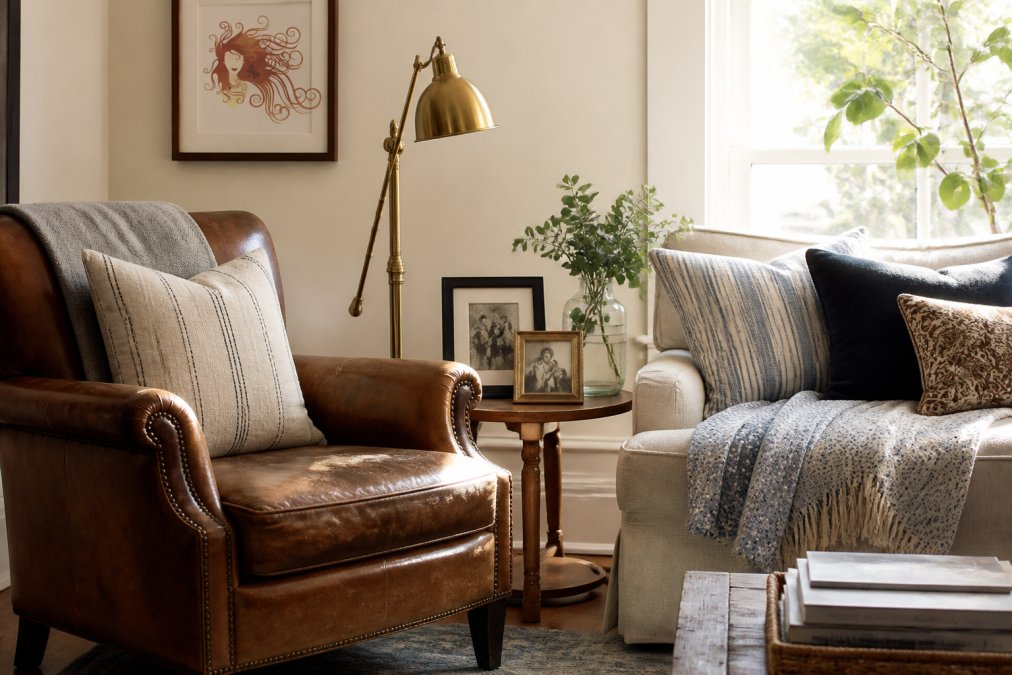
Authenticity vs. Trend-Chasing
The Real Interior Design ROI for Homeowners
The financial case for authentic interior design rests on four things: avoided mistakes, longer furniture lifespan, procurement savings, and resale appeal. A room designed around your actual life rarely needs redoing in three years; a trend-driven room often does.
How Design Fees Actually Work
Before judging ROI, know what you are comparing against. Interior design fees in the United States generally fall into four structures:
- Hourly: Common for consultations and small scopes. Billed in increments, with a minimum.
- Flat fee per room: A fixed price for a defined deliverable, such as a floor plan, palette, and shopping list.
- Cost-plus: The designer charges a markup on furniture and materials they procure, typically a percentage above trade cost.
- Full-service percentage: A percentage of the total project budget, used on larger renovations.
A Step-by-Step Cost-Benefit Calculator
Work through this before committing to a renovation or large furniture purchase. Write the numbers down; the exercise only works if it is concrete.
| Step | Question to Ask | What It Reveals |
|---|---|---|
| 1. Define the goal | Is this a refresh, a functional fix, or a full redesign? | Scope and realistic budget allocation |
| 2. Measure the space | Does the floor plan support how you actually live? | Whether space planning comes before shopping |
| 3. Price the alternatives | What does new retail cost versus a curated consignment find? | Where the biggest savings sit |
| 4. Estimate lifespan | Will this piece survive a move, a pet, and five years of daily use? | True cost per year of ownership |
| 5. Add design fees | If hiring a designer, what does their rate include? | Whether the fee buys procurement savings |
| 6. Set the timeline | How long can you live with a half-finished room? | Whether to phase the project |
| 7. Compare total cost | Full retail plan vs. mixed new-and-consignment plan | The actual number that decides it |
The Hidden Cost of Getting It Wrong
The most expensive outcome is not hiring a designer, it is buying the wrong thing twice. A wrong-size rug, a sofa that does not fit through the door, a paint color that reads green in daylight: each is a full-price mistake a floor plan and a sample would have caught. Design fees are insurance against repeating purchases, not a luxury add-on.
Photograph your room from all four corners before you buy anything. Most people shop for pieces they like in isolation, then discover the scale is wrong once the piece is home. A quick phone photo session prevents the single most expensive mistake in decorating.
The ROI question is not “does design cost money.” It is “does the fee cost less than the mistakes it prevents.” Run the two-column math before you decide.
How to Spot Authentic Vintage Furniture
Genuine vintage furniture shows its age in ways that are hard to fake and easy to learn. Check these markers:
- Joinery: Look underneath. Dovetail joints and mortise-and-tenon construction signal real craftsmanship; staples and particleboard do not.
- Screws: Flat-head screws suggest pre-1950s production. Phillips-head screws point to later manufacturing.
- Wear patterns: Authentic age shows uneven wear, especially on armrests, drawer pulls, and feet. Uniform distressing is usually manufactured.
- Hardware: Original brass hardware tarnishes unevenly and often has a maker’s mark on the back.
- Smell: A musty odor usually means stored damp, not age. Clean wood smells faintly of wood, nothing more.
- Labels and stamps: A maker’s label or stamped mark on the underside adds both provenance and value.
Never buy upholstered vintage pieces without checking the frame and cushion interiors. A beautiful exterior can hide a cracked frame or degraded foam, and reupholstery costs can exceed what you paid for the piece. Ask to see underneath, and press firmly on the seat to feel for sagging.
Mixing Wood Tones in a Living Room
The best way to mix wood tones in a living room is to choose one dominant tone and treat every other wood as an accent. Most rooms fail because the homeowner tries to match everything, producing showroom flatness rather than a collected look.
Three rules carry most of the weight:
- Pick a dominant tone. Decide whether the room leans warm (walnut, cherry, mahogany) or cool (oak, ash, maple), then let that tone occupy roughly two-thirds of the wood surfaces.
- Separate tones with a bridge. A rug, a textile, or a painted piece breaks up competing woods so the eye reads them as intentional rather than accidental.
- Repeat each tone at least twice. A single dark piece in an all-light room looks like a mistake. Two dark pieces look like a decision.
The Psychological Impact of Authentic Design
A home that reflects your actual identity reduces decision fatigue and increases the sense of refuge a living space should provide, the part most ROI-focused guides skip.
The strongest argument for authentic interior design is not financial. It is that a room built around your own history is the only version of the room you will not want to replace in two years.
When to Hire a Designer vs. DIY
Hire a designer when the project involves structural change, a whole-home scope, or construction documents a contractor will build from. Handle it yourself when the scope is cosmetic and you have time to source patiently. The harder question is the middle ground, where most homeowners live.
The Three-Question Test
Before you decide, answer these honestly:
- Does the project require a permit or a licensed trade? If walls are moving, plumbing or electrical is changing, or a contractor needs drawings to build from, you need professional help. This is not a style preference; it is a code and liability issue.
- Can you articulate what you want in one paragraph? If you cannot describe the room you are trying to create, a designer’s first job is to help you find that answer. That is real work, and it is worth paying for.
- Do you have more time or more money? DIY trades your time for savings. Hiring trades your money for time and, ideally, for fewer mistakes. Neither is wrong; the mistake is pretending you have both.
Signs It Is Time to Bring In Professional Help
- You are moving walls, changing a functional layout, or touching electrical and plumbing
- You need construction documents, permits, or contractor coordination
- The room has a problem you cannot solve, such as awkward proportions or poor lighting design
- You are furnishing multiple units, such as vacation rental properties, on a deadline
- You have bought and returned the same category of item more than once
Signs DIY Is the Better Call
- You are refreshing one room with furniture, lighting, and styling
- You enjoy sourcing and have weeks rather than days
- Your budget is better spent on pieces than on design fees
- You already know your palette and layout and only need to execute
The Middle Path: A Single Consultation
The middle path works for most homeowners: hire a designer for a single consultation to produce a floor plan optimization and a color palette, then execute procurement yourself. You get spatial awareness and a plan without full project management. This is often the highest-ROI engagement available, because layout and palette are the hardest decisions to fix later and the cheapest to get right upfront.
What to Ask Before You Sign
Professional certification matters less than a portfolio matching your taste. Ask to see completed projects in your region and style, then ask three questions:
- What is included in the fee, and what is billed separately? Procurement markups, delivery, and installation are frequently excluded.
- Do you pass through trade discounts, or keep them? The answer changes the effective cost of the fee.
- What happens if I want to source some pieces myself? A designer who insists on controlling every purchase is not the right fit for a homeowner who wants to stay involved.
How This Connects to Authenticity
Here is the part most hire-vs-DIY guides miss. A designer can give you a beautiful room; only you can give it your history. The most authentic outcomes come from a division of labor: the designer handles the hard, technical, expensive-to-fix decisions, layout, lighting plan, palette, scale, while you handle the personal ones, the art, the objects, the pieces with a story.
Do not hire a designer to “make it look like” a specific photograph you saved. That is trend-chasing with a fee attached. Bring references for the feeling you want, not the exact room you want to copy, or you will pay professional prices for a result that still does not reflect you.
The right question is not “designer or DIY.” It is “which decisions am I qualified to make, and which ones will cost me more to get wrong?” Hire for the second category, keep the first for yourself.
Common Mistakes That Undermine Authentic Design
The fastest way to ruin an authentic room is to buy the whole thing at once. Authenticity is a byproduct of time; no single shopping trip can manufacture it.
Watch for these:
- Buying a matching set. A full bedroom or dining set reads as a catalog page. Break it up.
- Chasing a trend you saw this month. If you cannot imagine still liking it in five years, wait.
- Ignoring scale. Oversized furniture in a small room is the most common and most expensive error.
- Over-refinishing vintage pieces. You strip the character and the value at the same time.
- Skipping lighting design. One overhead fixture flattens a room. Layer table lamps, floor lamps, and a dimmable overhead.
- Filling every surface. Negative space is part of composition.
- Shopping without measurements. Bring the floor plan and a tape measure, every time.
When you find a piece you love but are unsure about, put it on a 24-hour hold and photograph it in the store. Look at the photo that evening, away from the showroom lighting. Most wrong purchases announce themselves the moment you see them out of context.
Frequently Asked Questions
What defines ‘authentic’ in modern interior design?
Authentic design means choosing pieces that reflect your personal history and values, not just following trends. It prioritizes quality materials, craftsmanship, and a cohesive story over matching sets from big-box stores. This approach often involves mixing eras and styles, like pairing a vintage rug with modern furniture, to create a space that feels collected over time rather than bought all at once.
How does authentic furniture hold its value compared to mass-produced items?
Well-made furniture often retains or increases in value, especially if it’s a recognized design or brand. Investing in authentic pieces can be a smarter financial decision long-term, as they can be resold or passed down.
Is it worth paying for professional design services for a small home?
For small homes, a designer’s expertise in space planning and functional layouts can be invaluable. They can help you maximize every square foot and avoid costly mistakes like buying furniture that doesn’t fit. While there are design fees, the return on investment often comes from avoiding errors and increasing your home’s resale value through better flow and aesthetic cohesion.
What are the long-term benefits of investing in authentic interior design?
The long-term benefits include a home that feels personal and timeless, reducing the need for frequent redecorating. Authentic design often uses sustainable materials and quality construction, which means less waste and better durability. This approach can also increase your home’s resale value, as buyers appreciate unique, well-designed spaces that stand out from generic interiors.