

Table of Contents
- Why Weekly New Arrivals and Lower Prices Change the Furniture Game
- Consignment vs Retail: A Side-by-Side Comparison Table
- The Benefits of Buying Consignment Furniture Over Big-Box Stores
- Consignment Store Inventory Turnover: Why New Items Added Weekly Matters
- Total Cost of Ownership: Comparing Consignment, Retail, and Disposal Fees
- Furniture Pickup Services Near Me: Logistics, Costs, and What to Expect
- How to Verify Quality on Pre-Owned Furniture Before You Buy
- Frequently Asked Questions
Last Updated: September 29, 2026
Why Weekly New Arrivals and Lower Prices Change the Furniture Game
Walk into a big-box showroom and you see the same 40 sofas every month, marked at full retail. Walk into a consignment shop with rolling inventory and every week looks different. That contrast, new items added weekly vs affordable prices compared to retail for home furniture pickup, is the whole reason consignment has become a serious option for budget-conscious homeowners rather than a last resort.
Consignment furniture is pre-owned home furnishings sold on behalf of their owners, with the shop taking a cut of the final sale price. At Le Rouge Tete, a consignment store serving the Crystal Coast for over 16 years, that split is 50/50, and consignments carry no end date.
Here’s what most furniture guides get wrong: they treat consignment as a compromise. It isn’t. It’s a different supply chain.
Consignment vs Retail: A Side-by-Side Comparison Table
The core difference comes down to who carries the risk and who sets the price. In retail, the store buys stock upfront and builds markup into every tag. In consignment, the owner keeps the item until it sells, so the shop can price it lower and still stay profitable.
| Factor | Consignment Shop | Big-Box Retailer |
|---|---|---|
| Pricing model | Discounted pricing on pre-owned pieces | Retail markup on new stock |
| Inventory | New items added weekly | Seasonal collections, months apart |
| Product mix | One-of-a-kind, luxury furniture finds | Mass-produced, repeatable SKUs |
| Condition | Inspected second-hand | New, factory-sealed |
| Financing | Varies by shop | Financing options commonly offered |
| Delivery | Local pickup, sometimes paid | Delivery fees often added |
| Return policy | Usually hold-and-inspect, limited returns | Standard manufacturer returns |
The Benefits of Buying Consignment Furniture Over Big-Box Stores
The biggest benefit isn’t price alone. It’s the combination of price and uniqueness that big-box stores can’t match. A retailer orders 5,000 identical sofas. A consignment shop stocks the one dresser someone’s grandmother bought in 1974 and never scratched.
Unique Pieces You Won’t Find in a Showroom
Showrooms sell what sells in volume. That means neutral palettes, standard dimensions, and fabric choices that appeal to the widest possible buyer. Consignment inventory reflects what real households actually owned, from antique sideboards to solid-wood dining tables that were built to last decades.
How Consignment Pricing Compares to Retail Markups
Retailers typically build a substantial markup into every item to cover showroom rent, staff, advertising, and returns. Consignment shops skip most of that overhead because the inventory isn’t purchased upfront. That structural difference is why consignment prices usually land well below retail on comparable pieces.
When comparing a consignment piece to a retail equivalent, check the construction, not just the tag. Dovetail joints, solid wood frames, and metal drawer glides often show up on older furniture and rarely appear at the same price point in new mass-market pieces.
Consignment Store Inventory Turnover: Why New Items Added Weekly Matters
Inventory turnover is the speed at which items sell and get replaced. High turnover means fresh stock every week. Low turnover means the same dusty sofa sits in the corner for six months.
What Drives Turnover in a Consignment Shop
Several things push inventory through faster:
- Fair splits that attract good consignors. A 50/50 split with no end date gives owners a reason to bring in quality pieces instead of dumping them.
- A visible, shoppable layout. Items displayed in a “live in” arrangement sell faster because buyers can picture them at home.
- A short hold policy. A 24-hour hold keeps pieces moving instead of stalling behind endless reservations.
- Consistent local demand. Vacation rental owners, downsizers, and new movers all need furniture on different schedules, which smooths out demand.
Turnover is the single best signal of a healthy consignment shop. If the floor looks identical on two visits a week apart, the shop isn’t moving inventory, and you’re unlikely to find fresh pieces.
Total Cost of Ownership: Comparing Consignment, Retail, and Disposal Fees
Sticker price is the smallest part of what furniture actually costs you. Total cost of ownership (TCO) is the sum of four buckets: acquisition, transport, assembly and setup, and end-of-life disposal of whatever the new piece replaces. Most buying guides stop at bucket one, which is exactly why the retail-versus-consignment comparison gets distorted.
Here is how the buckets break down in practice.
A simple way to run the comparison:
- Write down the retail tag, then add the quoted delivery fee, the assembly fee if any, and the disposal cost for the item being replaced.
- Write down the consignment tag, then add the pickup fee if any, and the disposal cost for the item being replaced.
- Subtract. The disposal cost is identical on both sides, so it cancels out, but only if you remember to include it. Buyers who forget it routinely overestimate how much retail “saves” them.
The acquisition price is the number on the tag. The ownership price is the tag plus transport plus assembly plus disposal. Consignment usually wins the second number by a wider margin than the first, because it eliminates assembly and shrinks transport to a flat local fee.
Furniture Pickup Services Near Me: Logistics, Costs, and What to Expect
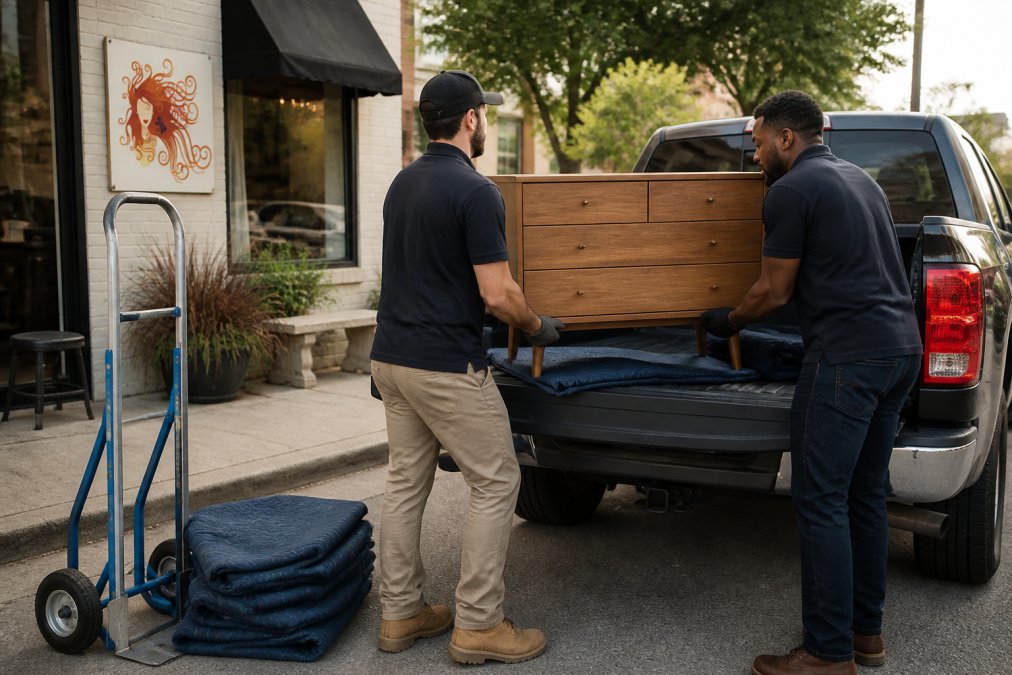
Local pickup is the step most buyers underestimate, and it’s where a great deal turns into a scratched dresser or a wasted trip. A piece that looks manageable on a showroom floor becomes a real problem the moment you’re staring at a stairwell turn or a tailgate that won’t close.
Self-Pickup Checklist for Large Items
If you’re handling pickup yourself, work through this in order. The sequence matters, measuring after you’ve already paid is too late.
- Measure the doorway, hallway, stairwell, and elevator, not just the room where the piece will live. Note the narrowest point in the entire path.
- Measure the piece itself, including any removable legs, arms, or backs. Many sofas and dressers come apart specifically to clear tight turns.
- Confirm the piece fits your vehicle with the seats folded down, or arrange a truck or trailer. A mid-size SUV handles most dressers and side tables; sofas and sectionals usually need a pickup bed, a van, or a trailer.
- Check the vehicle’s payload rating, not just the cargo volume. Furniture is denser than it looks, and a solid wood dresser can approach the payload limit of a small SUV.
- Bring moving blankets, ratchet straps, and a furniture dolly. Cardboard between the piece and the tailgate prevents paint transfer.
- Remove drawers, doors, and cushions before lifting. This cuts weight and lowers the center of gravity during the carry.
- Bring a second person. Most large pieces are a two-person lift, and a third person helps on stairs.
- Photograph the piece from multiple angles before loading, and again after it’s strapped in. This documents condition at the moment of transfer.
- Confirm the shop’s hold policy so the piece isn’t resold while you arrange transport.
Skipping the doorway measurement is the most common pickup mistake. A sofa that fits the room but not the stairwell turn ends up back at the shop, and some consignment agreements won’t refund a completed sale. Measure the path, not the destination.
How to Verify Quality on Pre-Owned Furniture Before You Buy
Quality verification is what separates a great consignment find from a costly mistake. Every shop handles inspection differently, so knowing what to check yourself matters.
Frequently Asked Questions
How does consignment furniture pricing compare to retail markups?
Consignment stores typically price items well below traditional retail because they avoid the high markups built into showroom pricing. A piece that sold new for full retail might be listed at a significantly lower price at a consignment shop, depending on condition and brand. Since consignment stores split proceeds with the seller (often 50/50), they can offer lower prices while still giving sellers a fair return. This model creates real consumer savings compared to buying new at full retail.
What are the benefits of shopping at stores that add new inventory weekly?
Weekly arrivals mean fresh selection every time you visit, so you are not browsing the same stale inventory month after month. High consignment store inventory turnover also signals that pieces are priced to sell, which benefits both buyers and sellers. For shoppers furnishing a vacation rental or downsizing, regular new arrivals increase the odds of finding multiple matching or complementary pieces in a single trip rather than hunting for weeks.
What should I look for when inspecting consignment furniture for quality?
Check drawer glides, door hinges, and joints for wobble or cracking. Run your hand along wood surfaces for deep scratches or water rings. Sit on upholstered pieces to test cushion support, and look underneath for sagging springs or frame damage. Smell the piece for musty odors that suggest moisture exposure. A reputable consignment shop will let you inspect items thoroughly and may offer a short hold period so you can measure your space before committing.
How does local furniture pickup work for consignment purchases?
Many consignment shops offer local pickup for large items, sometimes for a flat fee. At Le Rouge Tete, pickup for large pieces is available for $50. You schedule a time, and staff help load the item. If you are handling pickup yourself, bring a vehicle large enough for the piece, moving blankets, and straps. Measure doorways and stairwells before you arrive so you know the piece will fit. Some shops also offer a 24-hour hold so you can confirm measurements at home first.
Is it cheaper to buy pre-loved furniture than new retail items?
In most cases, yes. Pre-loved furniture from a consignment shop costs significantly less than comparable new pieces because you are not paying for retail markup, showroom overhead, or middleman distribution. The savings are largest on solid wood and brand-name pieces that hold structural quality over time. You also avoid delivery fees and long lead times common with new furniture orders. The trade-off is that inventory changes weekly, so you buy what is available rather than ordering a specific model.