
Last Updated: November 24, 2026
Quick Summary
Furniture photography pricing for sellers is the total cost of turning a piece of furniture into images a buyer will trust, and it rarely comes down to a single number. Quotes are built from studio time, photographer labor, styling, editing, and delivery, and the four pricing models you’ll encounter are per-image, per-SKU, day rate, and project pricing.
- Per-image pricing charges for each finished file, while per-SKU pricing bundles a set number of angles for one item.
- A day rate buys the photographer’s time regardless of output and suits sessions of 15 or more pieces.
- Setup time for building a room scene and dialing in lighting can take as long as the shooting itself and is billable.
- Build a written shot list before the shoot so you know exactly which images you receive.
- DIY setup needs a plain backdrop, two lights, and a phone or camera on a tripod, best for fewer than ten pieces.
Table of Contents
- Furniture Photography Pricing for Sellers: What a Quote Actually Covers
- Furniture Photography Cost Per Item: Per-Image, Per-SKU, Day Rate, and Project Pricing
- Studio, Photographer, and Equipment Costs Behind Every Shoot
- Props, Styling, and Room-Set Costs: White Background vs. Lifestyle Shots
- How to Photograph Furniture to Sell: Preparing Pieces Before the Shoot
- Furniture Product Photography Shot List: Angles, Detail Shots, and Deliverables
- DIY Furniture Product Photography Setup for Local Sellers
- Bring Your Pieces to Le Rouge Tete and Let the Store Do the Selling
- Frequently Asked Questions
Furniture Photography Pricing for Sellers: What a Quote Actually Covers
Furniture photography pricing for sellers is the total cost of turning a piece of furniture into images a buyer will trust, and it rarely comes down to a single number. Sellers often get blindsided by quotes that hide setup, styling, and editing fees. This guide breaks down what a quote actually includes, which pricing model fits your situation, and when doing it yourself makes more sense. Below, you’ll find the questions worth asking before you sign.
A furniture photography quote is an itemized estimate covering studio time, photographer labor, styling, editing, and delivery of finished image files.
Furniture Photography Cost Per Item: Per-Image, Per-SKU, Day Rate, and Project Pricing
The four pricing models you’ll encounter are per-image, per-SKU, day rate, and project pricing, and each one shifts risk to a different party. Per-image pricing charges for each finished file. Per-SKU pricing bundles a set number of angles for one item. A day rate buys the photographer’s time regardless of output. Project pricing quotes the whole catalog as one figure.
| Model | Best For | What It Rewards | Main Risk |
|---|---|---|---|
| Per-image | One or two pieces | You pay only for files you keep | Cost climbs fast on large sets |
| Per-SKU | Matching sets, dressers | Predictable bundle per item | Extra angles cost extra |
| Day rate | 15+ pieces in one session | Volume and speed | You pay for idle time |
| Project | Full room or collection | One negotiated total | Scope creep if undefined |
What an Itemized Quote Looks Like
A quote that lists only a per-image rate is not a quote; it is a starting number. Ask for the estimate broken into the same lines a photographer actually bills: shoot time, editing and retouching, studio or location setup, travel, prop and styling rental, and add-on images.
Quotes for a single upholstered piece often separate a base shoot fee, per-image charges for extra angles, and retouching if the piece shows wear.
Add-on images are where totals move most. A standard bundle might include a front, two three-quarter angles, and a side; a back view, drawer-open shot, fabric macro, or room scene can each be priced as an add-on.
What Drives the Number Up or Down
Volume is the biggest lever. A single armchair costs more per image than the twentieth piece in the same session, because setup and lighting are shared. Piece size and weight matter too: a three-seat leather sofa needs more floor space, more moving help, and more retouching than a side table.
Condition drives editing hours. Scratches, fading, and worn upholstery all need retouching, and that time is billable. Props, room sets, and travel to your location add on top.
Watch out: a quote that lists only a per-image rate and nothing else may be incomplete. Ask what happens when a piece needs heavy retouching, because that is where surprise charges often appear.
Studio, Photographer, and Equipment Costs Behind Every Shoot
Every commercial photography quote is built from the same three blocks: the space, the person, and the gear. Studio rental covers the room, the white or gray backdrop, and the lighting rig. Photographer fees cover shooting time plus the hours spent culling and editing. Equipment costs cover cameras, lenses, softboxes, and tethered capture setups.
Freelance photographers often bundle all three into one rate, which is convenient but can be opaque. Ask for the breakdown anyway. If you supply the location, such as your own garage, the studio line should drop or disappear.
Setup time is the line most sellers overlook. Building a room scene, hanging a backdrop, and dialing in lighting can take as long as the shooting itself, and it is billable on an hourly or day-rate quote. According to U.S.
Props, Styling, and Room-Set Costs: White Background vs. Lifestyle Shots
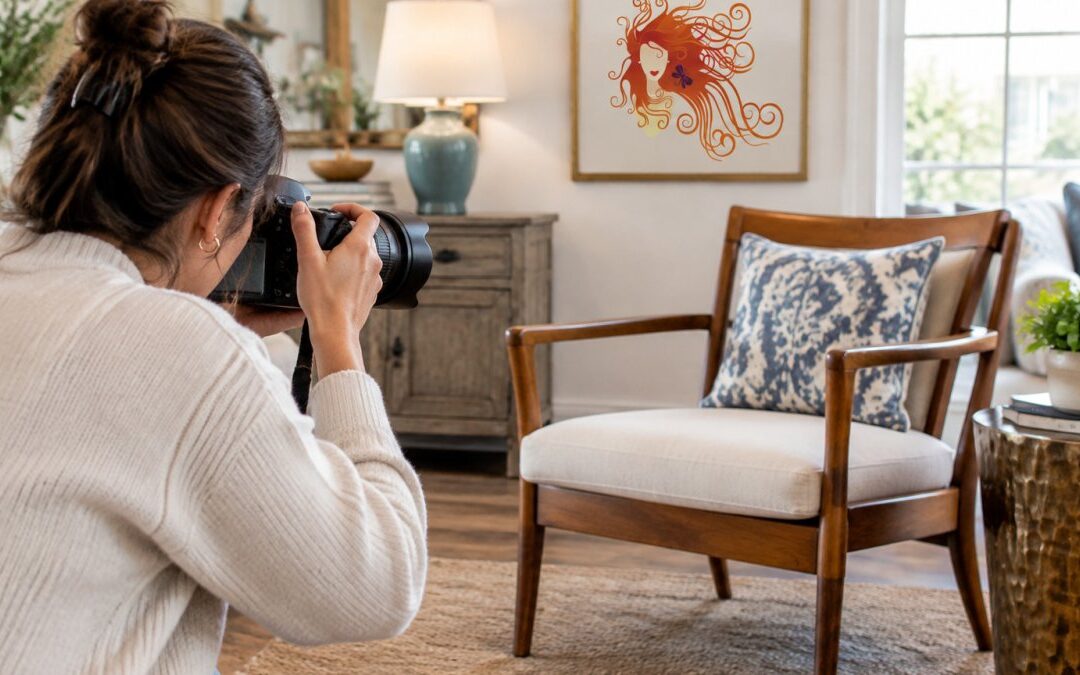
White-background images sell clarity; lifestyle photos sell desire, and the price gap between them comes down to styling labor. A white-background shot needs a backdrop, even lighting, and retouching to clean the edges.
Physical staging means real props in a real room. Virtual staging swaps the room digitally after the shoot, which usually costs less but can look artificial to a careful buyer. Our guide to selling upholstered furniture online covers how to present fabric, cushions, and wear honestly in photos.
If you are weighing costs, ask the photographer to quote both a white-background set and a single room scene for your best piece. Then compare which images actually drive inquiries.
How to Photograph Furniture to Sell: Preparing Pieces Before the Shoot
Preparation is the cheapest part of the process and the one that most affects how many retouching hours you pay for. Clean every surface, tighten loose hardware, and remove personal items before the photographer arrives. A piece that is ready to shoot saves billable setup time.
- Wipe down all surfaces and vacuum upholstery
- Tighten screws, hinges, and drawer pulls
- Open drawers and doors so hardware reads clearly
- Remove clutter and personal items from the frame
- Note existing scratches and wear so retouching scope is agreed upfront
- Move the piece to open floor space with room to walk around it
A common mistake is photographing a piece in a cramped corner. Buyers need to see the full silhouette, the feet, and the back. If you want a deeper walkthrough, our guide on how to photograph furniture for online sales walks through the full process, and our step-by-step guide to preparing furniture for a private sale covers cleaning and minor repairs in detail.
Furniture Product Photography Shot List: Angles, Detail Shots, and Deliverables
A furniture product photography shot list is the written agreement on exactly which images you receive, and it prevents the most common dispute in this work: paying for a shoot and getting four angles when you needed eight. Build the list before the shoot, not after.
The standard set for one piece covers a straight-on front, both three-quarter angles, a side profile, and the back. Add detail shots of drawer pulls, joinery, fabric weave, and any distinguishing feature. If drawers open, shoot them open.
| Shot | Purpose | Typical Count |
|---|---|---|
| Front and three-quarter | Overall shape | 3 |
| Side and back | Completeness | 2 |
| Detail shots | Condition and craft | 3-5 |
| Drawers open | Function | 1-2 |
| Room scene | Scale and context | 1 |
Typical Count
Deliverables, File Formats, and Turnaround
Deliverables deserve their own line in the quote, and the line should answer five questions: what file format, what resolution, how many files, how soon, and who owns them. Many photographers deliver JPEGs sized for web listings, and some will supply higher-resolution files on request. Ask whether edited files are included or billed separately, and ask for the delivery window in business days rather than “soon.”
A common pattern is a set number of retouched files per piece plus a folder of unedited selects. If you plan to relist the piece on more than one marketplace, confirm that the license covers all of your own listings, not just one platform.
Image Licensing and Usage Rights
Image licensing and usage rights are where sellers get caught. Copyright in a photograph generally belongs to the photographer unless the parties agree otherwise in writing, so a quote should state what rights you are buying. A photographer may retain copyright and grant you limited use, which matters if a buyer, a consignment shop, or a publication wants the image later.
If you need to hand images to a consignment shop or a buyer, get that permission in the quote. If you want to reuse the images in advertising or on a website, say so before the shoot so the license and the price reflect it.
Watch out: a verbal promise that you “can use the photos however you want” is not a license. Get the usage terms in the written quote or agreement.
DIY Furniture Product Photography Setup for Local Sellers
Doing it yourself is entirely viable for a handful of pieces, and the setup costs far less than a studio session. You need a plain wall or a white backdrop, two lights, and a phone or camera on a tripod.
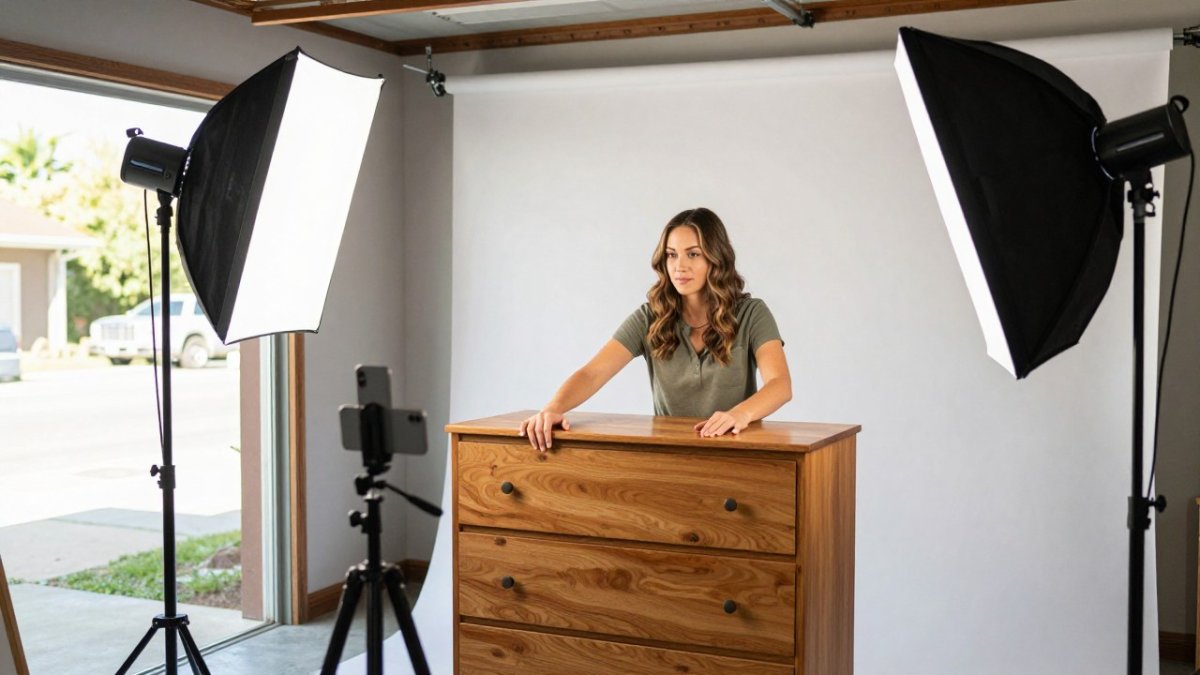
Keep the background plain, shoot at eye level or slightly below, and take more angles than you think you need. If your goal is simply to list and sell, our guide on where to sell used furniture locally covers the listing channels that reward good photos.
Best for: sellers with fewer than ten pieces and time to spare.
Skip if: you have a full room to move and a deadline.
Bring Your Pieces to Le Rouge Tete and Let the Store Do the Selling
When you consign with Le Rouge Tete, your furniture is displayed in our “live in” store layout in Morehead City, where shoppers can see pieces arranged to help them picture them at home.
Our terms are simple: a 50/50 split when your piece sells, no end dates on consignments, and a 24-hour hold policy for buyers. We also offer local pickup for large items at a flat $50.
If you are ready to hand off the work, our local guide to consigning furniture in Morehead City explains the process from intake to payout.
Photographing a room full of furniture yourself is a real job, and pricing a professional shoot is a real expense. You do not have to choose between the two.
Frequently Asked Questions
Do furniture photographers charge per photo, per item, or by the hour?
All three models exist. Per-image pricing bills each delivered file, so a 12-photo set costs more than a 6-photo set. Per-SKU pricing bundles a fixed number of angles and detail shots into one flat fee per piece, which makes budgeting easier for a catalog. Day rates cover the photographer’s time and usually include a set number of edited images, with extra files billed separately. Project pricing quotes the whole collection at once. Ask which model a quote uses before comparing totals.
How many photos should a furniture listing include?
Most online listings perform best with 8 to 12 images per piece. A useful furniture product photography shot list covers the front three-quarter angle, straight-on front, both sides, the back, plus detail shots of hardware, joints, fabric texture, and any wear. For case goods, include drawers open and interior shots. More angles reduce buyer questions and returns, and detail shots of flaws build trust rather than scare buyers off.
Is it cheaper to photograph furniture yourself or hire a professional?
For one or two pieces, a DIY furniture product photography setup costs far less. A phone, a plain backdrop, and two lights handle most resale listings. Professional photography earns its cost when you have a full collection, need consistent white-background images for a catalog, or sell at a price point where image quality changes the sale price. Compare the quote against the price difference better photos create on your specific pieces.
Are AI-generated furniture product photos worth the cost for sellers?
AI-generated imagery and CGI can produce clean room scenes without a physical staging day, and it works well for repeatable catalog items in standard finishes. It struggles with one-of-a-kind pieces, visible wear, and unusual textures, where buyers want to see the actual item. For used and consignment furniture, real photographs of the specific piece remain the safer choice because the buyer is purchasing exactly what is pictured.
