

Table of Contents
- The Case for Selling Antique Furniture Online
- The Real Drawbacks of Selling Antique Furniture Online
- Best Platforms to Sell Vintage Furniture
- Consignment vs. Selling Online: Which Model Fits Your Needs
- Shipping Antique Furniture Safely: What You Need to Know
- Hidden Costs and Tax Implications
- Making Your Decision
- Frequently Asked Questions
Last Updated: October 1, 2026
The Case for Selling Antique Furniture Online
Selling antique furniture online opens doors that local-only sales never could. You gain access to a national audience of collectors, designers, and homeowners actively searching for vintage pieces. That reach alone changes the economics of what you can sell and for how much.
You also avoid maintaining a physical storefront. List inventory once, answer inquiries from home, and coordinate shipping, invaluable for downsizing or liquidating inherited items.
Higher prices are often achievable online. A mid-century dining chair gathering dust in your garage might fetch $150 locally. The same chair, photographed well and listed on a platform where collectors browse daily, can command $400 or more. Buyers on specialized antique marketplaces expect to pay premium prices for authentic, quality pieces, and they do.
The data also shows that niche audiences pay better than generalist ones. According to Statista’s 2026 e-commerce trends report, specialty online retailers see higher average transaction values than mass-market platforms. Antique furniture buyers are willing to invest when they find the right piece.
Online platforms create a matching effect local markets can’t replicate. A rare Victorian settee might sit unsold for months locally; online, it finds the buyer searching for exactly that style.
The Real Drawbacks of Selling Antique Furniture Online
Shipping is brutal. Antique furniture is heavy and fragile. A sofa costing $400 to ship isn’t worth listing at $600. Buyers abandon carts when they see shipping costs.
Proper crating for delicate pieces, padding, corner protection, custom boxing, costs $150 to $300 per item, eating into profit fast.
Damage claims destroy margins. A piece arrives scratched or with loose joints, the buyer disputes the sale, and you’re stuck with a damaged item and no refund. Insurance adds cost and complexity.
Poor photography kills sales instantly. Professional furniture photography requires proper lighting, angles, and editing skills most casual sellers lack.
Platform fees compound quickly. Consignment platforms, auction sites, and specialty marketplaces each take a cut. You might pay 15% to 30% in commissions and fees before you see any money. Add shipping costs, and your profit margin shrinks to nothing on mid-range pieces.
Time investment is underestimated. Photographing, describing, responding to questions, negotiating, coordinating shipping, and handling returns takes 5+ hours per $300 sale.
Buyers demand proof of authenticity. You may need to research provenance or hire an appraiser. For inherited items, missing documentation kills buyer confidence.
Returns and disputes are common. Buyers claim pieces don’t match their decor or aren’t as described. You absorb return shipping and restocking costs.
Best Platforms to Sell Vintage Furniture
Each platform has a distinct buyer base and cost structure. Here’s how they stack up for selling antique furniture online.
Chairish: For High-End Dealers
Chairish targets interior designers, collectors, and affluent homeowners. The platform vets sellers and positions itself as the premium marketplace for high-quality furniture.
Pros:
- Access to a design-conscious, high-spending audience
- Professional vetting builds buyer trust in your inventory
- Integrated shipping support reduces logistics burden
- Strong brand reputation attracts serious collectors
Cons:
- Strict seller approval process can be difficult for beginners
- Commission fees are higher than mass-market platforms
- Smaller overall traffic volume compared to eBay or Etsy
- Requires professional-quality photography and detailed descriptions
Chairish works best for pieces valued at $500 or more; lower-priced items get lost in the noise.
Ruby Lane: For Serious Antique Collectors
Ruby Lane operates as a virtual mall where dealers rent shops. It’s built for serious collectors who expect seller expertise.
Pros:
- High-intent buyer traffic specifically seeking antiques
- Shop-based structure lets you build a brand identity and repeat customers
- No listing expiration dates, pieces stay live indefinitely
- Direct communication with buyers without platform intermediation
Cons:
- Monthly shop rental fee ($25 per month minimum) applies regardless of sales
- Smaller overall traffic compared to mainstream platforms
- Requires commitment to maintaining an active shop presence
- Best suited for dealers with consistent inventory
Ruby Lane makes sense for ongoing businesses, not one-time liquidations. Monthly fees add up if you’re selling only a handful of pieces.
Etsy and eBay: For Broad Reach
Etsy and eBay offer massive traffic and low barriers to entry. eBay’s auction format drives competitive bidding and higher prices.
Pros for Etsy:
- Enormous daily traffic and brand recognition
- User-friendly seller dashboard
- Lower listing fees ($0.20 per listing)
- Built-in marketing tools and advertising options
Cons for Etsy:
- High competition makes standing out difficult without paid ads
- Shipping large furniture is entirely your responsibility
- Buyers expect lower prices on Etsy than specialty platforms
Pros for eBay:
- Unmatched reach and trusted checkout infrastructure
- Auction format can drive competitive bidding and higher final prices
- First 250 listings per month are free
- Global shipping program options available
Cons for eBay:
- Managing shipping for heavy furniture is complex and risky
- Auction format means you can’t control final price
- High competition can drive prices down
- Buyer protection policies sometimes favor buyers in disputes
For broad reach and quick sales, Etsy and eBay work, though expect lower prices than specialty platforms.
Consignment vs. Selling Online: Which Model Fits Your Needs
The choice between consigning your furniture and selling it yourself online is fundamentally about control, effort, and timeline.
Consignment means a local business displays your piece, handles sales, and pays you a split when it sells. Le Rouge Tete operates on a 50/50 split with no end dates; your piece stays available until sold. This eliminates shipping risk, photography burden, and customer communication.
The trade-off is lower control and slower sales. You can’t adjust pricing or pull the piece if a better opportunity arises.
Selling online yourself means full control and higher prices, but you shoulder all work and risk. You set pricing, handle photography, respond to inquiries, arrange shipping, and manage disputes. You keep more of the sale price but absorb all costs.
Consignment makes sense for:
- People liquidating quickly and willing to accept lower prices
- Sellers who don’t want to deal with shipping logistics
- Anyone uncomfortable with online sales or photography
- Local pieces where a physical showroom adds value
- Busy professionals who value their time over maximum profit
Selling online yourself makes sense for:
- Rare or high-value pieces that justify the effort
- Sellers with photography and marketing skills
- People willing to invest time for higher returns
- Anyone with inventory to move regularly
- Collectors who enjoy the sales process
The hybrid approach, consigning some pieces locally while selling others online, lets you test what works without committing fully to either model.
Shipping Antique Furniture Safely: What You Need to Know
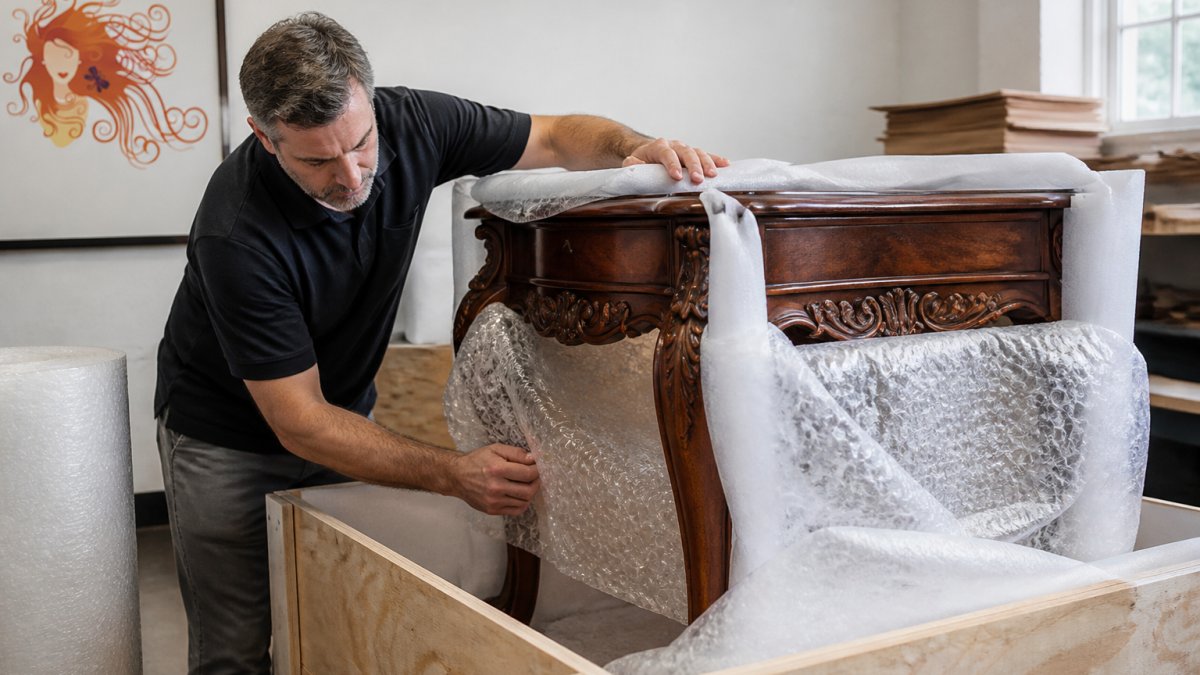
Shipping antique furniture safely requires more than throwing it in a box. The piece needs protection at every stage: wrapping, padding, boxing, and crating.
Use furniture blankets, bubble wrap for corners, foam sheets for flat surfaces, and cardboard or wooden crates. For pieces over $500, custom crating dramatically reduces damage risk.
Pad first, then wrap and secure with tape. Use corner guards on legs and arms. Wrap removable legs individually. For upholstered pieces, avoid snagging fabric.
Crating is essential for pieces over $500. A proper wooden crate costs $150 to $300 but prevents damage claims that kill profit.
Choose a carrier experienced with furniture. Get insurance covering replacement cost, not just declared value. Read policies carefully; some exclude “acts of nature” or improper packing damage.
Document with photos before packing, during packing, and after crating. These protect you in damage claims and disputes.
Ship directly to the buyer when possible. Direct shipping keeps accountability clear and lets you follow up if issues arise.
Communicate the shipping timeline and inspection process. Many damage claims happen because buyers don’t inspect carefully or report issues within the carrier’s window.
Hidden Costs and Tax Implications
Selling antique furniture online triggers costs and tax obligations many sellers overlook.
Platform fees vary widely. Etsy charges $0.20 per listing plus transaction fees. eBay takes a final value fee. Chairish and Ruby Lane take commissions of 20% to 30%. These fees stack up fast. On a $500 sale, you might pay $75 to $150 in fees before you ship anything.
Shipping costs are often higher than sellers expect.
Making Your Decision
The question isn’t whether selling antique furniture online is possible, it clearly is. The question is whether it’s worth your time and effort for the pieces you have.
Frequently Asked Questions
What is the best platform to sell antique furniture?
The best platform depends on your furniture’s value and your target audience. Chairish works well for high-end designer pieces and attracts interior designers and collectors. Ruby Lane suits serious antique dealers with niche inventory. Etsy and eBay offer broader reach but more competition. For local sales without shipping hassle, consignment through a local store like Le Rouge Tete eliminates logistics concerns entirely and reaches buyers who can inspect items in person.
How do I determine the value of antique furniture before selling?
Research comparable sold listings on platforms like eBay, Ruby Lane, and Chairish to see what similar pieces actually sold for, not just asking prices. Check provenance and maker’s marks, which significantly affect value. Professional appraisals cost $100-300 but help establish authenticity for high-value pieces. Condition matters enormously, original finishes, intact hardware, and no structural damage command higher prices. Local consignment stores can also assess value based on their market experience.
Is consignment or selling online better for antique furniture?
Consignment eliminates shipping risk, storage costs, and photography requirements. You avoid platform fees and keep a percentage of the sale price. However, you lose control over pricing and marketing. Online selling gives you pricing power and potentially wider reach but requires you to handle shipping logistics, manage customer communication, and absorb platform fees. Consignment suits those with valuable pieces who want hands-off selling; online works better if you want speed and control.
What are the main shipping challenges when selling antique furniture online?
Antique furniture is fragile, heavy, and expensive to ship. Damage during transit is common and often results in returns or disputes. Shipping costs can exceed the item’s profit margin, especially for bulky pieces. You must arrange specialized crating or use freight services, which require coordination and upfront costs. Buyer expectations often don’t match reality, photos don’t show wear, musty smells, or minor damage. Insurance during transit adds expense. Local pickup options reduce these risks but limit your buyer pool significantly.