
Table of Contents
- What Makes Secondhand Furniture Worth Reselling?
- The 7 Best Types of Secondhand Furniture for High Resale Value
- Best Furniture Brands for Resale Value
- How to Flip Furniture for Profit: A Step-by-Step Guide
- A Furniture Consignment Pricing Guide for Sellers
- Common Mistakes That Kill Your Resale Value
- Start with the Right Pieces
- Frequently Asked Questions
Last Updated: September 6, 2026
What Makes Secondhand Furniture Worth Reselling?
Not all used furniture is created equal. The best types for high resale value share non-negotiable traits: solid construction, timeless design, and materials that age gracefully. Particle board, cheap veneers, and trendy fast furniture depreciate quickly, while hardwood pieces with proper joinery can retain a significant portion of their original retail price for decades.
The key distinction comes down to how the item was built, not how old it is. A dining table with dovetail joints and a solid oak top will always outperform a laminated pressboard unit, regardless of condition. At Le Rouge Tete, an upscale consignment store in Morehead City, we have spent over 16 years watching which pieces move fast and which ones sit.
Below, we show you how to identify quality construction, estimate profit margins, and avoid costly mistakes. But first, here is what most guides get wrong: they focus on style trends when they should focus on structural integrity. Secondhand furniture with good bones will always find a buyer; trendy pieces without them will not.
The 7 Best Types of Secondhand Furniture for High Resale Value
The most profitable categories share a common thread: they are heavy, well-built, and made from materials that can be refinished or restored. These seven types consistently deliver the strongest return.
Solid Wood Case Goods and Dining Tables
Solid wood is the gold standard for resale, but not all hardwoods perform equally. Here is how the most common woods rank in the secondhand market:
- Walnut and Cherry: These are the top performers, typically retaining 50-70% of their original retail value. Walnut’s rich, dark grain hides scratches well, and cherry’s natural patina deepens with age, which buyers actively seek. A solid walnut mid-century dresser from a reputable maker can sell for more than its original price if it retains original hardware.
- Oak and Mahogany: Oak retains 30-50% of retail value. Quarter-sawn oak with visible tiger grain is particularly desirable. Mahogany, found in many traditional and Art Deco pieces, holds value well but requires careful inspection for veneer separation, as much ‘mahogany’ furniture from the mid-20th century is actually mahogany veneer over a lesser hardwood core.
- Maple and Birch: These lighter hardwoods retain 20-40% of retail. They are common in mid-century and Scandinavian-style pieces. Their lighter tone makes them versatile for modern interiors, but they show dents and scratches more readily than walnut or oak.
- Pine and Poplar: These softwoods retain only 10-25% of retail value. They are prone to dents and scratches and are often painted, which limits their appeal to buyers seeking natural wood grain. A pine piece is only worth flipping if it has exceptional joinery or an unusual design.
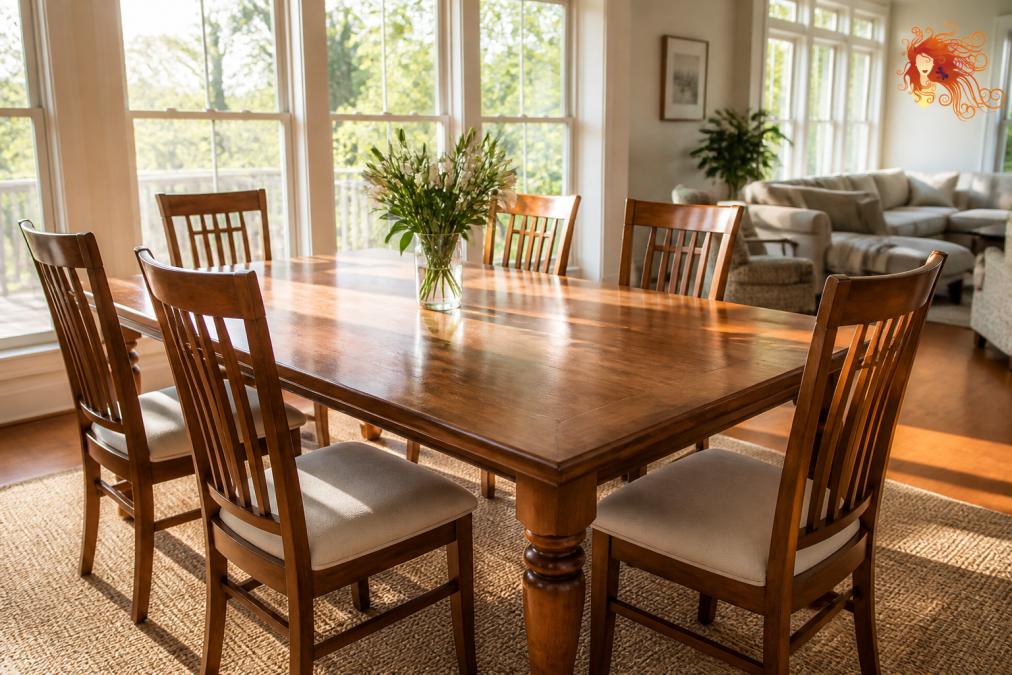
Hardwood dining tables are the single most reliable flip, provided the top is free of deep water rings and the legs are structurally sound. A solid oak table with a 1.5-inch-thick top will always outperform a thinner veneered table, regardless of brand.
Mid-Century Modern and Vintage Pieces
Mid-century modern furniture commands a dedicated collector base. Authentic vintage pieces from the 1950s and 1960s often appreciate in value, especially with original finishes and hardware. The market is flooded with low-quality replicas, so learn to spot genuine construction: solid wood frames, tapered legs, manufacturer stamps, dovetailed drawers, and mortise-and-tenon or dowel joinery rather than staples and glue.
Genuine Leather Seating
Genuine leather sofas and armchairs hold value well if the hide is clean, soft, and free of cracks. Leather is perceived as premium and easier to clean than fabric, attracting secondhand buyers. Classic styles in neutral colors sell faster than bold pieces; cracked or worn leather loses value quickly, so inspect seating surfaces and armrests. Check the underside of the cushion to verify it is top-grain or full-grain leather rather than ‘bonded leather,’ a composite that peels and has almost no resale value.
Designer Media Consoles and Case Goods
Well-branded storage pieces from reputable manufacturers often sell for 50-70% of retail in good condition. Resale value is tied directly to brand reputation, so a console from a known designer outperforms an identical-looking big box piece. Laminate or particle board versions have almost no resale value; check drawer construction and back panels. A solid wood back panel screwed in place, rather than thin hardboard stapled, is a reliable quality indicator.
Antique Dressers and Bedroom Sets
Full bedroom sets are harder to move than single pieces, but antique dressers with solid wood construction and original hardware are perennial sellers. Buyers often repurpose or refinish them. Look for dovetail joinery and solid drawer bottoms that sit in routed grooves, marks of pre-1950s construction; a bottom nailed flat to the drawer underside indicates a later, lower-quality piece.
Vintage Office Desks
The rise of home offices has created steady demand for sturdy desks. Vintage executive desks made from solid hardwood with leather or wood tops are particularly sought after. Their weight complicates shipping, but local buyers usually arrange pickup. Metal drawer slides with ball bearings indicate a higher-end piece; wooden slides on older desks can be repaired if they stick.
Architectural and Accent Items
Solid wood bookshelves, bar carts, and entryway consoles in mid-century or industrial styles move quickly when made from real materials. These smaller pieces are easier to transport and photograph, making them ideal for online marketplaces. A solid walnut bar cart with brass casters can outsell a full-size dresser by fitting the ‘small space, high style’ niche urban buyers favor.
Best Furniture Brands for Resale Value
Certain manufacturers have built reputations that carry over into the secondhand market. When you find these names on a piece, the resale value gets an automatic boost. Brands like Stickley, Henredon, Drexel Heritage, and Baker are known for solid wood construction and timeless designs that hold up over decades. For more contemporary pieces, brands like West Elm, Crate & Barrel, and Restoration Hardware have strong resale followings, particularly for their solid wood and upholstered lines.
[Kaiyo’s marketplace data on designer furniture resale(/how-to-calculate-furniture-resale-value/) | kaiyo.com] shows that recognizable brand names consistently outperform unbranded furniture in both sale price and time-to-sale. The lesson is simple: when you see a manufacturer’s stamp, do your research. A quick search can tell you the original retail price and current market demand, which gives you a clear picture of your potential profit margin.
How to Flip Furniture for Profit: A Step-by-Step Guide
Flipping furniture for profit is a process, not a gamble. The steps below give a repeatable framework for evaluating pieces and turning them around quickly. But before buying anything, you need a clear-eyed method for calculating whether the flip is worth your time and materials.
The ROI Calculation Framework
Most flippers lose money not because they buy bad furniture, but because they underestimate total costs. Use this formula before committing to any piece:
Projected Profit = (Realistic Sale Price) – (Purchase Price + Materials + Your Time Value + Transaction Fees)
Here is how to estimate each variable:
- Realistic Sale Price: Search current sold listings on major marketplaces for the same brand, style, and condition. Do not use asking prices; use what items actually sold for. If comparable pieces sold for $400-$500, set your ceiling at $450.
- Purchase Price: This is what you pay at the thrift store, estate sale, or auction. Include any delivery or gas costs to get it home.
- Materials: List every supply you will need: sandpaper in multiple grits ($10-$15), wood stain or paint ($15-$25 per can), polyurethane or wax finish ($15-$20), new hardware if replacing knobs or pulls ($2-$8 per piece), wood filler ($8), and cleaning supplies you do not already own. A full refinish of a dresser typically runs $50-$80 in materials.
- Your Time Value: Be honest about this. If you spend 6 hours sanding, staining, and photographing, and your time is worth $20 per hour, that is $120 of labor. Many flippers skip this step and then wonder why their ‘profit’ does not feel worthwhile.
- Transaction Fees: If you sell on an online marketplace, factor in commission fees that typically range from 10-30% of the sale price. If you sell through a consignment shop, the split is usually 50/50.
A worked example: You find a solid oak dresser for $60. Comparable pieces sell for $350. You estimate $60 in materials and 5 hours of your time at $20 per hour ($100). Selling it yourself on a no-fee marketplace yields $350 – $60 – $60 – $100 = $130 profit. Consigning at a 50/50 split drops it to $350 – $175 (shop cut) – $60 – $60 – $100 = -$45, a loss. Consignment only makes sense if you value your time at $0 or the piece sells for significantly more than estimated.
The 7-Step Evaluation and Flip Process
Once you have run the numbers and the projected profit clears your minimum threshold, follow this process:
- Evaluate structural integrity first. Check every joint, leg, and drawer, and rock the piece to test for wobble. Solid wood can be repaired; broken particle board cannot. Loose mortise-and-tenon joints are fixable with wood glue and clamps, but cracked panels require professional veneer work.
- Research the brand and original price. Look for manufacturer stamps, labels, or engravings, and compare against current listings to establish a realistic ceiling. A piece from a known manufacturer like Stickley or Henredon will have a higher ceiling than an unbranded piece of similar construction.
- Inspect for damage that affects value. Deep scratches, water rings, and dents can often be sanded out, but structural damage like split wood or broken joinery requires costly professional repair. Check for veneer bubbling or lifting, which is difficult and expensive to fix, and inspect drawer slides and hinges for wear.
- Calculate your total costs using the framework above. Include purchase price, refinishing supplies, and transportation. If the projected profit is under $50, pass on the piece unless you are doing it for practice.
- Clean and make minor repairs. Thoroughly clean with appropriate products to remove grime and odors. Tighten loose hardware and touch up small scratches with matching wood markers; for deeper scratches, use matching wood filler, then sand flush and refinish.
- Photograph in natural light. Good photos are the difference between a quick sale and a lingering listing. Shoot from multiple angles, including close-ups of unique details and the manufacturer stamp or label, which builds buyer trust and justifies a higher price.
- List on the right platform. Consignment shops handle the selling process; online marketplaces give pricing control but require you to manage the transaction. For pieces under $200, peer-to-peer marketplaces are usually fastest. For designer or antique pieces over $500, a curated online marketplace or reputable consignment shop attracts the right buyer.
When refinishing, test a small, hidden area first with your chosen stripper or sanding grit. Some wood species react differently, and a mistake on a visible surface can destroy the value of an otherwise solid piece. Also, check whether the piece has an original finish that buyers value; stripping a patina that took 50 years to develop can reduce the value of a true antique.
A flip is only profitable if the sale price covers your purchase, materials, time, and fees. Run the ROI calculation before you buy, not after.
A Furniture Consignment Pricing Guide for Sellers
Understanding consignment pricing helps you set realistic expectations and choose the right selling channel. Most consignment shops operate on a split model, with the industry standard being a 50/50 split that covers the shop’s costs for display space, marketing, and handling the transaction.
Chairish’s seller guide on pricing vintage furniture recommends pricing items based on condition, brand, and current market demand rather than what you originally paid. Sentimental value does not translate to market value, and overpricing is the fastest way to have your piece sit unsold for months.
| Selling Channel | Typical Fee Structure | Best For | Time to Sale |
|---|---|---|---|
| Local Consignment Shop | 50/50 split | Higher-end pieces needing display | Variable, no pressure |
| Online Marketplace (Chairish, 1stDibs) | Commission per sale | Rare, vintage, or designer items | Can be months |
| Peer-to-Peer (Facebook, Craigslist) | No fee, but you handle logistics | Quick local sales of mid-range items | Days to weeks |
The consignment model works best when you want to avoid the hassle of managing listings, negotiating with buyers, and arranging pickup. A reputable shop handles all of that, and you get paid when the item sells.
Common Mistakes That Kill Your Resale Value
Even experienced flippers make errors that erode profit margins. The most common is confusing “vintage” with “valuable.” Age alone does not create value, and many older pieces are made from low-quality materials that were cheap even when new. Similarly, buying a structurally damaged piece because the price is low rarely works out, since repair costs often exceed potential profit.
Another frequent error is ignoring the impact of fast furniture on the market. The Remoovit blog on furniture resale trends notes that the flood of cheap, disposable furniture has actually increased demand for well-made secondhand pieces, but it also means buyers are more discerning. They know the difference between solid wood and veneer, and they will not pay a premium for particle board with a pretty finish.
Odor removal is another overlooked factor. Upholstered furniture absorbs smoke, pet smells, and cooking odors that are nearly impossible to fully eliminate. If a piece has a musty smell, pass on it unless the price justifies costly professional cleaning.
Never skip the condition report. Buying a “great deal” on a sofa with a torn seam or a table with a split top usually ends with you holding the loss, not the profit. Inspect every surface and joint before you commit.
Start with the Right Pieces
The secondhand furniture market rewards patience and knowledge. Focus on solid wood case goods, authentic mid-century pieces, and genuine leather seating from reputable brands, and you will consistently find items that hold or grow their value. Skip particle board or cheap veneers, no matter how good the price looks.
For sellers in the Morehead City area, Le Rouge Tete offers a curated consignment experience with a 50/50 split, no end dates for consignments, and a 24-hour hold policy for buyers. Our “live-in” store layout helps you visualize pieces in your own home, and our team has over 16 years of experience matching quality furniture with the right owners. New items arrive weekly, so whether you are looking to shop or consign, the right piece is likely waiting.
Frequently Asked Questions
What furniture has the best resale value?
Solid wood case goods, such as dressers and dining tables, consistently offer the best resale value. Pieces made from hardwoods like oak, walnut, and teak can retain 25-60% of their original retail price. Authentic mid-century modern furniture and well-maintained genuine leather seating also command high prices. The common thread is quality construction and timeless design. Avoid particle board and laminate pieces, as they depreciate quickly and are hard to resell.
What should I look for when buying furniture for resale?
Inspect the structural integrity before you buy. Open drawers and check for dovetail joints, which signal quality construction. Look for solid wood rather than veneer over particle board. Check for deep scratches, dents, or water damage that would be costly to repair. For upholstered furniture, examine the frame and smell for odors. A piece from a reputable brand with a timeless style will always be easier to sell than a generic one.
How do I determine the resale value of used furniture?
Start by identifying the brand, age, and materials. Search online marketplaces for the same or similar items to see current asking prices, not sold prices. Condition is the biggest factor; a piece with minor scratches and patina will sell for less than one in excellent condition. For a realistic estimate, consider that quality solid wood furniture typically resells for 25-60% of its original retail price. A local consignment shop can also provide a professional valuation.
Are solid wood furniture pieces always worth more?
Yes, solid wood furniture almost always holds more value than pieces made from particle board or MDF. Hardwoods like oak, walnut, and cherry are durable and can be refinished multiple times, which appeals to secondhand buyers. Veneer over solid wood is also acceptable, but veneer over particle board is a red flag. When flipping furniture for profit, prioritize solid wood construction for the best return on your investment.
Finding furniture with genuine resale value takes a trained eye and a clear understanding of construction quality. That is where the Le Rouge Tete team excels. We inspect every piece for structural integrity, curate only items with lasting appeal, and display them in a setting that shows their true potential. Contact us today to see what has arrived this week, or to start the consignment process for pieces you no longer need.