
Last Updated: October 25, 2026
Quick Summary
Hiring an interior designer is worth it when your project involves more than one room, a renovation, or a decision you cannot easily undo. The value shows up in fewer returns, fewer paint regret stories, and a finished space that works the first time. If you have a clear vision, a tight budget, and one small room, you may not need one.
- A designer measures rooms and maps traffic flow before any furniture is bought.
- DIY saves the design fee but costs hours of research, measurement, and returns.
- Ask directly how sourcing works, since some designers keep trade discounts as compensation.
- A designer catches problems like wrong-scaled furniture and undersized rugs on paper first.
- Get the scope, deliverables, and payment terms documented before work begins.
Table of Contents
- What Does an Interior Designer Do?
- Is an Interior Designer Worth It?
- Interior Designer vs DIY: What Changes When You Hire a Pro
- The Interior Design Consultation: Your First Step
- Access to Trade Discounts and Trusted Suppliers
- How a Designer Helps You Avoid Costly Mistakes
- Furnishing on a Budget: How a Designer Works With What You Have
- Finding the Right Designer and Making the Most of Your Home
- Frequently Asked Questions
What Does an Interior Designer Do?
An interior designer is a professional who plans, specifies, and coordinates the furnishing and finishing of interior spaces, from furniture layout to lighting, materials, and color.
A designer’s day-to-day work covers more ground than most people expect:
- Measuring rooms and mapping traffic flow before a single piece is bought
- Building a furniture plan that fits the architecture, not fights it
- Sourcing fabrics, finishes, and lighting that hold up in daily use
- Coordinating painters, upholsterers, and delivery crews on a realistic schedule
The job is equal parts creative and logistical. Designers spend as much time solving problems as they do choosing pretty things.
Is an Interior Designer Worth It?
For most homeowners, hiring an interior designer is worth it when the project involves more than one room, a renovation, or a decision they cannot easily undo. The value shows up in fewer returns, fewer paint regret stories, and a finished space that works the first time.
What most guides miss is that the fee is rarely the real cost. The real cost is buying the wrong piece twice. A designer earns their keep by narrowing choices before money leaves your account.
The honest limitation: if you have a clear vision, a tight budget, and one small room, you may not need one. Some homeowners do fine alone. The question is whether you want to spend the hours it takes to get there.
Interior Designer vs DIY: What Changes When You Hire a Pro
Interior designer vs DIY comes down to time, access, and risk. A do-it-yourselfer saves the design fee but pays in hours of research, measurement, and trial-and-error returns. A professional trades that fee for a shorter, more predictable path.
Here is how the two approaches typically compare:
| Factor | DIY | Hiring a Designer |
|---|---|---|
| Time investment | High, spread over weeks | Lower, concentrated in meetings |
| Sourcing access | Retail and secondhand only | Trade suppliers plus retail |
| Risk of costly returns | Higher | Lower |
| Best for | One room, clear vision | Multi-room or renovation projects |
The trade-off is real. A designer costs money up front. DIY costs time and, often, a few mistakes.
The Interior Design Consultation: Your First Step
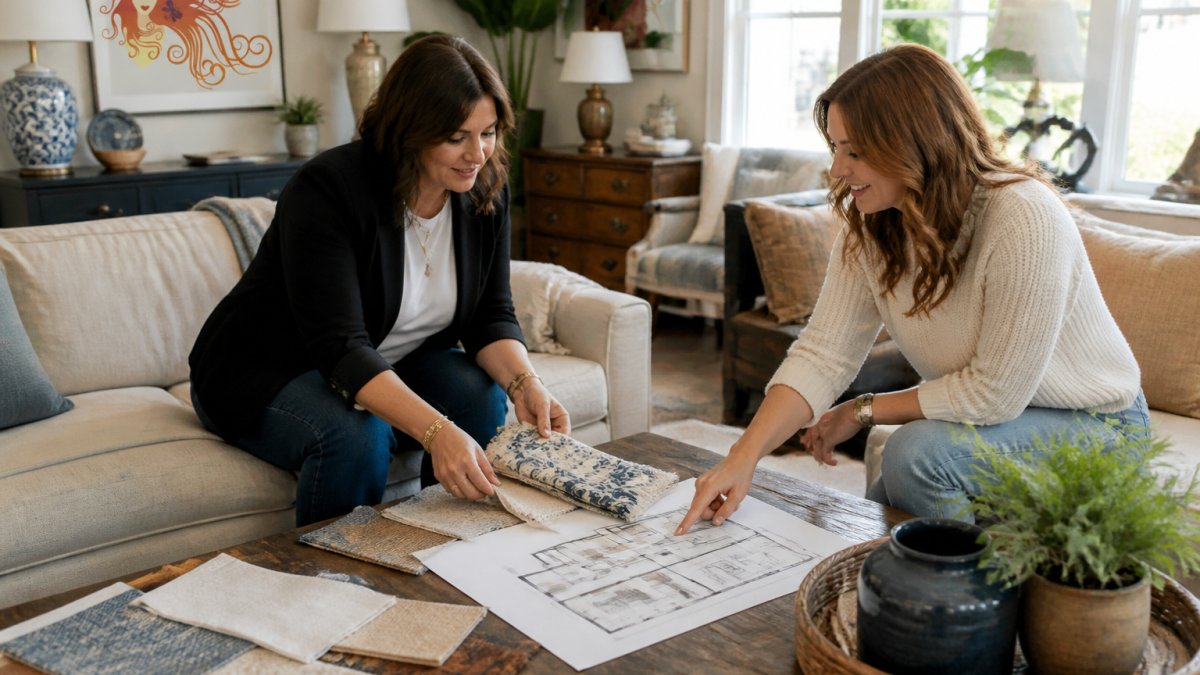
An interior design consultation is a working meeting, not a sales pitch. Expect the designer to walk your rooms, ask how you live in them, take measurements, and talk through budget and timeline. You should leave with a clearer sense of scope and what the next phase costs.
Come prepared. Photos of inspiration, a rough budget range, and a list of what bothers you about each room make the meeting far more productive. If a designer wants to move pieces around to test a layout, that is a good sign. Our own team offers personalized help moving items for better visualization, and it changes how a room reads before anyone spends a dollar.
Access to Trade Discounts and Trusted Suppliers
Trade discounts and supplier relationships are one of the quieter benefits of hiring a professional interior designer. Designers buy through channels most homeowners cannot access, and those relationships often come with pricing and lead-time advantages that are not visible on a retail tag.
Does that mean the discount cancels the design fee? Not always. Some designers pass savings through, others keep the difference as part of their compensation. Ask directly how sourcing works before you sign.
The bigger win is trust. A designer knows which upholsterer delivers on time and which supplier stands behind a defective finish. That saves you from becoming the person chasing a refund.
How a Designer Helps You Avoid Costly Mistakes
The biggest mistake in home design is buying before planning. Homeowners fall for a sofa that looks great online, then discover it blocks a doorway or clashes with the floor. A designer catches those problems on paper, before the delivery truck arrives.
Common pitfalls a pro will flag early:
- Furniture scaled wrong for the room’s footprint
- Paint colors that shift under a room’s actual lighting (How Light & Finish Affect Paint Color)
- Rugs too small to anchor a seating area
- Lighting layered poorly, leaving dark corners
Each avoided mistake saves both money and the hassle of returns. That is the quiet math behind the service.
Furnishing on a Budget: How a Designer Works With What You Have
A good designer does not start by emptying your house. They start by asking what stays. Existing pieces often anchor a room, and working around them keeps the budget focused on the gaps.
For budget-minded clients, secondhand and consignment sourcing stretches a plan further. Thrift shopping with a plan lets a designer fill a room with character pieces at a fraction of retail. When heavy furniture needs to move first, a guide to hiring professional furniture movers covers the logistics so the reshuffle stays manageable.
At Le Rouge Tete, we see this play out weekly. Clients bring a designer’s measurements and walk out with pieces that fit the plan, at prices well below new retail.
Finding the Right Designer and Making the Most of Your Home
Finding the right designer starts with three questions: What is your scope, what is your budget, and how do you want to communicate? A designer who fits your project will answer all three plainly, without pressure.
Watch out: a designer who will not put the fee structure in writing is a risk you do not need to take. Get the scope, deliverables, and payment terms documented before work begins.
Once you have your designer, the goal is a home that works for how you actually live. Small homes benefit from clever, space-saving choices. If you are furnishing a compact coastal property, space-saving bedroom furniture ideas give you a starting point to discuss with your designer.
Frequently Asked Questions
What are the benefits of hiring a professional interior designer?
A professional interior designer brings expertise, time savings, and access to trade resources. They help you avoid costly mistakes, find furniture that fits your space and budget, and coordinate contractors when needed. Designers also offer personalized solutions that reflect how you actually live, which is hard to achieve with guesswork alone. For many homeowners, the result is a cohesive home that feels finished rather than a collection of random purchases.
Is hiring an interior designer worth the cost?
It depends on your project scope and how much guidance you need. Designers can save you from expensive rework and help you prioritize spending. Some charge hourly, others take a percentage of the project or a flat fee. A consultation is a low-commitment way to test the waters. If your goal is a polished, functional space and you lack the time or confidence to execute it yourself, the investment often pays off in avoided mistakes and a better final result.
Can an interior designer work with furniture and decor I already own?
Yes. Many designers are happy to incorporate existing pieces. During a consultation, they assess what you have and suggest ways to rearrange, reupholster, or pair items with new finds. This approach stretches your budget and keeps sentimental pieces in the mix. Designers can also help you decide what to keep, what to consign, and what to replace, which is especially useful if you are downsizing or refreshing a single room.
How do I choose the right interior designer for my home?
Start by reviewing portfolios for a style that matches your taste. Ask about their process, fee structure, and experience with projects like yours. A good designer listens to your needs and communicates clearly. Schedule a consultation to see how you work together. Also check whether they have relationships with local suppliers or consignment sources, which can expand your options and keep costs in check.
The challenge with any design project is knowing which pieces to keep and which to replace. At Le Rouge Tete, we help homeowners answer that question with a curated showroom, a 24-hour hold policy, and a live-in layout that lets you picture a piece in your own space before you commit. Our 50/50 consignment split and $50 local pickup make it easy to refresh a room without the retail markup. Get started with Le Rouge Tete and furnish a home you are glad to walk into.

