

Table of Contents
- Start by Finding the Odor Source
- Test Your Cleaning Method on a Hidden Spot
- How to Get Musty Smell Out of Wood Furniture
- How to Remove Smoke Smell from Furniture
- How to Get Pet Odor Out of Upholstered Furniture
- How Long to Air Out Furniture (and When to Repeat)
- What Not to Do When Removing Odors from Used Furniture
- Conclusion: A Sequenced Plan for Odor-Free Furniture
- Frequently Asked Questions
Last Updated: October 12, 2026
Start by Finding the Odor Source
Before you scrub anything, find out what you’re actually fighting to remove odors. Learning how to remove odors from used furniture starts with diagnosis, not cleaning. A musty smell points to moisture. A stale, smoky odor clings to fabric.
At Le Rouge Tete, we’ve served the community for over 16 years, and the same rule holds every time: treat the source, not the symptom.
Here’s how to narrow it down:
- Sniff in layers. Check the frame, the cushions, and the underside separately. Odors often hide in one spot.
- Look for stains. Water rings, dark patches, or discoloration point to moisture damage.
- Check enclosed spaces. Open every drawer and cabinet. Trapped air holds odor longer.
Check for Moisture, Mildew, and Hidden Damage
Run your hand along the back panel and under the seat. Soft, spongy wood means water got in. White or gray speckles suggest mildew. If you find either, the piece needs drying and treatment before any cleaning. Skip this step and you’ll just lock the smell in.
Never seal or polish furniture that still feels damp. Trapping moisture under a finish feeds mildew and makes the musty smell worse within days.
Test Your Cleaning Method on a Hidden Spot
Every cleaner can damage a finish, so test first. Pick a spot no one sees: the back leg, the underside of a table, or inside a drawer. Apply your cleaner with a white cloth and wait a few hours.
Watch for these reactions:
- Color lift on the cloth means the finish is coming off
- Cloudy or dull patches signal damage to the topcoat
- Sticky residue shows the cleaner is too strong
A common mistake is testing on a visible edge and hoping for the best. Don’t. A hidden spot test takes two minutes and saves the piece.
How to Get Musty Smell Out of Wood Furniture
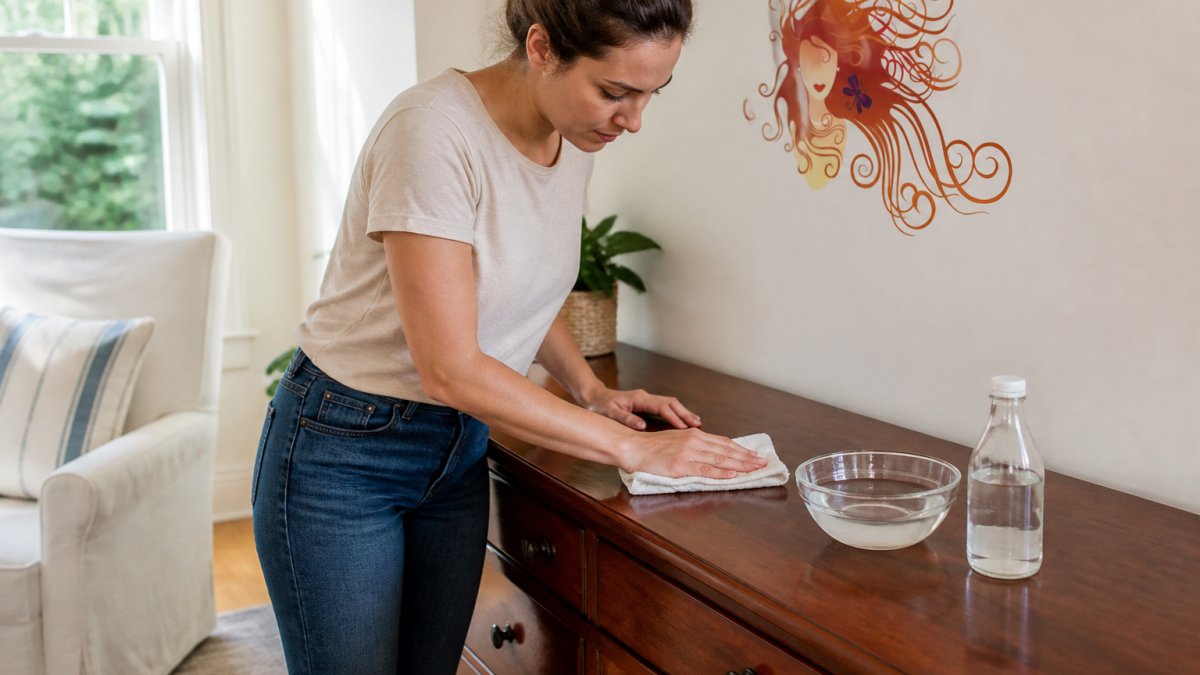
Musty odor in wood comes from moisture feeding mildew in the grain, joints, and any unfinished back panels. The fix is a sequence: dry the piece, clean the surface without over-wetting it, then absorb what’s left in the enclosed spaces. Start by moving it to a dry, shaded spot with good airflow. Sun and heat can warp old wood and lift veneer, so keep it out of direct light.
Match the Method to the Finish
Wood furniture is not one material. The finish on top determines how much moisture the surface can take before it clouds, lifts, or stains. Identify the finish before you touch it:
- Solid wood with an oil or wax finish. Porous and forgiving of a damp wipe, but it drinks liquid. Use the least moisture possible and re-oil only after the piece is fully dry.
- Lacquer, varnish, or polyurethane topcoat. Non-porous and easy to wipe, but alcohol and ammonia-based cleaners can dull or dissolve the film. Stick to diluted vinegar or mild soap.
- Veneer over particleboard or MDF. The thin wood layer is glued down, and moisture swells the substrate underneath. A damp wipe is fine; a wet cloth is not. Never let water sit on a veneer edge.
Spot-Test Before You Wipe the Whole Piece
Pick a hidden spot, the back leg, the underside of a tabletop, or the inside of a drawer face. Apply your cleaner with a white cloth and wait a few hours. Watch for color lift on the cloth, cloudy or dull patches, or a sticky residue. Any of those means the cleaner is too strong for that finish. A two-minute test on a hidden spot saves the piece.
Wipe Down Wood Surfaces with Diluted White Vinegar
Mix one part white vinegar with one part warm water. Dampen a white cloth, wring it out until it stops dripping, and wipe every wood surface. Vinegar kills the mildew that causes most musty smells.
For finished pieces, a mild soap solution works as a gentler option. For unfinished or antique furniture, plain warm water is safest. Work in sections and change the cloth when it picks up grime, so you’re not spreading mildew spores back across the surface.
Never seal, wax, or polish furniture that still feels damp. Trapping moisture under a finish feeds mildew and makes the musty smell worse within days.
Treat Drawers, Cavities, and Joints Separately
Drawer interiors, cabinet cavities, and the gaps around joints hold odor long after the exposed surfaces are clean. Trapped air and unfinished wood inside a drawer absorb smell like a sponge.
- Pull every drawer out and set it aside.
- Wipe the drawer interior and the cavity it slides into with diluted vinegar. Let both air-dry completely.
- Sprinkle baking soda into the drawer and the cavity. Leave it overnight.
- Vacuum it out, then set an open box of baking soda inside the drawer and close it for a few days.
- Repeat if the odor lingers.
For deep drawers or a stubborn cabinet, wipe with diluted vinegar first, let it air-dry, then add the baking soda. Cleaning before absorbing removes the source; the baking soda handles what’s left.
If the musty smell returns within a week of treatment, moisture is still trapped somewhere, usually the back panel, the underside, or the drawer cavity. Find and dry that spot before treating again, or you’ll just be masking it.
How to Remove Smoke Smell from Furniture
Smoke odor lives in fabric and porous wood, and it takes longer to clear than musty smell. Start by airing the piece outside in shade for a few hours. Then wipe hard surfaces with diluted vinegar.
For upholstery, sprinkle baking soda over the fabric, let it sit overnight, and vacuum it up. You may need to repeat this two or three times.
Smoke smell rarely clears in one pass. Plan on two or three rounds of baking soda and airing before the odor fully dissipates.
How to Get Pet Odor Out of Upholstered Furniture
Pet odor comes from proteins in urine and saliva that soak into foam. Surface cleaning won’t reach them. You need to clean the fabric, then pull the odor out of the padding.
Clean Cushions and Removable Covers Separately
Unzip removable covers and wash them on a gentle cycle with a mild soap. Check the care tag first. Air-dry them, never machine-dry, since heat can shrink fabric and set odor.
For cushions that don’t unzip, blot the spot with diluted vinegar, then sprinkle baking soda and let it sit overnight.
Vacuum Upholstery After the Treatment Dries
Once everything is dry, vacuum the upholstery with a brush attachment. Go over seams, folds, and the crevices between cushions. Vacuuming lifts the dried baking soda along with the odor it absorbed. A second pass a day later catches anything the first missed.
How Long to Air Out Furniture (and When to Repeat)
Air-out time depends on the odor source, how deep it soaked in, and how much airflow the piece gets. Most surface odors clear in a few hours to overnight.
Air out furniture in a shaded, well-ventilated space. Open windows, use a fan, and keep air moving around all sides, a piece pushed against a wall will hold odor on the back panel.
| Odor Type | Treatment Time | Repeat Interval | Escalate When |
|---|---|---|---|
| Musty smell | A few hours to overnight | Only if odor returns | Odor returns within a week, moisture is still trapped |
| Smoke smell | 2-3 days | Every 24 hours, 2-3 rounds | Odor persists after 3 rounds, smoke may have soaked into foam |
| Pet odor | Overnight per round | Every 24 hours, until gone | Odor returns after drying, urine reached the padding |
| Stale odor | A few hours | Rarely | Odor returns, check for hidden moisture or mildew |
A Least-Invasive-to-Strongest Sequence
Work through these steps in order, and only move to the next one when the current step stops producing results:
- Air out. Shaded, ventilated space for a few hours. Free, safe, and often enough for stale odors.
- Wipe hard surfaces. Diluted vinegar on wood and hard surfaces, then dry immediately.
- Absorb. Baking soda, activated charcoal, or coffee grounds in drawers and on upholstery. Overnight.
- Vacuum. Brush attachment over seams, folds, and crevices to lift the dried absorber and the odor it captured.
- Wash removable covers. Gentle cycle, mild soap, air-dry only.
- Repeat the cycle. Give each round 24 hours before judging results.
If three full rounds don’t clear the odor, the source is deeper than surface treatment can reach, usually foam padding, a sealed cavity, or active mildew in the substrate.
When to Stop Treating and Get Help
Some odors are a symptom, not the problem. Stop DIY treatment and bring in a professional if you notice:
- Soft, spongy, or crumbly wood anywhere on the frame or back panel, that’s rot, not odor.
- A musty smell that returns within days of every treatment, active moisture or mold is still present.
- Visible mold growth larger than a small surface patch, or any mold on upholstery foam.
For mold and moisture questions, the EPA indoor air quality resources and the American Cleaning Institute are solid starting points. If the piece is an antique, upholstered, or has a finish you can’t identify, a furniture restorer or upholsterer can assess it before you invest more time.
Repeat the treatment if the odor comes back after a day. If it keeps returning after three rounds, moisture or mold is still inside the piece, find and fix the source before treating again, or the smell will keep coming back.
What Not to Do When Removing Odors from Used Furniture
Some common fixes cause more harm than good. Skip these:
- Don’t douse wood in vinegar. Too much liquid warps grain and lifts finish.
- Don’t use bleach on wood or fabric. It strips color and can release fumes.
- Don’t paint or seal over odor. It traps the smell and makes it worse.
- Don’t skip ventilation. Odors need somewhere to go, or they settle back in.
For safety guidance on household cleaners and fumes, see the EPA Safer Choice program.
Conclusion: A Sequenced Plan for Odor-Free Furniture
The right order matters: diagnose the source, spot test, clean, absorb, air out, then vacuum. For deeper guidance on material safety, the American Cleaning Institute and EPA indoor air quality resources are solid references.
If you’d rather skip the guesswork, Le Rouge Tete inspects every piece before it hits the floor. Our 16 years of community service, our 50/50 consignment split, and our convenient local pickup for large items make it easy to buy or sell with confidence.
Frequently Asked Questions
Why does old wood furniture smell?
Old wood furniture often smells because it has absorbed moisture, dust, and airborne particles over years of use. A musty or old-wood smell usually points to mildew growing in the finish, joints, or drawer interiors, especially if the piece sat in a damp basement, garage, or storage unit. Smoke, pet dander, and cooking odors can also settle into unfinished wood and drawer bottoms. Finding the source before you treat the surface keeps the smell from returning a few days later.
How long does it take to air out used furniture?
Most light odors dissipate after a few hours to overnight in a well-ventilated space with open windows and a fan. Heavier smoke or pet odors can take two to three days of consistent airing, and you may need to repeat the treatment. Rotate the piece so all sides get airflow, and pull drawers out completely. If the smell lingers past three days, the odor source is likely deeper than the surface and needs a second cleaning pass.
Can baking soda remove odors from furniture?
Yes. Baking soda works as an odor absorber rather than a cleaner, so it is best for enclosed spaces like drawers, cabinets, and the gaps between cushions. Sprinkle a thin layer on the surface, let it sit for several hours or overnight, then vacuum it up. For drawers, place an open box or bowl inside and close the drawer. Replace the baking soda every few weeks until the stale odor stops returning.
When should you avoid cleaning or deodorizing antique furniture yourself?
Skip DIY treatment on antique furniture with a shellac, lacquer, or wax finish, on veneered pieces with lifting edges, and on anything with visible mold growth that has spread into the wood. Vinegar and water can dull or strip these finishes, and moisture can worsen veneer damage. For pieces with historic value or fragile inlays, have a conservator assess the odor source first. A spot test on a hidden area is the minimum before you touch the visible surface.