
Table of Contents
- Start With a Clear-Out: Remove What Makes the Room Feel Smaller
- Small Living Room Furniture Layout That Opens Up the Space
- How to Make a Small Living Room Look Bigger With Color and Light
- Budget Sources for Furniture and Décor That Stage Well
- Low-Cost Accessories That Make the Room Look Finished
- Living Room Staging Checklist for a Budget Refresh
- Booking Your Pieces Before the Room Goes Live
- Frequently Asked Questions
Last Updated: October 30, 2026
Staging a stage small living room on a budget is less about buying new things and more about removing what crowds the space and arranging what you already own. Le Rouge Tete, an upscale consignment store in Morehead City with over 16 years of experience, knows how pre-loved furniture looks in a real room, and the same principles apply whether you are preparing a home for sale or simply refreshing your own space. Small rooms feel bigger when the eye has somewhere to rest, and that comes from editing first and shopping second.
Start With a Clear-Out: Remove What Makes the Room Feel Smaller
Clutter does more damage to a small room than a sofa that is a little too big. Start by removing everything that does not earn its place.
Work through the room in this order:
- Pull out items that block walkways or sit in the middle of the floor
- Remove extra side tables, stacked magazines, and piles of mail
- Take down busy wall decor and keep one or two strong pieces
- Store cords, remotes, and small electronics out of sight
Most people are surprised by how much room appears once the surfaces are clear. Watch out: do not hide clutter in a closet that is already full, because the room will look just as crowded the next time you open the door.
Small Living Room Furniture Layout That Opens Up the Space
A small living room needs a layout that shows the floor. Furniture placement does more to create a sense of space than almost any other change.
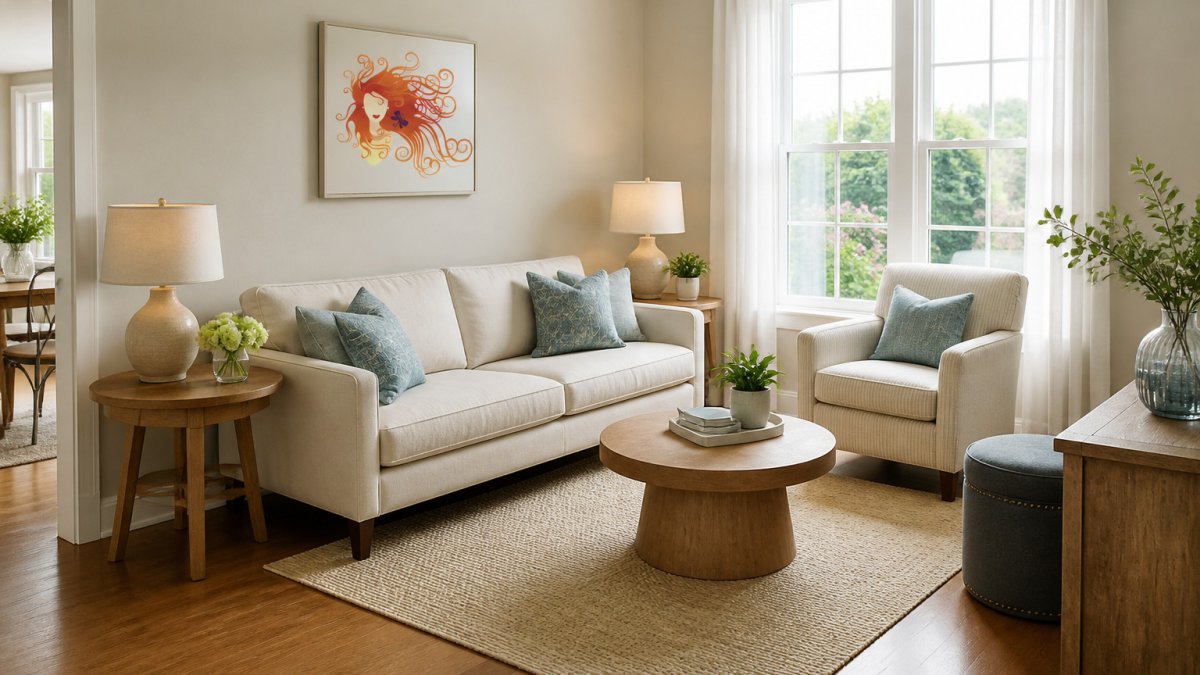
Float Your Sofa Away From the Wall
Pulling a sofa a few inches off the wall can make a stage small living room feel deeper. It also creates a natural walkway behind the couch, which makes the room easier to move through.
Try this approach:
- Measure the gap between the sofa and the wall, aiming for 4 to 8 inches
- Place a console table or narrow shelf behind the sofa if the gap feels awkward
- Keep at least 30 inches of clear walkway for comfortable movement
A common mistake is pushing everything against the walls because it looks tidy. In a small room, that often makes the center feel empty and the edges feel crowded.
Use One Large Rug to Anchor the Seating
A rug that is too small makes a room look cramped. Choose one large rug that sits under the front legs of the sofa and any chairs in the seating area.
Look for these details when you choose a rug:
- The rug should be large enough that at least the front legs of each seat sit on it
- Neutral colors and low-pattern designs make a small room feel calmer
- A rug with a visible border can make the floor look more defined
Our advice is to skip the tiny accent rug. It almost always makes the room look smaller.
How to Make a Small Living Room Look Bigger With Color and Light
Color and light are the cheapest tools you have. Used well, they change how large a room feels without moving a single piece of furniture.
Light colors on walls and ceilings reflect more light, which helps the room feel open. Mid-tone and dark colors can still work, but they need good lighting to avoid looking heavy.
Consider these quick changes:
- Paint the walls a soft white, cream, or light gray
- Use a lighter shade on the ceiling to lift the room
- Swap heavy drapes for sheer panels hung close to the ceiling
- Add a floor lamp in a corner to brighten dark spots
- Replace a single overhead light with two lamps placed at different heights
Bright, even light reduces harsh shadows. That makes the room feel cleaner and more inviting, which buyers and guests notice right away.
Budget Sources for Furniture and Décor That Stage Well
You do not need new furniture to stage a room well. Pre-loved pieces often look better than mass-market options because they have solid construction and a more finished look.
Good places to look include:
- Consignment shops, where curated pieces are displayed in room-like settings
- Estate sales, which often include quality furniture at lower prices
- Thrift stores, best for small décor like frames, vases, and throw pillows
- Your own home, where pieces from other rooms may work better than you expect
Shopping Secondhand Without Buying Someone Else’s Problems
Secondhand furniture can be a great value, but a few checks protect you from surprises.
Before you buy, check these points:
- Look at the underside of cushions and the frame for stains, pests, or odors, and read our guide to buying pre-loved furniture safely for a fuller checklist.
- Press on the seat and arms to test for wobbling or sagging
- Open drawers and doors to confirm they move smoothly
- Ask about the piece’s history if the seller knows it
- Measure twice, including doorways and stairwells, before you commit
Watch out: a musty smell is hard to remove from upholstery, so pass on any piece that smells strongly of damp or smoke.
Low-Cost Accessories That Make the Room Look Finished
Accessories tie a room together. A few well-chosen items can make a budget room look intentional rather than thrown together.
Focus on these categories:
- Two or three throw pillows in a shared color palette
- One throw blanket folded over the arm of the sofa
- A single large plant in a corner, which adds height and life
- A tray or bowl on the coffee table to group small items
- One or two framed prints or mirrors hung at eye level
Stick to a limited color palette. Three coordinating colors look more polished than a dozen unrelated ones.
The article’s accessory categories can be compared at a glance.
| Accessory | Quantity or setup | Effect |
|---|---|---|
| Throw pillows | Two or three in a shared palette | Ties the room together |
| Throw blanket | One, folded over the sofa arm | Adds a finished look |
| Large plant | One, in a corner | Adds height and life |
| Tray or bowl | On the coffee table | Groups small items |
| Framed prints or mirrors | One or two at eye level | Completes the walls |
Living Room Staging Checklist for a Budget Refresh
Use this checklist to move through the room in a logical order:
- Clear all surfaces and floors of unnecessary items
- Set the sofa a few inches off the wall and check the walkway
- Place one large rug under the front legs of the seating
- Paint or refresh walls in a light, neutral shade if possible
- Add two floor or table lamps to balance the lighting
- Swap heavy window coverings for lighter options
- Add pillows, a throw, and one large plant
- Hang one or two mirrors or prints at eye level
- Step back and look at the room from the doorway
Working through the list in order keeps the project manageable and avoids buying things you do not need.
Booking Your Pieces Before the Room Goes Live
Once the room is staged, your last step is to make sure the furniture you want is secured and ready. Plan this before you start shopping, not after you have already moved everything in.
Take these steps:
- Measure the room and each piece before you buy
- Confirm pickup or delivery options with the seller
- Ask about any hold policies so pieces are not sold while you arrange payment
- Keep receipts and notes for future reference
You can learn more about the pieces that suit a small space in our guide to small living room furniture layout tips. For a deeper look at arranging things visually before you move them, see our guide on visualizing furniture in your living room. If you are shopping for pieces that will hold their value, our guide to secondhand furniture with high resale value explains which options to prioritize, and our affordable home staging strategies cover more budget tactics. Staging your home for resale also involves choosing pieces that appeal to buyers, so our guide to staging furniture for resale is worth reading as well.
When you are ready to shop, Le Rouge Tete displays pre-loved furniture in a live-in layout so you can picture each piece in a real room. You can contact Le Rouge Tete through our website for current pricing and availability.
Frequently Asked Questions
How do you stage a small living room on a budget?
Start by removing anything that doesn’t serve a clear purpose, then set the furniture so the room has a clear walkway and a single focal point, such as the sofa or a fireplace. Paint is one of the cheapest upgrades if the walls are dark or scuffed. Use the pieces you already own, add a large rug and a few lamps for warmth, and add a small number of plants or throw pillows in one or two colors. Most of the work costs little more than time. Le Rouge Tete offers pricing and availability on secondhand furniture by contacting the store directly.
How can I make a small living room look bigger when staging it?
Visual space matters as much as square footage. Lighter wall colors reflect more light, and a sofa placed a few inches away from the wall makes the floor look continuous. Use lower-profile pieces, mirrors across from a window, and open shelving instead of bulky cabinets. Keep the walkway clear, around 30 to 36 inches wide, so buyers can move through the room easily. Hanging curtains high and wide also makes the windows and ceiling feel taller.
Where can I find affordable furniture for staging a small living room?
Secondhand shops and consignment stores are a practical source because pieces often cost far less than new retail and many look polished once styled together. Look for solid wood or quality upholstery in neutral tones that fit a range of décor. Shopping in person lets you measure the room and the piece before buying, which matters in a small space. Le Rouge Tete displays pieces in a live-in layout so you can see how they look together, and you can contact the store for current inventory.
What should you remove from a small living room before staging it?
Remove oversized furniture, extra side tables, bulky entertainment centers, and anything stored on the floor. Clear personal photos and collections from shelves so the room feels neutral and buyers can imagine their own things there. Keep only what supports the room’s function, such as a sofa, one or two chairs, a coffee table, and a single storage piece. A cleared room usually looks larger before you change anything else.
