
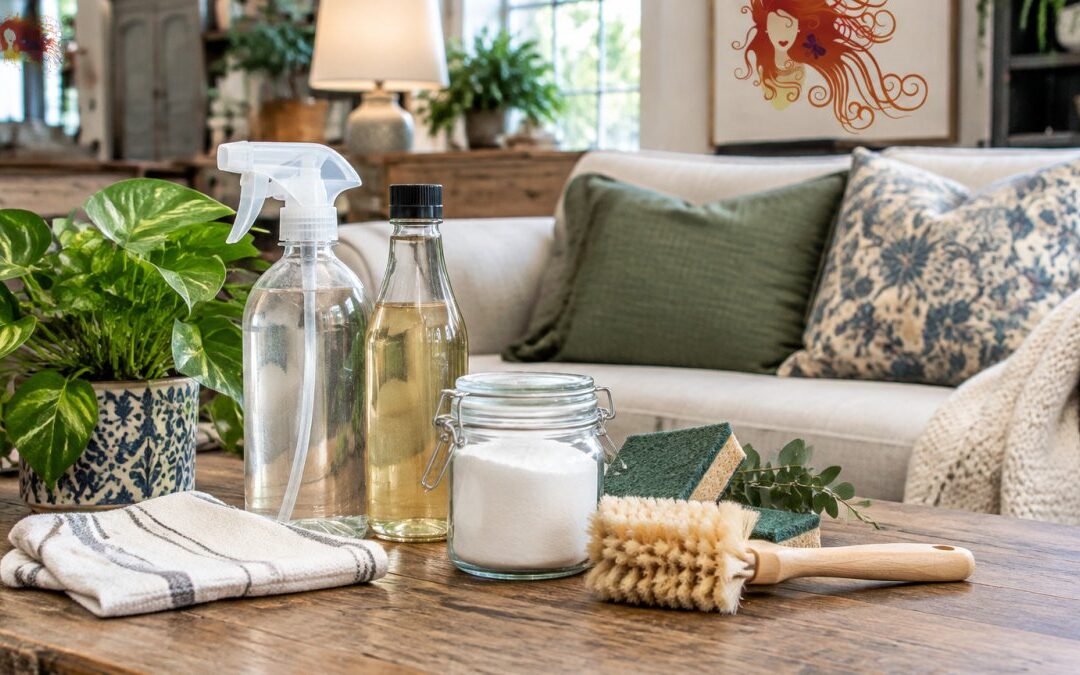
Last Updated: November 19, 2026
Quick Summary
The best eco-friendly cleaning products for used furniture are castile soap concentrate, white distilled vinegar, baking soda paste, plant-based enzyme cleaners, and an olive oil and lemon juice polish. Always test any product on a hidden spot first and start with the mildest option, since used pieces often have older finishes and thinner veneers.
- Inspect for pests, mold, and residues before cleaning, and quarantine the piece for 24 to 48 hours.
- Vacuum with a brush attachment and dust top to bottom with microfiber cloths before anything gets wet.
- Check upholstery tags for W, S, WS, or X cleaning codes to pick a safe cleaner.
- Skip vinegar on marble, unsealed stone, and unsealed wood, where acid can etch or dry the surface.
- Dilute castile soap in warm water and buff dry; full strength can dull a finish.
Table of Contents
- Quick Comparison: Best Eco-Friendly Cleaning Products for Used Furniture
- How to Clean Used Furniture: A Step-by-Step Workflow
- Natural Furniture Cleaner: Plant-Based Options That Work
- Homemade Furniture Cleaner Recipes You Can Mix at Home
- Eco-Friendly Upholstery Cleaner: Fabric and Spot Cleaning
- Matching Cleaners to Wood Finishes and Materials
- Pest and Contamination Checks Before You Clean
- Shop Pre-Cleaned Pieces at Le Rouge Tete in Morehead City
- Frequently Asked Questions
Quick Comparison: Best Eco-Friendly Cleaning Products for Used Furniture
Buying secondhand furniture is one of the smartest ways to furnish a home without paying retail prices, and it’s also a small act of environmental responsibility.
Below, we’ll walk you through a step-by-step cleaning workflow, the plant-based and homemade cleaners that work, and how to match a cleaner to each finish so you don’t damage what you just bought.
Here’s the short version, organized by what each product does best:
| Product | Best For | Key Ingredients | Watch Out For |
|---|---|---|---|
| Castile soap concentrate | All-purpose wood and surface cleaning | Plant oils, no synthetic fragrance | Dilute it; full strength can dull finish |
| White distilled vinegar | Glass, metal, tile, odor removal | Acetic acid | Never on marble or unsealed stone |
| Baking soda paste | Stain lifting, grout, odor absorption | Sodium bicarbonate | Can scratch high-gloss finishes if scrubbed hard |
| Plant-based enzyme cleaner | Upholstery, pet and smoke odors | Enzymes, plant surfactants | Test on hidden fabric first |
| Olive oil and lemon juice polish | Sealed wood nourishment | Olive oil, lemon juice | Skip on unsealed or painted wood |
| Microfiber cloths and natural-bristle brushes | Every surface | Reusable materials | Wash separately from lint-shedding fabrics |
| Refillable spray bottle with concentrate | Zero-waste routine | Reusable container | Label contents clearly |
The theme tying these together: the gentlest product that gets the job done wins. Used furniture often has older finishes, thinner veneers, and fabrics that have already been through years of wear. Aggressive cleaning is how you turn a good find into a repair project.
How to Clean Used Furniture: A Step-by-Step Workflow
The safest way to clean used furniture is to work from the least aggressive method to the most, testing every product on a hidden spot before it touches a visible surface. That single rule prevents most of the damage we see.
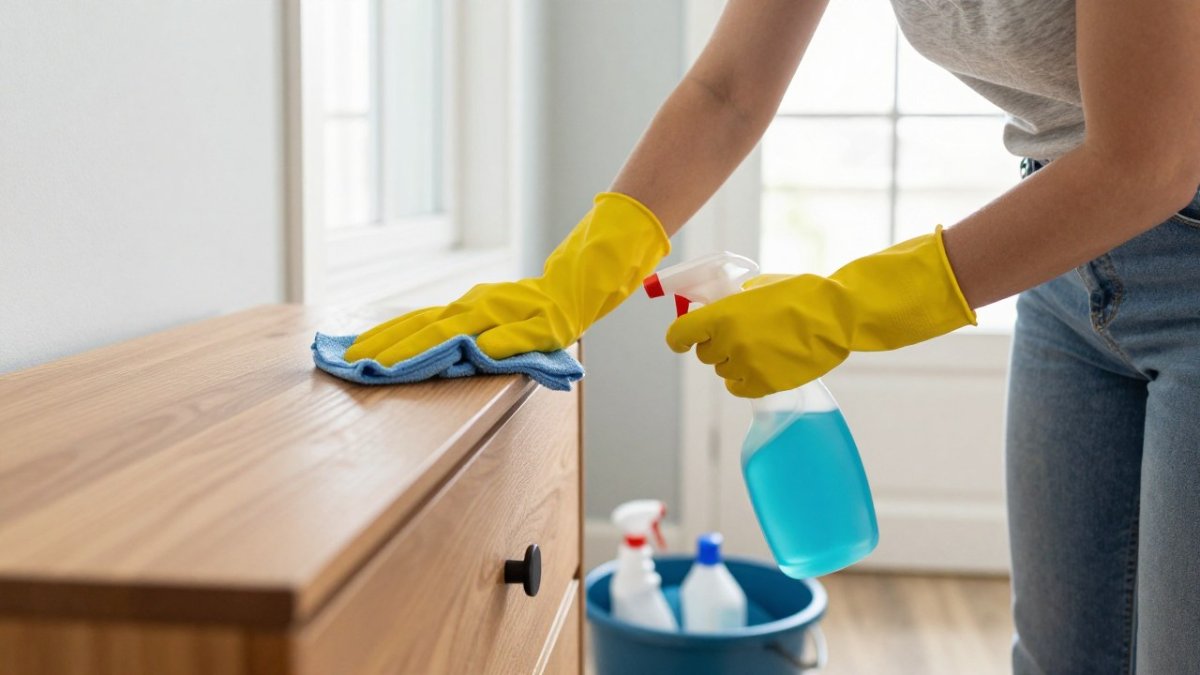
Here’s the workflow we recommend every time:
- Inspect before you clean. Empty every drawer and cabinet. Use a flashlight to check seams, the underside, the back panel, and cushion zippers for bedbug casings, frass, rodent droppings, white mold threads, or water rings. A musty smell that lingers after airing out usually means past moisture. If you find live pests or widespread mold, isolate the piece outdoors or in a garage and consult a pest control professional before bringing it inside.
- Quarantine and air out. Coastal humidity in Morehead City keeps fabrics and wood from drying quickly, so give a secondhand piece 24 to 48 hours in a dry, ventilated space before cleaning. This also lets you confirm whether odors are surface-level or embedded.
- Vacuum first. Run a brush attachment over upholstery, cushions, and crevices to lift loose dust, pet hair, and debris before anything gets wet. Use a crevice tool along welting and under cushions, where grit collects.
- Dust top to bottom. A microfiber cloth catches dust that a feather duster just moves around. Work from the highest point down so debris doesn’t resettle on cleaned surfaces.
- Identify the finish or fiber. Before choosing a product, determine whether the wood is sealed, oil-finished, painted, veneered, or raw, and check the upholstery tag for a W, S, WS, or X cleaning code. The next section covers how to do this.
- Test in a hidden spot. Inside a drawer, under a seat cushion, or on the back of a leg. Apply the product, wait at least 10 minutes, and check for dulling, darkening, tackiness, or color transfer on the cloth.
- Clean with the mildest option. Start with diluted castile soap and water. Move up to vinegar or baking soda only if needed. On upholstery, blot rather than scrub, and work in small sections so the fabric doesn’t stay damp.
- Dry immediately and thoroughly. Wipe away moisture with a clean cloth, then run a fan or dehumidifier. Standing water is the enemy of wood veneer and wood joints, and in coastal air a damp cushion can grow mildew overnight.
- Condition or polish sealed wood only. A light plant-based polish restores sheen without a chemical film. Skip oil on raw or painted wood.
- Deodorize last. After surfaces are dry, place a dish of baking soda in drawers or cabinets, or use a plant-based enzyme spray on fabric odors. Don’t mask a smell you haven’t removed.
A common mistake is soaking a cloth and scrubbing hard. Damp, not wet, is the usual standard for most surfaces. Cleaning a piece before inspecting it can spread bedbugs or mold spores to the rest of your home, so it’s best not to skip the inspection step.
Natural Furniture Cleaner: Plant-Based Options That Work
Castile soap, made from plant oils, is a commonly used option. A few drops in a bucket of warm water is a common approach for cleaning wood, laminate, and many hard surfaces.
Vinegar is commonly used on glass, metal, and tile, and it’s often used to neutralize odors.
Baking soda is commonly used for stains and odors. A paste of baking soda and water is a common approach for marks on fabric and for grout.
For upholstery and odors, plant-based enzyme cleaners are formulated to break down organic matter. Many people use them for pet accidents and smoke smell on fabric.
Homemade Furniture Cleaner Recipes You Can Mix at Home
A homemade furniture cleaner costs very little and lets you control exactly what goes on your furniture. These are the three recipes we suggest keeping on hand.
All-purpose wood cleaner: Mix a few drops of castile soap into a quart of warm water.
Wood polish for sealed finishes: Combine equal parts olive oil and lemon juice in a small jar.
Stain and odor paste: Mix baking soda with enough water to form a paste. Apply to the stain, let it sit, then wipe gently.
Label every bottle you mix, and don’t store oil-based polish for long periods, since plant oils can turn rancid over time.
Eco-Friendly Upholstery Cleaner: Fabric and Spot Cleaning
An eco-friendly upholstery cleaner is a plant-based or low-toxicity product formulated for fabric, and the right approach depends on whether you’re doing a full refresh or spot cleaning a single mark. Always check the fabric tag first, and test any product on a hidden area.
For general cleaning, vacuum thoroughly, then use a plant-based upholstery shampoo diluted per the label. Work in small sections with a soft brush, and blot rather than scrub.
If you’re preparing a piece to sell or consign, a deeper clean makes a real difference in how it presents. Our guide on how to clean upholstered furniture before consignment walks through the full process step by step.
Matching Cleaners to Wood Finishes and Materials
The biggest mistake people make with used furniture is treating every wood finish the same. Match the cleaner to the finish and you’ll avoid most damage.
How to identify the finish. In an inconspicuous spot, rub a cloth dampened with denatured alcohol.
Match the cleaner to the finish:
- Sealed and lacquered wood: Damp cloth with diluted castile soap. A light plant-based polish restores shine. Avoid vinegar, which can dull some lacquers over time.
- Oil-finished wood: Re-oil with a plant-based furniture oil rather than soap-heavy cleaning. Too much soap strips the oil layer and leaves the wood dry.
- Painted wood: Gentle soap and water only. Solvents and scrubbing lift paint. Test any cleaner on a hidden edge first.
- Veneer: Damp cloth, never soaked. Moisture creeps under veneer and causes bubbling. Keep water away from seams and edges.
- Unsealed or raw wood: Dry methods only. Vinegar and water can raise the grain. Vacuum and dust, then sand lightly only if the piece needs it.
- Marble, stone, and metal accents: Skip vinegar and other acids on marble and unsealed stone, which can etch the surface. Use a pH-neutral stone cleaner or diluted castile soap.
Patch testing protocol. Apply a small amount of the product to a hidden spot, wait 10 to 15 minutes, and blot with a white cloth.
Coastal conditions in Morehead City. Salt air and high humidity accelerate metal tarnish and wood swelling, and they make mold more likely on upholstery and unfinished wood.
For a deeper look at caring for older pieces, our guide on how to clean vintage wooden furniture without damage covers material-specific methods in detail. And if you want to skip sanding altogether, see how to refresh old wood furniture without sanding.
Pest and Contamination Checks Before You Clean
Before you clean a single surface, inspect the piece for pests and contamination. This step protects your home and tells you whether the furniture is worth keeping at all.
Check drawers, the underside, and seams for signs of insects, droppings, or musty odor. If you detect odor or contamination, our guide on how to remove odors from used furniture covers a seven-step process for clearing it out.
Unsure whether a piece is safe to bring home in the first place? Our article on whether it’s safe to buy used furniture walks through what to check before you commit. Watch out: skipping this inspection is how a small pest problem becomes a whole-house one.
Shop Pre-Cleaned Pieces at Le Rouge Tete in Morehead City
The easiest way to skip the cleaning checklist entirely is to buy pieces that have already been inspected and cared for.
If you’re downsizing or selling, our 50/50 consignment split and convenient local pickup services make the process seamless. Stop by and see what’s new, or reach out to ask about a piece you’ve spotted.
Cleaning used furniture well comes down to patience and the right products, not the harshest chemicals on the shelf. If you’d rather start with pieces that are already in great shape, Le Rouge Tete can help.
Frequently Asked Questions
What is a good chemical-free furniture cleaner?
A mix of mild dish soap and warm water is the safest chemical-free option for most finished wood and painted pieces. For routine dusting, a dry or slightly damp microfiber cloth handles everyday soil. For deeper cleaning on sealed wood, a plant-derived all-purpose cleaner labeled for furniture works well. Always test on an inconspicuous spot first, and avoid soaking the surface. If a piece has a wax finish, a small amount of olive oil mixed with white distilled vinegar can restore shine without harsh solvents.
How do you clean used upholstered furniture without damaging it?
Start by vacuuming with an upholstery attachment to lift loose dirt and debris. Check the care tag for a W, S, or WS code: W means water-based cleaners are safe, S means solvent-based only, and WS allows either. For most fabrics, a mild eco-friendly upholstery cleaner applied to a cloth, not directly to the fabric, is the safest approach. Blot rather than rub, work in small sections, and let the piece air dry completely. For odor removal, sprinkle baking soda, let it sit for several hours, then vacuum.
Can you use vinegar to clean used wood furniture?
White distilled vinegar diluted with water is safe for many sealed wood finishes when used sparingly, but it can dull or damage wax and oil finishes over time. Mix one part vinegar with three parts water, dampen a cloth, and wipe quickly without soaking. Never use vinegar on unfinished wood, veneer with lifting edges, or pieces with cracks where moisture can seep in. For antique or delicate pieces, a dedicated natural furniture cleaner is a safer choice than vinegar.
How can you tell whether an eco-friendly cleaner is safe for a furniture finish?
Read the label for the surfaces it lists and avoid products with solvents, ammonia, or bleach on sealed wood. Do a patch test on a hidden area, such as the back of a leg or inside a drawer, and wait 24 hours to check for dulling, stickiness, or color change. Water-based plant-derived cleaners are generally safe for sealed finishes, while oil-based polishes suit waxed or oiled wood. When in doubt, choose an unscented, pH-neutral product and apply it to a cloth rather than directly to the piece.
