
Last Updated: November 7, 2026
Quick Summary
The best vintage furniture consignment shops are curated floors where the owner keeps title until a sale, typically split 50/50, and where staff can explain a piece’s history. Look for staged displays, regular weekly restocking, and a clear hold policy before buying. For a specific era, start with consignment and antique dealers.
- Consignment shops keep the owner’s title until sale, with a common split of 50/50.
- Antique stores generally focus on pieces roughly 100 years old or older.
- Thrift stores run on donations, so selection is random and best for project pieces.
- Check the frame, drawers, upholstery, veneer, and underside before paying.
- Le Rouge Tete adds new items weekly and offers a 24-hour hold policy.
Table of Contents
- Consignment, Antique, Thrift, and Resale: How the Stores Differ
- What Makes a Consignment Shop Worth Visiting for Vintage Pieces
- How to Shop for Vintage Furniture Without Buying Blind
- Vintage Furniture Condition Checklist Before You Pay
- How the Furniture Consignment Process Works for Shoppers
- Comparing Vintage Consignment Options Around Morehead City
- Finding Your Next Vintage Piece at Le Rouge Tete
- Frequently Asked Questions
Consignment, Antique, Thrift, and Resale: How the Stores Differ
The four labels get used interchangeably, but they describe different business models, and the model tells you a lot about what you will find, how it is priced, and how much room you have to negotiate when shopping for vintage furniture consignment. For vintage furniture specifically, the distinction matters more than it does for small decor.
Consignment shops sell pieces on behalf of their owners. The owner retains title until the item sells, then the store and the consignor split the proceeds. A common split is 50/50. Because the store does not tie up cash in inventory, consignment floors tend to be curated rather than volume-driven, and pricing usually reflects both the consignor’s expectations and the store’s judgment about what the local market will bear. Consignment is often the best fit for mid-century case goods, quality upholstery, and designer-adjacent pieces that are too valuable for a thrift drop-off but not old enough for an antique dealer.
Antique stores generally focus on pieces that are roughly 100 years old or older, though many dealers stretch the term to include mid-century items. Antique dealers typically buy outright or take pieces on a dealer-to-dealer basis, and they price against documented resale value, maker’s marks, original hardware, provenance, and period-correct finish all move the number.
Thrift stores run on donations. Prices are low and selection is random, which is exactly the appeal and exactly the problem: you may find a solid walnut sideboard on Tuesday and nothing but particleboard the rest of the month. Thrift is where you go for project pieces, outdoor furniture, and the occasional sleeper find, not for a specific era or style.
Resale shops sit between consignment and thrift. They buy used goods outright or take them on a mixed model, which gives them more control over selection than a donation-based store but less consignor-driven curation than a pure consignment floor. Resale is often where you find contemporary furniture that is too new for antique dealers and too nice for thrift.
A practical way to choose: if you want a specific era and are willing to pay for condition, start with consignment and antique dealers. If you want to hunt and are comfortable with restoration, add thrift and estate-sale channels. If you want modern used furniture with predictable quality, resale is the middle path.
Watch out: some stores use “consignment” in their name while actually buying inventory outright, which changes the return policy, the negotiation room, and how quickly the floor turns over. Ask at the counter which model the store uses before you assume a piece can be held or discounted.
The four store types differ in how they source and price furniture, so the model you pick shapes what you will find.
| Store type | Typical source | Best for |
|---|---|---|
| Consignment | Owner keeps title until sale | Mid-century case goods, quality upholstery |
| Antique | Dealer buys or trades | Pieces roughly 100 years old or older |
| Thrift | Donations | Project pieces, outdoor furniture |
| Resale | Bought outright or mixed model | Contemporary used furniture |
What Makes a Consignment Shop Worth Visiting for Vintage Pieces
Not every consignment store is worth a special trip. A good vintage shop shows its work. Look for clear displays, pieces that are cleaned and staged, and staff who can tell you where a piece came from.
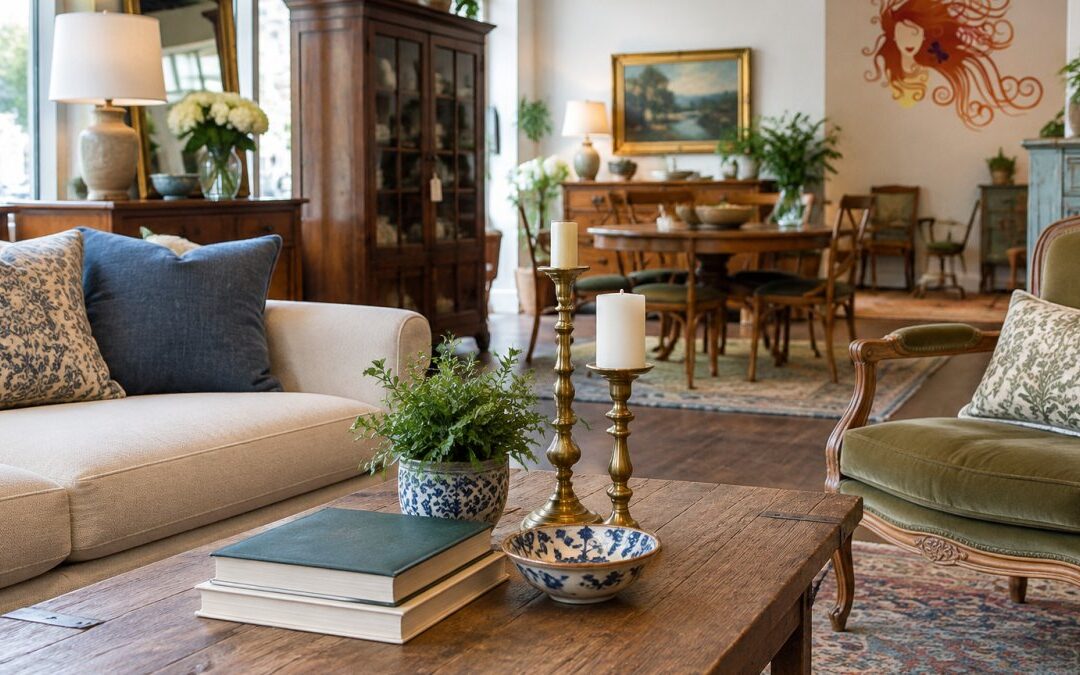
Presentation matters more than most shoppers expect. Le Rouge Tete displays its inventory in a “live in” layout, so you can picture a sofa or sideboard in a real room rather than a warehouse aisle.
Turnover is another signal. Stores that add new items regularly give you a reason to return. Le Rouge Tete adds new items weekly. Ask how often inventory changes before you commit to a shop.
How to Shop for Vintage Furniture Without Buying Blind
Online photos rarely show the true color, wear, or size of a vintage piece. A common mistake is buying from a listing without measuring your space first. Our guide on how to find reputable consignment shops explains how to verify a store before you rely on its pieces. Bring a tape measure and note the dimensions of the spot you have in mind.

Shopping in person removes most of that guesswork. You can open drawers, sit on chairs, and check how a piece looks next to other items. Le Rouge Tete offers personalized assistance with moving items so you can visualize them in your own home before you decide.
Ask questions too. Find out the item’s history, whether it has been repaired, and what the return or hold policy is. Le Rouge Tete’s 24-hour hold policy gives you time to measure, check your vehicle, and come back.
Vintage Furniture Condition Checklist Before You Pay
Use this checklist before any purchase:
- Frame: Press firmly on joints and corners. Wobbling suggests loose or failing joinery. For a deeper guide to confirming solid wood construction versus veneer or particleboard, see the linked page.
- Drawers: Pull each one out fully. They should slide smoothly without catching.
- Upholstery: Look for tears, stains, and odors. A musty smell often means moisture damage that can be hard to remove.
- Veneer: Check for lifting, bubbling, or chips along the edges.
- Hardware: Confirm that knobs, hinges, and legs are original or match the piece’s era.
- Stability: Set the piece on a level floor and check that it doesn’t rock.
A common mistake is ignoring the underside. Flip a table or check the back of a cabinet for water stains, pest damage, or repairs that the front hides.
How the Furniture Consignment Process Works for Shoppers
When you buy consignment furniture, you’re buying from an owner who has agreed to let the store sell on their behalf. For the full step-by-step picture of how consignment pricing, pieces, and sales work, read the complete guide. The sale proceeds are split between the store and the owner.
Stock rotates as pieces sell and new items arrive, which is why Le Rouge Tete adds new items each week. If something you like sells before you return, ask staff whether similar pieces are coming in.
Local pickup is available for larger purchases. Le Rouge Tete offers local pickup for large items for a $50 fee.
Comparing Vintage Consignment Options Around Morehead City
The honest starting point is that inventory at every consignment and resale shop in the area changes weekly, so any list of specific pieces will be stale by the time you read it. What does not change as fast is the store model, the service area, and the practical logistics, and that is what is worth comparing before you drive.
Start with Le Rouge Tete, which has served the Morehead City area for over 16 years and runs a 50/50 consignment split with no end dates on consignments. Its floor is arranged in a “live in” layout, new items arrive weekly, and the store offers a 24-hour hold policy plus local pickup for large items at a $50 fee.
Beyond that anchor, the Morehead City area supports a mix of thrift and resale options that are worth a loop rather than a single stop. For a direct side-by-side of Seahorse Cove and Second Go-Round before you choose, see this comparison. Hours and addresses change, so confirm details before you go. Call ahead before making a trip, and confirm three things, current hours, whether the store is consignment or outright-buy, and whether it offers holds or delivery.
Compare shops on five factors rather than on price alone:
- Model: consignment, outright-buy resale, thrift, or antique dealer, this drives negotiation room and return policy.
- Curation: whether the floor is staged and edited or volume-driven and random.
- Turnover: how often new inventory arrives; weekly turnover is a reason to return, monthly turnover is not.
- Logistics: hold policy, local pickup, delivery options, and any fees for large items.
- Condition transparency: whether staff can tell you the piece’s history, prior repairs, and whether hardware is original.
Watch out: a low sticker price on a piece that needs reupholstery, veneer repair, or structural reglueing is rarely the better value. Price the repair before you compare, and weigh condition against cost rather than cost alone.
Finding Your Next Vintage Piece at Le Rouge Tete
Le Rouge Tete offers pre-loved furniture and home decor at prices significantly lower than retail. Its 50/50 consignment split, no end dates on consignments, and weekly inventory updates are features shoppers and sellers can rely on. Visit in person to see the live-in layout, or contact the store directly for current prices and availability.
Frequently Asked Questions
Where can I find vintage furniture on consignment in Morehead City, NC?
Le Rouge Tete in Morehead City is an upscale consignment store offering a curated selection of pre-loved furniture and home decor. Its items are displayed in a ‘live in’ layout, so shoppers can see how a piece might look in a real room. For current inventory, store hours, and availability, contact the shop directly before visiting. Inventory changes as new pieces arrive, so a recent visit may show different finds than an older listing.
What should I look for when buying vintage furniture?
Start with construction. Check joints, drawers, and the underside of tabletops for solid wood and original hardware, and look for signs of repair that suggest the piece has been used and maintained. Confirm the dimensions against your room before you commit, since vintage pieces are often sized differently than modern furniture. Ask the staff about the piece’s history and any known issues, and note whether the finish is original or refinished, because that affects both value and care.
How can I tell whether a vintage furniture piece is in good condition?
Inspect the piece in good light and look closely at legs, feet, and stress points such as chair rails and table aprons. Open every drawer and door to check that they move smoothly and close square. Smell the piece for mustiness or pests, and look for water rings, lifting veneer, or loose hardware.
How does furniture consignment work for shoppers?
Consignment shops sell items on behalf of owners who keep part of the sale price. At Le Rouge Tete, the owner split is 50/50, and the store is a place to find pre-loved furniture and home decor at prices significantly lower than retail. As a shopper, you can use the store’s 24-hour hold policy if you want to think a piece over before you buy. Stock turns over regularly, with new items added weekly, so a piece you pass on may not be there next time.
