

Last Updated: November 6, 2026
Quick Summary
To consign furniture in Morehead City, bring your pieces to a consignment store that sells them for you and splits the sale price. At Le Rouge Tete the split is 50/50, and you are paid your share after each sale.
- Le Rouge Tete splits each sale 50/50 between the store and the seller.
- Clean, repair, and photograph pieces before drop-off to sell faster.
- Ask for the full fee schedule and markdown rules in writing before signing.
- Le Rouge Tete has no consignment end dates, so pieces stay until they sell.
- Local pickup for large items costs $50, so confirm stairs and tight access are covered.
Table of Contents
- What Consigning Furniture in Morehead City Involves
- What Types of Furniture Do Consignment Stores Accept?
- How to Prepare Furniture for Consignment
- Furniture Consignment Percentage and Fees Explained
- How Long Does Furniture Stay on Consignment?
- Pickup, Delivery, and Transport Options
- Booking Your First Consignment Drop-Off at Le Rouge Tete
- Frequently Asked Questions
What Consigning Furniture in Morehead City Involves
Consigning furniture means you bring your pieces to a store, the store sells them for you, and you split the sale price. At Le Rouge Tete, the split is 50/50. Many local sellers choose to consign furniture because it lets them earn money without running their own sale, posting listings, or meeting strangers at their door.
The process is simple in outline. You bring in pieces the store will accept, agree on a price, and wait for a buyer. When something sells, you get your share. The details matter, though, so it helps to know each step before you start.
Here is the typical path for a seller in Morehead City:
- Check acceptance. Confirm your piece fits what the store carries.
- Prepare the piece. Clean it, repair small problems, and photograph it.
- Set a price. Agree on a price with the store that fits the market.
- Arrange drop-off or pickup. Bring the item in or arrange transport.
- Wait for the sale. The store displays and sells the piece.
- Get paid. You receive your share after the sale.
Le Rouge Tete displays items in a “live in” layout, so buyers can picture a piece in a real room.
What Types of Furniture Do Consignment Stores Accept?
Most consignment stores accept good-condition furniture that buyers want to use again. Le Rouge Tete carries pre-loved furniture and home decor, so the focus is on quality pieces that will look good in someone else’s home.
Check the store’s current rules before you bring anything in, since acceptance policies can change.
How to Prepare Furniture for Consignment
Good preparation helps your piece sell faster and for a better price. A clean, well-presented item gives buyers confidence.
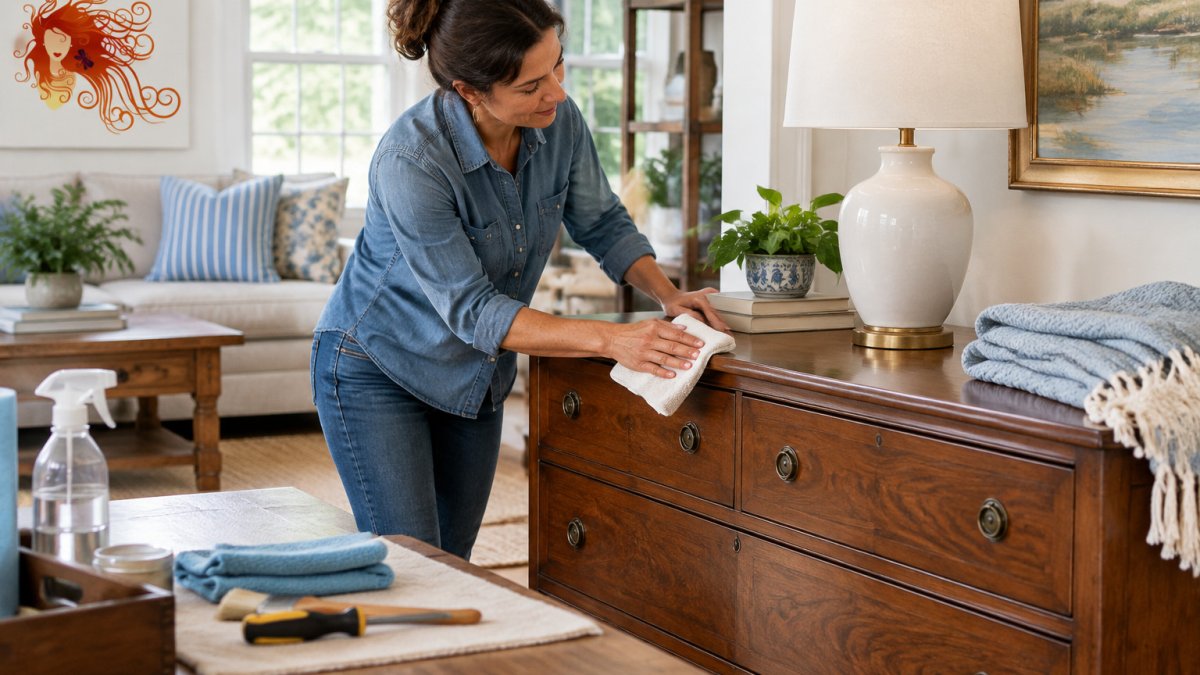
Follow these steps before drop-off:
- Clean thoroughly. Wipe surfaces, vacuum upholstery, and clean drawers.
- Fix small issues. Tighten loose screws, glue loose joints, and touch up scratches.
- Remove personal items. Empty drawers and check cushions and pockets.
- Take clear photos. Shoot in natural light from several angles.
- Note the details. Record the brand, dimensions, and any flaws.
A seller in a bright living room wiping down a wooden dresser with a soft cloth is a good picture of this step. Honest notes about flaws build trust with buyers and avoid returns.
Furniture Consignment Percentage and Fees Explained
Commission is the single number that decides what you actually walk away with, so it is worth understanding before you hand over a dresser. At Le Rouge Tete, the split is 50/50: the store keeps half of the final sale price and you receive the other half.
Ask for the full fee schedule in writing, not just the headline split.
Watch out: A percentage that looks generous can be undercut by markdown clauses. Confirm the markdown schedule and whether you get a say before any price drop.
Ask three questions before you sign: When is payout issued after a sale? Is it check, cash, or store credit? And what happens if a buyer returns the piece?
Unsold-item rules matter just as much. Le Rouge Tete has no end dates for consignments, so a piece can stay on the floor until it sells. Ask how the shop handles long-term unsold inventory, and get the pickup or disposal policy for unsold pieces in writing so you are not surprised months later.
Finally, separate commission from service fees. Le Rouge Tete offers local pickup for large items for a $50 fee, and that is a transport charge, not a commission. For current pricing on your specific pieces, contact Le Rouge Tete directly and ask for a quote before you commit.
How Long Does Furniture Stay on Consignment?
Sale timing depends on the piece, its price, and the season. Le Rouge Tete adds new items weekly, which keeps the floor fresh for buyers.
Le Rouge Tete has no end dates for consignments, so your piece can stay on the floor until it sells. For a direct timeline breakdown, see how long furniture consignment takes. Ask the team about current policies for returning unsold items before you drop off.
Pickup, Delivery, and Transport Options
Transport is where most furniture consignments stall. A dresser that fits a bedroom can still fail a stairwell, and a sofa that looks light on the showroom floor can weigh 200 pounds. Decide how the piece moves before you agree to consign it.
Start with measurements, not muscle. Measure the piece at its widest points, including any handles, feet, or removable legs, and then measure every opening it must pass through: interior doors, stairwell width, elevator doors, and the vehicle’s cargo opening. For a step-by-step plan, see how to transport large furniture to a consignment shop. If the piece is wider than the narrowest opening and cannot be tilted or disassembled, self-hauling is off the table.
If you are moving it yourself, protect the piece and the vehicle. Wrap corners and edges with moving blankets or cardboard, secure drawers and doors with painter’s tape rather than duct tape, and strap the item so it cannot slide. Load heavy pieces first and low, and bring a second person, most sofas and dressers are not safely a one-person lift. A pickup truck, cargo van, or trailer with a ramp is the practical minimum for large case goods.
If self-hauling is not realistic, use the shop’s service. Le Rouge Tete offers local pickup for large items for a $50 fee. Confirm the pickup window, whether the crew will move the piece from inside the home or only from the curb, and whether stairs or tight access change the price.
Watch out: Ask whether the $50 pickup fee covers removal from an upstairs room or a tight hallway.
For pieces you can carry, drop-off is the simplest option and avoids the fee entirely. Call ahead to confirm the shop is accepting consignments that day and that someone can help unload. If you are weighing whether to consign at all versus selling directly or donating, transport cost can be a deciding factor. For a quote on pickup in Morehead City or to plan a move, contact the team with your measurements and photos in hand.
Transport costs and access constraints often decide whether a consignment is practical, so compare the options below.
| Option | Cost | Key consideration |
|---|---|---|
| Self-haul | Your time and vehicle | Piece must fit every opening; needs a second person |
| Drop-off at store | No fee | Simplest option for pieces you can carry |
| Local pickup | $50 fee | Confirm stairs and tight access are covered |
Booking Your First Consignment Drop-Off at Le Rouge Tete
When you are ready, contact Le Rouge Tete to ask about drop-off or pickup. Have your photos and item details ready, and ask about current acceptance rules and pricing. The team can walk you through the next steps.
Consigning at Le Rouge Tete gives you a local, hands-on way to earn from furniture you no longer need. Get started by reaching out today.
Frequently Asked Questions
Where is the best place to sell used furniture in Morehead City?
Consignment stores are one of the most practical options in Morehead City because they handle display, customer contact and checkout while you earn a share of each sale. Le Rouge Tete is an upscale consignment store in town that accepts pre-loved furniture and home decor on a 50/50 split with no end dates on consignments. Other options include selling directly through online marketplaces or local classifieds, which give you full control of price but require you to handle every buyer, meeting and pickup yourself. Compare how much time you want to spend on sales against the share of the price you are willing to give up. Contact the store directly to confirm what it is currently accepting before you haul anything over.
What percentage do furniture consignment shops take?
Consignment shops typically keep a percentage of each sale as their commission, and the seller receives the rest. At Le Rouge Tete, the policy is a 50/50 split, meaning the store and the seller each receive half of the sale price. Splits vary between consignment shops, so ask any store you are considering to explain its commission in writing before you agree to bring items in. Also ask whether there are any additional fees for pickup, storage or markdowns, since those can change what you ultimately take home. Pricing and fees can change, so confirm current terms with the store directly.
How should I prepare furniture before consigning it?
Start by cleaning every surface, including the underside and the back, and wiping out drawers and cabinets. Tighten loose hardware, check for wobbly joints, and remove any personal items. Gather original hardware, keys, drawer inserts, cushions and matching pieces so the buyer gets the complete set. Take clear, well-lit photos from several angles, and note any dents, stains, chips or repairs honestly in your listing details. Bring a short written description with dimensions, brand if known, and approximate age. Pieces that look well cared for usually sell faster and at better prices.
How long does furniture usually stay on consignment?
Le Rouge Tete has no end dates on consignments, so your piece can remain on the floor until it sells or you choose to pick it up. Because consignment timelines differ between stores, ask any shop you are considering how long items are typically displayed, whether they have end dates, and what happens to unsold pieces. Furniture in popular styles and good condition tends to move faster, while larger or more specialized pieces may take longer to find the right buyer. Also ask how payouts are scheduled after a sale so you know when to expect your share.
