
Last Updated: November 10, 2026
Quick Summary
Coastal bedroom closet organization ideas center on visible, uncluttered order using light woods, woven materials, open shelving and a restrained palette of sandy neutrals and soft blues. Choose materials for the closet’s humidity, use vertical space in small closets, and control moisture to protect finishes.
- Choose tightly woven rattan with a smooth finish and avoid loose or splintering strands.
- Seagrass and paper rope soften in damp air, so they suit drier rooms or rooms with a dehumidifier running.
- Measure closet humidity with a digital hygrometer on a middle shelf for several days before buying a dehumidifier.
- Empty the entire closet and sort into keep, donate, consign and discard piles before buying any organizer.
- Measure the empty space before shopping, and mark stud locations before drilling any shelves or rods.
Table of Contents
- What Defines a Coastal Bedroom Closet
- Natural Material Closet Organizers Worth Buying
- Small Closet Organization Tips for Limited Space
- Color Palettes and Lighting for a Breezy Closet
- DIY Coastal Closet Organization Step by Step
- Managing Humidity and Maintaining Coastal Finishes
- Booking a Closet Consultation or Shopping Pre-Loved Pieces at Le Rouge Tete
- Frequently Asked Questions
What Defines a Coastal Bedroom Closet
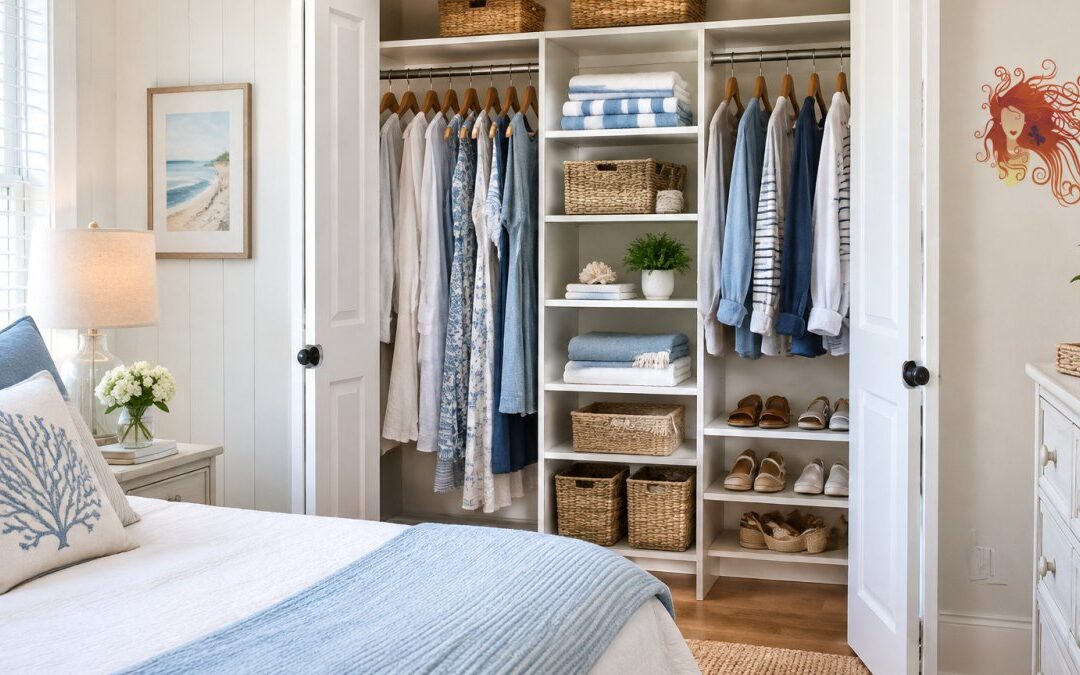
A coastal bedroom closet organization system at Le Rouge Tete starts with one principle: the closet should feel as calm and uncluttered as the shoreline it’s meant to echo. At Le Rouge Tete, we’ve spent over 16 years helping Morehead City homeowners furnish rooms that look and feel like a beach house, and a well-planned coastal bedroom closet organization ideas approach is where that look either succeeds or falls apart. Coastal design style overview describes the coastal palette as sandy neutrals, soft blues and natural textures, and those same qualities should guide your closet.
Coastal closets lean on light woods, woven materials, open shelving and a restrained palette. The goal is visible order rather than hidden storage, because a closet you can see at a glance is easier to keep tidy. Seeing your pieces in a calm, lived-in arrangement is also why our store displays furniture in a “live in” layout: shoppers can picture how a piece will sit in their own home.
Watch out: heavy dark wood and high-gloss finishes can make a small closet feel closed in, even when it’s well organized.
Natural Material Closet Organizers Worth Buying
Natural materials carry most of the look in a coastal closet, but they behave differently under humid, salt-heavy conditions, so the choice of material should follow how the closet is used rather than appearance alone.
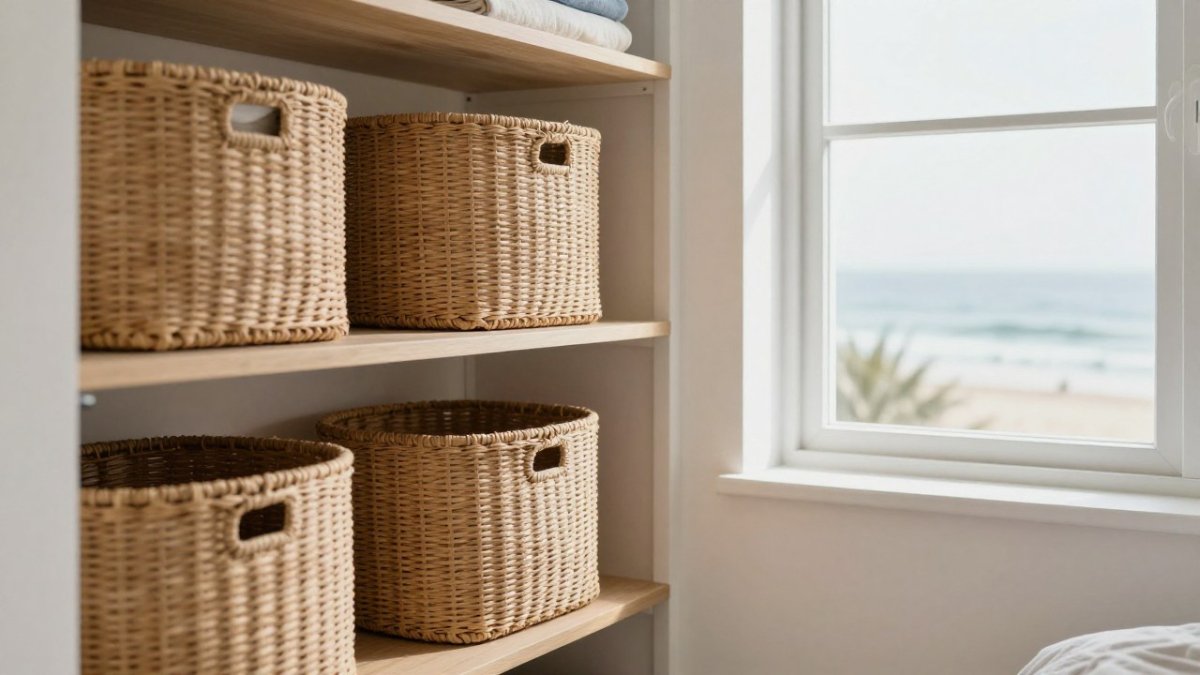
Rattan and wicker suit lightweight storage: folded knits, scarves, accessories and linens. Natural rattan is strong for its weight, but the weave can trap dust and salt film, so choose tightly woven pieces with a smooth finish and avoid those with loose or splintering strands. Seagrass and paper rope are attractive and affordable, though they soften in damp air, so they work best in a drier room or with a dehumidifier running.
consumer guide to buying used furniture covers additional inspection points for structural and pest issues.
Small Closet Organization Tips for Limited Space
Small closets reward vertical thinking, and the best coastal bedroom closet organization ideas for tight spaces start by using height as well as floor space. Add a second rod at a lower height for shirts and blouses, install a shelf above the rod for sweaters, and use over-the-door hanging units for accessories. Clear rules help too: keep one hanger style throughout so the rail looks even, and group items by category instead of by color.
Most small closets fail because they are overfilled. If you can’t close the door without pushing, remove some of what’s inside before buying any new organizer.
Color Palettes and Lighting for a Breezy Closet
A coastal closet works best with a palette of whites, soft sand, pale driftwood and muted sea blue. Paint the back wall a slightly deeper tone than the sides to add depth, or choose a light wallpaper with a subtle stripe. Warm, layered lighting matters more in a closet than most people expect: a battery-powered LED strip under a shelf or a small ceiling fixture with a warm bulb makes colors easier to judge when getting dressed.
Keep metal finishes consistent. Brushed brass or matte black hardware reads as intentional, while mixing several finishes can look accidental.
DIY Coastal Closet Organization Step by Step
Working through the closet in a fixed order keeps the project manageable and prevents you from buying organizers you don’t need.
Sorting and Decluttering Before You Build
Empty the entire closet onto the bed or floor. Sort everything into keep, donate, consign and discard piles. Pieces you no longer wear are good candidates for consignment; at Le Rouge Tete our 50/50 split means you keep half of any sale, and consigned items have no end date, so you can take your time. Measure the empty space before you shop for any organizer.
Installing Shelves and Rods
Mark stud locations before drilling, and use a level for every shelf and rod. Install the lower rod first, then the upper shelf, so you can check clearances as you go. Load shelves gradually and test each one before adding heavier items such as shoe boxes or storage baskets.
Managing Humidity and Maintaining Coastal Finishes
Humidity is the single biggest operational difference between a coastal closet and an inland one. Along the coast, outdoor relative humidity can stay high through the summer, and salt-laden air can settle on surfaces and into fabric. A closed closet traps that moisture because air rarely circulates through it, so problems often start in the back corners and on the floor before they become visible.
Most damage follows a predictable sequence. Moisture first condenses on the coolest surfaces, usually exterior walls and the floor. Wood shelving and wicker then swell or soften, and fabric starts to smell musty. Mildew shows up as dark spotting on leather, linen and the backs of garments, and mirrors on closet doors may cloud at the edges. Salt residue can also leave a faint crust on metal hardware, which accelerates corrosion on the hinges and rod brackets.
To control this, start by measuring rather than guessing. A basic digital hygrometer placed on a middle shelf will show you the closet’s actual relative humidity over a few days. If readings sit consistently above it, a small dehumidifier rated for a closet-sized space is usually sufficient; a unit with a built-in humidistat avoids running continuously in dry weather. Moisture-absorbing packs help in a pinch but need regular replacement and cannot keep up with a persistently damp room.
Airflow matters as much as dehumidification.
Finishes need a different routine.
Humidity is the main difference between a coastal closet and an inland one, and the article breaks down the damage and the fixes.
| Problem | Cause | Fix |
|---|---|---|
| Wood shelves swell or soften | Moisture condenses on cool surfaces | Measure humidity with a digital hygrometer |
| Musty fabric smell | Closed closet traps moisture | Run a dehumidifier rated for a closet-sized space |
| Dark spotting on leather and linen | Mildew from persistent dampness | Keep relative humidity under control and improve airflow |
| Clouding at mirror edges | Moisture on closet doors | Reduce humidity and check door surfaces regularly |
| Corroded hinges and rod brackets | Salt residue on metal hardware | Wipe off salt film from hardware |
Booking a Closet Consultation or Shopping Pre-Loved Pieces at Le Rouge Tete
If you want help planning a coastal closet or are ready to browse our current inventory, visit Le Rouge Tete in Morehead City. Our “live in” floor layout makes it easy to imagine how a rattan organizer or oak dresser will look in your own bedroom, and new items are added weekly. For pricing on specific pieces or a consultation, contact our team directly, since costs depend on the items and quantities involved.
For more on furnishing the rest of the room, see our space-saving coastal bedroom furniture ideas, and if you live in a compact home, read whether modern coastal furniture suits small apartments. Readers choosing secondhand organizers may also want to know whether buying used furniture for a refresh is worth it, along with our practical guide to buying pre-loved furniture. When you’re ready to shop, browse our current pre-loved inventory.
Ready to build a closet that feels like the coast? Le Rouge Tete can help you find pre-loved pieces that suit a relaxed, well-organized space. Contact us to start planning.
Frequently Asked Questions
What are the key elements of a coastal-style closet design?
A coastal closet usually relies on a light, neutral base such as white, sand or soft gray, paired with natural textures like rattan, wicker, jute, linen and light wood. Open or partly open shelving keeps the look airy, while hardware in brushed nickel or matte brass adds quiet contrast. Keep the layout simple: a few well-chosen baskets and hanging sections usually look more relaxed than a crowded, fully packed closet. Pieces with a weathered or pre-loved finish fit the style well.
How can I incorporate natural materials into my bedroom closet?
Start with the storage you already need, and add natural textures where they fit your space.
How do I organize a small closet for a beach house aesthetic?
Work vertically first. Add a second hanging rail under the existing one for shirts and folded items, install a tiered shelf above the rod, and use over-door hooks for bags and belts. Keep one category per basket so everything has a home, and leave a few inches of open space so the closet does not look cramped. Matching baskets and hangers do most of the visual work in a small closet.
Are there specific storage solutions that fit a coastal decor theme?
Yes. Many storage styles suit a coastal theme, and pieces with a slightly weathered finish or a pre-loved history can suit coastal rooms well.
