
Last Updated: November 14, 2026
Quick Summary
To prepare furniture for a private sale, inspect each piece for structural and surface problems, clean it thoroughly, and make minor repairs. Then photograph it in good light, price it from local comparable listings, and disclose its condition clearly. The article’s guidance covers each step, from inspection through safe pickup.
- Check frames, joints and drawers for looseness before photographing anything.
- Disclose scratches, stains and tears plainly so buyers trust your listing.
- Price from five to eight local comparable listings, not from what you paid.
- Screen buyers inside the platform’s messaging before sharing your address or phone number.
- Count cash or confirm peer-to-peer payment in your own app before releasing the item.
Table of Contents
- Assessing Your Furniture Before You List
- Cleaning and Making Minor Repairs
- Decluttering, Arranging and Staging for Buyer Appeal
- How to Price Used Furniture for a Private Sale
- Photographing Furniture So Buyers Want It
- Writing a Used Furniture Listing Description That Sells
- Screening Buyers and Staying Safe During Pickup
- Choosing Your Next Step: Sell, Consign or Donate
- Frequently Asked Questions
Assessing Your Furniture Before You List
Before you snap a single photo, take an honest look at each piece. Our guide to inspecting used furniture for quality walks through each check in more detail.
Look at the frame first. Wiggle chairs and tables, open drawers, and check joints for looseness.
Next, check for damage you might have stopped seeing. Scratches, water rings, pet stains, and fabric tears all cost you money if you don’t disclose them.
Use this quick checklist for each item:
- Structure: No loose joints, cracks, or unstable legs
- Surfaces: Note scratches, dents, and stains
- Upholstery: Check for rips, odors, pet hair, and sagging cushions
Resale suitability matters too. A well-built solid wood dresser usually sells well. Particleboard pieces with peeling laminate often do not.
Cleaning and Making Minor Repairs
Clean every piece before it goes on the market. Our step-by-step guide to cleaning upholstered furniture covers fabric pieces in detail.
Start with a basic cleaning routine:
- Vacuum upholstery and crevices with a brush attachment
- Spot-treat stains with a fabric cleaner suited to the material
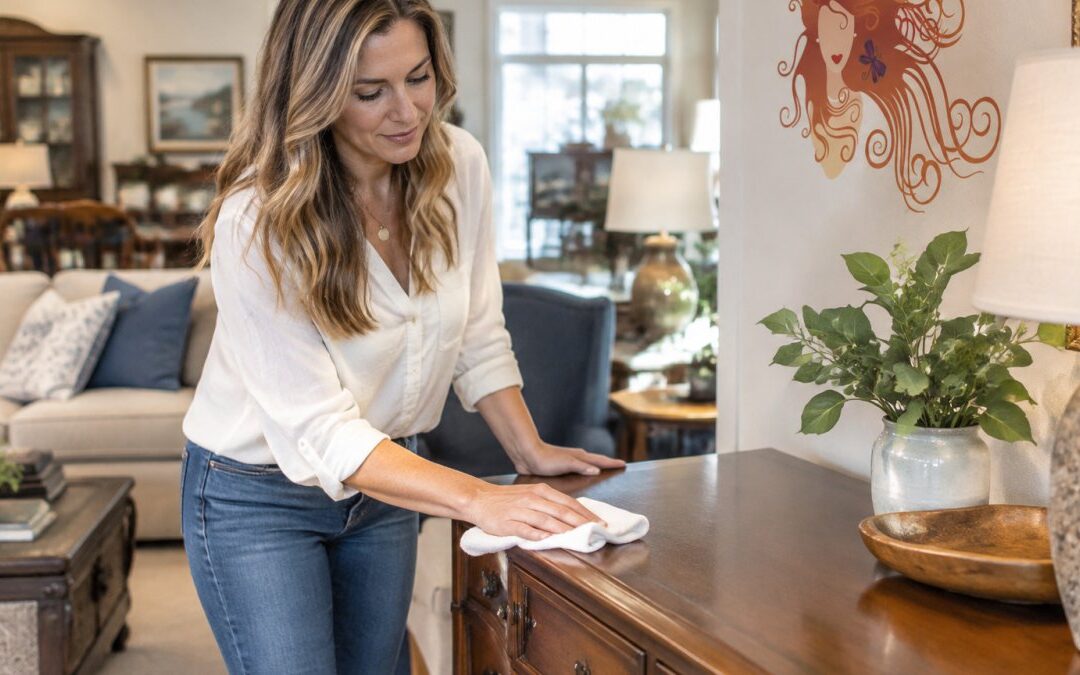
- Wipe wood surfaces with a damp cloth, then dry them right away
- Polish hardware so drawer pulls and handles look fresh
- Air out pieces that smell musty, away from other furniture
Minor repairs often pay off. Tighten screws, glue loose trim, replace missing knobs, and touch up small scratches with a matching furniture marker or wax stick. These fixes take an afternoon and can lift the perceived value of a piece.
Sell the piece as-is and disclose the condition clearly.
Decluttering, Arranging and Staging for Buyer Appeal
Buyers want to see how a piece fits into a real room.
Arrange the room to improve flow. Leave clear walking paths and make sure drawers and doors open fully.
Stage with restraint. A single lamp, a throw blanket, or a plant can show how the piece looks in use.
Declutter the surrounding area too. Clear counters, floors, and shelves around the item.
How to Price Used Furniture for a Private Sale
Pricing is where most private furniture sales are won or lost. For a deeper dedicated walkthrough, see our guide to pricing used furniture for resale. Set the number too high and the listing goes stale; set it too low and you leave money on the table. The fix is to price from local comparables, not from what you paid or what the piece cost new.
Build a local comparable set
Search the marketplaces where you plan to list, Facebook Marketplace, Craigslist, OfferUp, and Nextdoor are the common channels in the Morehead City area. Search the exact item type plus the material (for example, “solid wood dresser” or “leather sectional”), then filter to listings within about 30 miles.
For each comparable, record:
- Brand and model if listed
- Material and build (solid wood, veneer, particleboard, leather, fabric)
- Age and condition as described by the seller
A listing that has sat for three weeks at $400 is weaker evidence than one that sold in four days at $350.
Adjust for condition and age
Start from the median of your comparable set, then adjust. Condition generally moves price more than brand for everyday furniture. A piece in excellent condition with no disclosed flaws can sit at or slightly above the comparable median. A piece with visible scratches, a wobbly leg, or worn upholstery should sit below it. Age matters most for upholstered goods, where foam and fabric degrade, and least for solid wood case goods that hold up for decades.
Use these adjustments as a starting framework, then sanity-check against your comparables:
-
Excellent condition, all original parts: at or slightly above comparable median
-
Particleboard or peeling laminate: price near the bottom of the local range regardless of age
Leave room for negotiation
Buyers on private-sale platforms expect to negotiate. Many sellers set an asking price somewhat above their target sale price to leave room to negotiate.
Watch out: if you price high “to see what happens,” you burn the first week of listing visibility, when buyer attention is highest. A realistic opening price attracts serious buyers faster than a high price you plan to cut later.
Know when to cut
If you get fewer than a handful of inquiries in the first week, the price is likely above the local market. A small reduction often revives interest. If two weeks pass with no serious offers, compare your listing against the current comparables again; the local market may have shifted, or a new listing may now undercut you.
Price the pickup, not just the piece
For large furniture, factor in how the buyer will move it. Our guide to valuing bulky furniture covers specific pricing for oversized pieces. A dresser that requires two people and a truck is harder to sell at the same price as a comparable piece a buyer can carry. If you offer delivery or help with loading, that has value and can justify a slightly higher price.
Photographing Furniture So Buyers Want It
Good photos do most of the selling. Use natural daylight near a window, avoiding harsh direct sun that washes out colors.

Hold your phone steady and keep the background simple. A plain wall works well.
Include a photo that shows scale. Place a common object nearby or photograph the piece in a room so buyers can judge size.
Writing a Used Furniture Listing Description That Sells
Lead with the most useful facts. Include the item name, brand if known, material, dimensions, and condition in the first lines.
Use a simple template:
Item: [Name and style]
Dimensions: [Length x Width x Height]
Material: [Solid wood, leather, etc.]
Condition: [Excellent / Good / Fair, plus specific notes]
Pickup: [Location and timing]
Price: [Your asking price]
Describe condition honestly. Write “two small scratches on the top, shown in photo three” rather than “great condition.” Specific details build trust.
Keep the tone friendly and direct. Avoid excessive hype. Phrases like “a beautiful, solid piece” are fine, but back them with facts.
Screening Buyers and Staying Safe During Pickup
Private furniture sales attract scammers because the transactions are person-to-person and often involve large amounts of cash. A short screening routine protects your money, your personal information, and your home.
Screen before you share your address
Keep conversations inside the platform’s messaging system until you have confirmed the buyer is serious. Do not share your phone number, email, or home address in the first message. Ask two or three practical questions: when they can pick up, whether they have a vehicle large enough for the piece, and whether they have seen the dimensions in the listing.
Recognize common scam patterns
Most furniture-sale scams follow a few recognizable patterns:
- Overpayment scams: the buyer sends a check or payment for more than the asking price and asks you to refund the difference (How To Spot, Avoid, and Report Fake Check Scams). The original payment later reverses.
- Fake payment confirmations: the buyer claims to have paid through a platform or app and sends a screenshot. Verify the payment in your own account before releasing the item.
- Shipping-agent stories: the buyer says a mover or agent will collect the item and asks you to pay the agent upfront. Legitimate local buyers do not ask sellers to pay third parties.
Watch out: a payment that appears in your account can still be reversed if it was sent fraudulently. For high-value pieces, wait until the payment has fully cleared before handing over the furniture.
Verify payment before the item leaves
Cash in person is a simple method for local furniture sales. Count it before the buyer loads the piece. If you accept a peer-to-peer payment app, confirm the funds in your own app, not from a screenshot, and check that the sender name matches the buyer you have been messaging. For larger sales, some sellers ask for a small deposit through a verified app to hold the item, with the balance in cash at pickup.
Plan the pickup for furniture, not just for people
Furniture pickups fail for physical reasons as often as for trust reasons. Before the buyer arrives:
- Measure the piece and the route. Confirm the item fits through your doorways, hallways, and stairwells, and tell the buyer the dimensions so they bring the right vehicle.
- Clear the path. Move vehicles, rugs, and fragile items out of the way so the piece can be carried out without damage.
- Decide who lifts. Most large furniture needs two people. If you are not able to help lift, say so in the listing so the buyer brings help.
- Choose the meeting spot. For large items, a doorstep or garage pickup is practical. For smaller pieces, a well-lit public parking lot is safer than inviting a stranger inside.
Protect your home and your information
Do not let buyers wander through your home to “see how it looks.” Keep the item near the exit and the transaction at the door. Remove personal items, mail, and anything with your name or address from the pickup area. After the sale, delete or archive the listing and avoid posting photos that show your home’s exterior, house number, or street signs.
Keep a simple record
For each sale, note the buyer’s platform username, the item, the price, and the payment method. If a dispute or chargeback happens later, this record is your evidence. A short note in your phone is enough.
Choosing Your Next Step: Sell, Consign or Donate
Not every piece belongs in a private sale. Compare your options based on value, effort, and timing.
| Option | Best For | Effort Level | Typical Outcome |
|---|---|---|---|
| Private sale | Higher-value, good-condition pieces | High | Keeps full sale price, you handle everything |
| Consignment | Pieces you want sold without managing buyers | Medium | Store handles listing and sale, you share proceeds |
| Donation | Worn or low-value items | Low | No payment, possible tax deduction |
If a piece is worth your time to market, a private sale or consignment works well. Our honest look at whether consignment is worth it can help you weigh the two.
At Le Rouge Tete, we’re an upscale consignment store in Morehead City with over 16 years of community service.
Frequently Asked Questions
What furniture pieces sell the fastest in a private sale?
Solid wood dressers, dining tables with chairs, sofas in good condition and queen-size bed frames tend to attract the most buyer interest in private sales. Mid-century styles and well-known brands can also move quickly. Pieces that are bulky, heavily worn or outdated sell more slowly, so price them to reflect condition. Listing a complete set, such as a table with matching chairs, often sells faster than selling each piece separately.
How should I price used furniture for a private sale?
Start by searching completed listings for similar pieces on local marketplaces to see what comparable items actually sold for, not what sellers are asking. Adjust for brand, material, age and condition. Leave room to negotiate by pricing slightly above your target, and be prepared to accept a fair offer after a reasonable wait. Pricing depends on the specific piece and local demand, so comparables are more reliable than general rules.
How do I stay safe when selling furniture privately?
Meet buyers in a public or well-lit place when possible, and tell someone your schedule. Confirm the buyer’s name and contact details before pickup, and avoid giving out your home address until a sale is agreed. Accept payment in cash or a verified method and confirm funds before handing over items. Bring a second person to large pickups, and never let a buyer enter your home alone.
Is it better to sell furniture privately or consign it?
Private sales let you keep the full sale price but require more work on your part, including photos, messaging, scheduling and pickup. Consignment shops handle display, buyer contact and checkout, but they take a share of the sale, commonly around half at many stores. Private sales suit high-value or easy-to-describe items you can sell quickly. Consignment suits busy sellers and bulkier pieces, and Le Rouge Tete offers a 50/50 split with no end dates on consignments. Contact the store for current terms.
