
Quick Summary
The best places to source vintage home decor near Morehead City are antique stores, estate sales, thrift stores, flea markets and online marketplaces, each suiting a different budget and level of verification. Antique stores offer curated, dated pieces at higher prices, while estate sales and thrift stores offer lower prices with more variety and less verification. Inspect construction, surface, stability and provenance before buying any piece.
- Arrive at estate sales when doors open, since the best pieces usually leave within the first hour.
- Antique stores carry higher prices, while thrift stores have the lowest prices but little verification.
- Typical brass candlesticks run $35 to $120 per pair at antique stores.
- Let vintage wood acclimate indoors for a few days and use a dehumidifier in damp rooms.
- Price any repair before committing, because restoration costs can erase a bargain.
Table of Contents
- Where to Find Unique Vintage Home Decor Near Morehead City
- Comparing Sourcing Channels: Pros, Cons, and Typical Pricing
- How to Source Unique Vintage Home Decor Online
- Step-by-Step: How to Evaluate Vintage Quality and Authenticity
- Coastal Climate Considerations for Vintage Pieces in Carteret County
- Antique Decorating Ideas for a Living Room
- Start Shopping or Consigning at Le Rouge Tete
- Frequently Asked Questions
Where to Find Unique Vintage Home Decor Near Morehead City
Last Updated: November 16, 2026
Finding vintage home decor in Morehead City starts with knowing where good pieces actually turn up. Le Rouge Tete, an upscale consignment store in Morehead City, offers a curated selection of pre-loved furniture and home decor that shoppers can browse in person. Sourcing well means combining several channels, each with its own strengths, costs and drawbacks.
Antique Stores and Estate Sales
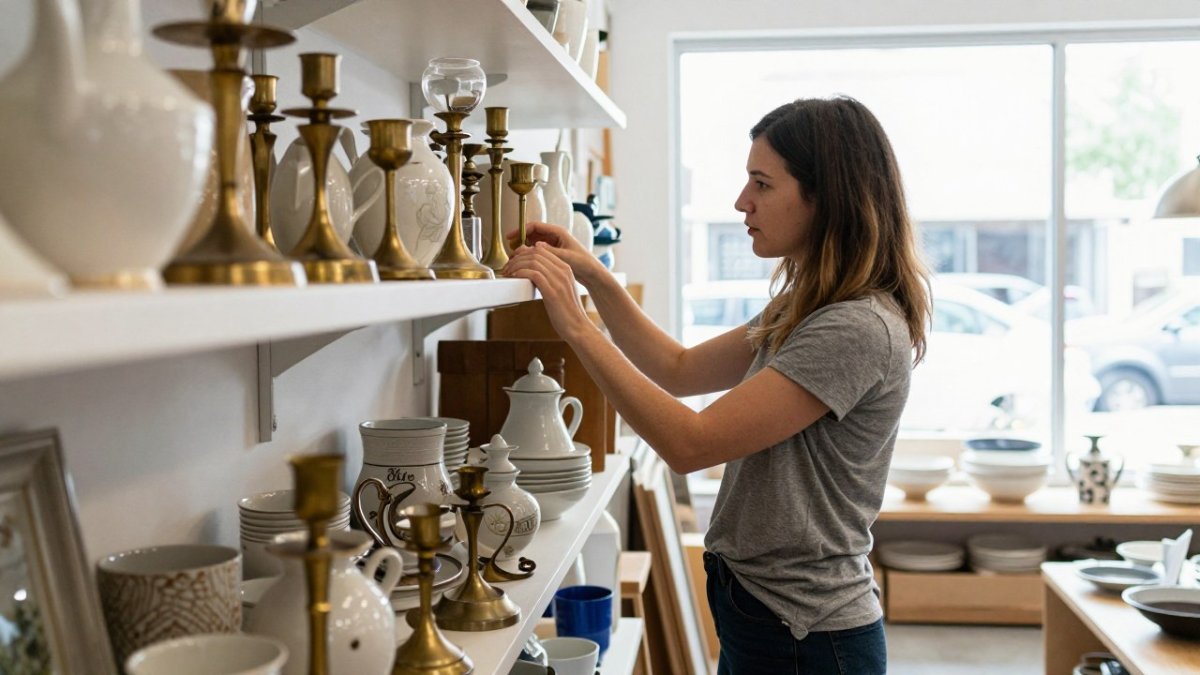
Antique stores and estate sales tend to offer the deepest selection of genuinely old pieces. Dealers often group items by era or style, which makes comparison easier. Estate sales can be especially rewarding, since they often have a large variety of items available.
A common mistake is arriving late. The best pieces usually leave in the first hour, so plan to be there when doors open.
Thrift Stores and Flea Markets
Thrift stores and flea markets reward patience. Inventory changes constantly, so a return visit every week or two often turns up something the last trip missed. Prices are usually lowest here, but so is the level of verification. Check each piece carefully before buying.
Comparing Sourcing Channels: Pros, Cons, and Typical Pricing
Each channel suits a different goal, and the trade-offs are easier to judge when you attach real dollar ranges to them. The figures below are typical U.S. resale ranges for common vintage decor categories, not quotes from any single shop; confirm current prices with Le Rouge Tete or the seller before you commit.
| Channel | Pros | Cons | Typical U.S. Price Range (USD) |
|---|---|---|---|
| Antique stores | Curated, often dated and described; staff can answer provenance questions | Higher prices, less room to negotiate | Brass candlesticks $35-$120 per pair; framed vintage prints $60-$250; small side tables $150-$600 |
| Estate sales | Large variety, contents priced to clear within a few days | Time-sensitive, crowded at opening | Decorative ceramics $10-$60; lamps $25-$150; dining chairs $40-$200 each |
| Thrift stores | Lowest prices, frequent restocking | Little verification, uneven quality | Vases $3-$25; picture frames $2-$15; small furniture $15-$80 |
| Flea markets | Negotiable prices, unusual finds | Weather dependent, variable sellers | Textiles $10-$75; mirrors $20-$150; tooled leather or brass $15-$90 |
| Online marketplaces | Wide selection, easy comparison | Shipping costs, photos can mislead | Varies widely; factor $15-$150 shipping on furniture-sized pieces |
A practical sourcing process keeps these channels from blurring together. Set a budget per room before you leave the house, then rank your channels by how much verification you need. High-value pieces justify more careful sourcing, while low-risk accent pieces suit thrift stores and flea markets.
Sequence a sourcing trip rather than browsing at random, starting with the channels that have the deepest inventory and finishing with those that restock most often.
Negotiation is part of the pricing picture. At estate sales, it is worth asking about multi-item discounts, and at flea markets, bundling several pieces into one offer can work well. At antique stores and consignment shops, ask whether the price is firm before making an offer.
Watch out: restoration costs can erase a bargain, so price any repair before you commit. Ask Le Rouge Tete directly for current prices and consignment options.
Typical U.S. resale price ranges for brass candlesticks and framed prints
How to Source Unique Vintage Home Decor Online
Online sourcing works best when you treat it as a local search first and a national one second. National marketplaces and independent seller sites widen your options, but the pieces you can actually inspect, pay for in USD without freight, and carry home are the ones listed within driving distance of Morehead City.
Start with specific search terms, the maker, material, era or pattern, rather than broad phrases like “vintage decor,” because sellers describe pieces precisely. Then narrow by location. On the major marketplaces, set the search radius to cover Morehead City and the surrounding Carteret County towns, and save the search so new local listings reach you automatically. A saved search with a tight radius surfaces pieces before they are picked over, which matters most for furniture and lighting that rarely ship cheaply.
Local online and community sourcing is where most buyers leave value on the table. Estate sale companies often post upcoming sales and photo galleries online ahead of time, so you can study the photos before deciding which sales to attend. Neighborhood and community groups on social platforms also list furniture and decor, and local consignment shops may share new arrivals that you can ask about before making the drive.
Assess sellers before you commit. On marketplaces, read recent reviews rather than the overall score, and look for sellers who answer questions in full sentences and send additional photos on request. Ask for a close-up of joints, hardware, maker’s marks and any damage, and ask directly whether a piece has been repaired or refinished. A seller who dodges those questions is telling you something.
Arrange pickup safely and practically. For local listings, meet in a public place during daylight, bring a friend for furniture pickups, and confirm the piece fits your vehicle before you agree. Pay in person when you can inspect the piece first. Factor shipping and handling from the start on anything you buy remotely, because a low listing price can become an expensive piece once delivery is added.
Watch out: photos can hide cracks, staining and repairs, and lighting in listing images is often flattering. Ask for a photo in daylight against a plain background before you travel, and treat any refusal as a reason to keep looking.
Step-by-Step: How to Evaluate Vintage Quality and Authenticity
Careful inspection separates a good find from an expensive mistake. Work through these steps before paying.
- Examine the construction. Look at joints, dovetails and hardware. Hand-cut details and irregular wear usually point to age, while uniform machine marks often indicate a newer reproduction.
- Check the surface. Look for original finish, patina and honest wear. Fresh refinishing can hide problems, so ask the seller whether a piece has been restored.
- Smell and inspect for pests. Musty odors or fine holes can signal moisture or insects. Walk away from pieces with active damage.
- Test stability. Wobbly legs, loose joints or cracked glass affect both safety and value.
- Ask for provenance. Receipts, estate details or a seller’s history help confirm where a piece came from.
Watch out: lighting can disguise cracks and staining, so inspect pieces in daylight whenever possible.
Coastal Climate Considerations for Vintage Pieces in Carteret County
Humidity and salt air are constant concerns on the Crystal Coast. Wood can warp, swell or develop mold when moisture stays high, and metal can corrode faster near the water. Before bringing a piece home, let it acclimate indoors for a few days and use a dehumidifier in damp rooms. Avoid placing vintage wood directly against exterior walls or in spaces with poor ventilation.
Antique Decorating Ideas for a Living Room
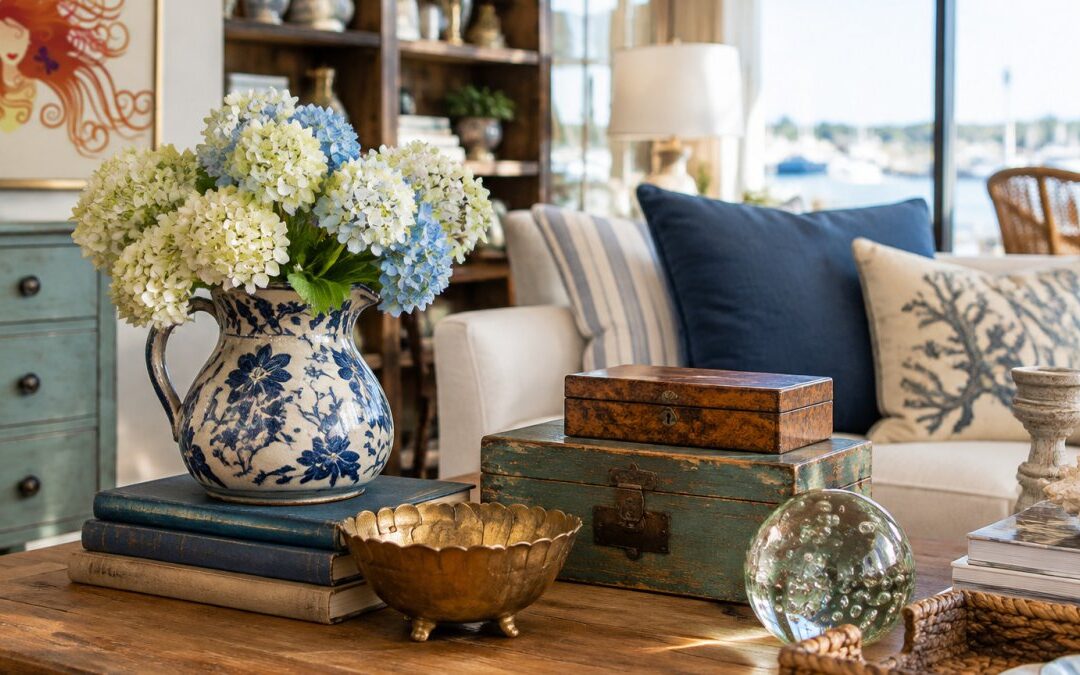
Mixing old and new keeps a room from feeling like a museum. Pair a weathered wooden side table with a contemporary sofa, or hang a framed vintage print above a clean-lined console. A single statement piece, such as a brass lamp or an ornate mirror, often anchors the room better than several smaller items.
Group objects in odd numbers and vary their heights. Let one or two antique accents carry the room, and keep the rest of the palette calm.
Start Shopping or Consigning at Le Rouge Tete
Sourcing unique vintage home decor takes time, but it rewards careful shoppers. Le Rouge Tete offers a curated selection displayed in a “live in” layout, so you can picture pieces in a real room before you buy. The shop also operates a 50/50 consignment split with no end dates, and a book a consignment pickup option is available for larger items. Browse the furniture store guide for Morehead City to compare other local options, or learn how to verify antique furniture before you commit to a purchase.
Frequently Asked Questions
Where can I find unique vintage home decor?
Good sources include antique stores, estate sales, consignment shops, thrift stores, flea markets, and online marketplaces. Consignment shops like Le Rouge Tete in Morehead City curate pre-loved furniture and decor, and the ‘live in’ layout helps you picture pieces in your own home. Visiting several channels gives you the best chance of finding one-of-a-kind items. Pricing varies by location and item, so check current prices directly with each seller.
How do I source vintage home decor online?
Start with established online marketplaces and local buy-and-sell community groups, and search with specific terms such as the maker, material, or era. Read seller descriptions closely, ask for measurements and close-up photos of any damage, and confirm the return policy. Factor in shipping costs and fragile-item packing before you buy, especially for ceramics and glass. Saved searches and alerts help you catch new listings quickly.
How can I tell if vintage decor is good quality?
Check the item in person when possible for cracks, chips, loose joints, and wobbly legs. Look for signs of authenticity such as maker’s marks, hallmarks, and consistent construction rather than uniform mass-production details. Smell for mustiness or mildew, which can be hard to remove, and inspect for water stains or warping. Compare the piece against reputable references or the seller’s provenance information before paying a premium.
How do I decorate with vintage pieces without making a room feel cluttered?
Choose a limited palette and repeat a few key pieces, such as a pair of lamps or matching bookends, to create balance. Mix vintage items with a few modern or simple pieces so the room does not feel like a museum. Give each object space, and rotate accessories seasonally rather than displaying everything at once. Testing a piece in the room before committing helps you judge scale and fit.
