
Quick Summary
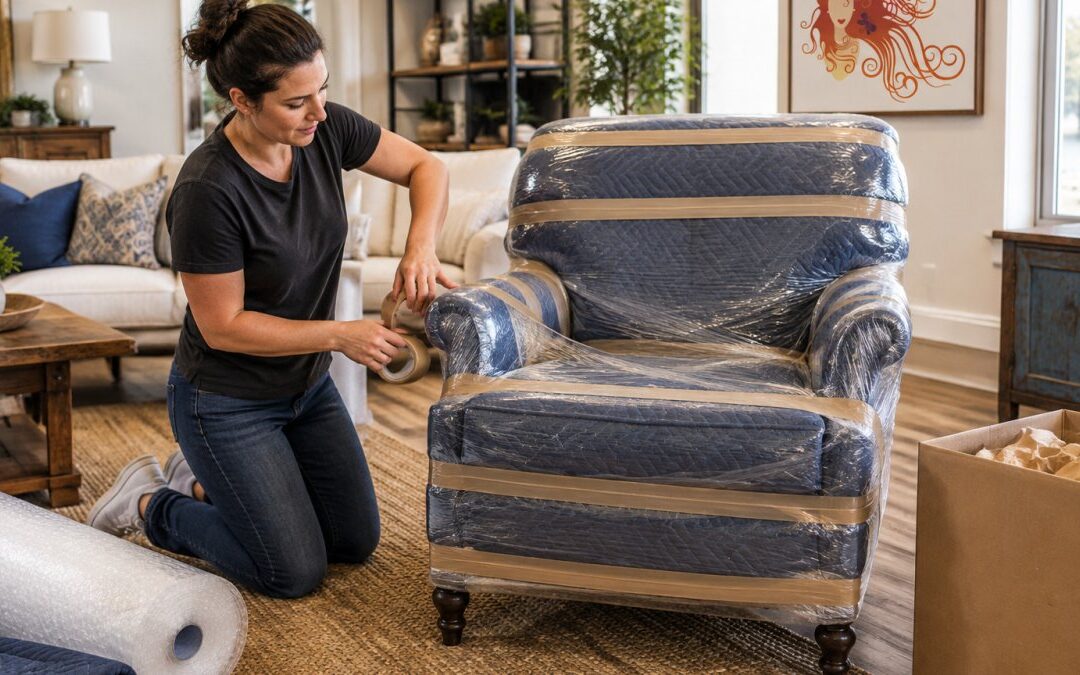
Shipping furniture without its original packaging means building your own protection in layers: rigid corner guards first, then cushioning and furniture blankets, then stretch wrap to hold everything in place. Disassemble removable parts, bag and tape the hardware, and photograph the piece before pickup.
- Fit rigid corner protectors before adding blankets, since blankets alone do not stop corner damage.
- Empty every drawer and tape it shut, then wrap the dresser body before strapping.
- Stand glass and mirrors on edge with padding on both sides, never flat against another piece.
- Confirm with the carrier whether the piece can ship blanket-wrapped or must be crated, in writing.
- Measure packed dimensions before requesting quotes, since carriers price by size and weight.
Table of Contents
- Why Shipping Furniture Without Its Box Takes a Different Approach
- Materials Needed to Pack Furniture for Shipping
- How to Pack Furniture for Shipping by Type
- Choosing the Cheapest Way to Ship Furniture Out of State
- How to Ship a Single Piece of Furniture and What It Costs
- Shipping Furniture Without Original Packaging: Cost Factors and Local Pickup
- Booking Your Furniture Shipment Next Step with Le Rouge Tete
- Frequently Asked Questions
Why Shipping Furniture Without Its Box Takes a Different Approach
Last Updated: November 21, 2026
Shipping furniture without its original packaging is harder than shipping a boxed item, but it is not impossible. A careful packing job makes the difference between a piece that arrives intact and one that does not.
Furniture without a box is more exposed. Carriers handle large items roughly, and corners, legs and glass tops take the brunt of it.
Here is what changes when you pack without the original box:
- You build the protection yourself, layer by layer
- Each piece needs its own approach based on material and shape
- Small mistakes in padding or strapping show up as damage in transit
- Documenting the piece before it leaves protects you if a claim is needed
A common mistake is wrapping a piece tightly without first protecting its weak points. Corners and legs crack under pressure, and blankets alone do not stop that. Start with rigid corner guards and edge protection, then add blankets over the top.
Materials Needed to Pack Furniture for Shipping
You do not need fancy supplies, but you do need the right ones. Gather these before you start:
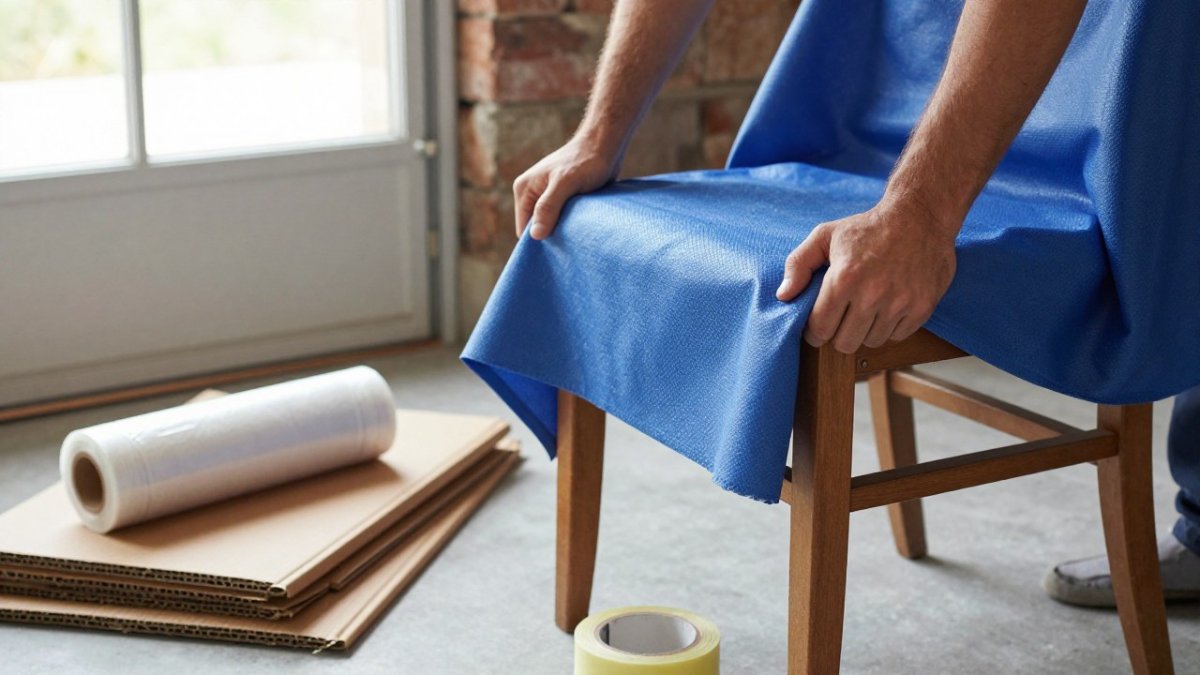
- Corrugated cardboard sheets for flat surfaces and sides
- Corner and edge protectors, ideally thick plastic or cardboard
- Furniture blankets or moving pads
- Bubble wrap for glass, mirrors and small decor
- Thin foam sheets for tabletops and drawer fronts
- Packing paper to fill gaps and cushion shifting parts
- Stretch wrap to hold blankets in place
- Heavy packing tape and strapping
- A permanent marker for labels
Hands wrapping a wooden dining chair in blue furniture blanket beside a roll of stretch wrap, corrugated cardboard sheets and packing tape on a garage floor. The man is American.
Buy slightly more than you think you need. A few extra feet of stretch wrap or one more blanket costs far less than a damaged table.
How to Pack Furniture for Shipping by Type
Every furniture type has its weak spots, and packing without the original box means you build the protection from the outside in.
Tables and desks need the top protected first. Cover the surface with foam or cardboard, then wrap the whole piece in a blanket. Remove legs when you can, and wrap them separately.
Chairs and sofas are usually bulkier but sturdier. Wrap the frame in blankets, then secure arms and legs with stretch wrap.
Dressers and cabinets are heavy and prone to drawer shifting. Empty every drawer completely, tape drawers shut, and wrap the body in blankets before strapping.
Glass pieces and mirrors need their own routine.
Protecting Corners, Edges, and Glass
Corners and edges are where most damage starts. Fit corner protectors on every exposed corner before adding blankets. Use rigid plastic or thick cardboard corner guards rather than foam alone, because foam compresses under the weight of a heavy piece and lets the corner contact the outer wrap. Run edge protectors along the front and back edges of tabletops and the vertical edges of cabinets.
Watch out: blankets alone do not stop corner damage on a heavy piece. The blanket cushions, but the rigid corner guard is what spreads the impact across a wider area.
Disassembling and Wrapping Removable Parts
Take apart anything that comes apart. Remove legs, shelves, arms and tabletops when the piece allows. Put hardware in a labeled zip bag and tape it to the main piece so it does not get lost. Wrap each removable part separately with its own padding.
When a piece cannot be disassembled, treat the whole item as one shipment and pad the joints and hinges with extra foam. Hinges and drawer slides are the parts most likely to bend when a piece is handled roughly, so wrap them before the blanket goes on.
Confirming Carrier Acceptance Before You Book
Packaging standards vary by carrier and by service level, and a piece that is packed well but not packed to the carrier’s standard can be refused at pickup or excluded from a damage claim. Before you book, ask the carrier or freight broker whether the piece can ship blanket-wrapped or must be crated, and what accessorial services the destination requires. Get the answer in writing, and photograph the packed piece from every side before the driver arrives.
Coastal and Weather Considerations for Morehead City Shipments
Furniture travels through varying humidity, and a piece that sits on a dock or in an unheated trailer can pick up moisture. Wrap wood and upholstered pieces in stretch wrap before the blanket so the blanket does not absorb damp air and transfer it to the finish. For pieces that will sit outdoors at pickup, add a final layer of shrink wrap or a moving bag to keep rain off. If a piece is going by freight, ask whether the trailer is enclosed or open-deck, because an open-deck shipment needs a weatherproof outer wrap that a blanket alone does not provide.
Choosing the Cheapest Way to Ship Furniture Out of State
Cost depends on size, weight and the service you choose. Parcel carriers suit small, light items. Freight shipping and specialty carriers handle larger pieces, and white-glove delivery adds handling at the destination.
To keep costs down:
- Ship a single piece on its own rather than mixing sizes
- Disassemble to reduce the shipment’s dimensions
- Compare quotes from several carriers using accurate weights, and use furniture shipping services for individuals to see which options are available to you.
- Ask whether pickup at your location is included
Pricing for shipments varies widely, so ask carriers for a written quote based on your exact dimensions and destination. Contact Le Rouge Tete for current pickup details if you want to compare it with shipping.
How to Ship a Single Piece of Furniture and What It Costs
Shipping one piece has its own tradeoffs. You pay for the whole shipment even when it holds just one item, so the per-piece price can climb quickly for something bulky.
A useful rule is to measure the piece and its packed dimensions before requesting a quote. Carriers price by size and weight, and a piece that is only slightly oversized can jump to a higher rate. Compact packing often saves more than switching carriers.
For a single item, confirm these details before you book:
- Packed length, width and height
- Total weight including all padding and crating
- Whether the destination requires a liftgate or residential delivery
- Insurance coverage for the declared value
Pricing for a single piece depends on the carrier, distance and packed size. Ask for a quote before you commit.
Shipping Furniture Without Original Packaging: Cost Factors and Local Pickup
Several factors change the price of a furniture shipment, and understanding how each one moves the quote is the difference between a fair price and an expensive surprise. Carriers price by the greater of actual weight or dimensional weight, so a bulky piece with light actual weight can still price high.
- Size and weight after packing. Padding and crating add inches and pounds. A table that measures 60 by 36 inches unpacked can grow by several inches on each side once corner guards and blankets are on, and that can push it into a higher rate tier.
- Distance to the destination. Long-distance freight is priced per mile plus a base rate, so a cross-country shipment can cost several times a regional one for the same piece.
- Whether the piece needs crating. Crating adds material and labor, and some carriers require it for glass, marble, or high-value pieces. A blanket-wrapped piece that the carrier accepts will usually cost less than a crated one.
- Delivery type. Curbside delivery is the base service. Inside delivery, liftgate service, and residential delivery are accessorials that add to the quote, and a destination without a loading dock will need a liftgate.
- Insurance and declared value. Declared value above the carrier’s default coverage adds a per-dollar charge, and the carrier may require specific packaging for the higher value to be honored.
Packing without the original box can add cost because you may need crating or extra materials, but it can also save money if you pack compactly and the carrier accepts a blanket-wrapped piece. Compare the cost of materials and crating against the rate difference before you decide.
Gathering Quotes: A Checklist
Before you request quotes, have these details ready so each carrier prices the same shipment:
- Packed dimensions and total weight, including padding and pallet
- Origin address and destination address, with zip codes
- Whether the destination is residential or commercial, and whether a liftgate is needed
- Whether the piece can ship blanket-wrapped or must be crated
- Declared value and desired delivery window
Ask each carrier for a written quote that itemizes the base rate and every accessorial, and confirm what packaging condition the quote assumes. A quote that assumes crating will not hold if you show up with a blanket-wrapped piece.
Local Pickup in Morehead City
Local pickup is an option for many people in Morehead City who want to avoid hauling and packing a piece themselves. Le Rouge Tete offers local pickup for large items, and Le Rouge Tete’s pickup service explains what the process looks like. A Morehead City consignment pickup guide also shows how the process works for furniture you are moving out of your home.
Compare both options before deciding, and ask for the pickup window and any access limitations at your address.
Booking Your Furniture Shipment Next Step with Le Rouge Tete
Once your piece is packed, the next step is getting it on the way. Whether you are shipping out of state or looking for a simpler local option, a complete guide to consigning furniture locally walks you through each step before you commit.
Packing without the original box is manageable with the right materials and a clear plan. Protect corners and glass first, wrap in layers, and document everything before pickup or shipping.
Contact Le Rouge Tete to talk through your options.
Frequently Asked Questions
What is the best way to ship a single piece of furniture?
For one piece, the best option is usually a specialty freight or furniture carrier, or a parcel carrier if the item fits within its size and weight limits. Wrap the piece in a furniture blanket, protect corners and edges with cardboard or foam, and secure it with stretch wrap. Ask the carrier for its exact dimension and weight limits before you pack, and get a written quote that includes pickup, transit and any liability coverage. Shipping one piece with its removable parts secured together usually lowers both cost and damage risk.
Can I ship furniture through USPS?
USPS accepts furniture only when a piece meets its size and weight limits for Priority Mail or Ground Advantage, and it must be packed to withstand handling. Most large or heavy pieces exceed those limits, so they typically need a freight or specialty carrier. Check USPS size and weight rules before you buy packaging, since oversized packages can cost considerably more or be refused.
How do you ship furniture without the original packaging?
Start with sturdy double-wall cardboard or a wooden crate for flat surfaces, then add foam padding or bubble wrap to protect edges. Wrap the entire piece in a furniture blanket, cover it with stretch wrap, and secure the blanket with packing tape. Disassemble legs, drawers and shelves where possible, label each part, and bundle them so they cannot shift. Keep glass and mirrors upright and never lay them flat.
What should I expect to pay to ship one piece of furniture?
Costs depend on the piece’s dimensions and weight, the distance it travels, the carrier type, pickup or delivery requirements, and the packing materials you use. Le Rouge Tete has not published shipping rates, so pricing depends on quantity, dates and delivery. For a current quote, contact Le Rouge Tete directly or ask any carrier for a written estimate before you commit to a shipment.
