
Table of Contents
- Consignment vs Retail Furniture Prices at a Glance
- How Furniture Consignment Store Commission Rates Work
- Depreciation and Resale Value in the Secondhand Market
- How to Price Used Furniture for Sale
- Consignment vs Private Sale: Pros and Cons
- Buying Furniture: Consignment vs Retail Price Comparison
- Online Consignment Platforms vs Local Consignment Stores
- Conclusion
Last Updated: August 15, 2026
Consignment vs Retail Furniture Prices at a Glance
Consignment stores typically offer furniture at 30-50% below original retail prices because inventory carries no manufacturing, wholesale, or traditional retail overhead. Retail furniture stores charge full markup to cover showroom costs, staff, and profit margins. A quality sofa retailing for $2,000 might cost $900-$1,200 at consignment.
Le Rouge Tete operates on a transparent 50/50 consignment split with no end dates on items, meaning your furniture stays available as long as you want and you keep half of whatever it sells for. This differs significantly from traditional retail markup structures and online platforms that take 20-40% of sale proceeds.
Furniture condition, brand equity, market demand, depreciation rates, and seasonal pricing all influence what a piece is worth in the secondhand market. A vintage mid-century modern chair might appreciate in value, while mass-produced contemporary pieces depreciate rapidly.
How Furniture Consignment Store Commission Rates Work
Standard Commission Models
Consignment stores operate on commission splits ranging from 40/60 (store takes 40%, seller keeps 60%) to 60/40 (store takes 60%, seller keeps 40%), depending on overhead, inventory quality tier, and services provided.
Le Rouge Tete‘s 50/50 split sits in the middle, offering sellers fair balance. The store handles pricing consultation, display, and customer service in exchange for commission.
Online consignment platforms operate differently. Chairish charges a commission that can range from 20% to 40% depending on the seller plan and item value. The RealReal takes 20-40% depending on item value. 1stDibs combines a monthly subscription fee ($99+) with percentage commission, which can vary based on the item, price, and seller’s membership plan. These platforms handle shipping, professional photography, and marketing to national audiences, justifying higher commissions than local stores.
What You Keep as a Seller
Your net proceeds depend on the consignment agreement’s terms. With Le Rouge Tete’s 50/50 split, if a dresser sells for $400, you receive $200.
Condition assessment impacts listing price. A dresser in excellent condition might list for $400, while the same piece with minor drawer damage lists for $250. The store assesses condition and recommends pricing based on market demand.
No consignment fees. Le Rouge Tete doesn’t charge sellers to bring items in, removing a barrier to consigning.
Payment timing varies by store. Le Rouge Tete processes payments after items sell. Clarify the payment schedule before consigning, especially during a move.
Online platforms offer different economics. If you consign a $600 vintage chair through Chairish and it sells, you could net $360 to $480 after their commission, which can be up to 40% for some sellers. If it sells through 1stDibs, you pay a monthly subscription plus commission. Online platforms reach buyers willing to pay premium prices for authenticated vintage and designer pieces.
Depreciation and Resale Value in the Secondhand Market
Furniture depreciation depends entirely on category, brand, and condition.
High-quality vintage and designer pieces often appreciate. A mid-century modern credenza in good condition might sell for more today than it cost 10 years ago. Solid wood pieces from respected furniture makers (Stickley, Ethan Allen, Drexel) hold value remarkably well.
Mass-produced contemporary furniture depreciates 50-70% in the first year. A particle-board bookcase that cost $300 new might resell for $75-$100 used. Buyers recognize these pieces as temporary and won’t pay much secondhand.
Brand equity matters enormously. A sofa from a recognized furniture maker (Room & Board, West Elm, Crate and Barrel) retains 40-60% of original retail value. An identical-looking sofa from an unknown brand retains 20-30%.
Condition directly determines market demand. A table with refinished wood and new hardware can command near-original pricing. The same table with water damage or peeling veneer might be unsellable.
If you’re furnishing a home on a budget, consignment stores offer the best value on quality pieces. If you’re selling furniture, expect to recover 30-50% of what you paid for mass-produced items, or 50-70% for quality pieces in good condition from recognizable brands.
How to Price Used Furniture for Sale
Assessing Furniture Condition
Condition assessment is the foundation of accurate pricing. Most consignment stores use a simple grading system: excellent, good, fair, or poor.
Excellent condition means no visible wear, original finish intact, all hardware functional, no stains or odors. These pieces command 60-75% of original retail price.
Good condition allows for minor cosmetic wear: light scratches, slight fading, or small stains that don’t affect function. Pricing typically lands at 40-60% of original retail.
Fair condition means visible wear and cosmetic damage, but structurally sound. These pieces price at 20-40% of original retail.
Poor condition means significant damage or structural issues. Consignment stores usually decline these items.

When assessing your own furniture before bringing it to a consignment store, photograph it from multiple angles in good lighting. Check for structural integrity, fabric or finish condition, hardware functionality, missing pieces, and odors. Honest assessment prevents rejection and ensures realistic pricing.
Brand Equity and Market Demand
Furniture pricing in the secondhand market hinges on who made it and whether buyers want it right now.
Brand tier drives baseline pricing. Designer and high-end furniture (Herman Miller, Knoll, Restoration Hardware, Pottery Barn) commands 50-70% of original retail. Mid-market brands (West Elm, Crate and Barrel, Room & Board) typically fetch 40-60%. Budget brands (IKEA, Wayfair, big-box retailers) drop to 15-35% of original retail.
Vintage and antique furniture operates in a different market. A 1970s credenza by a known designer might sell for $800 even if it originally cost $600, because vintage mid-century modern is in high demand.
Seasonal demand fluctuates significantly. Spring and early summer see peak furniture buying. Demand drops in fall and winter, meaning the same sofa might list for $1,200 in April but needs a $300 price reduction by November to move.
Current style trends affect desirability. Mid-century modern, industrial, and farmhouse styles remain consistently popular. Heavy traditional furniture and overstuffed florals are harder to move.
Consignment vs Private Sale: Pros and Cons
Selling furniture privately through Facebook Marketplace or Craigslist offers higher profit potential but demands significant effort. Consigning trades effort for convenience.
Private sale advantages: You keep 100% of the sale price. You control pricing, timing, and buyer selection. For high-value pieces, this can mean recovering substantially more than consignment.
Private sale disadvantages: You handle all photography, descriptions, inquiries, showings, and negotiations. You assume the risk that an item won’t sell or will sit for months. You’re responsible for payment collection and dealing with no-shows.
Consignment advantages: The store handles pricing, display, customer service, and sales. You don’t interact with buyers or manage logistics. Your furniture is professionally presented where buyers expect to pay fair prices. Le Rouge Tete’s 24-hour hold policy and $50 local pickup option remove friction from the buying experience, enabling faster turnover.
Consignment disadvantages: You keep only 50% of the sale price. You have no control over pricing. Items might not sell if out of style or in marginal condition. Payment comes only after sale.
For most sellers, consignment makes sense if you value time over maximum profit. For high-value designer pieces, private sale might yield more money if you’re willing to invest the effort.
Buying Furniture: Consignment vs Retail Price Comparison
Quality and Inventory Differences
Retail furniture stores curate inventory around current design trends and price points. Consignment stores operate differently, inventory is whatever people bring in, filtered through quality standards.
Advantages of consignment shopping: You’ll find unique pieces unlikely to appear elsewhere. A 1970s credenza or solid wood dresser from the 1960s offers character that new furniture rarely matches. Prices are genuinely lower, often 40-60% below retail for equivalent quality. Pieces have proven durability; if they’ve lasted 20+ years, they’ll likely last another 20. Le Rouge Tete’s "live in" store layout lets you see how pieces look in realistic room settings.
Limitations of consignment shopping: Inventory changes constantly, so you can‘t always find what you need. Selection is limited compared to retail. You need to inspect items carefully for hidden damage. Return policies are typically strict or nonexistent.
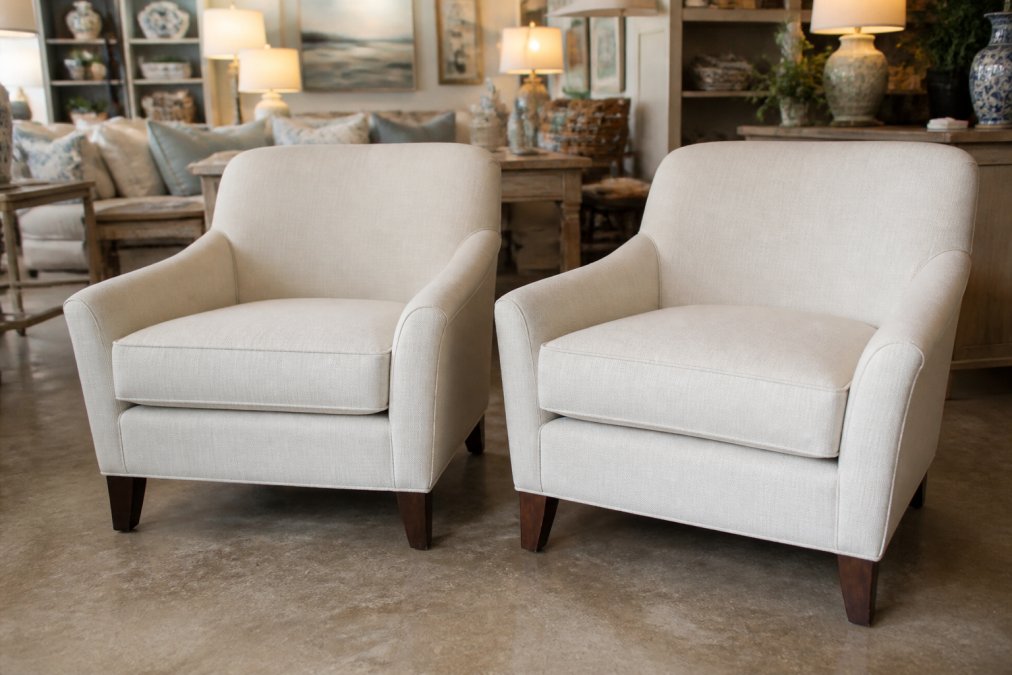
Retail advantages: Massive selection means you’ll find exactly what you want. New furniture comes with warranties. Financing and delivery services are standard.
Retail disadvantages: Prices are 50-100% higher than consignment for equivalent quality. Much contemporary furniture is designed for disposability. Delivery timelines are often 6-12 weeks.
The buying decision comes down to priorities. If you want immediate availability, warranties, and guaranteed quality, retail is appropriate. If you value unique pieces, lower prices, and proven durability, consignment offers better economics.
Seasonal Pricing Fluctuations
Consignment store pricing follows predictable seasonal patterns because furniture demand fluctuates throughout the year.
Spring and early summer see peak demand as people furnish new homes and refresh seasonal properties. Consignment stores can price higher because buyer competition is intense. A sofa might list for $950 in May versus $800 in January.
Fall and winter see declining demand. Fewer people are moving, and discretionary spending drops. Consignment stores reduce prices to maintain inventory turnover. The same sofa might drop to $650 by December.
Holiday periods create micro-cycles. November sees a slight uptick as people prepare for entertaining. December drops sharply after the holidays. January is typically the slowest month.
If you’re buying, you’ll find better deals in November through February. If you’re selling, spring is your best window for high prices.
Online Consignment Platforms vs Local Consignment Stores
The consignment landscape has split into two distinct channels: local brick-and-mortar stores and national online platforms.
Local consignment stores like Le Rouge Tete offer immediate gratification. You can see and touch items before buying. Pickup is convenient, with no shipping delays or damage risk. The store’s staff can answer questions about condition and styling. For sellers, you can drop off items knowing they’re cared for locally.
Online consignment platforms reach national and international audiences, meaning higher prices for desirable items. Chairish specializes in vintage and designer pieces, attracting buyers willing to pay premium prices. The RealReal authenticates luxury items, adding credibility. 1stDibs connects sellers with interior designers and collectors.
The tradeoff is clear: online platforms take higher commissions (20-40%) because they handle shipping, photography, customer service, and marketing. They also require items to meet specific quality and authenticity standards.
For sellers, high-value vintage, designer, or antique pieces belong on platforms like Chairish or The RealReal. Standard quality furniture in good condition works better at local consignment stores, where lower commissions mean better net proceeds.
For buyers, local stores offer convenience and immediate acquisition. Online platforms offer selection and access to pieces you couldn’t find locally.
| Channel | Commission | Best For | Shipping | Buyer Experience |
|---|---|---|---|---|
| Local Consignment (Le Rouge Tete) | 50/50 split | Standard quality, quick sales | Local pickup ($50) | See items in person |
| Chairish | 20-40% | Vintage, designer, unique pieces | Negotiated rates | Curated marketplace |
| The RealReal | 20-40% | Authenticated luxury items | White glove service | Full-service selling |
| 1stDibs | Varies (monthly fee + commission) | High-value antiques, dealers | Logistics support | Global audience |
| Ruby Lane | $45/mo + 9.9% (tiered) | Antiques, collectibles | Seller arranges | Collector-focused |
The choice between consignment and retail, whether you’re buying or selling, ultimately reflects your priorities. Retail offers convenience, selection, and guarantees. Consignment delivers value, uniqueness, and sustainability.
For sellers in the local market, Le Rouge Tete’s transparent 50/50 split, no end-date policy, and convenient pickup option remove the friction that makes consignment feel risky. For buyers, the "live in" showroom layout and curated inventory mean you’re seeing furniture in realistic context.
Frequently Asked Questions
What percentage do furniture consignment shops typically take?
Commission rates vary widely depending on the consignment model and platform. Traditional local consignment stores often use a 50/50 split, meaning the seller receives 50% of the selling price while the store keeps 50%. Online consignment platforms typically charge 20-40% commission, with luxury marketplaces sometimes charging higher percentages for lower-priced items. Always review the consignment agreement to understand exactly what percentage you'll receive after your furniture sells.
How do I determine the resale value of used furniture?
Start by researching the original retail price and the furniture's current condition. High-quality, well-maintained pieces from established brands typically retain 30-50% of their original retail price. Assess condition carefully: pristine pieces command higher prices, while those with visible wear, stains, or damage should be priced lower. Check local market demand for your furniture category and style, and consider seasonal trends. Vintage or designer pieces may appreciate if they have brand equity and collector appeal.
Is consigning furniture worth it compared to selling privately?
Consignment offers convenience and reduced effort, especially for sellers who don't want to handle marketing, photography, or buyer negotiations. However, you'll pay a commission split and wait for items to sell. Private sales through platforms like Facebook Marketplace or Craigslist keep 100% of the profit but require more work managing inquiries and logistics. Consignment works best for higher-quality pieces where the store's established customer base can reach serious buyers; private sales suit those willing to invest time for faster turnover.
What makes consignment furniture cheaper than retail?
Consignment furniture is priced lower than retail because it's pre-owned and has already experienced depreciation from its original purchase. The secondhand market naturally commands lower prices due to reduced perceived value, potential wear, and lack of warranty. Consignment stores also operate with lower overhead than traditional retail, allowing them to price items more competitively while still generating profit through their commission split. Buyers benefit from this pricing structure, accessing high-quality pieces at significant discounts compared to new furniture.
Ready to sell your furniture or find your next statement piece? Contact Le Rouge Tete to learn how our 50/50 consignment split and convenient local services make buying and selling furniture straightforward. With over 16 years serving the community, we’ve perfected the process, new items arrive weekly, and our personalized assistance helps you visualize pieces in your space before you commit.
This article was written using GrandRanker