

Table of Contents
- Assess Your Current Furniture and Priorities
- Measure Furniture for a Smaller Home
- Multi-Functional Furniture for Small Spaces
- Best Ways to Sell Used Furniture
- Decluttering Strategies That Stick
- Create Your Moving Timeline and Plan
- Common Mistakes to Avoid When Downsizing
- Conclusion
Last Updated: August 14, 2026
Assess Your Current Furniture and Priorities
Downsizing starts with honest evaluation. Before moving a single piece, understand what you actually use, what fits your lifestyle, and what’s taking up space out of obligation or habit.
The mistake most people make is treating every item equally. A dining table that seats eight when you never host dinners isn’t equally valuable to a bed you sleep in every night. Recognizing this difference is where downsizing actually begins.
Identify Essential Items vs. Sentimental Pieces
Essential items are furniture you use regularly that serves a clear function: your bed, a comfortable chair where you actually sit, a desk if you work from home, dining furniture you actually use.
Sentimental pieces carry memory and meaning but are often the biggest obstacles to downsizing. That dresser from your grandmother, the bookcase your kids built, the couch where you spent countless evenings, these items trigger guilt and nostalgia that override practical space decisions.
Here’s what matters: sentimental value doesn’t require keeping the physical object. A photograph of your grandmother’s dresser preserves the memory without consuming bedroom space. A digital scan of your child’s artwork captures the moment without needing the original piece taking up storage.
Start by separating items into three categories: daily-use essentials, occasional-use pieces, and sentimental or decorative items. This creates clarity about what each piece actually does for you.
Create Your Downsizing Checklist
A downsizing checklist transforms an overwhelming project into manageable steps. Without one, you’ll make inconsistent decisions and likely keep more than intended.
Your checklist should include:
- Room-by-room inventory of all furniture pieces
- Current dimensions of each item
- Condition assessment: excellent, good, fair, poor
- Frequency of use: daily, weekly, monthly, rarely, never
- Emotional attachment level: none, mild, strong, very strong
- Estimated resale value: high, moderate, low, none
- Final decision: keep, sell, donate, discard
The checklist forces deliberate decisions rather than impulse choices and creates a record you can reference when doubt creeps in.
Measure Furniture for a Smaller Home
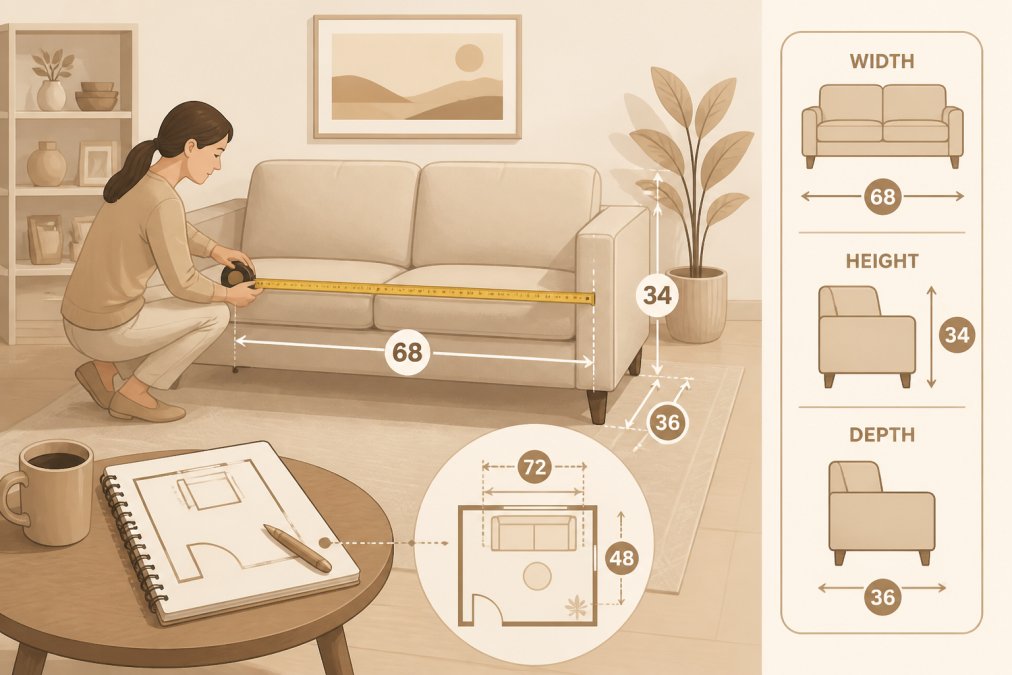
Measuring furniture accurately prevents the most common downsizing disaster: buying pieces that don’t fit. You can’t visualize how a sofa will work in a smaller space by looking at it in your current living room. Scale and proportion determine whether something works or becomes an expensive mistake.
Use the Tape Measure Method
Get a cloth tape measure, not a rigid ruler. Measure every piece of furniture you’re considering keeping: length, width, and height. Write these down immediately.
For sofas and chairs, measure the overall footprint when fully extended, including armrests and extended legs. For tables, measure the top surface dimensions plus height. For dressers and shelving, get height, width, and depth, including any legs that extend beyond the main body.
Then measure your new space. Get exact dimensions of each room, including ceiling height. Measure doorways and hallways where furniture will need to pass through. Measure window placements, outlet locations, and heating vents. A sofa that fits through your front door but not around the corner in the hallway is useless.
Write everything down in a spreadsheet or notebook with photos of the furniture and spaces. This documentation becomes invaluable when making final decisions.
Visualize Your Floor Plan
Measuring creates numbers. Floor planning creates vision. Use graph paper or a free floor planning tool online. Draw your new rooms to scale, marking walls, windows, doors, and fixed elements. Then draw your furniture pieces to the same scale and try different arrangements.
Many people discover during this step that they’re keeping too much. A living room that feels spacious with three seating pieces feels cramped with four. The floor plan doesn’t lie about space constraints.
Multi-Functional Furniture for Small Spaces
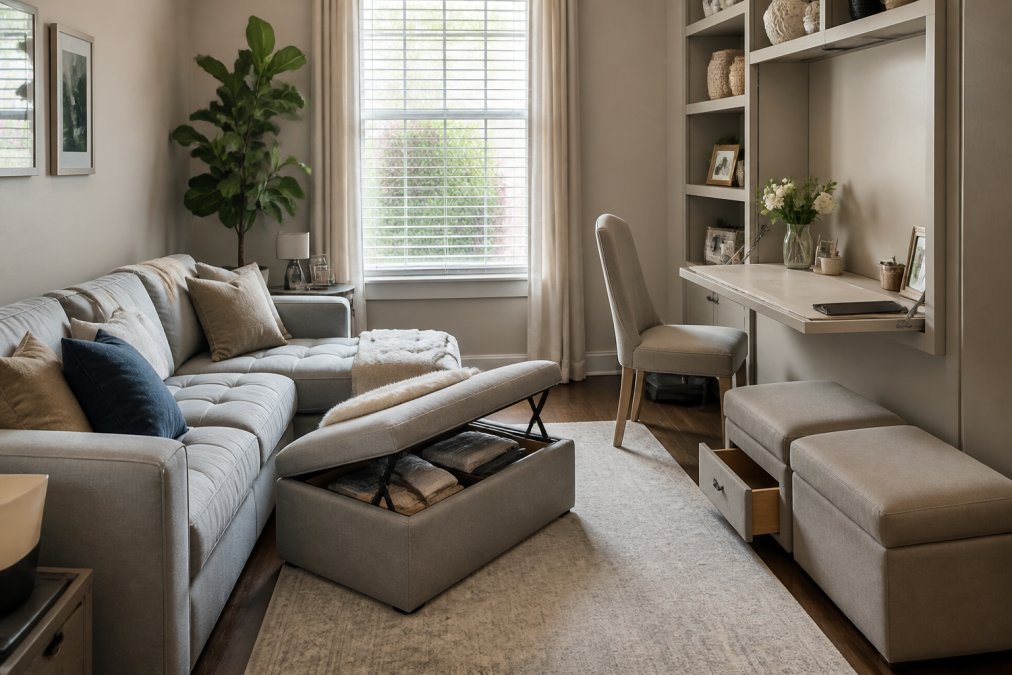
When downsizing, every piece needs to earn its place. Multi-functional furniture does this by serving multiple purposes in the same footprint. A storage ottoman provides seating, a footrest, and hidden storage. A murphy desk folds away when not in use. A nesting table expands when needed and contracts when it doesn’t.
Storage Solutions That Work Double Duty
Storage is the hidden challenge of downsizing. You’re reducing your home size but still need places to put things. Furniture that combines storage with another function solves this elegantly.
Beds with built-in drawers store seasonal clothing and items you need but don’t access frequently. Coffee tables with shelves or drawers hold remotes, magazines, and books without requiring additional furniture. Ottomans with lift-tops provide seating and storage simultaneously. Wall-mounted shelving provides display and storage without consuming floor space.
Storage furniture should be attractive enough to display, not relegated to closets. If you’re going to use the space, the pieces need to fit your aesthetic and your room’s design.
Nesting and Modular Pieces
Nesting tables stack when you don’t need them and separate when you do. A set of three nesting tables takes up the footprint of one table but provides three surfaces when needed.
Modular seating works similarly. Instead of a fixed sectional that dominates a room, modular pieces connect or separate based on your needs. Some days you need a large seating area for guests. Most days you need a compact configuration that leaves room to move through the space.
When evaluating multi-functional furniture, be honest about whether you’ll actually use the multiple functions. A murphy desk only works if you’ll consistently fold it away. Furniture that promises flexibility but requires too much effort to reconfigure becomes a frustration rather than a solution.
Best Ways to Sell Used Furniture
You’ve decided what’s leaving. Now comes the practical question: how do you actually get it out and potentially recover some money? Selling used furniture requires understanding your options and matching pieces to the right sales channel.
Some furniture sells quickly and easily. Other pieces sit for months. Condition, style, and market demand determine whether something moves fast or becomes a burden.
Consignment vs. Direct Sales
Consignment stores like Le Rouge Tete handle the entire process: they take possession of your furniture, display it, handle customer inquiries, manage the sale, and pay you a percentage when the piece sells. You don’t photograph items, write descriptions, or negotiate with buyers. The trade-off is that you receive a percentage of the sale price rather than the full amount, and you wait for items to sell.
Direct sales through Facebook Marketplace, Craigslist, or OfferUp give you the full sale price and immediate payment. You handle everything: photography, descriptions, buyer communication, and logistics. This works well for popular items that sell quickly but becomes exhausting for pieces that linger unsold.
The best approach often combines both. High-quality, in-demand, easy-to-photograph items (mid-century modern furniture, designer pieces, popular styles) sell well through direct channels. Items that are harder to describe or require seeing in person benefit from consignment, where professional display helps them sell.
Preparing Items for Sale
Furniture sells faster when it’s clean and presented well. Clean thoroughly. Dust, vacuum, wipe surfaces. Remove stains if possible. If a piece has damage, document it honestly in your description and photos. Misrepresenting condition guarantees returns and disputes.
Photograph from multiple angles in good lighting. Show the front, sides, any damage or wear, and details like hardware or fabric texture. Include a photo in a room setting so buyers can visualize scale and style. Write clear descriptions that include dimensions, material, condition, and any quirks or issues.
Price competitively by researching similar pieces on consignment sites and marketplace listings. Underpricing moves items faster but leaves money on the table. Overpricing means items sit unsold. For consignment, the store typically handles pricing based on condition and market demand.
Decluttering Strategies That Stick
The physical process of removing furniture is one challenge. The psychological process of letting go is another. Many people get stuck not because they can’t move furniture, but because they struggle with the decision to release it.
The Room-by-Room Approach
Tackling your entire home at once creates decision fatigue. Working room by room creates natural stopping points and allows you to see progress, which builds momentum.
Start with the room that will change the least in your new space. Often this is a guest bedroom or home office. Success in one room proves the process works and builds confidence for harder rooms. Save your bedroom and primary living spaces for later.
Work systematically through each room. Remove everything from one category, evaluate each piece, make decisions, and move items out before starting the next category. Document what leaves and where it goes. Closure matters, knowing items have left your home and gone somewhere specific helps you let go completely.
Overcoming Psychological Barriers
Sentimental attachment, guilt about waste, and fear of future need are the real obstacles to downsizing.
Acknowledge the emotions without letting them override practical decisions. It’s okay to feel sad about letting go of your grandmother’s dresser. That sadness doesn’t mean you need to keep a piece that doesn’t fit your space. You can honor the memory while releasing the object.
Guilt about waste is often misplaced. Donating furniture to charities, selling it to buyers who will use it, or passing it to family members means the item continues serving a purpose. Keeping furniture you don’t use because you feel guilty is actually wasteful.
The fear of needing something later is often unfounded. Most people who downsize don’t regret letting go of furniture. They regret keeping items they never use. If you genuinely need a piece later, you can buy it again.
Create Your Moving Timeline and Plan
Downsizing requires planning, realistic timelines, and organized logistics. Rushing creates stress and poor decisions.
Set Realistic Deadlines
If you’re moving in three months, work backward from that date. Allocate six weeks for decision-making and sorting, two weeks for selling or donating, and one week for final cleanup and removal.
For larger downsizing projects, extend the timeline. If you’re moving in six months, you have flexibility to sell items gradually rather than dumping everything at once. Gradual selling often brings better prices.
Build in buffer time. Moving logistics always take longer than expected. Buyers cancel pickups. Donation centers have limited hours. Furniture removal services book up. Finish the major work two weeks before your actual move date.
Organize Your Moving Logistics
Coordinate selling, donating, and moving simultaneously. Create a master list of items leaving your home and track their status: sold, scheduled for pickup, donated, discarded, or still in progress.
For items you’re keeping, coordinate with your moving company. Confirm that your furniture fits in the moving truck and in your new space.
For items you’re selling or donating, arrange pickups strategically. Group pickups by location or time to minimize disruption. If possible, coordinate with Le Rouge Tete or other local consignment services to pick up multiple items in one trip.
Common Mistakes to Avoid When Downsizing
Most downsizing failures follow predictable patterns. Recognizing these mistakes before you make them saves time, money, and frustration.
Keeping too much "just in case." The most common mistake is retaining furniture for hypothetical future scenarios. "What if we have guests?" "What if we need extra seating?" Future-proofing your furniture collection defeats the purpose of downsizing.
Underestimating the emotional difficulty. People often assume downsizing is a practical problem when it’s actually an emotional one. Acknowledge that this will be hard. Build in extra time. Accept that some decisions will be difficult.
Pricing items too high. Sellers often overestimate what used furniture is worth. A sofa that cost $3,000 new might sell for $400 used. Research comparable items before pricing. Accept that used furniture depreciates significantly.
Trying to sell everything. Not every piece of furniture is worth the effort to sell. A worn-out chair might sell for $25 after two hours of work. Donate it instead and get a tax deduction. Focus selling effort on high-value items.
Making decisions under pressure. Downsizing decisions made in a rush are often regretted. Start early. Make decisions deliberately. Don’t let external timelines force poor choices.
Conclusion
Downsizing your home furniture is ultimately about intentionality. You’re choosing which pieces genuinely serve your life and which ones are just taking up space. This choice requires honest assessment, practical planning, and emotional honesty about attachment.
When you’re ready to sell pieces as part of your downsizing process, Le Rouge Tete offers a seamless consignment experience. With over 16 years serving the community, we understand that downsizing is about more than just moving furniture, it’s about transitioning to a new lifestyle. Our 50/50 consignment split, no end dates on consignments, and convenient local pickup services ($50 for large items) make it easy to sell quality pieces while you’re reducing your home. Visit us to discuss consigning your furniture and start your downsizing journey with confidence.
Frequently Asked Questions
How do I decide what furniture to keep when downsizing my home?
Evaluate each piece by asking: Does it fit my new space? Do I use it regularly? Does it align with my lifestyle? Keep essential items that serve a clear function and pieces with genuine sentimental value. Measure your new rooms first, then match furniture to those dimensions. Items that don't fit physically or functionally should go. Be honest about heirlooms and decorative pieces, if they don't enhance your space, they're taking up room you could use more productively.
Is it better to sell or donate furniture when downsizing?
Selling works best for quality pieces in good condition, you recover some value and offset moving costs. Consignment stores like Le Rouge Tete offer a 50/50 split with no end dates, making it convenient for local furniture. Donation suits items with wear or damage; you get a tax deduction and avoid storage fees. For heirloom pieces, consider selling to family first. For bulk items, consignment saves time versus listing individually online. Choose based on condition, your timeline, and whether you need immediate cash or prefer convenience.
What are the best multi-functional furniture options for small spaces?
Storage ottomans, murphy desks, and nesting tables maximize utility in compact areas. Sectionals with built-in storage, murphy beds, and expandable dining tables adapt to your needs without permanent footprint. Shelving units that reach ceiling height use vertical space efficiently. Modular seating lets you reconfigure as your layout changes. Wall-mounted desks and fold-down tables free floor area. Before buying, measure your new space and test how pieces fit. Multi-functional furniture reduces the total number of items you need, making your downsizing effort more successful.
How do I measure furniture to ensure it fits my smaller home?
Use a tape measure to record the width, depth, and height of each piece you're keeping. Write down doorway widths, hallway clearances, and ceiling height in your new home. Sketch a floor plan to scale or use a room-planning app to test furniture placement digitally. Account for swing space on doors and walkways, furniture needs breathing room. The 4-inch rule suggests keeping at least 4 inches of space around major pieces for comfort and accessibility. Measure twice, verify doorways, and confirm corners can accommodate larger items before committing to keep them.
This article was written using GrandRanker