
Table of Contents
- Is It Safe to Buy Used Furniture? The Real Risks
- Signs of Bed Bugs in Furniture You Should Know
- How to Inspect Used Furniture for Quality and Safety
- How to Clean Used Furniture Properly
- Best Furniture to Buy Secondhand
- Furniture Items to Avoid Buying Used
- Where to Find Quality Used Furniture
- Conclusion
Last Updated: August 21, 2026
Is It Safe to Buy Used Furniture? The Real Risks
Buying used furniture saves money and reduces waste, but it comes with genuine safety concerns. At Le Rouge Tete, we’ve spent over 16 years helping customers navigate the secondhand furniture market. The primary risks fall into three categories: biological hazards like bed bugs and mold, chemical concerns from off-gassing, and structural failures. Each can be managed if you know what to look for.
Most guides focus on the "ick factor" of bed bugs and leave you terrified. In reality, bed bugs are detectable and treatable. Mold is preventable. Structural damage is visible. The real issue is that many buyers skip inspection entirely.
Bed Bugs and Pest Infestations
Bed bugs are the most common concern when buying secondhand furniture. These pests hide in seams, joints, and crevices and can infest your home within hours of arrival. However, bed bugs are not a sign of poor quality, they’re an equal-opportunity pest.
Adult bed bugs are about the size of an apple seed, reddish-brown, and move slowly. Look for the bugs themselves, dark droppings (tiny ink dots), shed skins, or eggs in seams, piping, buttons, and the underside of cushions. Beyond bed bugs, watch for dust mites, which trigger allergies, and fleas or lice if furniture came from homes with pets. All can be eliminated through proper sanitization.
Mold, Mildew, and Moisture Damage
Mold grows in damp conditions and causes respiratory issues, allergies, and structural deterioration (the CDC). Furniture stored in basements, garages, or humid climates is at higher risk. Fresh mold has a musty, earthy odor, if a piece smells actively moldy, pass on it. You can’t always reverse mold damage, and attempting to do so spreads spores throughout your home.
Check for water stains on wood surfaces, soft spots in cushions, and visible discoloration. Leather and upholstery can sometimes be salvaged if mold is surface-level, but solid wood exposed to prolonged moisture is usually a loss.
Chemical Off-Gassing and Indoor Air Quality
Older furniture often contains flame retardants, formaldehyde, and volatile organic compounds (VOCs) that off-gas into your home (the EPA). This is especially true for particle board furniture manufactured before stricter regulations. Off-gassing can cause headaches and respiratory irritation, particularly in homes with poor ventilation.
Solid wood furniture generally poses less risk than particle board or MDF. The solution isn’t to avoid used furniture, but to prioritize solid wood pieces and allow adequate off-gassing time. Airing out furniture in a garage or outdoor space for several days to weeks before bringing it inside significantly reduces chemical exposure.
Signs of Bed Bugs in Furniture You Should Know
Bed bug detection requires knowing exactly what to look for:
Live bugs or shed skins: Adult bed bugs are visible, about the size of an apple seed, flat, and reddish-brown. Shed skins appear as tan or brown husks in seams and crevices.
Dark fecal spots: Bed bugs leave small, dark droppings that look like tiny ink dots on seams, piping, and fabric.
Eggs and egg casings: Bed bug eggs are tiny, cream-colored, and often found in clusters.
Rust-colored stains: Crushed bed bugs leave rust-colored smears on fabric or seams.
Sweet odor: Heavy infestations produce a distinctive sweet, musty smell.
When inspecting, use a flashlight and magnifying glass. Check seams, piping, button tufting, and the underside of cushions. Pull back fabric to inspect underneath, bed bugs hide deep in crevices.
How to Inspect Used Furniture for Quality and Safety
A thorough inspection takes 10-15 minutes per piece and can save thousands in replacement costs.
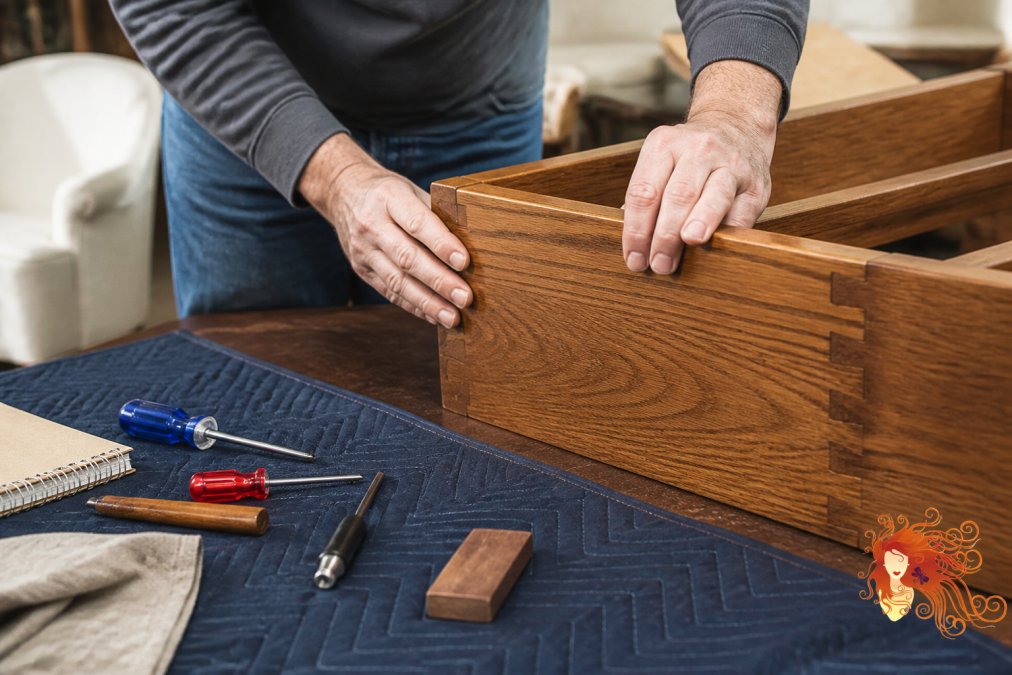
Start by examining the piece from all angles. Walk around it, look underneath, open drawers, and flip cushions.
Structural Integrity and Frame Stability
The frame is the skeleton of furniture. If it’s compromised, the piece won’t last. Wood frames should be solid and tight, not wobbly or creaky.
Test frame stability by pushing on corners and sides. A quality frame won’t move excessively. Check for visible cracks, splits, or repairs in the wood. Look for dovetail joints on drawers and corners, these interlocking wood pieces indicate solid construction. Butt joints are weaker and more prone to failure.
Examine the underside for reinforcing blocks or corner braces, which provide stability. For upholstered furniture, check springs and webbing underneath. Springs should be intact and not visibly rusted. Webbing should be tight, not sagging.
Materials Matter: Solid Wood vs. Particle Board and Veneer
Solid wood furniture lasts decades. Particle board and MDF deteriorate faster, especially if exposed to moisture. Run your hand along edges, solid wood feels warm with visible grain. Particle board feels rough and uniform.
Check for water damage, especially critical with particle board. If particle board gets wet, it swells and becomes unusable. Look for soft spots, discoloration, or swelling at furniture bases.
Inspect veneered pieces carefully. Veneer peeling at edges is usually fixable, but widespread peeling indicates glue failure and instability.
Upholstery Condition and Hidden Damage
Press on cushions to test firmness and feel for lumps or broken springs underneath. Examine seams and piping for tears or separation. Check the underside for signs of bed bugs, mold, or pet damage.
Look at fabric wear patterns. Heavy wear on armrests is normal, but extreme wear suggests the fabric is near end-of-life. Test zippers and closures. Check that all cushions are accounted for and in similar condition.
How to Clean Used Furniture Properly
Once purchased, proper cleaning and sanitization are essential. This removes surface contaminants, eliminates odors, and kills dust mites, mold spores, and other biological hazards.
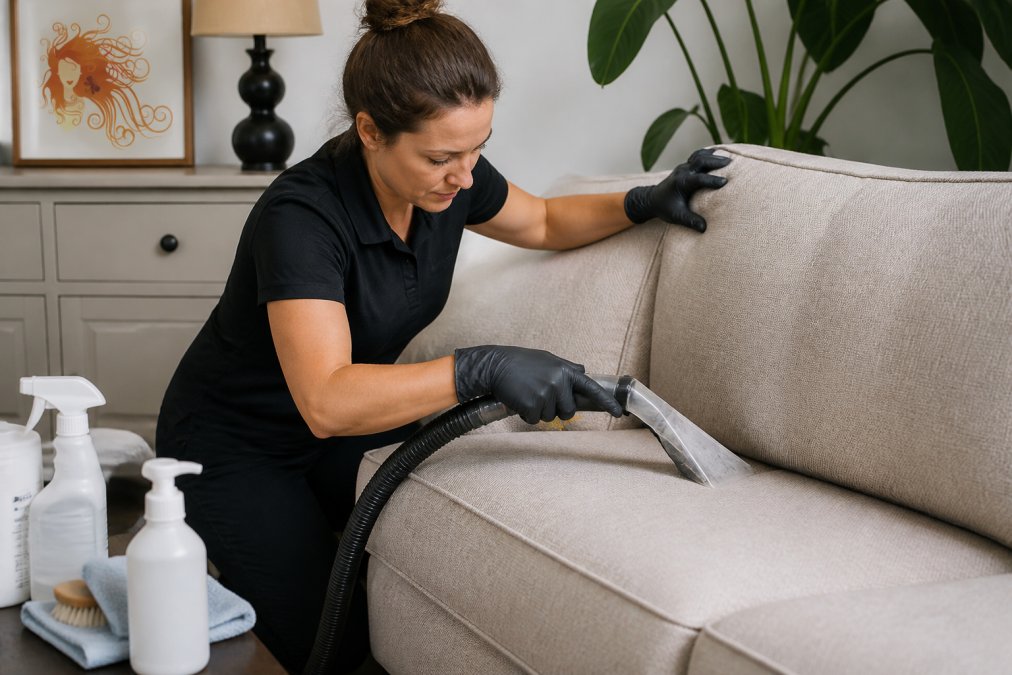
Sanitization Methods for Different Materials
Upholstered furniture: Vacuum thoroughly with a HEPA filter vacuum, paying special attention to seams and crevices. For deeper sanitization, rent or hire a professional steam cleaner. Steam heat kills bed bugs, dust mites, and mold spores at temperatures above 130°F (54°C) (the CDC).
Solid wood furniture: Wipe down with a damp cloth to remove dust. For deeper cleaning, use a wood-safe cleaner or equal parts white vinegar and water. Avoid excessive moisture. Dry immediately after cleaning.
Leather: Clean with leather-specific cleaner or saddle soap and water. Wipe with a damp cloth and dry thoroughly.
Metal and glass: Wipe with a damp cloth and dry immediately.
Addressing Odors and Off-Gassing
Musty odors often dissipate with airing and sunlight exposure. Place the piece outdoors or in a garage for several days to a week. Sunlight naturally kills bacteria and molds while allowing volatile compounds to escape.
For stubborn odors, sprinkle baking soda on upholstered surfaces, let it sit for 24 hours, then vacuum. Activated charcoal placed inside drawers also absorbs odors over time.
Chemical off-gassing decreases naturally, but you can accelerate it by improving ventilation. Open windows and use fans to circulate air. In warm months, placing furniture outdoors in shade for several days significantly reduces off-gassing.
Best Furniture to Buy Secondhand
Solid wood tables and desks: Quality wood construction means they’ll last indefinitely. Check for structural integrity and refinishing potential.
Wooden chairs and stools: Often better quality than new budget alternatives. Even if the seat needs reupholstering, the frame is usually sound.
Leather furniture: Quality leather ages well and can be refinished affordably. Avoid leather with extensive cracking or peeling.
Dressers and cabinets: Solid wood storage pieces are durable and functional with minimal risk.
Shelving units: Metal or solid wood shelving is straightforward and unlikely to have hidden damage.
Mirrors and frames: Purely functional items with minimal risk.
At Le Rouge Tete, we curate pieces that meet these criteria. Our 16 years of experience means we’ve learned which furniture categories hold value. We display items in a "live in" layout so you can see how they’ll look in your home before committing.
Furniture Items to Avoid Buying Used
Mattresses: Never buy used. They’re breeding grounds for dust mites and bed bugs and are difficult to sanitize properly.
Upholstered headboards and bed frames: Similar to mattresses, these attract bed bugs and are difficult to sanitize. Stick to solid wood or metal frames.
Particle board furniture: It deteriorates quickly, especially if exposed to moisture. New particle board pieces are often cheaper than used ones.
Office chairs with hydraulic cylinders: These mechanisms fail over time and are expensive to replace.
Cribs and baby furniture: Safety standards have changed significantly. Older cribs may not meet current standards.
Heavily stained or odorous upholstered furniture: Professional upholstery cleaning often exceeds the discount on the used price.
Furniture with visible mold or water damage: Not worth the risk. Mold remediation is expensive and often unsuccessful.
Where to Find Quality Used Furniture
Consignment stores: Curated inventory means someone has already filtered out obviously damaged pieces. Le Rouge Tete has spent 16 years building relationships and developing an eye for quality. We display furniture in a "live in" setting and stand behind our inventory with personalized assistance.
Estate sales and auctions: Often feature high-quality vintage and antique furniture. Prices can be steep, but quality is usually reliable.
Online marketplaces: Facebook Marketplace, Craigslist, and OfferUp offer the widest selection and lowest prices, but require the most due diligence.
Thrift stores: Goodwill and Salvation Army offer low prices and high volume, but quality is unpredictable. Many have no-return policies.
Rental return centers: Furniture rental companies sell returned pieces at discounts. These are often in decent condition.
Local pickup services: Prioritize sellers offering local delivery or pickup. Le Rouge Tete offers convenient $50 local pickup for large items, eliminating shipping costs and allowing inspection before committing.
Buying used furniture doesn’t have to be risky if you approach it strategically. Inspect thoroughly, clean properly, and source from reputable channels. When you prioritize structural integrity, materials quality, and condition assessment, secondhand furniture becomes an affordable way to furnish your home with pieces that last.
Le Rouge Tete makes this process easier. With over 16 years of experience and a commitment to quality, we’ve built a curated selection of pre-loved furniture that meets rigorous standards. Our "live in" store layout lets you visualize pieces in your space, and our personalized assistance helps you find exactly what you need. Contact us to explore our current inventory or discuss consigning your own furniture.
Frequently Asked Questions
What are the main health risks of buying used furniture?
The primary health risks include bed bug infestations, mold and mildew exposure, dust mite allergens, pet dander residue, and chemical off-gassing from adhesives and finishes. Bed bugs are the most common concern and can spread quickly through your home. Mold poses respiratory risks, especially for people with asthma or allergies. Proper inspection and sanitization before bringing used furniture into your home significantly reduces these risks.
How can I tell if used furniture has bed bugs before buying?
Inspect seams, piping, and under cushions for small dark spots (fecal matter) or tiny rust-colored insects. Check for shed exoskeletons and a sweet, musty odor. Examine wooden frames closely, especially joints and crevices. Look for small blood stains on upholstery. If you notice any of these signs of bed bugs in furniture, avoid the piece. When shopping at consignment stores with live-in displays, you can see items in proper lighting and examine them thoroughly before purchase.
What's the best way to clean and sanitize secondhand furniture?
The method depends on the material. For upholstered pieces, use a HEPA-filter vacuum, then steam clean at 160°F or higher to kill bed bugs and dust mites. For wood furniture, wipe with a damp cloth and allow to air dry completely. Leather can be cleaned with leather cleaner and conditioner. All pieces should air out for 24-48 hours in sunlight if possible. Consider professional upholstery cleaning for valuable pieces. Ensure proper ventilation during and after cleaning to manage any odors.
Which types of furniture are safest to buy secondhand?
Solid wood furniture, dining tables, bookcases, and wooden frames are generally safe choices if structurally sound. Metal furniture, glass tables, and wood pieces without upholstery are easier to clean and inspect. Avoid upholstered items like mattresses, pillows, and heavily cushioned sofas unless you can thoroughly inspect and sanitize them. Wooden bedroom furniture is acceptable if you verify structural integrity and check for bed bugs. Consignment stores that display items in live-in layouts help you assess quality and condition before purchase.
This article was written using GrandRanker