

Table of Contents
- How the Consignment Process Works
- How to Prepare Furniture for Consignment
- Understanding Furniture Consignment Split Percentage
- What Items Are Accepted in Consignment
- Consignment vs. Selling Furniture Outright
- Finding a Reputable Local Consignment Shop
- Pricing, Valuation, and Getting Paid
- Conclusion
Last Updated: August 10, 2026
How the Consignment Process Works
Furniture consignment is a straightforward arrangement where you place your items in a store, and the shop sells them on your behalf in exchange for a commission. You retain ownership until the piece sells, at which point you receive your share of the proceeds. The process eliminates the hassle of managing private sales while giving your furniture a professional retail environment where it’s more likely to find a buyer.
You bring your furniture to the shop, where staff evaluate its condition and sales potential. If accepted, your item enters their inventory and gets displayed alongside other consigned pieces. The shop handles all customer interactions, pricing, and the sale itself. Once sold, you’re notified and paid your portion of the proceeds. The entire cycle usually takes several weeks to a few months, depending on demand and the item’s appeal.
Le Rouge Tete operates on a straightforward 50/50 consignment split, meaning you receive half of the final sale price. There’s no end date on consignments, your furniture remains available for sale as long as it’s in the store. This differs from some shops that impose time limits or charge fees if items don’t sell within a specified period.
How to Prepare Furniture for Consignment
Before bringing furniture to a consignment shop, proper preparation significantly improves your chances of acceptance and faster sales. Consignment shops receive dozens of pieces weekly and are selective about what they display.
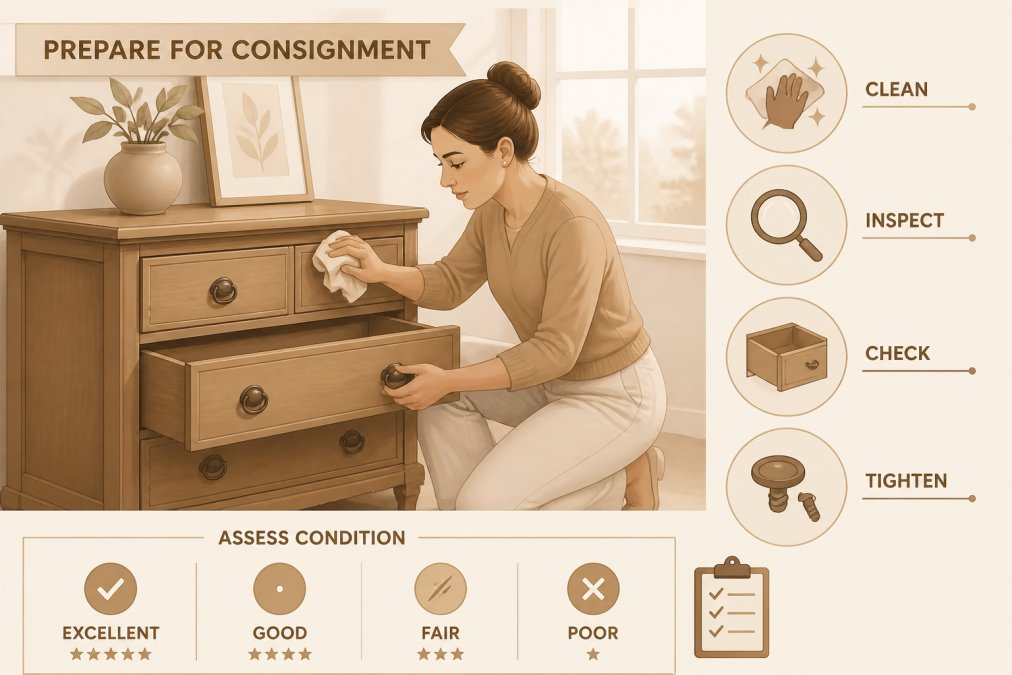
Start with thorough cleaning. Dust all surfaces, wipe down wood with appropriate cleaners, and vacuum upholstered pieces. Remove visible stains, pet hair, or odors. Cleanliness is the first impression, and a musty smell or surface dirt can disqualify a piece even if structurally sound.
Assess condition honestly. Check for loose joints, broken hardware, torn upholstery, or water damage. Take close-up photos of any damage to give the consignment shop a realistic sense of what they’re working with. Consider minor repairs like reupholstering a chair seat or replacing cabinet handles, but don’t over-invest. A $200 repair on a $300 piece doesn’t make financial sense.
Disassemble large pieces if possible. Tables with removable leaves, shelving units, and bed frames take up less space and are easier to display. Include all hardware in clearly marked bags and bring assembly instructions if they exist.
Understanding Furniture Consignment Split Percentage
The consignment split percentage, typically ranging from 40/60 to 50/50, determines how much of the sale price you keep versus what the shop retains as commission. A 50/50 split means you receive 50% of the final selling price, and the shop keeps the other 50%. This is generally considered fair, as the shop invests in rent, utilities, staff, insurance, and marketing. Le Rouge Tete uses a 50/50 model, which is competitive in the local market.
Some consignment shops offer sliding scales based on item value or category. Always clarify this before consigning. Pay attention to what’s included in the split calculation. Some shops deduct cleaning, repairs, or photography fees from your proceeds before splitting. Ask whether the split is calculated on the full sale price or after deductions.
What Items Are Accepted in Consignment
Not all furniture qualifies for consignment. Shops are selective about inventory to maintain quality standards and ensure pieces will actually sell.
Most consignment shops accept solid wood furniture in good condition, dining tables, dressers, bookcases, desks, and chairs. Upholstered pieces like sofas, armchairs, and ottomans are welcome if the fabric is clean and structurally sound. Vintage and antique furniture often commands strong interest, particularly mid-century modern pieces and high-end designer items.
Condition is the primary filter. Furniture must be clean, functional, and free of major damage. Small cosmetic wear is acceptable; a few scratches on a table or minor fading on upholstery won’t disqualify a piece. Structural damage, broken mechanisms, water stains, or severe odors typically result in rejection.
Style matters too. Consignment shops curate inventory to match their customer base and market demand. A store focused on modern, minimalist design may decline ornate Victorian furniture. Mass-produced furniture from big-box retailers often lacks resale appeal. Ask the shop directly about their acceptance criteria. Le Rouge Tete maintains high standards for the pieces they display, ensuring that consigned furniture aligns with their curated, upscale aesthetic.
Consignment vs. Selling Furniture Outright
Choosing between consignment and private sale depends on your timeline, effort tolerance, and financial goals. Each approach has distinct advantages and trade-offs.
Consignment requires minimal effort on your part. The shop handles pricing, display, customer interaction, and sale completion. This is ideal if you’re busy, moving quickly, or uncomfortable with sales conversations. The trade-off is lower net proceeds due to commission split and a longer wait for payment.
Private sales give you complete control over pricing and timeline. You can set asking prices higher than a consignment shop might, potentially netting more money overall. However, you handle all logistics: photographing items, responding to inquiries, negotiating, arranging pickup or delivery, and managing no-shows.
Consignment shops offer middle ground. You avoid the hassle of private sales while benefiting from professional presentation and foot traffic. A curated retail environment, especially stores like Le Rouge Tete that display furniture in "live in" settings, helps buyers visualize pieces in their own homes. This increases perceived value and sales likelihood compared to online listings.
Consider the item’s value and your circumstances. High-end furniture with strong resale appeal may justify the effort of private sale to maximize proceeds. Everyday pieces, bulk liquidation during a move, or items you want to offload quickly favor consignment. Consignment also removes the psychological burden of negotiation, as the shop sets the price and buyers either accept it or move on.
| Approach | Timeline | Effort | Net Proceeds | Best For |
|---|---|---|---|---|
| Consignment | 4-12 weeks | Minimal | 40-50% of sale price | Busy people, bulk items, quick liquidation |
| Private Sale | 1-8 weeks | High | 70-90% of asking price | High-value items, time availability, negotiation comfort |
| Consignment Shop | 2-6 weeks | Low | 50% of sale price | Professional presentation, local convenience |
Finding a Reputable Local Consignment Shop
Locating a trustworthy consignment shop requires research beyond a quick Google search. The quality of the shop directly impacts your experience, likelihood of sale, and ultimate earnings.

Check online reviews on Google, Yelp, and Facebook. Look for patterns in customer feedback about fair pricing, quick sales, and reliable payment. Pay attention to reviews from people consigning furniture, as their experiences directly mirror what you’ll encounter.
Visit the shop in person before committing. Observe the store layout and furniture quality. Is the space organized and clean? Does the inventory match your furniture’s style and quality level? Ask detailed questions about their consignment process, intake timeline, what happens if an item doesn’t sell, payment frequency, and price reduction policies. Reputable shops provide clear, straightforward answers.
Check their consignment agreement carefully. Look for hidden fees, unreasonable time limits, or clauses allowing the shop to donate unsold items without notifying you. A legitimate agreement should specify the commission split, maximum consignment period, payment schedule, and your rights if the item doesn’t sell.
Le Rouge Tete’s 16-year track record in the community provides credibility. Their 50/50 split and no-end-date policy remove common friction points. The "live in" store layout demonstrates commitment to presentation and customer experience. Ask about their customer base and whether they offer pickup or delivery services.
Pricing, Valuation, and Getting Paid
Furniture valuation for consignment differs significantly from retail pricing or personal appraisals. Consignment shops price items for quick sale, not maximum profit, which means your net proceeds depend on realistic market assessment.
The consignment shop determines pricing based on condition, style, market demand, and comparable sales. A dining table in excellent condition might be priced at 40-50% of its original retail cost. Vintage or designer pieces command higher percentages because they attract collectors willing to pay premium prices.
Ask the shop how they arrive at their pricing. Transparent shops explain their logic clearly. Understand that consignment pricing isn’t personal appraisal. A piece you paid $2,000 for five years ago may be valued at $400 for consignment sale. Furniture depreciates, styles change, and market conditions shift.
Price reductions are standard practice. If an item doesn’t sell after 30-45 days, the shop typically reduces the price by 10-20% to stimulate interest. Discuss the shop’s price reduction schedule upfront so you understand how your earnings potential changes if the item sits.
Payment timing varies by shop. Some pay consignors weekly or bi-weekly as items sell. Others accumulate sales and pay monthly. Ask about Le Rouge Tete’s specific payment schedule and whether you receive payment immediately after sale or if there’s a holding period.
Keep records of everything. Get a receipt listing consigned items, agreed pricing, the consignment date, and commission terms. Request regular updates on your items’ status. When something sells, request a receipt showing the final price and your net proceeds.
Conclusion
Consigning furniture locally offers a practical path to declutter your home and earn money without the hassle of managing private sales. The process is straightforward: bring your items to a reputable shop, they handle the sale, and you receive your share of proceeds. Success depends on choosing the right consignment partner and preparing your furniture properly for display.
Le Rouge Tete brings 16 years of community experience to the consignment process, offering a 50/50 split with no end dates on consignments and convenient local pickup services for large items. Their "live in" store layout helps you visualize pieces in realistic settings, and their commitment to quality ensures your furniture is displayed alongside carefully curated inventory. Contact Le Rouge Tete to discuss consigning your furniture and discover how their expertise can help you achieve your liquidation or decorating goals.
Frequently Asked Questions
How do I know consignment furniture will actually look good in my space before I buy?
Reputable consignment shops display furniture in 'live in' layouts that let you visualize pieces in realistic room settings. Visit the shop in person to see items under natural light and assess condition firsthand. Many shops, including those serving the Crystal Coast area, allow you to hold items for 24 hours while you decide. This hands-on approach beats online shopping because you can inspect for damage, test drawers and joints, and see the actual finish and patina.
What's the difference between a 50/50 consignment split and other commission rates?
A 50/50 consignment split means you receive 50% of the final sale price after the item sells. Other shops may charge 40/60 splits (you get 40%) or take a flat commission fee. The 50/50 arrangement is straightforward and fair, you know exactly what percentage you'll earn. Before consigning, ask the shop about their furniture consignment split percentage, any monthly fees, and whether they adjust splits based on item value or how long pieces sit unsold.
How long does furniture typically stay on the consignment floor?
Consignment periods vary by shop. Many stores have no end dates on consignments, meaning your items can remain on display indefinitely until they sell. However, some shops enforce 60- to 90-day limits and charge pickup fees if items don't sell. Before signing a consignment agreement, clarify the consignment period, whether there are storage or holding fees after a certain timeframe, and what happens to unsold items. Shops with no end dates give you more flexibility and reduce pressure to lower prices artificially.
Is consigning furniture better than selling it myself on Facebook Marketplace or Craigslist?
Consignment vs. selling furniture outright each has trade-offs. Selling privately gives you full control of pricing and timing, but requires photographing items, fielding inquiries, arranging pickup, and handling payment. Consignment shops handle photography, display, customer inquiries, and transactions for you. You earn less per item (typically 50%) but save time and effort. Consignment works best if you're downsizing large quantities, want professional presentation, or prefer not to manage individual sales. Private sales work better if you have just a few high-value pieces and want maximum profit.
This article was written using GrandRanker