

Table of Contents
- Why Consignment Shops Reject Uncleaned Upholstered Furniture
- How to Prepare Furniture for Consignment: A Step-by-Step Checklist
- Upholstery Cleaning Codes W S WS X: What Each Letter Means
- Vacuuming and Spot-Cleaning Upholstered Furniture Safely
- Homemade Upholstery Cleaner for Furniture: Safe DIY Recipes
- How Long Upholstery Takes to Dry After Cleaning
- Odor, Pet Hair, and Sunlight: Final Prep Before You Consign
- Frequently Asked Questions
Last Updated: October 8, 2026
Why Consignment Shops Reject Uncleaned Upholstered Furniture
Most upholstered furniture gets turned away at consignment for one reason: it arrives dirty, and the seller never noticed. At Le Rouge Tete, we’ve inspected thousands of pieces, and the pattern is always the same.
Consignment shops aren’t being picky for the sake of it. Floor space is limited, and every piece has to sell within a reasonable window. A sofa that smells like a dog or shows gray grime on the arms will sit for months.
What Acceptance Standards Actually Look For
Acceptance standards come down to three things: cleanliness, structure, and odor. A piece can have a small stain and still get accepted. It rarely gets accepted if it smells, feels sticky, or sheds pet hair when you run a hand across it.
Here’s what we check on every piece:
- Surface soil: Visible grime on arms, headrests, and seat cushions
- Odor: Smoke, pets, mildew, or heavy perfume
- Structural soundness: No sagging, broken frames, or torn seams
- Fabric condition: No pilling, fading, or stretched upholstery
- Cleanliness of crevices: Crumbs, debris, and dust in the seams
A clean piece with minor wear outsells a dirty piece in perfect structural shape every time. Cleaning is the highest-return prep step before consignment.
How to Prepare Furniture for Consignment: A Step-by-Step Checklist
Preparing furniture for consignment is a five-step process: vacuum, test, spot-clean, deodorize, and dry. Skipping any step is the fastest way to get turned down or to damage a fabric you can’t replace.
Work through this checklist in order:
- Check the care tag for a cleaning code before touching the fabric
- Vacuum all surfaces, including under cushions and inside seams
- Test your cleaner on a hidden spot and wait 24 hours
- Spot-clean stains by blotting, never rubbing
- Deodorize with baking soda, then vacuum it out
- Air-dry fully in a ventilated space before moving the piece
Most sellers rush step three. A hidden test patch is the only way to know if a cleaner will fade or bleed a fabric. If you skip it, you risk ruining the piece right before consignment.
Upholstery Cleaning Codes W S WS X: What Each Letter Means
Upholstery cleaning codes tell you which cleaner is safe for a specific fabric. You’ll find them on the furniture’s care tag, usually as a single letter. Ignoring the code is the most common way sellers damage fabric before consigning it.
Here’s what each code means:
| Code | Meaning | Safe Cleaner | Watch Out For |
|---|---|---|---|
| W | Water-based cleaners only | Mild soap and water | Solvents can set stains |
| S | Solvent-based cleaners only | Dry-cleaning solvent | Water causes rings and shrinkage |
| WS | Water or solvent safe | Either method | Still test first |
| X | Vacuum only | None | Any liquid can damage fabric |
If the tag is missing or unreadable, treat the piece as code X. Vacuum it and leave liquid cleaners alone.
Using water on a code S fabric can leave permanent rings and shrink the weave. Once that happens, most consignment shops will decline the piece.
Vacuuming and Spot-Cleaning Upholstered Furniture Safely
Vacuuming is the single most important step, and it’s the one sellers skip. A vacuum lifts dust, crumbs, and pet hair that no spot cleaner can reach.
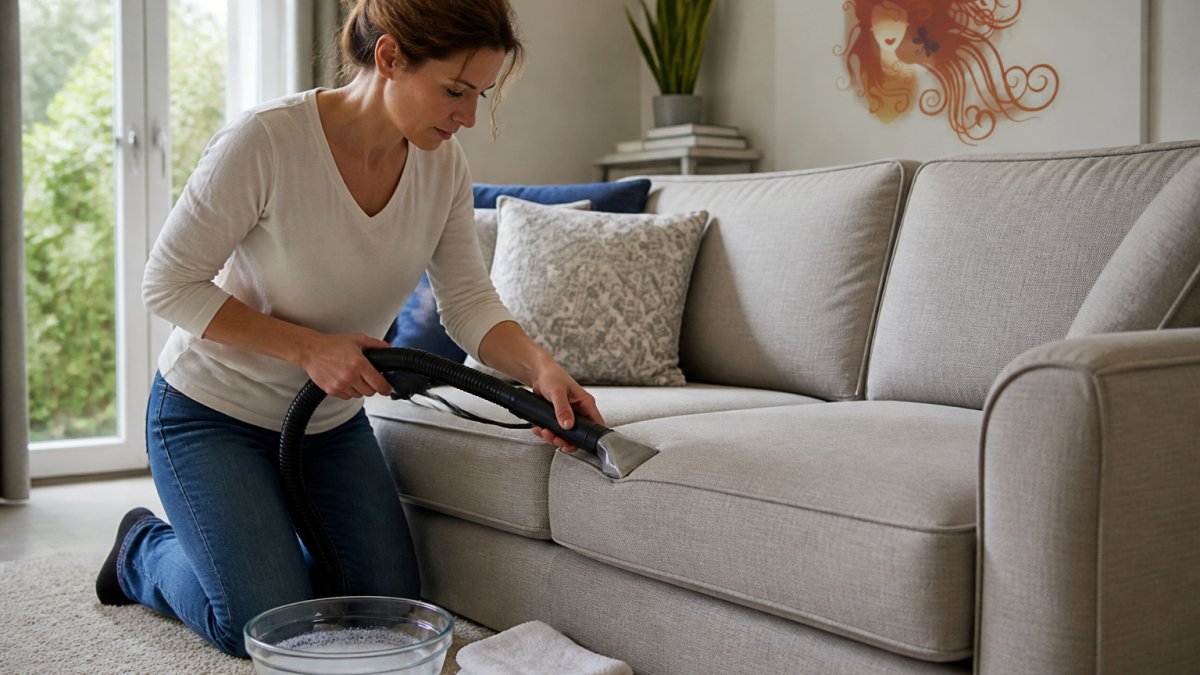
Use a brush attachment on low suction. Work in overlapping passes across the seat, back, arms, and skirt. Then switch to a crevice tool for the seams. That’s where debris collects and where odors start.
Blot, Don’t Rub: Stain Removal That Protects the Fabric
Blotting lifts a stain out of the fabric. Rubbing pushes it deeper and frays the fibers. This one habit separates a piece that cleans up well from one that looks scrubbed.
Apply a small amount of cleaner to a white cloth, not directly to the fabric. Press down and hold for a few seconds. Work from the outside of the stain toward the center to stop it from spreading.
Homemade Upholstery Cleaner for Furniture: Safe DIY Recipes
A homemade upholstery cleaner works well for most code W and WS fabrics, and it costs almost nothing to mix. The key is keeping it mild and matching the recipe to the fabric code on the care tag. Stronger isn’t better on upholstery, it’s how sellers fade dye, shrink weaves, and leave water rings right before a consignment appointment.
Match the Recipe to the Cleaning Code
Use the code you found on the care tag to pick a method. If the tag is missing, treat the piece as code X and vacuum only.
- Code W (water-based safe): Mild soap solution or diluted laundry detergent. Water is safe here.
- Code S (solvent only): Skip water entirely. Use a solvent-based dry-cleaning product from the hardware or grocery store, applied to a white cloth. Water on code S causes rings and shrinkage.
- Code WS (water or solvent): Either method works. Start with the mildest option and escalate only if the stain persists.
- Code X (vacuum only): No liquid cleaner of any kind. Vacuum, brush, and air out. Anything wet can damage the fabric.
Three DIY Recipes That Are Safe on Code W and WS
- Mild soap solution: A few drops of clear, fragrance-free dish soap in one cup of warm water. Best for general soil on arms, headrests, and seat cushions.
- Laundry detergent mix: One teaspoon of mild liquid detergent in one cup of water. Slightly stronger on body oils and food stains.
- Isopropyl alcohol (70%): For ink and grease spots on solvent-safe fabric. Apply to a white cloth, not the fabric, and blot. Alcohol evaporates fast, so it won’t leave a water ring.
Material-Specific Cautions
Not every fabric behaves the same, even within the same code. These are the failure modes that get pieces declined at inspection.
- Velvet and chenille: Water leaves crush marks and rings in the pile. Use a solvent cleaner or a dry velvet brush, and brush the nap in one direction after any spot treatment.
- Linen: Can shrink and wrinkle permanently if soaked. Blot, don’t saturate, and dry flat if the cover is removable.
- Leather and faux leather: Never use dish soap or detergent, it strips the finish. Use a dedicated leather cleaner and follow with a conditioner. Water alone can leave a ring on unfinished leather.
- Older upholstery (pre-1990s): Dyes are less colorfast and foam may be degraded. Test every product on a hidden area and wait a full 24 hours before touching the visible surface.
- Dark or saturated colors: Test for color transfer by blotting a white cloth on a hidden spot. If dye lifts onto the cloth, stop, the fabric will bleed.
The 24-Hour Test Rule
Always test on an inconspicuous area first, the back of a skirt, the underside of a cushion, or the deck under the seat. Apply the cleaner, let it sit the way you would on the real stain, then wait a full 24 hours. Check for color change, ring formation, shrinkage, and texture change. If any of those appear, switch to a different method or leave the spot alone.
Mix only what you’ll use in one session. A soap solution that sits grows bacteria, and you’ll be spreading that back onto the fabric. Discard leftovers rather than storing them.
How Long Upholstery Takes to Dry After Cleaning
Most upholstery dries in 4 to 12 hours with good airflow, but that range hides a lot of variation. A thin cotton slipcover over a foam cushion can be dry in four hours.
Damp fabric is the number one reason a clean piece gets rejected. Moisture trapped in padding feeds mildew, and mildew produces the musty, basement smell that buyers associate with water damage.
Drying Times by Material and Fill
Use these as planning estimates, not guarantees. Always confirm by touch before you schedule a drop-off or pickup.
| Material or fill | Typical dry time | Notes |
|---|---|---|
| Cotton or linen slipcover, thin foam | 4-8 hours | Fastest to dry; watch for shrinkage on unwashed linen |
| Standard polyester blend, foam cushions | 6-12 hours | Most common sofa build |
| Velvet, chenille, or thick woven | 12-24 hours | Pile holds moisture; brush nap after drying |
| Down or down-blend cushions | 24-48 hours | Inner feathers trap water; may need two sessions |
| Leather or faux leather | 2-6 hours surface | Wipe dry immediately; never soak |
How to Dry Upholstery Without Causing Damage
Airflow does the work. Heat and direct sun cause more problems than they solve.
- Open windows and run a fan across the piece. A box fan pointed at the seat, plus a second fan behind it, cuts dry time roughly in half compared to still air.
- Blot up excess moisture with a dry white towel before you start air-drying. Press down, don’t rub.
- Prop cushions on their edges so air reaches the top, bottom, and sides at once. Stacked cushions dry on the outside and stay damp in the middle.
- Avoid direct sunlight. It can fade dye and, on some fabrics, set a watermark into the weave.
- Skip the hair dryer and space heater. Concentrated heat can shrink synthetic fibers and warp foam.
The Touch Test Before You Consign
Press the palm of your hand flat against the seat cushion and hold for five seconds. If your hand comes away feeling cool or slightly moist, the piece is not dry.
A piece that still smells faintly of cleaner or damp fabric is not ready. Let it air another 12 hours and re-test. Consignment shops inspect by smell as much as by sight, and a musty note is one of the fastest ways to get turned away.
Never consign a piece that still feels cool or damp to the touch. Mildew can develop inside the padding within 24 to 48 hours of a damp drop-off, and by the time it’s on the showroom floor the odor is already set.
Odor, Pet Hair, and Sunlight: Final Prep Before You Consign
Odor and pet hair are the two things that get a piece declined fastest. Both are fixable, but only if you handle them before the piece leaves your home.
Sprinkle baking soda over the fabric and let it sit for a few hours, then vacuum it out.
At Le Rouge Tete, we’ve built our whole process around making consignment simple. If you’re downsizing or clearing a rental, our $50 local pickup handles the heavy lifting for you.
Frequently Asked Questions
Can I use Dawn dish soap to clean my fabric couch before consigning it?
Yes, a few drops of Dawn or another mild dish soap in warm water works well on most water-safe fabrics. Mix roughly one teaspoon per cup of water, dip a sponge, wring it out so it is barely damp, and blot the stain rather than soaking the cushion. Always test on an inconspicuous area first, like the back or underside, and let it dry fully to check for colorfastness. If the fabric code is S or X, skip water-based soap entirely.
How do I clean thrifted upholstered furniture before consigning it?
Start by vacuuming every surface, including under cushions and along seams, to lift dust, crumbs, and pet hair. Check the fabric cleaning code tag, then spot-clean stains with a cleaner matched to that code. For odors, sprinkle baking soda, let it sit for a few hours, and vacuum it up. Air the piece outside in shade, not direct sunlight, until it is completely dry before you bring it in for consignment.
How long should upholstered furniture dry after cleaning?
Most upholstery dries in 4 to 12 hours with good airflow. Humidity, fabric thickness, and how much moisture you used all affect timing. Run a fan, open windows, and avoid direct sunlight, which can fade or stiffen fabric. If the piece still feels cool or damp to the touch after 12 hours, give it more time. Consigning damp furniture risks mildew and a musty smell that shops will reject.
Should I clean upholstery myself or hire a professional before consigning?
DIY cleaning works for surface dust, light stains, and odors on water-safe fabrics. Hire a professional for set-in stains, heavy pet accidents, or delicate materials like silk, velvet, or vintage pieces with unknown fabric content. Professional cleaning typically costs more than the piece may earn at consignment, so weigh that against your split. If the furniture has structural damage, sagging, or tears, cleaning will not fix it and most shops will pass.
Cleaning a piece before consignment takes an afternoon, but it’s the difference between a sale and a rejection. If you’d rather skip the work, Le Rouge Tete handles inspected, ready-to-sell furniture through our 50/50 split, no end dates, and convenient $50 local pickup for large items. Bring us a clean piece, and we’ll help it find its next home.