
Last Updated: November 5, 2026
Quick Summary
To stage furniture for a quick consignment sale, clean the piece, shoot it in natural light against a plain neutral wall, and add only two or three neutral props so the furniture stays the focal point. Plan six to eight photos per piece, including angled views and close-ups of the finish and hardware.
- Set up a staging area in about 30 minutes with a clean corner and decent light.
- Shoot near a window in soft morning or late afternoon light, and turn off flash.
- Plan six to eight photos per piece, shooting at eye level or slightly lower.
- Solid wood dressers and side tables move fastest with Morehead City coastal buyers.
- Le Rouge Tete uses a 50/50 split with no end dates on consignments.
Table of Contents
- Why Staging Decides How Fast Your Furniture Sells
- How to Prepare Furniture for Consignment Before Staging
- The 30-Minute Staging Area Setup
- How to Photograph Furniture for Sale: Angles and Close-Ups
- Best Furniture to Sell on Consignment in Morehead City
- Pricing, Commission, and Payout Expectations
- What Le Rouge Tete Looks for at Intake
- Book Your Morehead City Consignment Drop-Off
- Frequently Asked Questions
Why Staging Decides How Fast Your Furniture Sells
A well-staged piece sells faster because buyers decide from photos before they ever walk in. Staging is how you control that first impression. Pieces often sit for weeks when the listing photo is dim, cluttered, or shot from one flat angle. The furniture may be fine; the presentation is what buyers see first.
Here is the core idea behind a quick consignment sale: your photos are the product. A buyer scrolling online gives each image a second or two. If the wood looks dull or the room looks crowded, they keep scrolling.
So staging is not decoration. It is speed.
Below, we walk through prep, a fast staging setup, photo angles, pricing, and what shops look for at intake. Do the small things right and your piece moves.
How to Prepare Furniture for Consignment Before Staging
Preparation comes first, and it takes less time than most people expect. Clean the piece before it ever reaches the staging area. Dust gets into wood grain and shows up in photos as a gray haze.
Start with these steps:
- Wipe down all surfaces with a soft cloth
- Vacuum upholstery and under cushions
- Check drawers and doors for loose hardware
- Tighten screws and reattach any wobbly legs
- Note every scratch, chip, and worn spot for your condition disclosure
Honesty here pays off. A buyer who spots an undisclosed scratch after purchase may feel misled. A buyer who knows about it up front feels respected.
For a deeper walkthrough of the prep and staging sequence, see our guide on how to stage furniture for resale.
One more thing: measure the piece. Width, depth, height, and any clearance for doorways. Buyers ask for dimensions constantly, and having them ready speeds up every inquiry.
The 30-Minute Staging Area Setup
You do not need a studio. You need a clean corner, decent light, and about half an hour. Here is a timed checklist we would use:
- Minutes 0-5: Clear the area. Remove boxes, cords, and clutter from the frame.
- Minutes 5-10: Move the piece so its best side faces the light source.
- Minutes 10-15: Wipe the piece again and check for smudges the camera will catch.
- Minutes 15-25: Add two or three props, no more.
- Minutes 25-30: Take a test shot and review it on your phone before you commit.
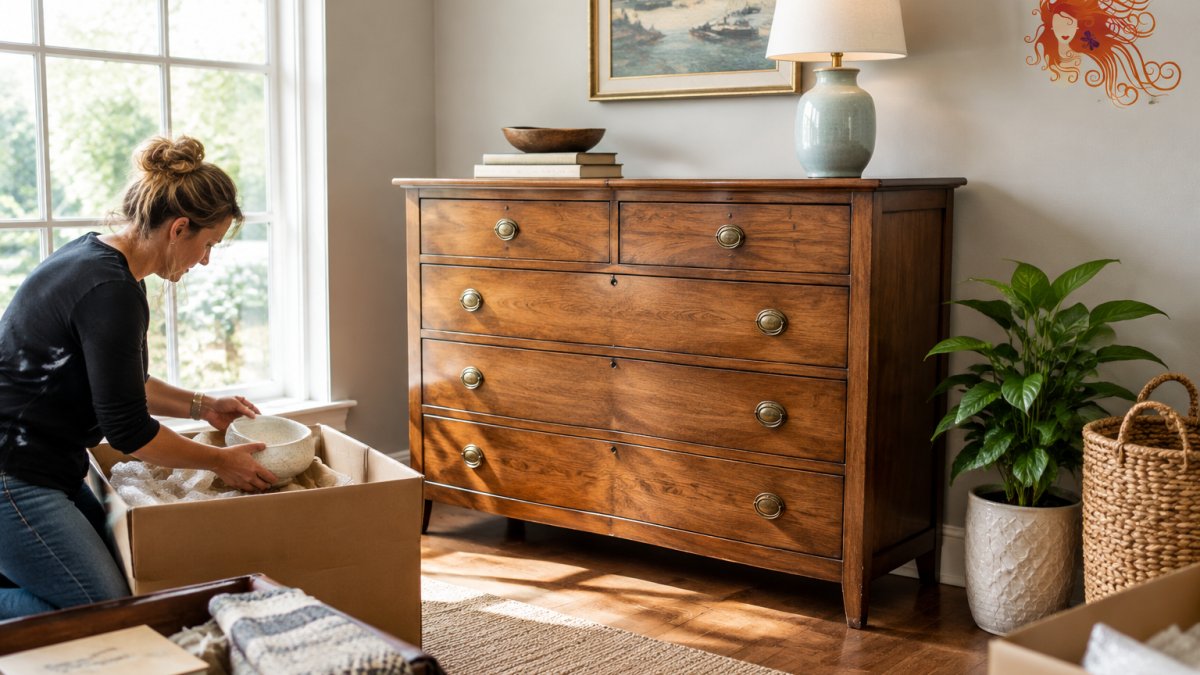
Lighting and Background Choices That Flatter Furniture
Natural light wins every time. Shoot near a window during soft morning or late afternoon hours. Direct midday sun creates harsh shadows and blown-out highlights on wood.
Turn off the overhead light and the camera flash. Mixed lighting shifts color, and a warm oak can read as orange in the final photo.
For the background, pick a plain neutral wall. A busy wallpaper or a cluttered shelf pulls the eye away from the piece. If your wall is not neutral, hang a plain sheet behind the furniture.
Props, Balance, and Keeping the Piece as the Focal Point
Props should support the piece, not compete with it. Two or three items are plenty:
- A small plant or vase
- A folded throw or neutral pillow
- A simple basket or tray
Keep the styling neutral so buyers can imagine their own decor in the space. A loud patterned rug or a shelf of knickknacks makes the photo about your taste, not the furniture.
The piece stays the focal point. If a prop draws your eye first, remove it.
Here is the timed checklist we would use to set up a staging area in about half an hour.
| Time | What to do |
|---|---|
| Minutes 0-5 | Clear the area of boxes, cords, and clutter |
| Minutes 5-10 | Move the piece so its best side faces the light |
| Minutes 10-15 | Wipe the piece again and check for smudges |
| Minutes 15-25 | Add two or three props, no more |
| Minutes 25-30 | Take a test shot and review it on your phone |
How to Photograph Furniture for Sale: Angles and Close-Ups
Good product photography for furniture means shooting from multiple angles and getting close on the details that sell. Plan for six to eight photos per piece.
Your shot list:
- Straight-on front view
- Two angled side views
- A close-up of the wood finish or upholstery texture
- A close-up of any distinctive feature, like carved trim or brass hardware
- A detail shot of the top surface
- One photo showing scale, ideally with a common object nearby
Shoot at eye level or slightly lower for larger pieces. A high angle makes a tall dresser look squat.
Keep the phone steady or use a tripod. Blurry photos kill buyer confidence faster than anything else.
Want the full method for shooting pieces for online listings? Read our article on how to photograph furniture for online sales.
Best Furniture to Sell on Consignment in Morehead City
Solid wood pieces move fastest here. Coastal buyers want furniture that holds up to humidity and salt air, and they know the difference between real wood and particle board.
The strongest candidates:
- Solid wood dressers and side tables
- Leather sofas and loveseats in good condition
- Wicker and rattan pieces that suit the coastal style
- Quality dining sets with all chairs present
- Upholstered accent chairs with clean fabric
Weak candidates include anything with structural damage, heavy pet odor, or missing parts. Shops often decline pieces like these.
Vacation rental owners are one group of buyers who look for durable, stylish pieces at value prices.
For a fuller list of brands and styles that perform well, see what furniture brands sell best at consignment.
Pricing, Commission, and Payout Expectations
Pricing is where most sellers guess, and guessing costs money. A competitive price based on condition and brand generally helps a piece sell. Overpriced pieces can sit longer.
Set your price by checking what similar pieces actually sold for, not what sellers are asking. Then subtract for any flaws you disclosed. Pricing depends on condition, brand, and demand, and the shop can advise on a price for your specific piece.
Commission works on a split. At Le Rouge Tete, our consignment sale terms use a 50/50 split, and consignments have no end dates. Your piece stays on the floor until it sells.
Three pricing mechanics are worth confirming with any shop before you sign:
- Commission split: the percentage the shop keeps versus what you receive. Ask whether the split changes at different price points.
- Markdown policy: whether and when the shop reduces the price, and whether markdowns come out of your share, the shop’s share, or both.
- Payout timing: whether you are paid when the item sells, on a set cycle, or at pickup, and how you are notified.
Payout timing varies by shop, so ask about the payment cycle before you sign and get the answer in writing.
For a detailed breakdown of pricing large pieces, read how to price large furniture for consignment.
What Le Rouge Tete Looks for at Intake
Pieces are reviewed before they go on the floor. Here is what is generally checked:
- Structure: joints, legs, frame, and drawer glides
- Condition: scratches, stains, tears, and odor
- Function: do the doors close, do the drawers slide
- Cleanliness: has it been wiped down and vacuumed
- Completeness: all hardware, shelves, and cushions present
We display pieces in a live-in layout, so buyers can picture them in their own home. That means each item needs to look good from every angle, not just the front.
Minor repairs made before intake can help a piece look its best.
The Intake Packet: Photos and Information to Bring
Most back-and-forth at intake comes from missing information. Bring a short packet with the piece so the shop can list it the same day:
- Dimensions: width, depth, and height, plus any doorway clearance needed to move it
- Materials: solid wood, veneer, upholstery fabric, metal, or glass
- Maker or provenance: brand, label, or origin if you know it
- Condition disclosures: every scratch, chip, stain, and worn spot, plus any odor
- Photos: front, both sides, top, any damage close-up, and one shot showing scale
A concise packet with complete details can help the listing process go more smoothly.
Local Logistics and Coastal-Climate Considerations
Humidity and salt air can affect how furniture holds up. Before you load a piece, wipe it dry and cover upholstery during transport. If you are arranging pickup for a large item, confirm the shop’s current requirements first.
Wrap and secure the item before transport to help protect it from moisture.
Book Your Morehead City Consignment Drop-Off
Ready to move a piece out of your home and into a buyer’s? Contact Le Rouge Tete to ask about drop-off and local pickup options for large items. We have served the Morehead City area for over 16 years, and we know how to make the process simple.
A quick consignment sale starts with clean furniture, honest condition disclosure, and photos that show the piece at its best. Do those three things and you are most of the way there.
Get started with Le Rouge Tete and turn the furniture you no longer need into cash, with a 50/50 split, no end dates, and a team that helps you stage and sell. Schedule your local furniture consignment pickup or stop by the store to see how we display pieces.
Frequently Asked Questions
How long does it usually take for consignment furniture to sell?
Timelines vary with price, condition, and demand, but staged pieces with clear photos and honest condition notes tend to move faster. At Le Rouge Tete, consignments have no end dates, so your piece stays on the floor until it sells. The 50/50 split means you receive half the sale price when it sells, and the live-in store layout helps buyers picture pieces in their own homes.
Should I repair or refinish furniture before consigning it?
Minor fixes pay off: tighten loose joints, replace missing hardware, and clean upholstery. Skip major refinishing unless the piece is high-value, since the cost may exceed what the added finish returns. Disclose structural damage, scratches, and upholstery wear upfront. Shops weigh condition against pricing, and honest disclosure builds trust with buyers who inspect pieces in person before committing.
How clean does furniture need to be before a consignment sale?
Clean enough that a buyer would set it in their living room without hesitating. Wipe wood with a gentle cleaner, vacuum upholstery and cushions, and air out pieces stored in garages or coastal humidity. Pay attention to drawers, shelves, and undersides, since buyers open and inspect everything. A quick polish on hardware and a lint roll over fabric make a visible difference in photos and on the showroom floor.
What is a good percentage to resell used furniture for?
Pricing depends on condition, brand, and local demand. Check what comparable pieces list for in your area to set a realistic price. At Le Rouge Tete, the 50/50 split means your payout is half the final sale price.
The challenge is simple: most sellers lose money to slow sales and weak photos. We can help you avoid both. Contact Le Rouge Tete to book a drop-off, ask about our 50/50 split, and get your furniture in front of buyers who are ready to furnish a home.
