

Last Updated: November 20, 2026
Quick Summary
Consignment furniture appraisal cost depends on the fee structure, the scope of the work, and the purpose of the valuation. Appraisers bill by flat fee, hourly rate, or per-item pricing, so a single piece favors a flat fee while a full household favors hourly or per-item. For most sellers, a free consignment valuation is the right starting point before paying for a formal written appraisal.
- Appraisers bill three ways: flat fee, hourly rate, and per-item pricing.
- A free consignment valuation should come before any paid online or formal appraisal.
- Online appraisals run about one to two days but cannot confirm physical condition.
- At Le Rouge Tete the split is 50/50, so a $600 sale returns $300 to the seller.
- Ask for the delivery date in writing before you pay for an appraisal.
Table of Contents
- What Drives Furniture Appraisal Cost
- How to Find Out What Furniture Is Worth
- Online Furniture Appraisal: What It Covers and What It Misses
- Consignment Furniture Pricing and How It Differs From an Appraisal
- Appraiser Credentials and Turnaround Time
- How to Prepare Furniture for Appraisal
- Book a Consignment Evaluation at Le Rouge Tete
- Frequently Asked Questions
What Drives Furniture Appraisal Cost
Consignment furniture appraisal cost is not a single number. It is a set of fees tied to how the appraiser charges, how many pieces you bring, and what the report is for. Sellers often arrive with a formal written appraisal and a consignment quote for the same dresser, and the two figures frequently differ. Understanding why saves you money before you spend any.
Three things move the price: the fee structure, the scope of the work, and the purpose of the valuation. A verbal walk-through of one chair is a different job from a written insurance report on a full household. Most sellers overpay because they buy the wrong type of valuation for their goal.
Flat Fees, Hourly Rates, and Per-Item Pricing
Appraisers bill in three main ways. A flat fee covers one item or one defined report at a set price. An hourly rate applies when the appraiser works on site or researches many pieces. A per-item fee charges for each piece inspected, which suits large collections.
Which one is cheaper depends on volume. One heirloom sideboard favors a flat fee. A twelve-piece estate favors hourly or per-item, because the appraiser’s time spreads across the whole job. Ask for the fee structure first, before you describe the furniture.
Why Single Items and Full Households Price Differently
A single item gets a quick inspection and a short report. A full household needs photographs, maker research, condition notes, and a written summary for each piece. The appraiser’s travel, research time, and paperwork all scale up.
Watch out: sellers often request a formal written appraisal on a whole house when they only need a resale estimate. That is the most common way to overspend. If your goal is to sell or consign, a valuation from a consignment shop is usually the right starting point.
How to Find Out What Furniture Is Worth
Start with the cheapest accurate method, then pay for more only when the stakes justify it. For most sellers, that means a free consignment valuation first, a paid online appraisal second, and a formal written appraisal only for insurance, estates, or high-value antiques.
Here is a practical order of operations:
- Identify the maker, age, and condition yourself using labels and joinery.
- Get a free consignment valuation from a local shop that sells comparable pieces.
- Consider a paid online appraisal for unusual or antique items.
- Commission a formal written appraisal when a third party requires one.
If you want the full calculation method, our guide on how to calculate furniture resale value walks through it step by step.
Value Types and What Each One Is For
Fair market value is what a willing buyer would pay a willing seller, and it is the figure consignment shops work from. Replacement value is what it costs to buy the same piece new, which is what insurers want. Resale value is what you can realistically get in a local market this month.
Each value type serves a different purpose. Quoting replacement value to a consignment shop will not help you, because the shop sells at resale prices. Ask the appraiser which value type the report delivers before you agree to the fee.
Online Furniture Appraisal: What It Covers and What It Misses
Online furniture appraisal is fast and useful for identification, but it cannot confirm condition. Services like ValueMyStuff’s appraisal pricing page sell appraisal credits and report turnaround in the range of one to two days. That speed suits a seller who needs a rough number before deciding whether to sell.
What online appraisals miss is the physical piece. They cannot feel the joinery, check for warping, or smell for moisture damage. A photo hides a repaired leg and a water stain. Use online appraisal to identify a maker or confirm a hunch, not to set a final price.
Consignment Furniture Pricing and How It Differs From an Appraisal
A consignment furniture appraisal is a selling estimate, not a certified valuation. An appraisal documents what a piece is worth for insurance, taxes, or estate settlement. A consignment price is what the shop believes it can sell the piece for, given local demand and current floor space. The two numbers can differ on the same dresser, because they answer different questions.
That difference matters because consignment fees come out of the sale. At Le Rouge Tete, our split is 50/50, so the seller’s proceeds are half the final sale price. A formal appraisal does not change that math. If you are new to the process, our beginner’s guide on how to consign furniture covers the full sequence, and our breakdown of how to price large furniture for consignment explains why big pieces price differently.
How Consignment Fees Affect Your Net Proceeds
The sticker price on the floor is not what you take home. A practical way to compare a consignment offer against a formal appraisal is to model the seller’s net proceeds after every charge. Common line items in a consignment agreement include:
- Commission split. A 50/50 split means a $600 sale returns $300 to the seller. A 60/40 split in the shop’s favor returns $240 on the same sale.
- Pickup or delivery. Ask whether any pickup charge applies to your large items.
The appraisal tells you what a piece is worth; the consignment agreement tells you what you keep.
Consignment Valuation vs. Formal Appraisal: Which Do You Need?
A consignment valuation is useful when your goal is to sell locally and you want a realistic resale number this month. Use a formal written appraisal when a third party, an insurer, an estate attorney, or a tax preparer, requires a documented value. The table below summarizes the trade-off.
| Method | What It Delivers | Best For |
|---|---|---|
| Free consignment valuation | A realistic local resale price and a fee schedule | Sellers ready to consign |
| Online appraisal | Maker ID and rough value | Quick pre-sale research |
| Formal written appraisal | Documented fair market or insurance value | Estates, insurance, disputes |
Watch out: a consignment offer is not a certified appraisal and may not satisfy an insurer or tax authority. If a third party requires a written report, budget for the formal appraisal separately, the consignment quote will not substitute for it.
Appraiser Credentials and Turnaround Time
Credentials decide whether a written appraisal holds up. When choosing an appraiser, ask about professional memberships and what specialty they hold. A generalist can value a sofa; a specialist is worth the fee for period antiques. For furniture specifically, ask whether the appraiser has experience with the period or style you own, American Federal, mid-century modern, and Victorian pieces each reward different expertise.
The Furniture-Specific Appraisal Workflow
A furniture specialist works through a predictable sequence, and knowing it helps you prepare and helps you judge whether a quote is fair. Most practitioners ask for the following before or during an inspection:
- Photographs of the front, back, sides, underside, and any maker’s mark or label.
- Measurements, height, width, depth, and any seat or drawer dimensions that affect usability.
- Maker marks and joinery details, stamps, brands, dovetail patterns, and hardware that indicate origin and age.
- Condition notes, repairs, refinishing, veneer loss, warping, and water damage.
- Provenance, receipts, prior appraisals, family history, and any documentation tying the piece to a maker or period.
A desk appraisal can often be done from good photos and measurements. An in-person inspection becomes necessary when the piece is high-value, when condition is uncertain, when a signature or label needs verification, or when the report will be used for insurance or estate settlement. Ask the appraiser upfront which format your piece requires, that single question often separates a low-cost online estimate from a several-hundred-dollar on-site report.
Turnaround Time and Local Availability
Turnaround varies by format and scheduling, so ask for the delivery date in writing before you pay.
Availability also varies by location. Availability of furniture specialists varies by location, so on-site appointments may take longer to book in some areas. If you want to check a piece’s authenticity yourself first, our step-by-step guide on how to authenticate antique furniture shows what appraisers look for.
How to Prepare Furniture for Appraisal
Preparation lowers the fee and improves accuracy. Clean each piece, gather any provenance paperwork, and photograph every side before the appraiser arrives. Organized preparation can make inspections faster.
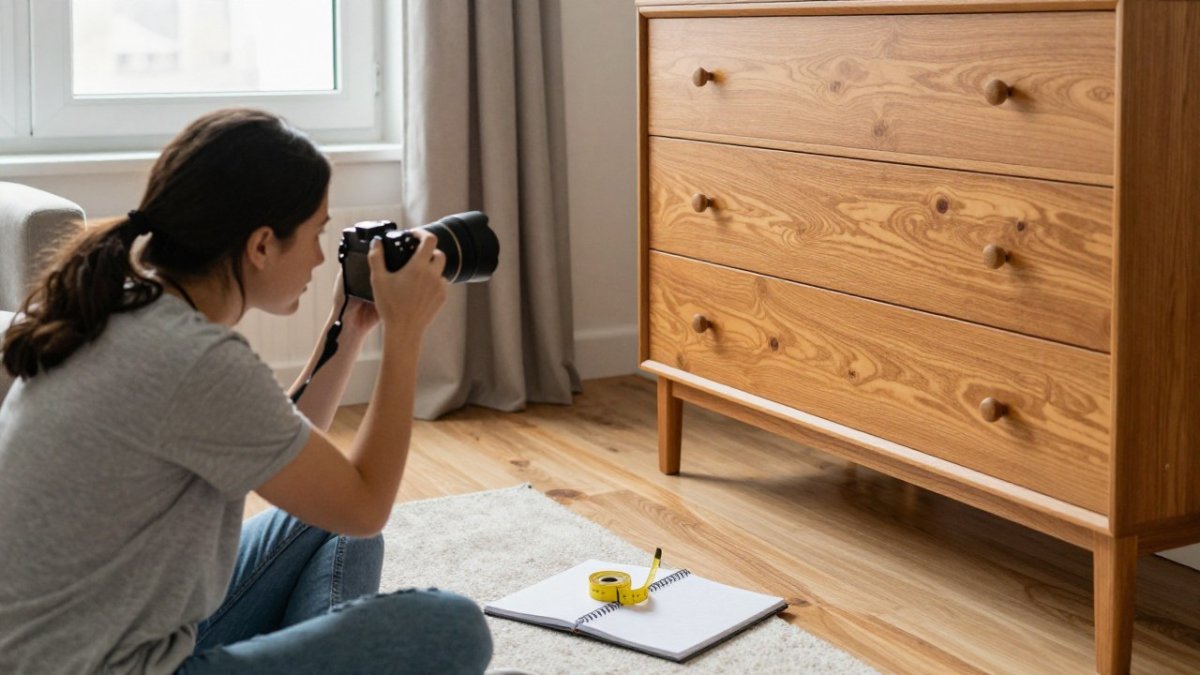
Follow this checklist:
- Photograph front, back, sides, underside, and any maker’s mark
- Clear drawers and shelves so the appraiser can inspect joinery
- Gather receipts, provenance letters, and prior appraisals
- Note any repairs, refinishing, or damage you already know about
- Group items by room so the appraiser can work in one pass
- Write down your goal: sell, insure, or settle an estate
Watch out: hiding a repair to protect the value can backfire. An appraiser who finds undisclosed damage will discount the whole report. Our guide on preparing furniture for a private sale covers the same steps in more detail.
Book a Consignment Evaluation at Le Rouge Tete
If your goal is to sell rather than insure, skip the paid appraisal and start with a free consignment evaluation. Le Rouge Tete has served the community for over 16 years. We offer a 50/50 split with no end dates for consignments, and local pickup for large items. Our “live in” layout helps buyers see how a piece fits a real room.
Contact Le Rouge Tete to discuss your piece and ask about current consignment terms. Contact Le Rouge Tete to get started.
Frequently Asked Questions
How much does a furniture appraisal cost?
Fees depend on the method and the appraiser. Fees depend on the method and the appraiser, so request a written quote before committing. Always request a written quote before committing.
Do I need a formal appraisal to consign furniture?
No. A consignment shop sets its own asking price based on condition, maker, and local demand, so a paid written appraisal is usually unnecessary before consigning. A formal appraisal matters when you need a documented value for insurance, an estate, or a tax deduction. If your goal is simply to sell, ask the shop for a consignment evaluation first and save the appraisal fee.
Can I get an antique furniture appraisal online?
Yes, several services accept photographs and a description and return a value estimate. Online furniture appraisal works best for identifiable pieces with visible maker’s marks. It is weaker for furniture where condition, joinery, or finish matters, since photos hide structural problems. Use an online estimate as a starting point, then confirm in person before you price or sell.
How do consignment stores determine furniture prices?
Shops weigh condition, age, maker, provenance, and current market demand, then check comparable sales for similar pieces. They also factor in how quickly an item is likely to sell and the space it takes up on the floor. At Le Rouge Tete, the seller and store split proceeds 50/50, and consignments have no end date.
