

Table of Contents
- How to Calculate Furniture Resale Value: The Core Method
- Assessing Furniture Condition: Your First Valuation Step
- Checking Local Market Comps and Fair Market Value
- Factors Affecting Furniture Resale Value You Cannot Ignore
- Using a Furniture Depreciation Calculator Effectively
- How to Price Used Furniture for Sale: Strategy Matters
- Antique Furniture Appraisal: Special Valuation Rules
- Common Mistakes to Avoid When Calculating Resale Value
Last Updated: July 29, 2026
How to Calculate Furniture Resale Value: The Core Method
Learning how to calculate furniture resale value is essential whether you’re selling pieces from your home, running a consignment business, or simply curious about what your furnishings are worth. At Le Rouge Tete, we’ve spent over 16 years helping customers understand the true market value of pre-loved furniture. The process is far more nuanced than applying a simple percentage to the original retail price.
The foundation of any resale valuation starts with understanding depreciation. Unlike cars, which follow predictable depreciation curves, furniture values depend on multiple factors: condition, brand recognition, material quality, current market demand, and where you plan to sell. A well-maintained mid-century credenza might retain 40-50% of its original value, while a mass-produced particle-board dresser could drop to 10-15% within months.
The most common mistake is anchoring too heavily to the original retail price without accounting for secondhand market realities. A sofa that cost $3,000 new doesn’t automatically have a $1,500 resale value just because it’s two years old. The actual resale value depends on what buyers in your specific market are willing to pay for that exact sofa, in that exact condition, right now.
Start by identifying the original retail price if you still have the receipt or can find the item on the manufacturer’s website. For vintage or antique pieces, research historical catalogs or auction records. This becomes your baseline, not your selling price.
The Foundation: Original Retail Price and Depreciation
Determining the original retail price requires detective work. For newer furniture, check the manufacturer’s website, the original retailer’s archives, or contact the seller if you purchased secondhand. For vintage and antique pieces, auction sites, historical catalogs, and antique price guides offer clues about original prices.
Industry practitioners generally find that furniture loses 50-70% of its value in the first year, then stabilizes at a slower depreciation rate. Designer pieces, solid wood furniture, and items with strong brand recognition depreciate more slowly. A Restoration Hardware sofa might hold 35-40% of its value after five years, while a comparable IKEA sofa might hold only 15-20%.
The depreciation calculation is straightforward: Original Retail Price × Depreciation Factor = Estimated Resale Value. If a sofa originally cost $2,500 and you’re applying a 60% depreciation factor (meaning it retains 40% of value), the estimated resale value is $1,000. Your actual selling price will depend on condition assessment and market comps.
Never use the original retail price as your asking price, even for barely-used furniture. Buyers purchase secondhand specifically to avoid paying retail prices. Anchoring your listing to “original value” signals you don’t understand the secondhand market and will deter serious buyers.
Why Depreciation Matters in Your Calculation
Depreciation reflects real market dynamics. New furniture loses value rapidly because of overstock, seasonal clearances, and the psychological impact of "new" versus "used." Understanding depreciation helps you price strategically. If you need to sell quickly, apply a steeper depreciation factor. If you’re willing to wait, you can be less aggressive.
Market conditions affect depreciation rates significantly. During economic downturns, depreciation accelerates because buyers seek deeper discounts. During strong economies, buyers pay closer to retail for quality secondhand pieces. Research from the National Association of Resale Professionals indicates that pieces sold within the first 18 months of purchase command higher resale prices than those sold after five years, even accounting for condition.
Assessing Furniture Condition: Your First Valuation Step
Condition is the single most powerful variable in resale pricing. Two identical sofas, one in excellent condition and one in fair condition, can have resale values differing by 50% or more.
Start with systematic evaluation. Examine the piece from multiple angles in natural daylight. Check the frame for structural integrity by gently pressing on different areas. Run your hand along all surfaces to feel for damage you might not immediately see. Look underneath and behind the furniture, where buyers often discover hidden damage.
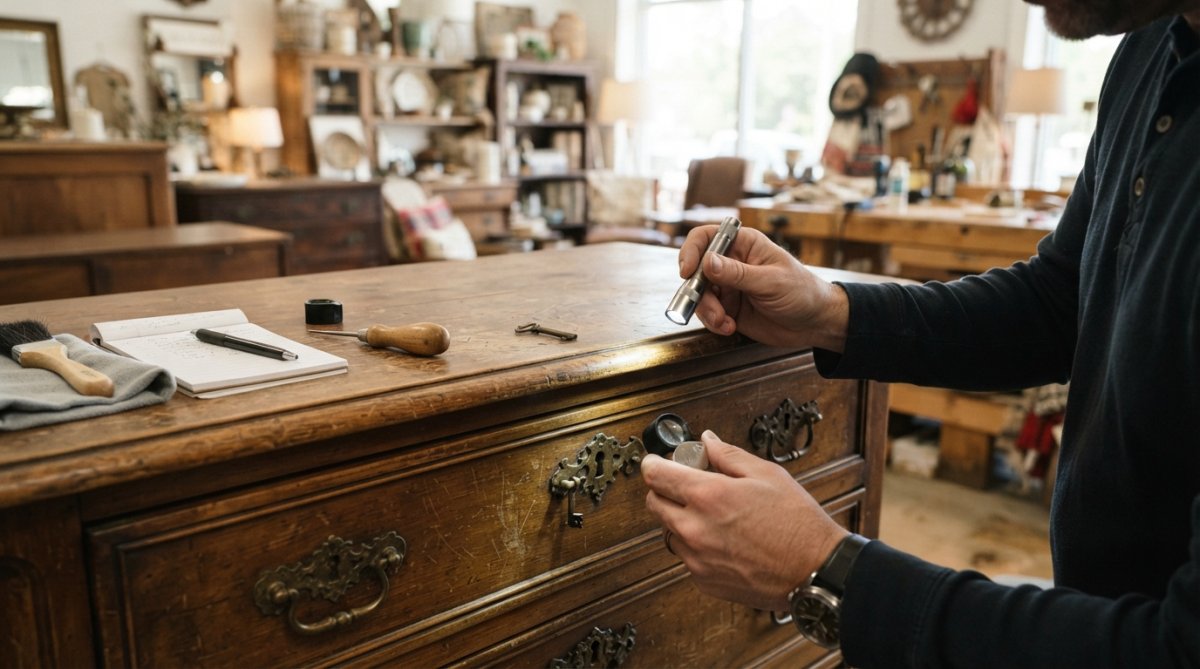
Document everything. Take photos of any damage, stains, odors, or wear patterns. Be honest about what you see. Buyers will inspect these same details, and underestimating damage in your condition rating will trigger price negotiations or lost sales.
Condition Rating Scale and What It Means for Price
Most resale platforms use a four- or five-tier condition scale.
Excellent or Like-New: Virtually no signs of use. Resale value: 50-70% of original retail price.
Very Good: Minor signs of use but nothing affecting function or appearance from normal viewing distance. Resale value: 40-55% of original retail price. This is the most common condition for furniture sold within 2-3 years of purchase.
Good: Visible signs of use including minor stains, small tears, light scratches, or wear on cushions. Fully functional and structurally sound. Resale value: 25-40% of original retail price.
Fair: Noticeable wear including stains, tears, fading, or cushion compression. Fully functional but requires some work. Resale value: 15-30% of original retail price.
Poor: Significant damage including large stains, tears, broken hardware, or structural issues. Resale value: 5-15% of original retail price.
Be conservative in your self-assessment. Buyers are more critical than sellers, and overstating condition leads to failed sales or last-minute price negotiations.
Identifying Wear and Tear That Affects Resale Value
Cosmetic wear, light scratches on wood, minor fading, small scuffs on legs, typically reduces value by 5-15%. Functional damage, broken drawers, wobbly joints, non-functioning mechanisms, reduces value by 20-40% because repairs are necessary. Odor is deceptively damaging, reducing value by 15-30% even if the furniture is otherwise in good condition. Stains and discoloration on upholstery reduce value by 10-25% depending on size and visibility.
The most overlooked wear factor is the back and underside of furniture. A sofa with a torn back seam or stained underside loses 20-30% of value even if the front and sides are pristine.
Checking Local Market Comps and Fair Market Value
Comparable sales, pieces similar to yours that have recently sold, are the most reliable way to validate your valuation. Market comps anchor your pricing in reality rather than wishful thinking.
Start by identifying where comparable furniture is selling in your market. Facebook Marketplace, Craigslist, and OfferUp show active local listings. Estate sale websites reveal what similar pieces actually sold for. Consignment stores like Le Rouge Tete provide real-time market data. Online marketplaces like AuctionZip show auction results for antique and vintage furniture.
Search for pieces matching yours as closely as possible: same brand, same model if possible, same or very similar condition, and ideally sold within the last 30-60 days. Document asking prices and actual selling prices when available. If a comparable piece was listed at $800 but sold for $650, that tells you buyers in your market are negotiating down by roughly 20%.
Adjusting Comps for Brand, Material, and Condition
Raw comps need adjustment. A West Elm sofa in excellent condition isn’t directly comparable to an IKEA sofa in good condition.
Brand adjustment: Designer and mid-market brands (West Elm, Restoration Hardware, Room & Board) typically command 20-40% higher resale prices than mass-market brands (IKEA, Wayfair, Ashley Furniture).
Material adjustment: Solid wood furniture holds value better than veneer or particle board. A solid walnut dresser might retain 45% of original value, while a veneer dresser retains 30%.
Condition adjustment: If your comps are in better condition than your piece, reduce your valuation by 10-20%. If they’re in worse condition, increase your valuation by 10-20%.
Factors Affecting Furniture Resale Value You Cannot Ignore
Material quality is foundational. Solid wood, genuine leather, and high-quality upholstery fabrics hold value. Particle board, bonded leather, and synthetic fabrics depreciate faster.
Brand recognition matters significantly. Crate and Barrel, Pottery Barn, Room & Board, and Ethan Allen command resale premiums. Pieces from brands no longer in business depreciate faster.
Market demand fluctuates seasonally and by style trend. Mid-century modern furniture is consistently in demand and holds value well. Neutral, timeless styles sell better than trendy pieces that may feel dated quickly.
Age and era affect value differently for different furniture types. For contemporary pieces (less than 20 years old), newer is generally better. For vintage and antique furniture (20+ years old), age can add value if the piece is well-made and in good condition.
Provenance and documentation increase value for antique and high-end pieces. Original receipts, designer signatures, or historical documentation can add 10-20% to resale value.
Using a Furniture Depreciation Calculator Effectively
Online calculators simplify the valuation process, but they’re only as good as the data you input. Most calculators ask for original retail price, age, condition rating, and sometimes brand category. They then apply standard depreciation formulas to estimate resale value.
The advantage is speed and consistency. The disadvantage is that calculators can’t account for local market variations, specific damage, or brand-specific depreciation patterns. Use calculators as a starting point, not a final answer. If a calculator estimates $600 but your local comps show similar pieces selling for $450, trust the comps.
Cross-reference calculator results against at least three local comps before finalizing your asking price. If the calculator estimate differs significantly from comps, investigate why.
How to Price Used Furniture for Sale: Strategy Matters
The asking price is not the same as the expected selling price. Strategy determines whether you sell quickly at a lower price or wait longer for a higher price.
Patient sale pricing targets the 75th-90th percentile of recent comps. If similar pieces sold for $400-600, you price at $550-580. This attracts serious buyers willing to wait. Patient sales typically take 4-12 weeks but result in higher net proceeds.
Quick sale pricing targets the 25th-50th percentile of comps. You price aggressively to generate interest and close quickly. Quick sales typically close within 1-2 weeks but result in lower proceeds.
Market-rate pricing targets the 50th-75th percentile. You price competitively and expect to sell within 2-4 weeks. This is the most common strategy.
Factor in your carrying costs. If you’re paying storage fees, every week the piece sits costs money. Sometimes a quick sale at a lower price is more profitable than a patient sale because you avoid weeks of carrying costs.
Platform-Specific Pricing: Consignment, Online, and Local Sales
Different sales channels command different prices for the same piece.
Direct-to-buyer sales (Facebook Marketplace, Craigslist, OfferUp) let you keep 100% of the selling price, but you handle all marketing and logistics. Prices tend to be 10-20% lower than consignment because buyers expect negotiation room.
Online marketplaces (1stDibs, Etsy, eBay) reach broader audiences but charge 10-15% commission and may require shipping. Pieces typically sell for 15-25% higher prices because the audience is more targeted.
Consignment stores like Le Rouge Tete take a 50% commission but handle all marketing, showing, and sales logistics. Prices tend to be 20-30% higher than direct sales because the store’s curation and professional presentation add value.
Estate sales and auctions charge 25-40% commission but reach serious collectors. High-end or unusual pieces often sell for premium prices through this channel.
Choose the channel based on the piece’s characteristics. Unique, high-end, or collectible pieces benefit from consignment or auction. Standard, mass-market pieces sell faster through direct channels.
Shipping and Logistics: The Hidden Cost Impact on Resale Price
Shipping dramatically affects net proceeds for online sales. A sofa weighing 150 pounds costs $200-400 to ship across the country. A dresser weighing 100 pounds costs $150-300. These costs come directly out of your proceeds.
Local pickup eliminates shipping but limits your buyer pool. A piece available for local pickup might sell for $400. The same piece shipped nationally might sell for $600, but after $300 shipping, you net $300, the same result.
Factor shipping into your pricing strategy from the start. If you’re selling nationally, price higher to account for shipping. If you’re limiting to local pickup, you can price lower. Be transparent about shipping costs in your listings. Le Rouge Tete offers $50 local pickup for large items, which removes shipping friction for local buyers.
Antique Furniture Appraisal: Special Valuation Rules
Antique and vintage furniture follow different valuation rules than contemporary pieces. Age, rarity, and craftsmanship matter more; condition matters less (within reason).
Antique furniture (100+ years old) is valued based on historical significance, rarity, craftsmanship, and provenance. A Victorian walnut dining table from 1880 might be worth more than a contemporary $3,000 dining table because of its age, solid construction, and design.
Vintage furniture (20-100 years old) falls between contemporary and antique. Mid-century modern pieces from the 1950s-1970s are particularly valuable. A 1960s Eames lounge chair in decent condition might sell for $2,000-4,000 because of designer prestige and collectibility.
Antique and vintage pieces appreciate or hold value better than contemporary pieces because they’re no longer in production. Supply is limited, and demand from collectors and designers keeps prices stable or increasing.
Provenance and Documentation in Antique Pricing
Original documentation dramatically increases antique and vintage furniture value. A piece with a maker’s mark, original receipt, or published reference commands 20-50% premium pricing.
Research provenance by checking maker’s marks, labels, or signatures. Look up the maker or designer in antique furniture databases or auction records. Documentation also includes condition reports, restoration history, and ownership history. A piece that’s been professionally restored and well-maintained sells for more than one that’s been neglected.
Common Mistakes to Avoid When Calculating Resale Value
Overestimating condition is the most common error. Sellers often rate their own furniture one condition tier higher than buyers would. Be conservative.
Ignoring hidden damage costs you dearly. Damage on the back, underside, or inside of drawers gets discovered during buyer inspection and triggers price negotiations. Document all damage upfront.
Anchoring to original retail price instead of market comps leads to overpricing. Market comps determine value, not original purchase price.
Neglecting inflation-adjusted pricing matters for older pieces. A piece that cost $500 in 2000 would cost roughly $900 in 2026 dollars due to inflation.
Forgetting to factor in carrying costs leads to suboptimal pricing decisions. If a piece sits unsold for three months at a patient-sale price and you’re paying $75/month in storage, you’ve spent $225 in carrying costs.
Never price furniture based solely on sentimental value or what you remember paying. Buyers care about market value. Emotional attachment to pricing leads to unsold inventory.
Overestimating Condition or Ignoring Hidden Damage
Condition assessment requires brutal honesty. Walk through your piece as if you’re a skeptical buyer inspecting it for the first time.
Check structural integrity by applying pressure to joints and frames. A wobbly table or loose drawer mechanism reduces value by 20-30%. Check for water damage, which is often hidden. Water stains on wood furniture indicate previous moisture exposure and can lead to mold or structural weakness. Smell the piece carefully. Smoke, pet odors, or musty smells are deal-killers for many buyers. Examine upholstery under good lighting and test all mechanisms, drawers, doors, hinges, and locks. Anything that doesn’t work smoothly reduces value.
Neglecting Inflation-Adjusted Pricing and Market Shifts
Inflation affects how to interpret historical pricing data. A piece that cost $1,000 in 2015 would need to cost roughly $1,200 in 2026 dollars to represent the same purchasing power.
Market shifts happen faster for furniture than most goods. Styles go in and out of favor. Refresh your comps regularly to catch these shifts. Economic conditions affect the entire secondhand furniture market. During recessions, buyers seek deeper discounts and depreciation accelerates. Supply and demand shifts matter significantly. If a particular style becomes trendy, prices rise. If a style falls out of favor, prices drop.
Forgetting the Environmental and Sustainability Value
A growing number of buyers value secondhand furniture specifically for environmental reasons. Buying used furniture reduces waste, avoids new manufacturing emissions, and extends product lifecycles. This sustainability value can add 5-15% to resale prices.
Emphasize sustainability in your listings. "Solid wood construction ensures decades of use" appeals to environmentally conscious buyers. Certifications and documentation of sustainable materials add value. A sofa made with FSC-certified wood and organic cotton upholstery can command 10-20% premium pricing.
Calculating furniture resale value accurately requires balancing multiple factors: original retail price, condition assessment, local market comps, material quality, and brand recognition. Start with original retail price and depreciation to establish a baseline. Validate that baseline against local market comps. Adjust for condition, brand, and material differences. Then price strategically based on your timeline and carrying costs.
If you’re selling through a consignment partner like Le Rouge Tete, you benefit from their market expertise and professional presentation, which typically results in higher selling prices and faster sales despite the commission split. Their 50/50 consignment policy and no-end-date terms mean your furniture is marketed professionally while you avoid the logistics of private sales.
Get started with Le Rouge Tete’s consignment services and let their 16 years of experience guide your pricing strategy.
Frequently Asked Questions
What percentage of the original retail price is used furniture typically worth?
Used furniture typically retains 20-50% of its original retail price, depending on condition, brand, and material quality. Gently used pieces with minimal wear and strong brand recognition may retain higher percentages, while heavily worn or generic furniture depreciates faster. Antique and vintage pieces sometimes appreciate or hold value differently than modern furniture. The exact percentage depends on market demand, local comps, and how long the piece has been owned.
How do factors affecting furniture resale value change my pricing strategy?
Factors like solid wood construction, upholstery condition, brand recognition, and material quality directly impact fair market value. A gently used solid wood dining table from a recognized brand will command higher resale prices than a veneer piece in the same condition. Assess each factor individually, then adjust your listing price accordingly. Check local market comps for similar pieces to validate your estimate. Platform choice also matters, consignment typically yields higher prices than quick-sale venues.
Should I use a furniture depreciation calculator, or calculate resale value manually?
A furniture depreciation calculator provides a useful starting point, especially if you know the original retail price and age. However, calculators work best as a baseline, they cannot account for condition nuances, local market demand, or brand-specific trends. Use the calculator to estimate depreciation, then adjust upward or downward based on condition rating, local comps, and material quality. Manual assessment combined with calculator output gives you the most accurate fair market value.
How does shipping and logistics cost impact my final resale price when selling online?
Shipping costs significantly reduce profit margins on heavy furniture. A $300 online listing may cost $50-150 to ship, cutting your net proceeds substantially. For large pieces, consider local pickup or consignment options that eliminate shipping costs. When pricing used furniture for online sale, factor in platform fees, packaging materials, and courier charges before setting your listing price. This is why many sellers achieve better returns through local consignment stores or pickup-only sales.
This article was written using GrandRanker