
Last Updated: November 4, 2026
Quick Summary
The best cleaning products for used upholstery match both the fabric code and the stain, rather than relying on the strongest cleaner. Check the care label, vacuum first, and test a compatible product in a hidden spot; use water-based cleaners only when the fabric permits them.
- W fabrics generally permit water-based cleaners; S fabrics call for solvent-based cleaners.
- X-coded upholstery should be vacuumed or gently brushed, without liquid cleaners or steam.
- Blot stains from the outside toward the center, using a clean white cloth.
- Let treated upholstery dry completely before judging the result.
Table of Contents
- Best Cleaning Products for Used Upholstery: What to Use First
- What You’ll Need to Clean Used Upholstery Safely
- Step 1: Check Fabric Codes Before Choosing a Cleaner
- Step 2: Match the Cleaner to the Fabric and the Stain
- Step 3: Try DIY Upholstery Cleaner Recipes with Care
- Step 4: Remove Odors from Second-Hand Furniture Safely
- Contact Le Rouge Tete About Pre-Loved Furniture
- Frequently Asked Questions
Best Cleaning Products for Used Upholstery: What to Use First
According to the American Cleaning Institute’s upholstery cleaning guidance, checking care instructions before cleaning helps prevent damage. The best cleaning products for used upholstery are the ones that match the fabric code and the stain, not simply the strongest cleaner on the shelf. This guide explains how to make that match, handle odors, and clean second-hand furniture with care.
Used upholstery is furniture fabric that has had a previous owner and may carry stains, odors, or accumulated soil. A careful first step is more useful than a broad, aggressive clean: vacuum, check the label, then spot-test the chosen product.
For a small, fresh mark on a colorfast fabric, a water-based spot cleaner such as Folex is a practical starting point. For embedded dirt across a larger area, a portable upholstery machine may suit the job, provided the fabric allows water-based cleaning. Skip treatment until you know the fabric code.
| Need | Starting point | Main caution |
|---|---|---|
| Small surface stain | Water-based spot cleaner | Test colorfastness |
| Broad, embedded soil | Upholstery machine | Avoid over-wetting |
| Pet-related odor | Enzyme-based cleaner | Check fabric compatibility |
| Future spill protection | Fabric protector | Apply with ventilation |
What You’ll Need to Clean Used Upholstery Safely
Safe upholstery cleaning starts with a vacuum, the right cleaner for the fabric, and a hidden-area test. Gather a soft upholstery brush, clean white cloths, and a vacuum with an upholstery attachment. Use a machine only when the care code permits water-based cleaning.
A common mistake is treating “used” as a cleaning instruction. It isn’t. A second-hand sofa may need only light spot treatment, while a musty cushion or broad soil may call for a more careful plan.
Before starting, assemble:
- Vacuum with an upholstery attachment
- White cloths for blotting
- Soft brush for loose debris
- Cleaner suited to the fabric and stain
- Gloves and ventilation when the product label calls for them
For more preparation advice before selling or consigning a piece, see the used upholstery cleaning guide. Follow product directions, and don’t mix cleaning agents. The [EPA’s Safer Choice product guidance | epa.gov] explains how to identify products assessed for safer chemical ingredients; a label still does not replace a fabric compatibility test.
Step 1: Check Fabric Codes Before Choosing a Cleaner
Fabric codes explain which cleaning methods a manufacturer recommends. Check the furniture tag, often found beneath a cushion or on the frame, before applying water or solvent. If the tag is missing, test cautiously and seek professional advice for delicate or valuable fabric.
Common codes include:
- W: Water-based cleaner is generally permitted.
- S: Use a solvent-based cleaner; avoid water.
- W/S: Either water-based or solvent-based products may be suitable.
- X: Vacuum or brush only; avoid liquid cleaners.
This is the part most quick guides skip: the same stain remover can be suitable for one fabric and harmful to another. “Upholstery cleaning codes explained” starts with the label, not the product aisle. If you cannot confirm the material or code, limit care to gentle vacuuming until you can get reliable guidance.
The [University of Georgia Cooperative Extension’s textile care resources | uga.edu] offer additional guidance on fabric care and cleaning choices.
Step 2: Match the Cleaner to the Fabric and the Stain
Choose a product only after checking both the upholstery code and the stain. A cleaner that works on a water-cleanable synthetic fabric may leave a ring, change the texture, or damage a water-sensitive material. Product labels and furniture-care instructions take priority over general advice.
| Fabric code | Suitable starting point | Avoid or use caution |
|---|---|---|
| W | A labeled water-based upholstery spot cleaner; an extraction machine may be appropriate for broader soil if its instructions allow the fabric | Saturating cushions or leaving cleaner residue behind |
| S | A solvent-based upholstery cleaner specifically labeled for the material; use a small amount on a cloth as directed | Water-based sprays, steam, and wet extraction |
| W/S | Either a compatible water-based or solvent-based upholstery product, selected for the stain and tested first | Assuming the code means the fabric cannot be damaged |
| X | Vacuuming and gentle brushing only | Liquid cleaners, steam, and extraction machines |
A missing tag is not permission to use water. Identify the fabric if possible, check the maker’s care instructions, and stick to vacuuming until you can confirm a safe method. For valuable, delicate, or badly soiled furniture, ask an upholstery-cleaning professional before applying a product.
For a small, fresh mark on a compatible fabric, a water-based spot cleaner such as Folex can be a practical option when its label permits the use. Woolite Instaclean is marketed for stains and odors, including pet-related messes; check its directions and the furniture code before use.
Match the method to the spill, too:
- Food or drink: Lift solids without pushing them into the weave, then blot liquid from the outside of the mark toward the center. Use a compatible spot cleaner if plain blotting is not enough.
- Pet urine or other organic residue: Blot up as much as possible first. An enzyme-based product may help break down organic residue, but only use one labeled for upholstery and compatible with the fabric. Treating the surface alone may not remove residue that has reached the cushion filling.
- Grease or oily marks: Avoid adding water before checking the fabric code and cleaner label. A suitable solvent-based upholstery product may be needed for an “S” fabric; do not substitute a household solvent without manufacturer guidance.
- Unknown or set-in stains: Do not layer several products. Residue from one cleaner can interfere with another, and repeated wetting can spread the mark or leave a ring.
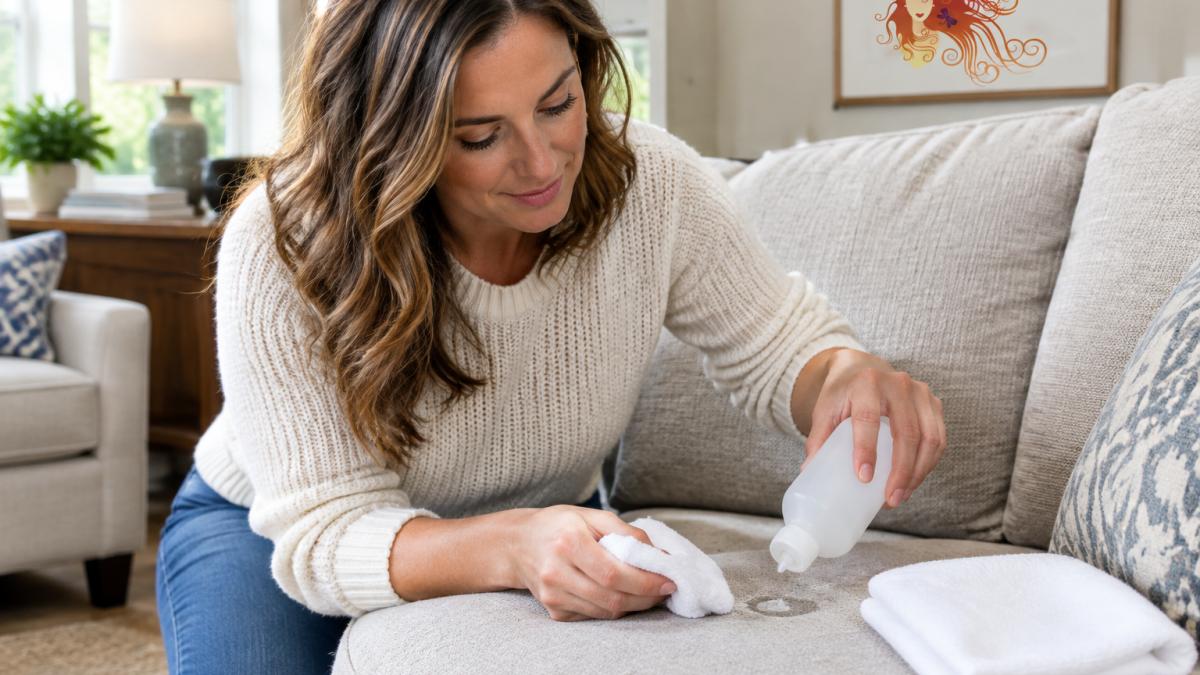
Apply the cleaner to a white cloth when the label allows, rather than spraying a large area. Blot gently, turn to a clean part of the cloth as soil transfers, and avoid scrubbing, which can distort the weave or spread the stain.
Watch out: Test in a hidden spot and let it dry before proceeding; color transfer, a change in texture, or a visible ring means you should stop rather than increase the amount of cleaner.
Step 3: Try DIY Upholstery Cleaner Recipes with Care
DIY upholstery cleaner recipes should stay simple, and only be used when the fabric code allows water-based cleaning. Start with a small amount of plain water on a white cloth, then blot a hidden area and check for color transfer or texture change. Avoid homemade mixtures on “S,” “X,” or unknown-code fabrics.
Many online recipes combine household ingredients, but mixing products can leave residue or damage fibers. The [National Poison Control Center’s cleaning product safety advice | poison.org] recommends following product labels and avoiding unsafe mixtures (Top tips for a safe spring cleaning). For used upholstery, a labeled cleaner matched to the fabric is usually a safer choice than experimenting.
A practical sequence is straightforward:
- Vacuum loose dust and debris.
- Test the cleaner in a hidden spot.
- Blot from the stain’s edge toward its center.
- Use a clean cloth to lift remaining moisture.
- Let the fabric dry fully before using the furniture.
Step 4: Remove Odors from Second-Hand Furniture Safely
Second-hand upholstery can hold dust, pet dander, pollen, and odor-causing residue in seams, under cushions, and inside the cushion cover. Cleaning the visible fabric may improve its appearance without removing material embedded deeper in the piece. Treat odor removal as a source-finding and drying problem, not as a reason to spray fragrance over the sofa.
Start with a dry inspection:
- Check the whole piece. Remove loose cushions and look along seams, under the frame, and around zippers for dampness, visible growth, water marks, or pest evidence. Do not open a cushion or disturb suspected moldy material if doing so could spread dust or spores.
- Vacuum thoroughly. Use an upholstery attachment on the seat, back, cushion edges, seams, and crevices. Empty the vacuum outdoors or dispose of its bag according to the manufacturer’s directions, especially if the furniture is dusty or has a persistent musty odor.
- Separate removable covers only when permitted. Follow the care label; a removable cover is not automatically machine washable. Keep covers and cushions apart until each is fully dry.
- Clean only with a compatible product. For a fabric that permits water-based cleaning, use a labeled upholstery cleaner sparingly. For an “S” code, use only an appropriate solvent-based product as directed. For “X,” limit care to vacuuming and brushing.
- Dry with airflow. Stand cushions on edge when practical, leave space around the furniture, and use fans or air conditioning to help move and dehumidify indoor air. Do not put damp cushions back against the frame or store them in a closed room.
In Morehead City and the surrounding Crystal Coast, humid air can slow drying, while salt carried in coastal air can settle on fabric and metal components. Keep used upholstery away from damp walls and direct exposure to open windows during humid or salty conditions. If a piece has been stored in a damp space, check it carefully before bringing it into a living area; a surface spray cannot correct moisture trapped in the cushion or frame.
A musty smell that remains after vacuuming and complete drying may point to a deeper source, such as residue in the filling or past moisture damage. Likewise, a product described as a sanitizer or disinfectant should not be assumed to sanitize upholstery: check its label for the specific surface, application method, and contact time it supports, and confirm that the fabric can tolerate it (the EPA).
Watch out: Do not mix cleaners, use fragrance to mask a musty odor, or soak a cushion in an attempt to reach contamination inside; trapped moisture can make odor and mildew problems worse.
For targeted odor-removal steps, follow the guide to removing odors from used furniture.
Contact Le Rouge Tete About Pre-Loved Furniture
Choosing the best cleaning products for used upholstery comes down to three checks: fabric code, stain type, and a hidden-area test. The strongest cleaner is not automatically the right one.
At Le Rouge Tete, our Morehead City showroom displays pre-loved furniture in a live-in layout, with new items added weekly. If you’re furnishing a home or rental, visit us to see pieces in person.
Frequently Asked Questions
How do I determine the cleaning code for used upholstery?
Look for the manufacturer’s care tag, often beneath a cushion or attached to the furniture frame. W means water-based cleaners are permitted, S calls for a solvent-based cleaner, and SW allows either type. X means vacuuming or professional cleaning only. If the tag is missing, do not guess: test any proposed cleaner on a hidden area and stop if the fabric changes color, texture, or finish.
What is the best cleaner for removing odors from used upholstery?
Choose a product suited to the fabric code and the source of the odor. The researched products include Woolite Instaclean Permanent Pet Stain Remover for pet-related odors and stains, and the Bissell Little Green Machine for extracting embedded dirt and odors. Test first on a hidden spot, follow the label, and let the upholstery dry fully. Persistent musty odors may need professional assessment rather than repeated wet cleaning.
Can I use Dawn dish soap or a homemade solution to clean upholstery?
The research does not verify a Dawn recipe or a specific homemade mixture as safe for upholstery. Fabric codes determine whether water-based cleaning is appropriate, and excess soap can leave residue that attracts soil. Use a cleaner labeled for the fabric, test it in an inconspicuous area, and avoid soaking the upholstery. If you try a DIY upholstery cleaner recipe, do not apply it until the care code and fabric compatibility are clear.
A lingering odor or uncertain fabric label can make a second-hand piece hard to assess. Contact Le Rouge Tete to explore curated furniture, a live-in showroom layout, and personalized help moving pieces for a better view. Get started with Le Rouge Tete and find pre-loved furniture that fits your space.
