
Table of Contents
- The Case for Modern Coastal Furniture in Small Apartments
- Space-Saving Coastal Furniture Solutions That Actually Work
- Modern Coastal Living Room Ideas for Compact Spaces
- Best Furniture for Coastal Interior Design: Durability and Materials
- Cost-Benefit Analysis: New Retail vs. Consignment Coastal Pieces
- Avoiding Kitsch: How to Create a Refined Coastal Look
- Maintenance and Longevity in Humid Coastal Environments
- Conclusion
Last Updated: August 24, 2026
The Case for Modern Coastal Furniture in Small Apartments
Modern coastal furniture is the design approach that combines breezy, beach-inspired aesthetics with contemporary functionality and clean lines, specifically scaled for compact living spaces. If you’re considering whether modern coastal furniture is worth it for small apartments, the answer depends on three factors: your budget flexibility, how long you plan to stay, and whether you value durability over trend-chasing.
The tension here is real. Modern coastal pieces often cost more upfront than mass-market alternatives, yet they deliver what budget furniture can’t: authentic materials, better resale value, and a cohesive look that doesn’t feel cluttered or themed. At Le Rouge Tete, we’ve spent over 16 years watching renters and homeowners in this market navigate exactly this choice. Pieces that come through our doors tend to be either ultra-cheap fast furniture that falls apart within two years, or quality coastal pieces that hold their value remarkably well.
The real question isn’t whether modern coastal furniture is "worth it" in absolute terms. It’s whether it’s worth it for your specific situation. This guide breaks down when it makes sense and when it doesn’t.
Space-Saving Coastal Furniture Solutions That Actually Work
The biggest mistake people make with coastal design in small apartments is buying full-sized pieces and hoping they’ll fit. Modern coastal furniture designed for compact spaces works because it prioritizes vertical storage, multi-functional pieces, and materials that don’t visually overwhelm a room.
The most effective space-saving solutions combine three elements: light wood tones that create visual airiness, pieces that serve double duty (ottomans with hidden storage, floating shelves that replace bulky bookcases), and textural contrast through natural materials like jute and rattan. These aren’t just aesthetic choices, they’re functional ones that make rooms feel larger than they are.
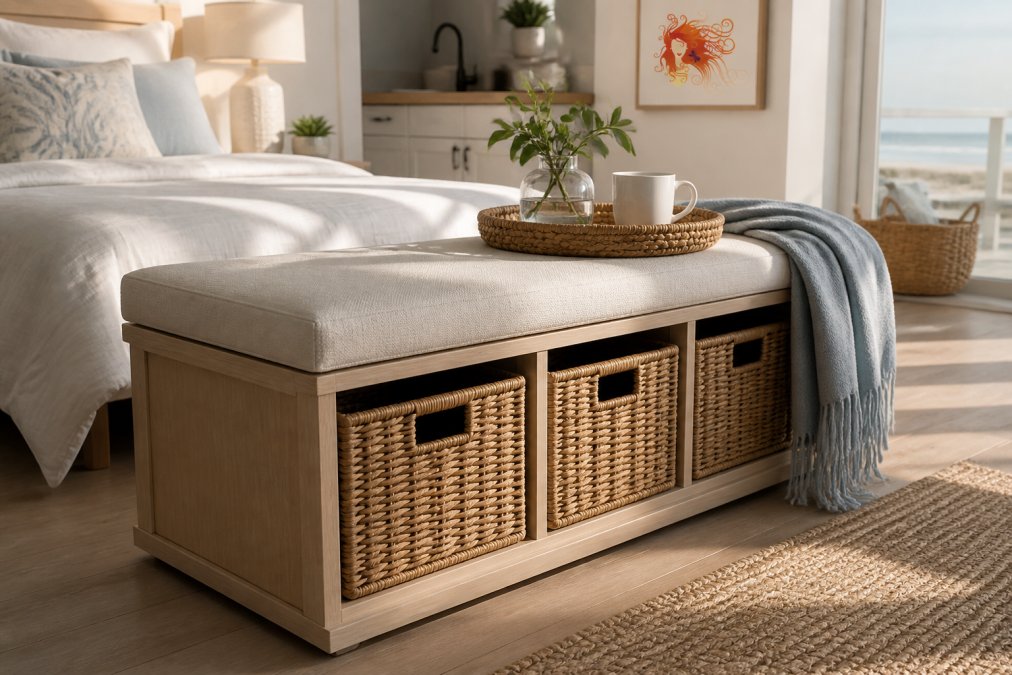
Consider floating shelves over floor-standing bookcases, storage ottomans instead of traditional coffee tables, and murphy beds or lofted platforms if you’re working with under 300 square feet. The coastal aesthetic actually favors this approach because the style celebrates open space and minimal visual clutter. Unlike traditional coastal design, which can feel heavy with nautical accents and ornament, modern coastal strips away the excess and leaves you with functional pieces in soft, neutral palettes.
Vertical storage is non-negotiable in small apartments. Floor-to-ceiling shelving, wall-mounted cabinets, and tall narrow bookcases maximize usable storage without consuming floor space. Pair these with light wood finishes and you’ve created the illusion of openness while actually gaining storage capacity.
The durability question matters here too. Cheap particle-board storage solutions fall apart after a year of use (peer-reviewed research). Quality coastal pieces, whether new or consignment, hold up to the weight and movement of daily life. If you’re investing in vertical storage, invest in pieces that won’t sag or deteriorate.
Modern Coastal Living Room Ideas for Compact Spaces
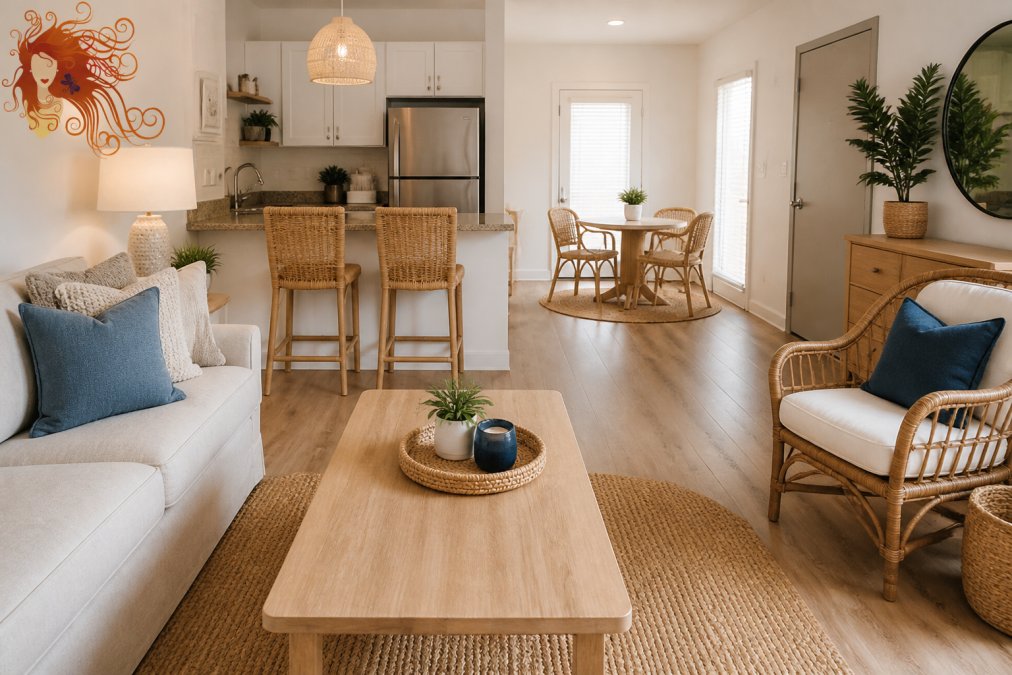
A functional small living room in the modern coastal style starts with one anchor piece: usually a lightweight sectional or compact sofa in natural linen or performance fabric. From there, layer in texture through throws, pillows in soft neutrals, and one or two statement pieces in rattan or light wood.
The living room is where modern coastal design either succeeds or becomes kitsch. The difference lies in restraint. A single large piece of coastal art or one statement mirror works. Three anchor pieces fighting for attention looks themed and cramped. The goal is a serene, calming space that happens to be inspired by the coast, not a room that announces its design style loudly.
Lighting strategy matters enormously in small living rooms. Natural light is your first priority, so keep window treatments minimal and airy, think linen curtains or roman shades rather than heavy drapes. Layer in soft task lighting with floor lamps or wall sconces in brushed metal or natural wood. The combination of natural light, soft textiles, and minimalist furniture creates the breezy feeling that defines modern coastal style.
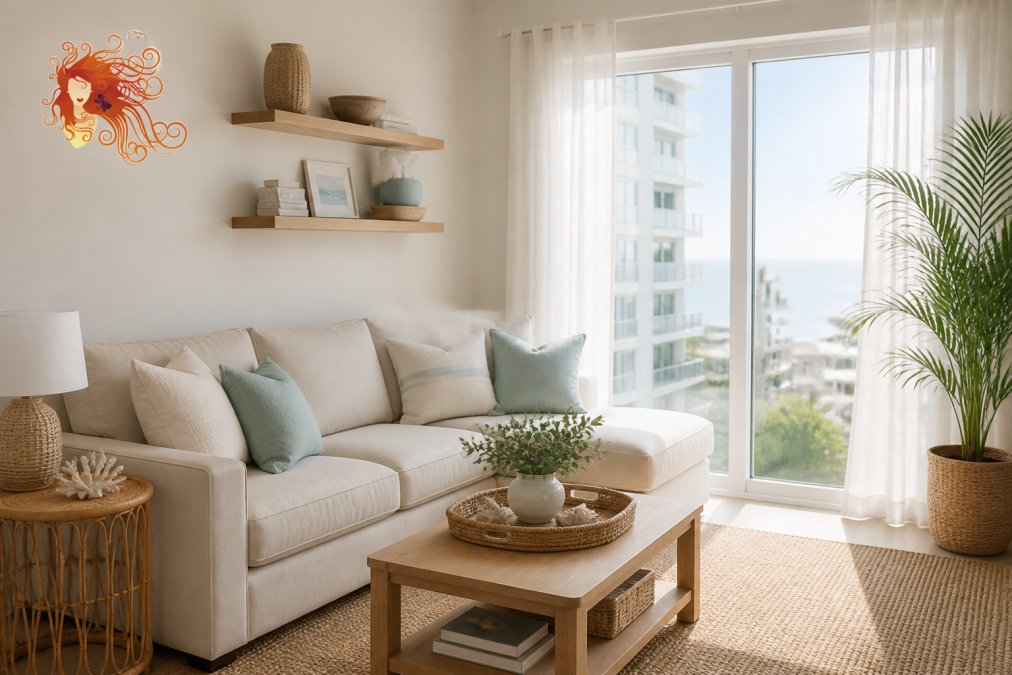
Furniture scale matters more in small spaces than anywhere else. A full-sized sectional will dominate a 200-square-foot living room. Instead, choose a loveseat or apartment-scale sofa (typically 72 inches or less), pair it with a small side table in natural wood or rattan, and add a storage ottoman that doubles as seating. This approach gives you all the functionality of a larger setup without the visual weight.
The neutral palette, soft whites, warm grays, natural beige, and light wood tones, is fundamental to modern coastal design. This isn’t just aesthetic preference. Neutral colors make small spaces feel larger by reducing visual competition. Add textural contrast through layered textiles: a chunky knit throw, linen pillows, a jute area rug. The texture creates interest without the visual clutter of pattern or color variation.
Best Furniture for Coastal Interior Design: Durability and Materials
Modern coastal furniture worth keeping is built from materials that handle moisture, salt air, and daily wear without deteriorating. If you’re investing in pieces, understanding material durability separates smart purchases from regrettable ones.
Natural wood, specifically light woods like oak, ash, or sustainably-sourced teak, forms the foundation of durable coastal furniture. These woods resist warping and hold up to humidity better than cheaper alternatives. Avoid particle board or laminate veneers if longevity matters to you. The price difference between solid wood and veneered pieces often justifies itself within three years through durability alone.
Upholstery in coastal spaces needs to handle moisture and salt air. Performance fabrics like solution-dyed polyester or high-quality linen blends resist staining, fade less in sunlight, and dry quickly if exposed to humidity (peer-reviewed research). Avoid pure cotton upholstery in humid environments, as it absorbs moisture and can develop mildew. Leather, while durable, requires regular conditioning in coastal climates to prevent cracking.
Hardware and metal finishes matter more than most people realize. Stainless steel, brushed aluminum, and powder-coated metals resist rust and corrosion. Avoid plated finishes that chip easily. If a piece has exposed wood joints or hardware, verify that fasteners won’t corrode in a humid environment.
Rattan and woven materials are central to coastal aesthetics, but quality varies dramatically. High-quality rattan is kiln-dried, tightly woven, and sealed to resist moisture. Cheap woven pieces fall apart within a year. When evaluating rattan furniture, inspect the weave density and ask whether it’s been treated for humidity resistance.
The cost-benefit calculation here is straightforward: durable materials cost more upfront but last 5-10 years. Budget materials cost less initially but require replacement within 1-3 years. Over a decade, quality pieces often cost less per year of use than cheap alternatives.
Cost-Benefit Analysis: New Retail vs. Consignment Coastal Pieces
This is where the decision becomes practical. Pricing for a new modern coastal sofa from a specialty retailer depends on size and material quality. The same piece, gently used and purchased through consignment, can be significantly less. Over a five-year period, that’s a meaningful difference.
The tradeoff with consignment is inventory uncertainty and the need for in-person inspection. You can’t browse online and have pieces delivered sight-unseen. You need to visit, examine quality, visualize how pieces fit your space, and commit to transport. For renters and people furnishing small apartments on a budget, this friction often feels worth it. For people who value convenience and want guaranteed new stock, retail makes sense.
New retail offers certainty: you know exactly what you’re getting, delivery is handled, and most pieces come with warranties. The downside is cost and the reality that new doesn’t always mean better quality. Many mainstream retailers produce coastal furniture that looks good in a showroom but deteriorates quickly under real-world conditions.
Consignment offers value and often better quality, because pieces that survive years of use and then reach a consignment floor are typically well-built. The downside is that you’re buying someone else’s castoff, which means potential hidden wear, the need for thorough inspection, and no warranty. At Le Rouge Tete, we inspect every piece and display items in a ‘live in’ layout specifically so you can visualize how they’ll work in your space before committing. This approach eliminates the guesswork that makes online consignment risky.
For vacation rental owners and people furnishing multiple units, consignment becomes even more attractive. You can source enough pieces to furnish units at a fraction of what new retail would cost, and the pieces are already proven to be durable.
The hidden cost of cheap new furniture is replacement frequency. If you buy a particle-board bookcase that falls apart in 18 months, you’ve spent more over time than on a solid wood piece that lasts years. The math favors quality, whether new or consignment.
Avoiding Kitsch: How to Create a Refined Coastal Look
The line between refined modern coastal and over-themed kitsch is thin, and crossing it ruins the investment. Kitsch happens when you layer too many coastal references: nautical wall art, rope accents, shell decorations, anchor motifs, and blue-and-white striped everything in the same room.
Refined modern coastal achieves the aesthetic through material and form, not decoration. Light wood, natural textiles, open space, and functional design create the feeling without announcing it. If your room requires explicit coastal signage, literal anchors, sailboat art, or shell collections, you’ve crossed into theme-park territory.
The key distinction: modern coastal celebrates the feeling of coastal living (breezy, open, calm, natural) rather than the symbols of it. A room with a neutral palette, natural materials, and minimalist furniture feels coastal. A room plastered with nautical tchotchkes looks like a costume.
Avoid these kitsch triggers: novelty throw pillows with anchor or starfish patterns, rope-wrapped accents, painted driftwood, shell mirrors, and anything with a nautical cliché. Instead, focus on texture through natural materials and let the aesthetic emerge from form and material choices.
One or two carefully chosen pieces, perhaps a large driftwood mirror or a single piece of abstract coastal art, can work as long as everything else stays minimal and refined. The rule is simple: if it feels like decoration rather than furniture, it’s probably kitsch.
The consignment approach actually helps here. Pre-loved pieces tend to be more refined than trendy new items because trends fade but quality endures. A linen sofa in natural tones will look more timeless and less "themed" than a new piece designed to explicitly read as coastal.
Maintenance and Longevity in Humid Coastal Environments
Coastal humidity accelerates wear on furniture in ways that dry climates don’t. Wood swells and contracts with moisture changes, upholstery absorbs dampness, and metal corrodes. Understanding maintenance extends the life of your investment significantly.
For wood furniture, the priority is controlling humidity. Keep wood pieces away from direct moisture sources (windows, bathrooms) and maintain indoor humidity between 30-50% if possible (the EPA). Dust regularly with a soft cloth, and use furniture polish or oil appropriate to the wood type every 3-4 months. This protective layer resists moisture absorption.
Upholstery in humid environments needs ventilation. Avoid pushing sofas against exterior walls where condensation forms. Allow air circulation behind and underneath pieces. If you notice any musty smell or visible mold, address it immediately with appropriate cleaning or professional restoration. Prevention is far cheaper than remediation.
Rattan and woven materials are particularly vulnerable to moisture. Store them away from direct humidity sources, dust regularly, and inspect for mold or mildew quarterly. If pieces are stored long-term, place them in climate-controlled spaces rather than basements or attics where humidity fluctuates.
Metal hardware should be inspected annually for rust or corrosion. Wipe down with a dry cloth and apply a protective coating if needed. Stainless steel resists corrosion best, so prioritize it for pieces in humid environments.
The consignment advantage here is that pieces already surviving in this climate have proven their durability. A linen sofa that’s been in a coastal home for five years and then consigned has already passed the humidity test. New furniture from retailers outside the region may not have the same proven track record.
Is modern coastal furniture worth it for small apartments? The answer is yes, if you prioritize durability, quality materials, and a refined aesthetic over trend-following. The investment pays dividends through longevity, resale value, and the genuine comfort of living in a space that feels intentional rather than temporary.
If you’re furnishing a small apartment in this market and want to maximize value, Le Rouge Tete offers a unique advantage: access to quality coastal pieces already proven to survive humid coastal conditions, displayed in a ‘live in’ layout so you can visualize exactly how they’ll work in your space. With our 50/50 consignment split and convenient local pickup, sourcing your apartment’s foundation pieces becomes both affordable and risk-free. Contact us to explore what’s in stock this week, new items arrive regularly.
=== FAQ ANSWERS (audit these too, same rules) ===
[1] Q: Is modern coastal furniture worth the investment for a small apartment?
A: Modern coastal furniture can be worth it if you prioritize durability, functionality, and aesthetic longevity. Pieces like multi-functional ottomans, floating shelves, and light wood furniture maximize space while creating an airy, calming environment. The real value depends on your budget and whether you choose new retail or consignment options. Consignment pieces, in particular, offer high-quality coastal furniture at significantly lower price points than retail, making the investment more accessible for apartment dwellers.
[2] Q: What makes space-saving coastal furniture different from standard apartment furniture?
A: Space-saving coastal furniture combines functional design with coastal aesthetics through multi-purpose pieces, vertical storage solutions, and minimal visual weight. Items like nesting tables, ottomans with hidden storage, and floor-to-ceiling shelving serve dual purposes while maintaining the airy, breezy feel of coastal design. These pieces are intentionally scaled for compact living and use natural materials like rattan, jute, and light wood tones that enhance the sense of openness without adding clutter.
[3] Q: How do I avoid making my small apartment look too themed or kitschy with coastal decor?
A: Focus on refinement over decoration. Choose neutral palettes with whites, soft grays, and natural wood tones rather than bright blues or nautical prints. Incorporate textural contrast through layered textiles, rattan accents, and jute rather than relying on beach-themed knick-knacks. Select fewer, higher-quality pieces displayed thoughtfully rather than filling every surface. Modern coastal design emphasizes minimalist, functional aesthetics, think serene and calming rather than beach-themed novelty.
[4] Q: What materials are best for coastal furniture in humid environments?
A: Look for humidity-resistant materials like solid wood (especially light wood tones), rattan, wicker, and quality upholstery treated for moisture. Avoid particleboard or veneered pieces that swell in humidity. Metal frames and powder-coated hardware resist rust. For textiles, choose durable, washable fabrics that resist mildew. Consignment stores often have pre-vetted pieces that have already proven their durability in coastal climates, making them a smart choice for apartments in humid regions.
[5] Q: Should I buy new modern coastal furniture or look for consignment pieces?
A: Consignment offers significant advantages for small apartments: lower costs, proven durability, and unique one-of-a-kind pieces that add character. New retail furniture from mass-market stores is affordable and immediately available but may sacrifice quality and longevity. Mid-range retailers offer middle ground. For modern coastal furniture specifically, consignment stores curate high-quality pieces at prices substantially below retail, making them ideal if you have time to browse and can arrange local pickup for larger items.
Frequently Asked Questions
Is modern coastal furniture worth the investment for a small apartment?
Modern coastal furniture can be worth it if you prioritize durability, functionality, and aesthetic longevity. Pieces like multi-functional ottomans, floating shelves, and light wood furniture maximize space while creating an airy, calming environment. The real value depends on your budget and whether you choose new retail or consignment options. Consignment pieces, in particular, offer high-quality coastal furniture at significantly lower price points than retail, making the investment more accessible for apartment dwellers.
What makes space-saving coastal furniture different from standard apartment furniture?
Space-saving coastal furniture combines functional design with coastal aesthetics through multi-purpose pieces, vertical storage solutions, and minimal visual weight. Items like nesting tables, ottomans with hidden storage, and floor-to-ceiling shelving serve dual purposes while maintaining the airy, breezy feel of coastal design. These pieces are intentionally scaled for compact living and use natural materials like rattan, jute, and light wood tones that enhance the sense of openness without adding clutter.
How do I avoid making my small apartment look too themed or kitschy with coastal decor?
Focus on refinement over decoration. Choose neutral palettes with whites, soft grays, and natural wood tones rather than bright blues or nautical prints. Incorporate textural contrast through layered textiles, rattan accents, and jute rather than relying on beach-themed knick-knacks. Select fewer, higher-quality pieces displayed thoughtfully rather than filling every surface. Modern coastal design emphasizes minimalist, functional aesthetics, think serene and calming rather than beach-themed novelty.
What materials are best for coastal furniture in humid environments?
Look for humidity-resistant materials like solid wood (especially light wood tones), rattan, wicker, and quality upholstery treated for moisture. Avoid particleboard or veneered pieces that swell in humidity. Metal frames and powder-coated hardware resist rust. For textiles, choose durable, washable fabrics that resist mildew. Consignment stores often have pre-vetted pieces that have already proven their durability in coastal climates, making them a smart choice for apartments in humid regions.
Should I buy new modern coastal furniture or look for consignment pieces?
Consignment offers significant advantages for small apartments: lower costs, proven durability, and unique one-of-a-kind pieces that add character. New retail furniture from mass-market stores is affordable and immediately available but may sacrifice quality and longevity. Mid-range retailers offer middle ground. For modern coastal furniture specifically, consignment stores curate high-quality pieces at prices substantially below retail, making them ideal if you have time to browse and can arrange local pickup for larger items.
This article was written using GrandRanker