
Last Updated: November 3, 2026
Quick Summary
Yes, you can negotiate consignment shop commission rates, and the split is worth a conversation because a few percentage points add up fast on higher-priced pieces. Come with leverage: ask how fast pieces like yours are moving, offer delivery or a realistic price in exchange for a consignor-favored consignment commission, and get the final split in writing.
- Many furniture consignment shops use a split near 50/50, though terms vary by shop and item.
- A 60/40 split usually means the shop keeps 60% and you keep 40%, so confirm which side the number refers to.
- If comparable pieces sell in 30 to 45 days, you have a strong argument for a consignor-favored split.
- A shop quoting an unusually consignor-friendly split may be compensating for slow turnover or weak foot traffic.
- Ask for the markdown schedule in writing and negotiate a floor price below which the item comes back to you.
Table of Contents
- What the Average Consignment Percentage for Furniture Actually Looks Like
- How a Consignment Split Works: 50/50, 60/40 and What They Mean for Your Payout
- Factors That Influence Consignment Commission Rates
- What Belongs in a Consignment Agreement Template Before You Sign
- A Consignment Shop Commission Negotiation Script You Can Use Word for Word
- Hidden Costs and Tax Questions That Change Your Net Profit
- Bring Your Pieces to Le Rouge Tete and Talk Terms in Person
- Frequently Asked Questions
What the Average Consignment Percentage for Furniture Actually Looks Like
Most furniture consignment shops work on a split, not a flat fee. The shop keeps a share of the final sale price, and you keep the rest. For furniture, many consignment shops use a split near 50/50, though terms vary by shop and item. At Le Rouge Tete in Morehead City, NC, we run a straight 50/50 split with no end dates, which keeps the math simple for consignors.
Furniture is not clothing. A dress takes up a hanger; a sofa takes up a wall. That changes everything about how a shop prices its cut. Here is the short version:
- Clothing and small decor turn over fast and take little floor space, so shops can afford a lower percentage per item.
- Large furniture sits longer, needs staging room, and often requires delivery help. That overhead shows up in the split.
- Handmade goods and one-off pieces are harder to price, so shops often want more room to negotiate.
The split is rarely the whole story. What matters is what the shop does for its share.
How a Consignment Split Works: 50/50, 60/40 and What They Mean for Your Payout
A consignment split is the percentage of the final retail price that goes to the shop versus the consignor. A 50/50 split means you and the shop each take half of what the item sells for. A 60/40 split usually means the shop keeps 60% and you keep 40%, though always confirm which side the number refers to before you sign.
The difference adds up fast. Say a dining set sells for $600:
| Split | Shop Keeps | You Keep |
|---|---|---|
| 50/50 | $300 | $300 |
| 60/40 (shop-favored) | $360 | $240 |
| 60/40 (consignor-favored) | $240 | $360 |
That gap is why the split is worth a conversation. If you want the full picture of how these policies work in practice, our guide on furniture consignment split policies walks through the details.
Factors That Influence Consignment Commission Rates
Several things move the number up or down, and none of them are random. A shop owner is weighing risk and effort when they quote you a rate.
Item value and demand. A piece that will sell fast and for a good price earns a friendlier split. A shop can afford to give up points on an item it expects to turn in weeks, because its capital and floor space come back quickly.
Inventory turnover speed. This is the lever most consignors overlook. If comparable pieces in the shop are selling in 30 to 45 days, you have a strong argument that your item is low-risk and deserves a consignor-favored split. If similar pieces have been sitting for 90 days or more, the shop owner is right to want more margin.
Floor space and staging. Large pieces that need a “live in” display cost the shop more to show. A sofa staged in a room vignette occupies floor space that could hold several smaller items, and the shop may need to move it for photos or walkthroughs. That overhead shows up in the split.
Condition and prep work. Items needing cleaning or repair eat into the shop’s margin. A piece that arrives ready to photograph and price is worth more to the shop than one that needs a touch-up, a missing knob replaced, or a thorough cleaning before it can go on the floor.
Your pricing expectations. Set a retail price too high and the item sits, which costs the shop. This is the single most common reason a shop holds firm on a shop-favored split. Our guide on how to price large furniture for consignment can help you set a number the local market supports.
Sales velocity in your category. If similar pieces are moving, you have more room to talk. If the category is soft, say, large dining sets in a market where buyers are downsizing, the shop may want a higher cut to offset the risk of a long sit. Ask what categories are currently strong and time your consignment accordingly.
What the shop does for its share. The split is rarely the whole story. A shop that photographs well, stages pieces in room settings, and helps buyers visualize items is doing more than a shop that simply puts a tag on your item.
Watch out: a shop that quotes an unusually consignor-friendly split may be compensating for slow turnover or weak foot traffic. Ask how long comparable pieces have been on the floor before you treat a generous percentage as a win.
What Belongs in a Consignment Agreement Template Before You Sign
A consignment agreement is the written contract that sets the split, the price, the payout timing, and who handles what. Get it in writing, every time. Here is what a solid template should generally cover:
- The exact split percentage and which side keeps what
- The agreed retail price and any markdown schedule
- The consignment period and what happens at the end
- Payout timing after a sale
- Who pays for pickup, delivery, or storage
- Liability if an item is damaged or stolen
- How you get unsold items back
Before you sign anything, it helps to see the whole process end to end. Our complete guide to selling furniture on consignment walks through how it works from start to finish.
A Consignment Shop Commission Negotiation Script You Can Use Word for Word
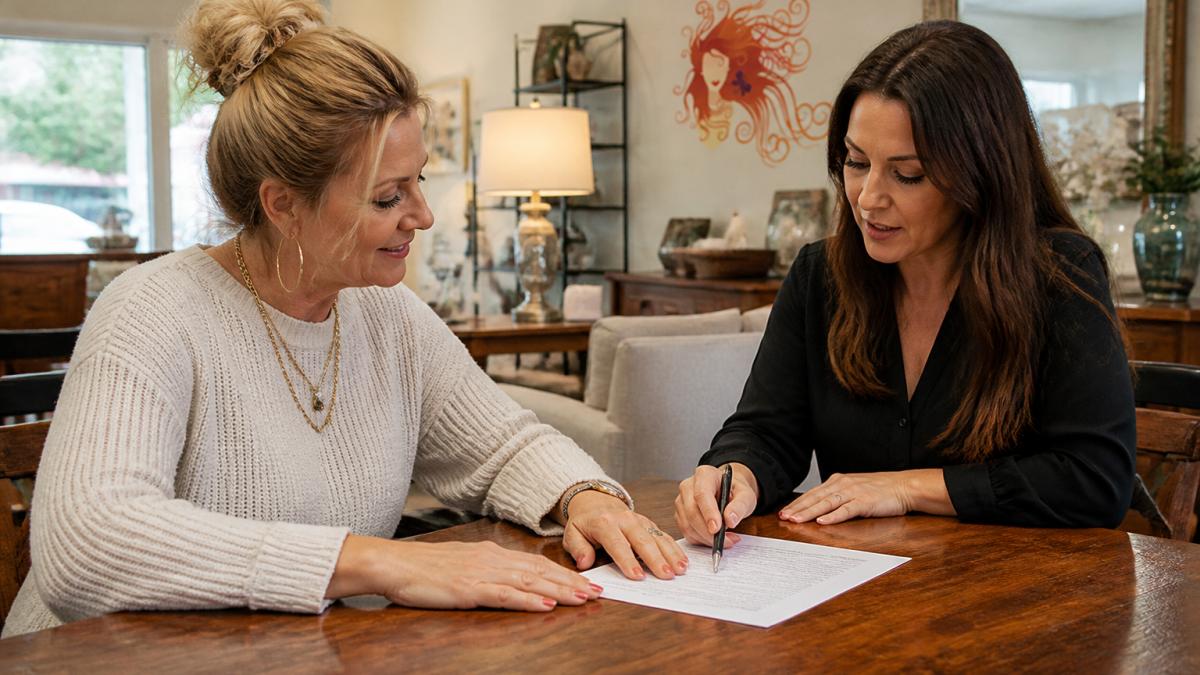
You can absolutely ask about the split. The trick is to ask with use, not apology. Here is a script you can adapt:
“I have a few pieces I think would move well here. Before we set terms, can we talk about the split? I’m flexible on price if it helps them sell. What would a 55/45 look like if I handle delivery and keep the price realistic?”
Three things make that work:
- You lead with value, not a demand.
- You offer something in return, like delivery or a fair price.
- You ask a question instead of making a threat.
A common mistake is opening with “I want more money.” Offer a reason instead. If you are coming from a shop that held your items for months, say so. That is real negotiation use.
Hidden Costs and Tax Questions That Change Your Net Profit
Your net profit is what you actually keep after every cost, not just the split. The split is the headline. The fine print decides whether consigning was worth it. Most guides stop at “watch for fees.” The more useful exercise is to read the agreement line by line and ask, for each cost, who bears it and when.
Pickup and delivery fees. Some shops charge for pickup or delivery and deduct it from your payout. Ask whether the fee is charged at intake, at sale, or only if the item does not sell, and whether it is a flat fee or a percentage.
Storage charges. If an item does not sell within the consignment period, some shops charge storage. Confirm whether storage starts after the consignment period ends or after a shorter window, and whether you are notified before charges begin. A shop that charges storage without notice is a shop to avoid.
Markdowns. A markdown schedule quietly lowers your final take. Ask for the schedule in writing: how much the price drops, how often, and whether markdowns require your approval. A defined schedule protects the shop’s turnover and protects you from surprise cuts.
Liability if an item is damaged or stolen. This is the question consignors ask least often and regret most. Confirm in writing who is responsible if a piece is damaged on the floor, stolen, or lost in storage, and whether the shop carries insurance that covers consigned goods. Ask whether the shop’s policy covers the agreed retail price or a lower wholesale value.
Tax reporting. Consignment sales can count as income for you. Depending on how an arrangement is structured, the consignor may receive tax paperwork for sales proceeds. That means you may owe income tax on the full sale price even though the shop kept its share, so keep records of the commission and fees you paid.
Who insures the goods, and for how much. Ask the shop directly: “If this piece is damaged or stolen while it is here, what does your insurance cover, and what do I need to do to make a claim?” Get the answer in the agreement, not in conversation. A shop that cannot answer clearly is telling you something.
Running the numbers before you agree is the smart move. Our guide on calculating profit margins on furniture consignment shows you how to do the math on your own pieces, including fees and markdowns, so you can compare a 50/50 offer against a 60/40 offer on net proceeds rather than on the headline split.
Bring Your Pieces to Le Rouge Tete and Talk Terms in Person
The best way to settle a split question is face to face. At Le Rouge Tete, we have served the Morehead City community for over 16 years with a 50/50 split and no end dates on consignments. You can see pieces in our “live in” layout and ask about our 24-hour hold policy. If you are local and want to start the conversation, you can contact us to talk through the terms.
Frequently Asked Questions
How much commission do most consignment shops charge for furniture?
Many furniture consignment shops use splits near 50/50, though the exact consignment commission varies by store, overhead and item type. Ask any store for its written split before you commit, and confirm whether the percentage applies before or after markdowns so your net profit is clear.
Can you negotiate commission rates at upscale consignment shops?
Often yes, especially on high-value or hard-to-source pieces. Negotiation leverage comes from item valuation, sales velocity and how quickly your piece is likely to sell. A consignor bringing a clean, in-demand dining set or a designer sofa has more room to ask than someone with a single worn side table. Come with comparable retail prices and a realistic price point, and ask whether the split can improve if the item sells within the first 30 days.
What should a consignment agreement template include?
A solid consignment agreement template covers the commission split, the agreed retail price and markdown schedule, the consignment period and end date, payout structure and timing, who handles pickup and delivery, and what happens to unsold items. It should also state how damage or loss is handled and whether selling fees apply. Read the contract terms line by line, and ask the shop to write in any verbal promise about rates before you sign.
Is it better to consign high-value furniture or sell it privately?
It depends on your time and the local market. Selling privately can net more per piece, but you handle photos, showings, hauling and no-shows. Consignment trades some revenue share for a storefront, foot traffic and staff who move items for buyers. For heavy pieces or a whole-home downsizing, the convenience and steady sales velocity of a consignment shop often outweigh the percentage cut. Compare your expected net profit both ways before deciding.
Negotiating a fair split starts with knowing your numbers and asking the right questions. We keep consignment simple: a 50/50 split, no end dates, and local pickup for large items. Get started with Le Rouge Tete and turn the furniture you no longer need into room for something you love.
