
Table of Contents
- How to Transport Large Furniture Items: Planning and Preparation
- Essential Furniture Moving Equipment You’ll Need
- How to Pack Large Furniture for Moving: Disassembly and Protection
- Proper Lifting Techniques and Safe Handling
- Moving Large Items Upstairs: Specific Techniques and Strategies
- Loading and Securing Items in Your Moving Truck
- Cost of Moving Large Furniture: DIY vs. Professional Services
- Common Moving Problems and Troubleshooting Solutions
Last Updated: July 18, 2026
How to Transport Large Furniture Items: Planning and Preparation
Preparation separates smooth moves from stressful ones. This guide covers essential steps, measuring spaces, choosing equipment, and safe handling, to move furniture without damage.
Measure Doorways, Hallways, and Stairs
Document every critical dimension before moving. Measure width and height of all doorways, including exterior doors and hallways. Many people forget height, then discover a tall dresser won’t fit through a low doorframe.
For stairs, measure staircase width and ceiling height above the landing. Large items like sectional sofas need to be angled or tilted, and low ceilings can prevent that entirely.
Write down furniture dimensions, length, width, and height. For sectional sofas, measure each component separately, including legs.
Measure diagonal distances across doorways and hallways. A sofa that’s 36 inches wide and 32 inches tall might fit through a 36-inch doorway if stood upright, but the diagonal measurement (about 47 inches) tells you whether it can be tilted at an angle. This single measurement prevents most furniture-doesn’t-fit disasters.
Plan Your Route and Access Points
Map the exact path from current to new location. Identify problem areas: narrow hallways, tight corners, staircases, and exterior access points. Note whether you’ll need stairs or an elevator, and check ceiling height in basement stairwells.
Consider exterior access. Will furniture fit through the front door, or should it come through a side entrance or window? For very large pieces, some people remove windows or doors temporarily.
Walk the route with furniture dimensions in mind. Check for obstacles like radiators or light switches. Identify corners where furniture will pivot. This 30-minute investment prevents hours of frustration.
Essential Furniture Moving Equipment You’ll Need
Dollies, Furniture Sliders, and Lifting Straps
A four-wheel platform dolly is essential for large furniture. Platform dollies typically support 1,000+ pounds and have a low profile that slides under furniture easily.
Furniture sliders are thin plastic or felt discs that reduce friction between furniture legs and floors. Place sliders under each leg before pushing. They cost just a few dollars but prevent thousands in floor damage.
Lifting straps distribute weight across your shoulders and back instead of concentrating it in your hands and arms. A quality pair makes moving a heavy dresser manageable for two people.
The combination of a four-wheel dolly, furniture sliders, and lifting straps handles 90% of residential furniture moving challenges. These three items cost under $100 to purchase or rent and prevent most injuries and damage.
Protective Materials: Moving Blankets, Bubble Wrap, and Stretch Wrap
Moving blankets protect furniture from scratches, dents, and moisture. Wrap blankets around furniture and secure with packing tape or rope.
Bubble wrap protects delicate surfaces and glass components. Wrap it around legs, arms, and protruding elements. For glass tabletops, use bubble wrap first, then secure with packing tape.
Stretch wrap holds blankets and bubble wrap in place while protecting against dust and moisture.
How to Pack Large Furniture for Moving: Disassembly and Protection
Disassembling Furniture Safely
Determine whether furniture can be disassembled. Many modern pieces, bed frames, sectional sofas, dining tables, bookshelves, separate into smaller, manageable components.
Take photos before disassembly from multiple angles, then photograph each step. These photos become invaluable during reassembly.
Remove legs first if possible. Most furniture legs are bolted or screwed on. Store all hardware, bolts, and screws in a labeled bag taped directly to the furniture piece it belongs to.
For sectional sofas, separate individual sections. Most modern sectionals disconnect with simple latches or bolts. Removing feet and separating sections can reduce a 12-foot sectional to pieces that fit through standard doorways.
Never force a piece apart. If something won’t disconnect easily, you’re using the wrong technique or tool. Forcing it risks breaking the furniture or injuring yourself. Stop, examine the connection point, and try a different approach.
Wrapping and Padding for Maximum Protection
Wrap each component individually to prevent pieces from banging against each other and to protect against scratches and dust.
Start with bubble wrap for delicate surfaces. Secure it with packing tape. For wood furniture, use at least two layers of bubble wrap on any surface that might contact other items.
Add a moving blanket next. Wrap it around the bubble-wrapped piece and secure with packing tape or rope. Remove drawers and doors if possible and wrap them separately. Protect corners and edges with extra padding or corner guards.
Proper Lifting Techniques and Safe Handling
Bend Your Knees and Lift with Your Legs
When lifting heavy furniture, bend at your knees and hips, not your waist. Keep your back straight. Your legs contain large muscle groups designed for lifting; your back is not.
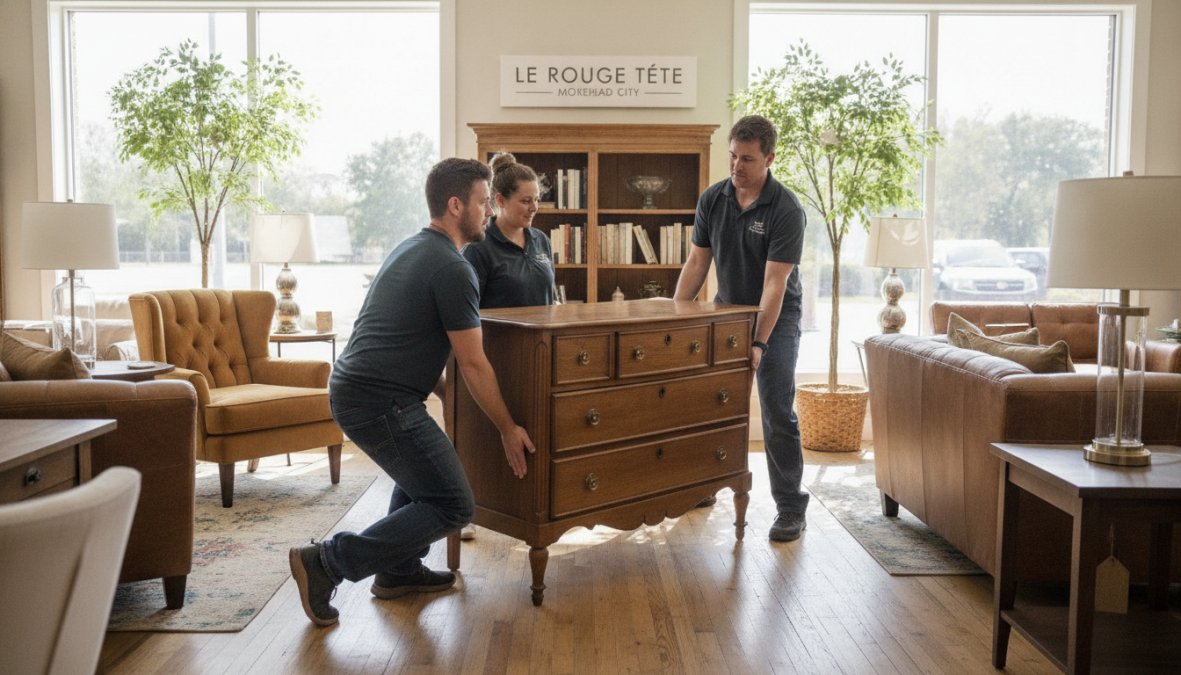
Position your feet shoulder-width apart for stability. Get a firm grip on sturdy structural points. Never grip upholstery or thin decorative elements that might tear.
Engage your core muscles before lifting. Tighten your abdominal muscles to create internal spine support. Lift smoothly and deliberately. Never lift and twist simultaneously, as this causes most back injuries. Move your feet to change direction rather than rotating your torso.
Using Dollies and Sliders for Heavy Items
A four-wheel platform dolly makes moving heavy furniture dramatically easier. Tilt the furniture slightly, slide the dolly underneath, and lower the furniture onto it. Secure furniture to the dolly with rope or straps.
When pushing a loaded dolly, push from the back or side, never from in front. Keep your knees slightly bent and use your legs to push, not your arms.
For furniture with wheels, unlock them for transport. On stairs, a dolly becomes less useful. Use lifting straps and a second person instead.
Moving Large Items Upstairs: Specific Techniques and Strategies
Navigating Narrow Staircases and Tight Corners
Most large furniture can navigate stairs if tilted or angled correctly. A sofa that won’t fit straight up might fit if tilted on its end or at a 45-degree angle.
Test angles before committing to the full move. Try different orientations at the base of the stairs. Measure the diagonal distance from the bottom corner of the stairwell to the top corner of the landing to determine the maximum length of furniture that can navigate the stairs.
Use furniture sliders on stairs to reduce friction. Maintain firm grip and control, as sliders make furniture more likely to slide if not controlled.
When moving furniture up a narrow staircase, have one person at the top pulling with a rope while two people at the bottom push with lifting straps. This three-person method distributes the work and prevents the furniture from sliding backward.
Angle and Pivot Methods for Sectional Sofas
Always separate a sectional sofa into individual sections before moving. A 12-foot sectional becomes three or four manageable pieces.
Test angles before committing. A sofa section that won’t fit straight up the stairs often fits when tilted on its end. Use the "pivot and slide" technique for tight corners. Position the sofa section at the corner, then rotate it incrementally while sliding it forward.
For L-shaped or curved pieces, measure the diagonal distance carefully. The diagonal measurement determines whether the piece fits through a doorway or around a corner.
Loading and Securing Items in Your Moving Truck
Strategic Loading Order and Weight Distribution
Load heavy items first and place them toward the front of the truck (above the cab). This lowers the truck’s center of gravity and improves handling. Lighter items go toward the back and on top.
Place the heaviest items on the truck floor. Dressers and tables should be loaded first, then sofas and upholstered pieces. Distribute weight evenly side-to-side to prevent imbalance and tipping risk on turns.
Create layers by placing furniture pieces parallel to each other, then adding another layer on top. Leave some space between pieces so nothing shifts during transport.
Using Tie-Downs and Ratchet Straps
Secure all furniture to the truck with ratchet straps or rope. Furniture should not shift during transport, even if you brake suddenly or hit a pothole.
Ratchet straps are superior to rope because they hold tension. Use straps rated for the weight they’re securing, a strap rated for 1,000 pounds should secure furniture weighing no more than 500 pounds.
Attach straps to sturdy anchor points on furniture and to tie-down points in the truck bed. For sofas and upholstered pieces, wrap straps around the piece rather than relying on handles. Cross-brace large pieces using two straps in an X pattern to prevent tipping or rotating.
If you can move the furniture by hand once it’s strapped in the truck, your straps aren’t tight enough. Properly secured furniture shouldn’t shift at all.
Cost of Moving Large Furniture: DIY vs. Professional Services
DIY Moving Costs and Equipment Investment
Moving furniture yourself requires equipment investment. A four-wheel dolly costs $100-150 to purchase or $20-30 to rent per day. Furniture sliders cost $10-20. Lifting straps cost $30-50. Moving blankets cost $15-30 per blanket (most moves require 4-6).
Local DIY moves typically cost $200-500 in equipment and supplies. Truck rentals range from $50-100 for a one-day local rental of a 10-foot truck. DIY moving makes sense for small moves or when you have access to equipment and help from friends.
Professional Movers: Full-Service and Self-Service Options
Full-service moving companies handle everything, packing, loading, transport, and unloading. They provide equipment, trained personnel, and insurance. Self-service options (like U-Pack or PODS) fall between DIY and full-service. You pack and load; the company handles transport.
For large furniture items, professional movers offer value through specialized equipment and experience navigating difficult situations.
Local vs. Long-Distance and LTL Shipping Comparison
Local moves (under 50 miles) are cheaper because the truck doesn’t travel far. Professional movers typically charge hourly for local moves, $100-150 per hour for a team of two to three.
Long-distance moves are usually charged by weight and distance. For shipping individual large furniture items long-distance, Less-Than-Truckload (LTL) freight services consolidate shipments from multiple customers on one truck, reducing costs. LTL works well for single items like pianos or high-end sectionals shipped across the country.
Common Moving Problems and Troubleshooting Solutions
What to Do When Furniture Doesn’t Fit
If furniture won’t fit through a doorway or around a corner, several options exist.
Remove the door from its hinges to create additional clearance. Most doors add 2-3 inches of width when removed. Remove furniture legs or other removable components. Even removing legs can reduce height by 6-12 inches, which might be the difference between fitting and not fitting.
Try different angles. Rotate the furniture 45 degrees or stand it on end. The diagonal measurement is often smaller than the straight-line measurement. If furniture truly doesn’t fit after trying these solutions, hire professional movers who might have creative solutions.
Dealing with Unexpected Damage and Scratches
Despite best efforts, furniture sometimes gets damaged during moving. Minor scratches in wood can often be repaired with furniture markers (available at hardware stores) that fill the scratch with color-matched stain.
For deeper gouges, wood filler works for damage up to about 1/4 inch deep. Apply filler, let it dry, sand smooth, and apply stain if needed. For upholstered furniture, small tears can be patched with fabric glue and matching fabric patches.
For damage during a professional move, the moving company’s insurance typically covers repairs or replacement.
Eco-Friendly Moving Tips and Sustainable Packing Materials
Use recycled packing materials instead of new bubble wrap. Newspaper, shredded paper, and cardboard boxes you already have work fine. Blankets and towels you own can replace moving blankets.
Source boxes from local businesses. Grocery stores and restaurants often have boxes they’re discarding. Reuse moving blankets, dollies, and equipment. Rent rather than buy when possible.
Consider donating furniture you’re not moving rather than storing it. When purchasing new furniture, consider consignment or pre-loved options. Buying used furniture means giving existing pieces a second life rather than manufacturing new furniture.
Moving large furniture successfully comes down to preparation, the right equipment, and proper technique. Whether handling the move yourself or hiring professionals, the steps in this guide prevent damage and injuries.
| Moving Approach | Best For | Cost Range | Time Investment |
|---|---|---|---|
| DIY with friends | Local moves, 1-3 items | $200-500 | Full day or more |
| Self-service (PODS/U-Pack) | Long-distance, moderate amount | $2,000-5,000 | Several days |
| Professional movers | Full house, long-distance, valuable items | $3,000-10,000+ | 1-3 days |
| LTL freight | Single large item, long-distance | $500-2,000 | 5-10 days |
Frequently Asked Questions
What equipment do you need to transport large furniture items?
Essential furniture moving equipment includes a dolly for wheeling heavy items, furniture sliders to protect floors, moving blankets for padding, stretch wrap and bubble wrap for protection, lifting straps to distribute weight safely, packing tape, and tie-downs or ratchet straps for securing items in a moving truck. For specific furniture types like pianos or hot tubs, you may need specialized equipment. Start with basic supplies and add specialized tools based on your furniture type and move distance.
How do you move heavy furniture without a dolly?
Without a dolly, use furniture sliders under each leg to glide items across floors smoothly. For stairs, wrap the furniture in moving blankets and use lifting straps to distribute weight between two people. Practice proper lifting technique by bending your knees and lifting with your legs, not your back. For particularly heavy pieces, consider renting a dolly locally or hiring professional movers. Moving blankets and sliders together can reduce strain significantly compared to dragging furniture directly.
What's the cost difference between DIY moving and hiring professional movers for large furniture?
DIY costs depend on equipment rental (dollies, straps, blankets) and materials, typically ranging from minimal if you own supplies to moderate if renting. Professional full-service movers handle packing, loading, transport, and unloading but cost more. For local moves of single items, services like Le Rouge Tete offer convenient pickup options. Long-distance moves may use LTL (Less-Than-Truckload) freight services. Get quotes from local professional movers and compare against your DIY equipment costs to determine the best value for your specific situation.
How do you move a sectional sofa upstairs through a narrow doorway?
Measure your doorways and staircase width before attempting to move a sectional. Many sectionals can be disassembled into individual pieces, which move through narrow spaces more easily. Use the angle-and-pivot method: tilt the piece at a 45-degree angle and rotate it gradually through the doorway. Protect corners and edges with moving blankets to prevent damage and scratches. If disassembly isn't possible and it won't fit, consider professional movers experienced with large furniture or explore alternative delivery methods like freight services.
This article was written using GrandRanker