
Table of Contents
- Understanding Vintage Wood in Coastal Design
- Selecting the Right Vintage Wood Furniture Pieces
- Mixing Wood Tones in Coastal Interiors
- Creating Coastal Farmhouse Decor Ideas with Reclaimed Wood
- How to Style Reclaimed Wood Furniture for Modern Coastal Aesthetics
- Maintenance and Preservation of Vintage Wood Pieces
- Budget-Friendly Distressing and Finishing Techniques
- Sourcing Quality Vintage Wood for Your Coastal Home
- Frequently Asked Questions
Last Updated: August 31, 2026
Understanding Vintage Wood in Coastal Design
Vintage wood brings authentic character and depth to coastal interiors through natural textures, warm tones, and historical patina that new furniture cannot replicate. The key is balancing aged, weathered qualities with the light, airy foundation that defines coastal style.
At Le Rouge Tete, we’ve helped homeowners navigate this balance. Our consignment inventory features carefully curated vintage wood pieces that work beautifully in coastal settings without overwhelming the space. The challenge most people face is understanding which pieces work, how to mix them without creating clutter, and where to source quality vintage wood that won’t require extensive restoration.
Coastal design emphasizes light palettes, natural materials, and a relaxed atmosphere inspired by seaside living. Vintage wood introduces depth and character that complements these principles. The patina on aged wood, visible grain, and weathered textures tell stories. A distressed reclaimed wood console table or faded wooden armchair enhances coastal aesthetics by adding layers of visual interest.
Treat vintage wood as a foundational element rather than a decorative accent. Select 2-3 statement pieces in complementary wood tones and build your coastal design around them. This approach creates cohesive, intentional design.
Selecting the Right Vintage Wood Furniture Pieces
The best vintage wood pieces for coastal interiors feature lighter wood tones (whitewashed, bleached, or naturally pale finishes), visible wood grain, and solid construction. Look for wood types like pine, oak, or reclaimed barn wood that develop beautiful patina over time.
Identify your primary wood tone as an anchor. Many coastal interiors use soft, weathered white or cream-colored wood as the foundation, then layer in medium and darker tones for depth. A whitewashed reclaimed wood console table works excellently as a starting piece because it anchors the room while remaining visually light.
Size matters significantly. In smaller spaces, oversized vintage wood furniture overwhelms the room and blocks natural light. Measure carefully and consider how each piece interacts with natural light. Vintage wood shows its best qualities when sunlight highlights the grain and weathered finish.
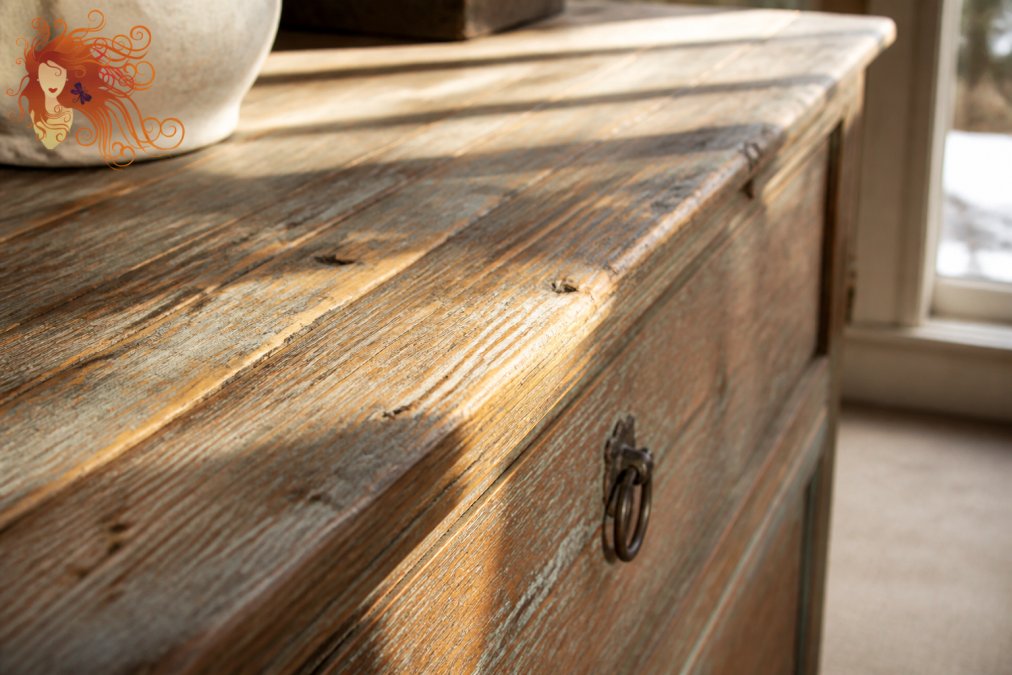
Quality is non-negotiable. Inspect pieces for structural soundness, checking joints, legs, and signs of active wood rot or pest damage. Cosmetic wear is desirable; hidden structural problems become expensive. Le Rouge Tete’s team personally inspects every consignment item. When you shop locally, you can physically examine pieces and visualize them in different lighting conditions.
Consider the finish. Original distressed finishes feel authentic and require less maintenance. Refinished pieces offer a cleaner aesthetic but may need periodic touch-ups.
Mixing Wood Tones in Coastal Interiors
Mixing wood tones successfully requires understanding color temperature and visual balance. Cool wood tones (whitewashed, gray, silver-tinted) align naturally with coastal palettes and pair easily with blues, greens, and neutral backgrounds.
Use the 70-20-10 rule: let 70 percent of your wood be in the lightest tone, 20 percent in a medium tone, and 10 percent in darker accents. For example, a whitewashed reclaimed wood console table (70 percent light) paired with a medium-toned wooden armchair (20 percent) and a darker wood side table base (10 percent) creates depth while maintaining the airy coastal aesthetic.
Complementary colors enhance wood tone mixing. Light wood looks better next to soft blue textiles or pale green accents. The coastal palette naturally supports light wood because blues, grays, and whites make wood grain and patina more visible.
Avoid clustering similar wood tones in one area. Spread pieces throughout the room so the eye moves naturally. A light wood console in the entryway, a medium-toned armchair in the living area, and a darker wood accent table in the bedroom creates visual rhythm across your home.
Creating Coastal Farmhouse Decor Ideas with Reclaimed Wood
Coastal farmhouse style blends the relaxed aesthetic of seaside living with the rustic, collected-over-time feeling of farmhouse design. Reclaimed wood provides the aged, organic foundation that farmhouse design requires while maintaining the lightness coastal spaces demand.
Start with large reclaimed wood pieces that serve as anchors. A reclaimed wood console table in the entryway, a distressed wood bookshelf in the living room, or a weathered wood dining table creates the structural foundation. These pieces should show visible signs of age, nail holes, color variation, and uneven surfaces because authenticity is central to the aesthetic.
Layer in smaller reclaimed wood accents: wooden picture frames, driftwood-inspired shelving, or small wooden boxes for storage. Pair reclaimed wood with soft textiles in cream, white, or pale blue to balance the aged wood’s visual weight.
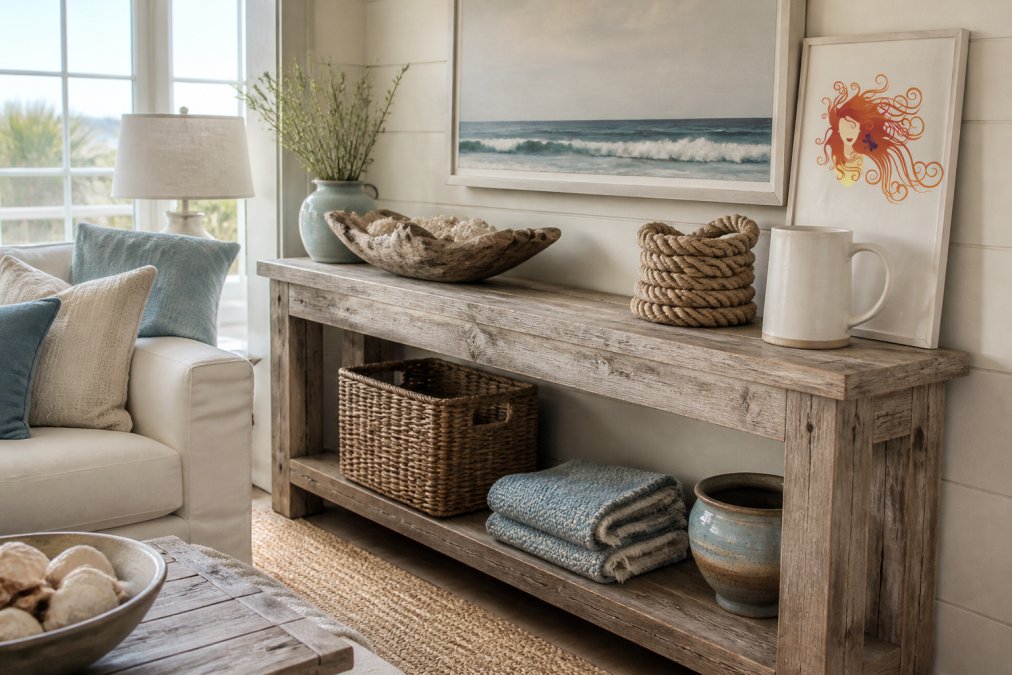
The key to coastal farmhouse success is restraint. Don’t fill every surface with reclaimed wood. Let negative space breathe around each piece. A single large reclaimed wood statement piece creates more impact than three smaller pieces competing for attention.
Nautical accents complement reclaimed wood naturally. Rope details, weathered metal hardware, or vintage maritime items enhance the aesthetic without clashing with aged wood. Keep these accents minimal and functional.
How to Style Reclaimed Wood Furniture for Modern Coastal Aesthetics
Modern coastal design emphasizes clean lines, functional pieces, and natural materials. Reclaimed wood fits this aesthetic when styled with intentionality and restraint.
Pair aged pieces with contemporary elements. A weathered wood console table looks fresh when topped with a sleek glass lamp and minimalist white vase. A distressed wooden armchair gains modern appeal when dressed in a solid linen slipcover in soft blue or cream.
Lighting dramatically affects how reclaimed wood reads in a space. Natural light highlights wood grain and patina beautifully. Position vintage wood pieces where they catch morning or afternoon sunlight. If natural light is limited, use warm-toned lighting that complements the wood’s undertones.
Negative space is your ally in modern coastal design. Give each piece room to breathe. A single large reclaimed wood table in a minimalist dining room creates more impact than multiple smaller pieces.
Color coordination matters. Reclaimed wood in light, neutral tones pairs easily with modern coastal palettes. If you have darker wood pieces, balance them with plenty of white walls, light textiles, and negative space.
Maintenance and Preservation of Vintage Wood Pieces
Vintage wood requires different care than new furniture because the wood has already aged and may have delicate finishes.
Dust weekly with a soft brush or microfiber cloth to remove particles from grain and crevices. Avoid compressed air, which forces particles into the wood (si.edu).
Humidity is critical. Keep indoor humidity between 40-55 percent if possible. A humidifier in dry months and a dehumidifier during humid seasons protects vintage wood from warping and cracking.
Avoid direct sunlight exposure for extended periods. While sunlight highlights wood grain beautifully, prolonged exposure fades finishes and dries out wood. Use window treatments that filter harsh afternoon light.
For cleaning, use minimal water. A slightly damp cloth works for light cleaning, but excessive moisture damages vintage wood. Never use commercial furniture polish on distressed finishes. Instead, use a specialized wood cleaner designed for aged finishes, or simply dust regularly.
Address spills immediately. Use coasters under glasses and placemats under plates. If a spill occurs, blot immediately with a dry cloth.
Budget-Friendly Distressing and Finishing Techniques
Creating a distressed finish on new wood or refreshing an existing vintage piece doesn’t require professional equipment. Simple techniques produce authentic-looking results at minimal cost.
Distressing with hand tools is accessible. Use a hammer, chisel, or screwdriver to create dents and marks that mimic natural wear. Focus on edges and high-traffic areas. Strike lightly and randomly; authentic distressing is uneven and organic.
Sanding creates a weathered texture. Use medium-grit sandpaper (120-150 grit) to sand edges and high points, revealing layers beneath (extension.oregonstate.edu). Sand in the direction of the wood grain.
Whitewashing creates the pale, weathered look characteristic of coastal design. Mix white paint with water (roughly 1:1 ratio) and apply with a brush, allowing the wood grain to show through. Wipe excess with a cloth while still wet.
Matte finishes suit distressed wood better than glossy ones. Use matte polyurethane or matte wax as a protective topcoat. Avoid high-gloss products, which make distressing look artificial.
Work in ventilated spaces, wear appropriate protective equipment, and follow product instructions carefully. Water-based products are safer than oil-based alternatives for indoor use (the EPA).
Sourcing Quality Vintage Wood for Your Coastal Home
Finding quality vintage wood pieces requires knowing where to look and what to evaluate. Local consignment shops, estate sales, online marketplaces, and salvage yards all offer vintage wood, but quality varies significantly.
Consignment stores like Le Rouge Tete offer curated selections where items have been inspected for quality and condition. You can see pieces in person, understand their actual condition, and receive assistance with visualization and transport. New inventory arrives regularly, offering fresh options.
Estate sales and auctions provide access to authentic vintage pieces, often with documented history. Attend previews to inspect items carefully. Bring measurements and compare pieces to your space requirements.
Online marketplaces offer broader selection but require caution. Request detailed photos showing wood grain, finish condition, and any damage. Ask specific questions about dimensions, wood type, and structural integrity. Arrange local pickup when possible to inspect items before committing.
Salvage yards specialize in reclaimed materials from demolished buildings. Quality varies widely, and pieces often require refinishing. If you have refinishing skills or budget for professional work, salvage yards offer authentic reclaimed wood at competitive prices.
When evaluating any vintage wood piece, assess structural integrity first. Wobbly joints, cracked wood, or pest damage are red flags. Minor cosmetic wear, scratches, fading, and small dents are desirable in vintage pieces. Ask about the piece’s history if available.
Consider your timeline. Quality vintage pieces take time to find. Wait for options that genuinely fit your design vision rather than forcing an imperfect piece into your space.
Coastal design comes alive when you approach vintage wood as a design partner rather than a decorative afterthought. The weathered textures, visible wood grain, and authentic patina of reclaimed wood create the depth and character that make coastal spaces feel like home. Le Rouge Tete’s carefully selected vintage wood collection offers quality pieces inspected for condition and displayed in our live-in layout so you can visualize exactly how each item works in your space. Visit us to explore pieces that speak to your coastal aesthetic, and let our team help you bring your design vision to life with pieces that will age beautifully for years to come.
Frequently Asked Questions
Q: How do you balance dark vintage wood with a light coastal color palette?
A: Use dark wood pieces as anchors rather than dominant elements. Pair them with soft blue, cream, or white textiles and accessories to maintain visual balance. Position dark wood furniture where natural light hits it to reveal the wood grain and patina. Layer lighter organic materials like linen and cotton nearby to soften the overall look. This creates depth and character without overwhelming the coastal aesthetic.
Q: Can you mix different wood tones in a coastal design scheme?
A: Yes, mixing wood tones adds visual interest and authenticity to coastal design. Combine aged wood with lighter, weathered finishes across different furniture pieces. The key is ensuring each piece has some coastal character, whether through distressed finish, reclaimed origins, or vintage-inspired styling. Aim for cohesive design by repeating similar wood tones across the room rather than using too many different shades.
Q: What types of vintage wood finishes work best in a beach-inspired home?
A: Distressed finishes, weathered textures, and faded paint are ideal for coastal design. Reclaimed wood with natural patina adds authenticity and timeless appeal. Whitewashed or light-stained vintage pieces complement soft palettes, while aged darker woods create statement pieces. The goal is selecting pieces that look like they’ve been touched by time and seaside living, creating that lived-in, organic aesthetic.
Q: How can you incorporate reclaimed wood without making a room feel too rustic?
A: Balance reclaimed wood with light textiles, coastal accessories, and modern elements. Use reclaimed pieces as console tables or accent furniture rather than filling the entire room. Pair them with soft blue, nautical accents, and faded textiles to keep the look beachy rather than farmhouse-heavy. Positioning furniture to maximize natural light helps reclaimed wood feel fresh and coastal instead of heavy or dated.
This article was written using GrandRanker