
Last Updated: October 31, 2026
Quick Summary
Vacation rental staging raises occupancy by helping guests picture their stay before they book. Start by auditing your current listing photos and rooms, then plan the setup around your typical guests. Spend your budget on the bedding, seating, and beds guests use most, and shoot the finished rooms for your listing.
- Audit your current listing photos and rooms before buying anything
- Plan staging around your two or three most common guest types
- Spend your budget on bedding, quality seating, and a solid dining table
- Keep decor to three to five accents per room for a more intentional look
- Refresh pillows, bulbs, and accents monthly and review photos yearly
Table of Contents
- Step 1: Audit Your Listing Photos and Rooms Before You Buy Anything
- Step 2: Plan Vacation Rental Staging Ideas Around Your Guests
- Step 3: Decorate on a Budget Without Looking Cheap
- Step 4: Source Furniture and Decor, Including Secondhand Pieces
- Step 5: Shoot the Staged Rental So Photos Sell the Stay
- Step 6: Keep Staging Fresh to Support Occupancy Over Time
- Booking Your Next Furnishing Round at Le Rouge Tete in Morehead City
- Frequently Asked Questions
Guests decide within seconds of opening a listing whether a place feels worth booking. Staging is the fastest lever you have to shape that first impression. Below, we walk through seven steps that raise vacation rental occupancy with staging, starting with the audit that most owners skip.
Staging is the practice of arranging furniture, decor, and accessories so a space looks lived-in, comfortable, and purposeful. For a rental, the goal is simple: help guests picture their stay before they arrive.
Most owners treat furniture as a cost. Guests read it as a promise. A room with a clear purpose, good lighting, and a few thoughtful touches tells a booker that the place is cared for. A room with mismatched pieces and bare walls tells them the opposite, even if the beds are new.
Here is what staging usually changes:
- Photos look clearer and more inviting
- Guests understand how each room is used
A common mistake is staging for the owner’s taste instead of the guest’s. Ask what your typical guest wants: a family needs space to spread out, a couple wants a romantic corner, and a remote worker needs a real desk.
Watch out: Overcrowding a room can make it look smaller in photos. Leave clear floor space and let each piece earn its spot.
Step 1: Audit Your Listing Photos and Rooms Before You Buy Anything
Start with what guests already see. Pull up your current listing photos and look at each one as a stranger would. Note what catches your eye and what feels empty, dated, or cluttered.
Walk through the property with a notepad and check each room against a short list:
- Is there a clear focal point, such as a sofa, bed, or dining table?
- Does the lighting feel warm and bright?
- Are walls, floors, and surfaces clean and in good repair?
- Does each room have a clear use?
Mark the rooms that need the most help. Those are where staging will raise occupancy fastest. Skip upgrades in rooms guests rarely see.
Step 2: Plan Vacation Rental Staging Ideas Around Your Guests
Good vacation rental staging ideas start with your typical guest, not with a catalog. Write down your two or three most common guest types and what each needs from the space.
Use a simple planning table:
| Guest Type | Key Needs | Staging Focus |
|---|---|---|
| Families | Space, storage, kid-friendly seating | Sectional sofa, bunk or trundle beds |
| Couples | Comfort, relaxation, views | Cozy reading chair, soft lighting |
| Remote workers | Quiet, good desk, Wi-Fi | Desk with ergonomic chair, task lamp |
| Groups | Shared space, dining | Large table, extra seating |
Then pick one theme per property. A coastal theme fits a beach cottage. Keep colors, textures, and materials consistent so the place feels planned.
Step 3: Decorate on a Budget Without Looking Cheap
Budget vacation rental decorating works best when you spend on the pieces guests touch and sit on, and save on the rest. Mattresses, pillows, and seating matter most. Wall art and throw pillows can come from secondhand shops.
Focus your budget here:
- Quality bedding and towels
- One good sofa or chair
- A solid dining table
- Warm lamps in every main room
Keep decor simple. Three to five accents per room looks intentional. A large piece of art or a cluster of plants does more than twenty small trinkets.
Look for pieces with clean lines and neutral finishes that can work across different themes.
Step 4: Source Furniture and Decor, Including Secondhand Pieces
Sourcing is where many owners waste time and money. Set a clear shopping list before you visit any store, with measurements for every room.
Use this checklist when you shop:
- Measure doorways, hallways, and stair widths before buying
- Note the room size and leave clear walking paths
- Choose a color palette of three to four main shades
- Check every secondhand piece for stains, odors, and loose joints
- Ask about delivery or pickup for large items
Secondhand furniture can look like new with a good cleaning and a fresh cushion. For a guide to the essential staging furniture to buy, see essential staging furniture. Shoppers in Morehead City can compare options at local stores such as Le Rouge Tete, which carries curated pre-loved furniture and decor displayed in a “live in” layout so you can picture each piece in a room. Browse the Morehead City thrift stores guide for more secondhand options nearby. Find out where to shop for furniture in Morehead City. Large items can be arranged for local pickup, and pricing depends on the items and quantity, so contact the store for current details.
For ideas on where to look and how to stage used pieces well, see our guide to Furniture staging basics from the National Association of Realtors.
Step 5: Shoot the Staged Rental So Photos Sell the Stay
Your photos are your first sales tool, so shoot them after staging is complete. Clear the surfaces, open the blinds, and turn on every lamp during the day. For a complete walkthrough of staging furniture well, read our guide.
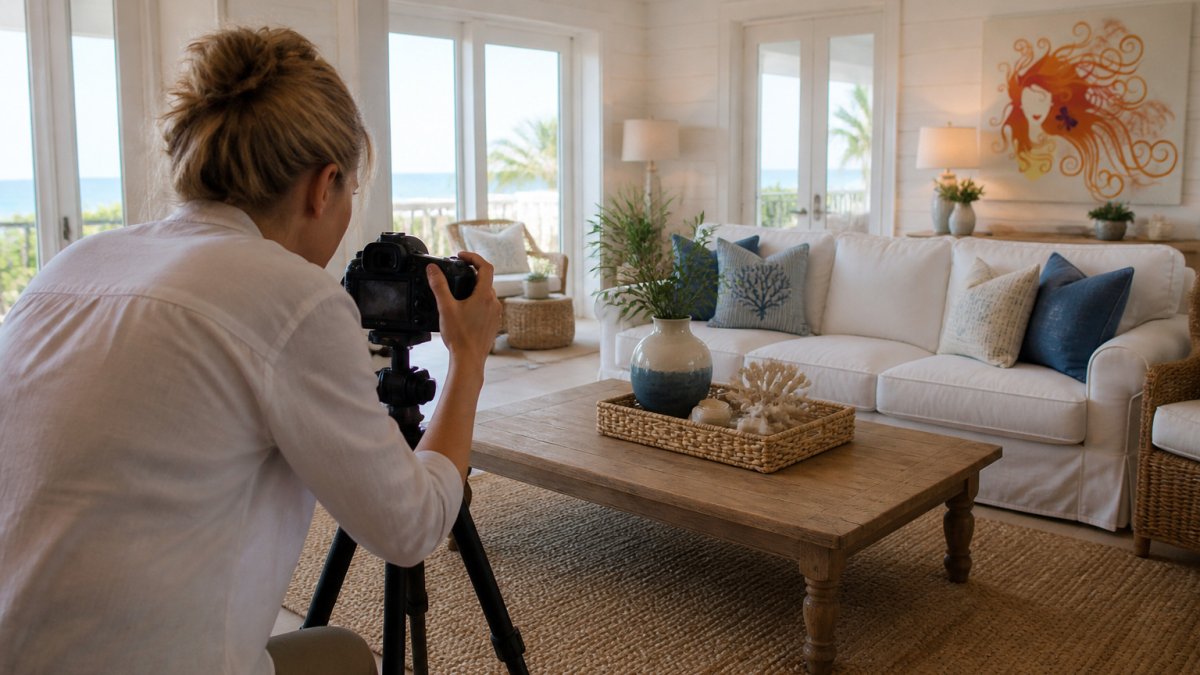
A photographer setting up a wide shot of a bright, freshly staged beach cottage living room with coastal throw pillows and a styled coffee table is a good model for your own shoot. Shoot each room from a corner so the whole space fits in the frame.
Shot list for every rental:
- One wide shot per main room
- A bed shot with made linens
- A kitchen shot with clean counters
- An exterior shot in good light
Edit lightly. Guests should recognize the place when they arrive.
Step 6: Keep Staging Fresh to Support Occupancy Over Time
Staging wears out. Pillows flatten, rugs fade, and décor starts to feel tired. Set a simple refresh schedule so the rental keeps earning bookings.
Try this routine:
- Every month: fluff pillows, replace burned-out bulbs, dust surfaces
- Every quarter: rotate accent pieces and check furniture for wear
- Every year: review photos and update anything that looks dated
Track reviews too. If guests mention a worn chair or a dim room, act on it fast.
Booking Your Next Furnishing Round at Le Rouge Tete in Morehead City
Staging does not have to be a solo project. If you are furnishing a new unit or refreshing an old one, Guide to buying secondhand furniture safely is a good place to start your research. Then visit Le Rouge Tete in Morehead City to see pre-loved pieces arranged in a live-in layout. Our team offers personalized help with moving items to visualize them in your rental, and we add new items weekly. Contact us to plan your next furnishing round, and ask about our 50/50 consignment split if you have pieces to sell.
Frequently Asked Questions
How does staging help increase vacation rental occupancy?
Staging makes a rental easier for guests to picture themselves in. Clean, cohesive rooms with functional furniture, good lighting and a clear purpose for each space tend to earn stronger listing photos and more inquiries. Those photos are often the first thing a traveler compares across listings, so a staged space can convert browsers into bookings. Staging is not a guarantee of occupancy, but it removes a common reason guests scroll past a property. Pair staging with accurate descriptions and consistent reviews for the best results.
How can I stage a vacation rental on a budget?
Start with what guests see most: the living room, bedroom and kitchen. Use a limited palette of two or three colors, add inexpensive throw pillows, plants and framed prints, and replace worn linens before anything else. Secondhand furniture and decor from a local consignment store such as Le Rouge Tete can be a practical option. Pricing depends on the items and quantity, so contact the store for current prices before planning your budget.
What should you prioritize when staging a vacation rental?
Prioritize the spaces that shape first impressions and reviews: the entry, living area, primary bedroom and bathroom. Clear clutter, make beds with fresh bedding, and ensure every room has a clear function such as a dining table for four or a reading chair by the window. Check that furniture fits the room scale and that walkways feel open. Small fixes like matching towels and good lighting often matter more than expensive new pieces.
How often should vacation rental staging and decor be refreshed?
Refresh seasonal elements such as throws, pillows and artwork every few months, and do a deeper review of furniture and linens at least once a year. Wear shows up quickly in high-turnover rentals, so inspect sofas, mattresses and rugs between bookings. Updating a few visible items can renew listing photos without a full redesign. Keep notes on what guests comment on in reviews, and adjust your staging to address those points.
