
Table of Contents
- Why Staging Matters for Coastal Vacation Rentals
- Step 1: Choose Your Coastal Color Palette and Design Aesthetic
- Step 2: Maximize Natural Light and Visual Openness
- Step 3: Declutter and Remove Personal Items for Guest Appeal
- Vacation Rental Staging Tips: Furniture Arrangement and Flow
- Step 4: Select Durable Beach House Furniture That Lasts
- Step 5: Optimize Outdoor Living Spaces and Curb Appeal
- Maximize Rental Income for Coastal Properties: ROI-Focused Staging
Stage Coastal Rental Properties: 7 Design Steps
Last Updated: July 23, 2026
Learning how to stage coastal rental properties is one of the most direct paths to higher occupancy rates and guest satisfaction. Vacation renters expect both aesthetic appeal and durability that withstands frequent turnover. At Le Rouge Tete, we’ve worked with property managers and owners across the Outer Banks to understand what transforms an empty space into a property guests can’t wait to book.
According to National Association of Realtors [vacation rental(/best-furniture-for-coastal-interior-design-a-2026-guide/) market analysis | nar.org], properties with professional staging see 27% faster bookings on average. Staging a vacation rental isn’t about creating a showroom, it’s about creating an experience that translates to photographs, survives sandy footprints, and justifies your nightly rate.
Why Staging Matters for Coastal Vacation Rentals
Your listing photos are your only chance to convince potential guests to book. A well-staged space tells a story where guests can already imagine themselves relaxing on the deck with morning coffee or gathering for dinner after a beach day.
Staging also solves a practical problem unique to vacation rentals: durability. A rental property hosts dozens of guests per year. Sand gets tracked in, furniture gets moved, textiles get stained. Staging forces you to think about which pieces withstand wear, which colors hide dirt, and which layouts make sense for high-traffic situations.
Properties that invest in professional staging typically command 15-20% higher nightly rates than comparable properties in the same area, according to Airbnb host earnings analysis. More guests book, they stay longer, and they leave better reviews.
Step 1: Choose Your Coastal Color Palette and Design Aesthetic
Your color palette sets the tone for everything, furniture choices, textile selections, and accessories. The most common mistake is assuming "coastal" means white walls and pale blue accents.
A stronger coastal palette uses depth and contrast. Pair warm whites with soft grays, weathered blues, and natural wood tones. Accent colors should lean toward warm neutrals: warm sand, soft terracotta, muted sage green. These colors photograph well, hide wear better than pure white, and create visual interest without feeling trendy.
Light and Airy Coastal Tones
Coastal spaces benefit from a light foundation with subtle variation. Pure white walls photograph harshly in bright sunlight. Instead, consider warm whites with subtle gray or beige undertones, or soft greige, a blend of gray and beige that feels both modern and timeless.
Accent walls or trim in slightly deeper tones, like soft sage green or weathered blue-gray, create visual depth without overwhelming the space. Textiles carry much of the color story, throw pillows, area rugs, and curtains in varying shades of neutral, cream, soft gray, and warm tan create a cohesive theme without demanding constant updates.
Using Neutral Tones for Large Furniture Pieces
Large furniture pieces, sofas, beds, dressers, should anchor in neutral territory. A light gray upholstered sofa, natural wood dining table, or white-painted dresser provides flexibility for seasonal styling and photographs cleanly. These pieces are expensive to replace, so choosing timeless neutrals protects your investment.
Le Rouge Tete’s consignment selection offers budget-conscious property owners pre-loved furniture in classic neutral tones at significantly less than retail while maintaining the durability needed for rental environments.
Avoid trendy upholstery colors on large pieces. Stick to neutrals on sofas and beds, then use pillows and throws for color personality. Pillows are replaceable; sofas are not.
Step 2: Maximize Natural Light and Visual Openness
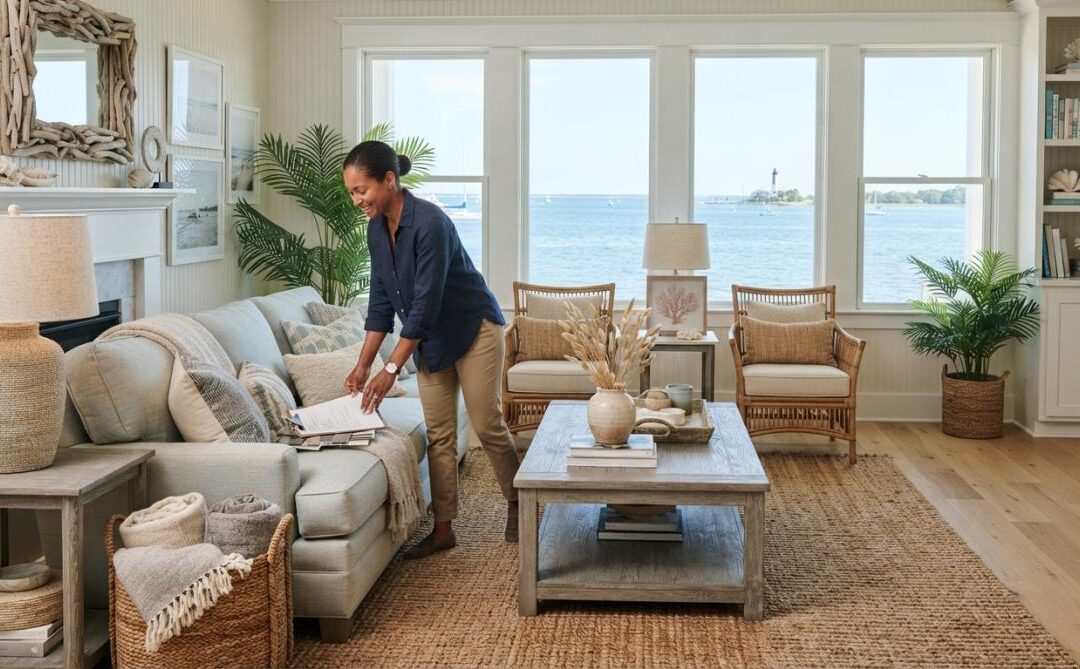
Natural light is the single best staging tool for coastal properties. It makes spaces feel larger, highlights design details, and creates the airy feeling guests expect. Many rental properties are staged in ways that actually block natural light.
Remove heavy window treatments. Instead, use light linen curtains in white or cream that filter light without blocking it, or install cellular shades in light neutral that can be raised fully during the day. Position seating to face outward and take advantage of views rather than toward windows.
Mirrors amplify natural light by reflecting it deeper into the space. Place a large mirror opposite a window to bounce light around the room. Clear windowsills and areas near light sources completely during the photography phase.
Step 3: Declutter and Remove Personal Items for Guest Appeal
Remove all personal items: family photos, personal documents, mail, medications. Go through drawers and closets, guests will open them. Clear out 30-40% of closet space so guests feel they have room for their belongings. Remove half the kitchen gadgets, keeping only essentials.
The goal is to create a blank canvas where guests see themselves, not your life. For decor items, follow the "less is more" principle. A few well-chosen pieces create impact; fifteen decorative objects create clutter.
Leaving personal items in a vacation rental creates legal and privacy risks. Guests may move, damage, or accidentally pack items. Insurance liability increases. Remove everything that isn’t replaceable or essential to the rental experience.
Vacation Rental Staging Tips: Furniture Arrangement and Flow
The way furniture is arranged either invites guests to move through the space or creates bottlenecks. Functional flow is invisible when done right, guests simply feel comfortable moving from kitchen to living room to bedroom.
Creating Functional Zones
Open-concept spaces need clear zones even without walls. Use area rugs to define the living area, dining area, and kitchen. A rug anchors furniture and signals "this is the living room zone" without closing off the space. Choose rugs in neutral tones with subtle texture that hide sand and wear better than solid colors.
Furniture arrangement should create natural pathways. Don’t block the direct route from the front door to the kitchen. For smaller rental properties, multi-functional furniture maximizes space perception, an ottoman with hidden storage, a console table that becomes a dining surface, or a daybed that serves as both seating and sleeping.
Dining areas deserve special attention. A proper dining table signals that the property is designed for groups and gathering, which matters for your listing positioning and nightly rate.
Accessorizing with Area Rugs and Throw Pillows
Rugs and pillows are the easiest way to update a space seasonally and hide wear. Choose area rugs in neutral tones with subtle patterns or texture. A soft gray rug with woven texture or subtle stripe hides dirt while maintaining a clean aesthetic. Rugs should be large enough to anchor the seating area.
Throw pillows add color, pattern, and personality without permanent commitment. Use pillows to introduce accent colors, soft blues, warm taupes, muted greens. Mix textures: linen, cotton, subtle knits. Aim for 4-6 pillows on a sofa, 2-3 on each bed. Rotate pillows seasonally to keep the space feeling fresh.
Step 4: Select Durable Beach House Furniture That Lasts
Durability is essential. A beautiful piece means nothing if it falls apart after six months of guest use. Prioritize solid wood and metal frames over particleboard or veneered pieces. Upholstered pieces should have eight-way hand-tied springs or sinuous wire springs, not cheap webbing.
Light upholstery shows every stain; dark upholstery shows every dust particle. Mid-tone neutral fabrics, warm grays, soft taupes, natural linen, hide wear better than either extreme. For high-traffic pieces like sofas, choose performance fabrics designed to resist staining and pilling.
Sand-Resistant Textiles and Fabrics
Sand works its way into every crevice and damages upholstery fibers. Tight-weave fabrics resist sand penetration better than loose weaves. Microfiber, performance linen, and solution-dyed synthetics all perform well. Avoid delicate fabrics like silk or loosely woven linen that sand damages easily.
For outdoor spaces, choose weather-resistant cushions and fabrics rated for UV and moisture exposure. Sunbrella fabrics and similar performance textiles maintain color and integrity through seasons of sun and salt air. Hard surfaces should be sealed or finished to resist salt water and sand scratches.
Durability vs. Aesthetics: Balancing Style with Maintenance
The solution isn’t to sacrifice aesthetics for durability, it’s to choose materials that deliver both. A warm gray performance linen sofa photographs beautifully and resists staining. A solid wood table with matte finish hides wear while maintaining elegance. A wool-blend area rug in neutral tone feels high-quality and hides dirt.
Consignment furniture from quality sources like Le Rouge Tete offers better construction at lower cost than retail. You’re buying pieces already vetted for quality at 40-60% below retail pricing. The 50/50 consignment model lets you source complete bedroom sets in solid wood with quality construction for a fraction of retail cost.
The best vacation rental furniture balances three factors: durability for high-turnover use, aesthetics for listing photos, and cost-efficiency for regular replacement. Pre-owned furniture from quality sources achieves all three better than new budget furniture.
Step 5: Optimize Outdoor Living Spaces and Curb Appeal
For coastal properties, outdoor space is often the primary selling point. Start with curb appeal: a clean driveway or walkway, fresh mulch or landscaping, and a welcoming entrance.
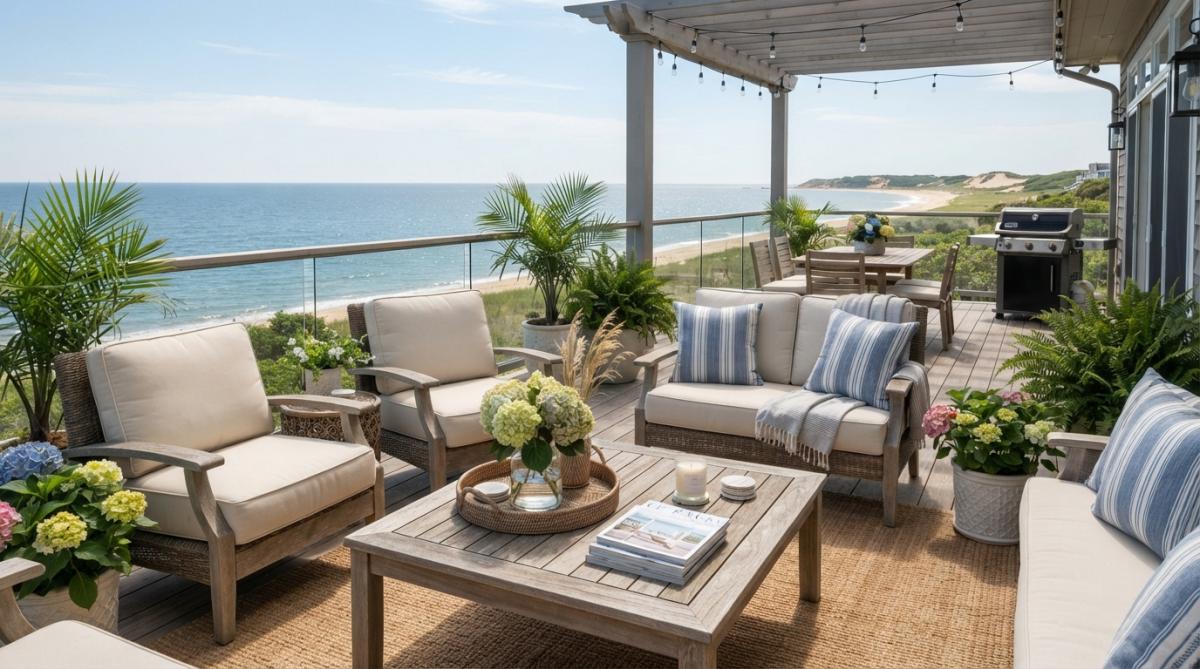
Outdoor furniture should match your interior aesthetic in color and style. Create defined zones on larger decks or patios, a dining area, a lounging area, a reading nook. Multiple zones make the space feel larger and give guests options.
Shade is functional and aesthetic. An umbrella or shade sail signals that the space is usable in hot sun. Lighting extends outdoor usability into evening hours. String lights or lanterns create ambiance while making the space feel safe and inviting. Keep lighting subtle and warm-toned.
Plants and greenery soften hard surfaces and add life. Choose low-maintenance plants suited to your climate. Avoid plants requiring constant watering or creating mess. The goal is visual interest with minimal maintenance burden.
Maximize Rental Income for Coastal Properties: ROI-Focused Staging
Staging isn’t just about aesthetics, it’s about justifying your nightly rate and maintaining high occupancy. Properties that are professionally staged and photographed command 10-20% higher nightly rates, according to Vacation Rental Investment Analysis.
If professional staging allows you to increase your nightly rate by $25 and you host 200 nights per year, that’s $5,000 additional annual revenue. Staging investments that cost $2,000-3,000 pay for themselves in a single year.
Prioritize staging investments that directly impact how the property photographs. Professional photography is non-negotiable. Styling for photography comes second. Durable, replaceable items come third. Expensive permanent fixtures come last.
Photography-First Staging for Listing Photos
Your listing photos are your primary marketing tool. Remove one-third of your furniture to open up the space. Declutter even more aggressively than you would for guest comfort. Every surface should be clear except for intentional styling pieces.
Photograph during golden hour (early morning or late afternoon) when natural light is warm and directional. Avoid harsh midday sun that creates shadows and washes out colors. If your property lacks great natural light, invest in professional photography lighting or hire a professional photographer.
Add a few strategic props: a coffee table book, a throw blanket draped over a sofa, fresh flowers in a vase. These items signal lifestyle and help guests imagine themselves in the space. Remove them after photography.
Color pop matters in photos. A single accent color, a blue throw pillow, coral artwork, or green plant, draws the eye and makes the space feel intentional. Keep it subtle.
Budget-Friendly Coastal Hacks
Paint is the cheapest way to transform a space. Fresh paint in warm whites, soft grays, or pale coastal tones costs $500-1,500 for a typical rental and completely changes how a property photographs. Stick to universally appealing neutrals.
Thrifting and consignment shopping replace expensive retail furniture with character and durability. Le Rouge Tete’s weekly inventory rotation offers quality pieces at 50-70% below retail. The pieces have patina and authenticity that new furniture lacks.
DIY updates make a difference. Refinishing old wood furniture, reupholstering chairs with performance fabric, or adding new hardware to dressers costs $100-300 per piece and dramatically improves appearance.
Lighting updates are cheap and impactful. Replacing builder-grade light fixtures with simple, quality fixtures costs $200-500 and immediately elevates perceived quality. Warm-toned LED bulbs make rooms feel cozier.
Plants and greenery are inexpensive and replaceable. A few large potted plants, trailing plants on shelves, and fresh flowers add life and color without permanent expense.
Textiles are your most flexible staging tool. Rotate pillows, throws, rugs, and curtains seasonally. Replace them as they wear. A $40 throw blanket draped over a sofa creates visual interest. $60 worth of throw pillows transforms a plain sofa into a styled focal point.
Staging a coastal rental property is a continuous process, not a one-time project. Seasonal updates, regular refreshes, and attention to wear keep your property competitive and photographable. The properties that maintain consistent bookings and strong guest reviews aren’t necessarily the most expensive, they’re the ones where every detail reflects thoughtful design and durability.
Le Rouge Tete’s consignment model makes this approach economical for property owners. Source quality furniture at consignment pricing, refresh pieces seasonally without retail expense, and maintain a design-forward property that photographs well and justifies premium nightly rates. With over 16 years of community service and a 50/50 consignment split, Le Rouge Tete makes it simple to furnish and update coastal rental properties with style and substance. Contact Le Rouge Tete today to explore how pre-loved furniture can elevate your rental property’s design while protecting your budget.
Frequently Asked Questions
What is the best coastal color palette for a vacation rental property?
Light and neutral coastal tones work best for vacation rentals. Use soft whites, warm beiges, pale blues, and sandy grays as your base. These colors make spaces feel open and airy while appealing to a broad range of guests. Accent with natural textures like jute, linen, and weathered wood. Avoid bold or trendy colors that may feel dated quickly or clash with different guest preferences. Neutral tones also photograph better for listing photos, which directly impacts booking rates.
How do I choose durable beach house furniture that still looks good?
Select pieces made from sand-resistant, washable fabrics like performance textiles, outdoor-grade upholstery, or sealed wood. Look for furniture with clean lines and timeless coastal styling that won't require frequent replacement. Prioritize durability over trendy designs, a well-made neutral sofa will outlast a fashionable but delicate piece. Consider items from quality consignment sources where you can inspect condition before purchasing. Mixing durable basics with seasonal accessories (pillows, throws) lets you refresh the look affordably without replacing core furniture.
Why is staging important for vacation rental income?
Professional staging directly increases booking rates and rental income. Well-staged properties command higher nightly rates, attract more bookings, and generate better reviews from satisfied guests. Staging helps potential renters visualize themselves enjoying the space, which is critical for online listings. Properties with cohesive design, appealing photography, and thoughtful layouts convert browsers into bookers. The investment in staging typically returns through increased occupancy and premium pricing within the first season.
What vacation rental staging tips work best for photography?
Stage with listing photos in mind: maximize natural light, declutter completely, and arrange furniture to show flow and space. Use soft, neutral backdrops and add small coastal touches (throw pillows, area rugs) that draw the eye. Photograph rooms from corners to show depth, and capture key amenities like views, kitchens, and outdoor spaces. Remove personal items, family photos, and clutter. Style beds with quality linens and a few decorative pillows. Stage outdoor areas with inviting seating to showcase outdoor living potential. Professional photography of a well-staged space is your strongest marketing tool.
This article was written using GrandRanker