
Table of Contents
- Why Decluttering Furniture Matters for Your Home and Mind
- Best Ways to Declutter Home Furniture: Proven Methods That Work
- How to Get Rid of Old Furniture: Disposal and Rehoming Options
- Selling Used Furniture Online: Maximize Your Returns
- Donating Furniture Near Me: Local Charity and Community Options
- Organizing Furniture for Small Spaces: Maximize Your Layout
- Dealing with Emotional Attachment to Furniture
- Common Mistakes When Decluttering Furniture
Last Updated: July 21, 2026
When reclaiming your living space, understanding the best ways to declutter home furniture is essential for creating a calm, functional environment. At Le Rouge Tete, we’ve spent over 16 years helping our community manage furniture through downsizing, refreshing, and creating breathing room. This guide covers proven strategies for tackling furniture clutter, from decision-making methods to disposal options.
Why Decluttering Furniture Matters for Your Home and Mind
Your furniture choices shape how you live. When pieces accumulate without purpose, they consume physical space, create visual noise, and generate stress. A cluttered room demands constant mental energy, even when you’re not actively thinking about it.
Decluttering improves functionality: fewer pieces mean easier cleaning, better traffic flow, and the ability to actually use your space. When you remove items that no longer serve you, you create room for what matters: family gatherings, hobbies, or simply peace.
Furniture often carries emotional weight, that couch from your first apartment, the dining table where you hosted dinners. Letting go feels like losing memories. But keeping furniture purely for sentimental reasons prevents you from creating new memories in a space that actually works for your current life.
Research on home organization shows that environments with reduced clutter demonstrate measurable improvements in focus and decision-making ability. Environmental Psychology studies on clutter and cognition demonstrate that visual disorder directly impacts mental clarity.
Start by defining what “clutter” means for YOUR space. Your definition matters more than any rule.
Best Ways to Declutter Home Furniture: Proven Methods That Work
The best approach depends on your decision-making style and timeline. Some methods work through rapid sorting, while others guide you through emotional attachment.

The Four-Box Method for Furniture Decisions
This method forces binary decisions without overthinking. Create four labeled areas: Keep, Donate, Sell, and Relocate.
Start with one room or furniture category. Pick up each piece and immediately place it in one box. Speed matters, hesitation typically means overthinking emotional attachment rather than evaluating utility.
Keep pieces that serve your current lifestyle and fit your space well. Donate usable furniture that no longer works for you. Sell pieces with real monetary value: vintage items, quality wood furniture, or designer pieces. Relocate pieces to other rooms where they might work better.
The Four-Box Method works best when you’re decisive and want quick results. It’s less effective if you struggle with guilt about letting things go.
The One-In-One-Out Rule for Long-Term Success
For every new furniture piece you bring home, one existing piece leaves. This maintains equilibrium without requiring massive purges and works particularly well for people who frequently refresh their decor.
This method falters during major life transitions, moving to a larger home, combining households, or furnishing new spaces. You’ll need flexibility during these periods. The rule is a maintenance tool, not a starting point for serious decluttering.
Combine an initial sorting method with a maintenance system. Use one decisive method to clear what you have, then implement one-in-one-out to prevent future buildup.
Room-by-Room Approach to Reduce Overwhelm
Tackling your entire home at once creates decision fatigue. Breaking the project into rooms makes it manageable and shows progress quickly.
Start with your least emotional room, often a home office, entryway, or guest bedroom. Success here builds momentum before facing emotionally charged spaces like bedrooms or living rooms. Work systematically through each room, completing one entirely before moving to the next.
How to Get Rid of Old Furniture: Disposal and Rehoming Options
Once you’ve decided what leaves, you need a realistic exit strategy. Different furniture types require different approaches.
Handling Large, Bulky Furniture Items
Large furniture presents unique challenges. Many people keep worn sofas or oversized dressers simply because removing them feels complicated.
For furniture in good condition, consignment stores offer a practical solution. Le Rouge Tete accepts quality pre-loved furniture and handles the sales process. With our 50/50 split policy and no end dates on consignments, you maintain flexibility while recovering value.
If your furniture is damaged or worn, donation pickup services handle removal for free. Habitat for Humanity ReStore furniture donation program offers free pickup for gently used items in many areas. The Salvation Army provides similar services with tax-deductible donations and convenient scheduling.
For furniture beyond use, junk removal services like LoadUp provide upfront pricing and eco-friendly disposal options. This costs money but eliminates logistics entirely.
Eco-Friendly and Sustainable Disposal Solutions
Donation organizations like ReSupply prioritize quick pickup (24-48 hours) and direct items to local charities and veteran-owned initiatives. [ReSupply’s veteran-focused furniture(/consignment-furniture-pricing-guide-2026/) donation program | resupplyme.com] combines speed with social impact.
For furniture you want to repurpose, local maker spaces, community centers, or schools sometimes accept donations for creative projects. Upcycling services have emerged in many areas, taking old furniture, refinishing it, and reselling it. This prevents landfill waste while costing less than buying new.
Selling Used Furniture Online: Maximize Your Returns
Quality pieces with real value deserve to be sold. Online marketplaces have made this accessible, though success requires realistic expectations.
Facebook Marketplace and Craigslist remain the fastest channels for local sales. Buyers can inspect items before purchasing, and most furniture sales are local pickups. The tradeoff is managing inquiries and scheduling viewings.
Specialized platforms like OfferUp and Letgo cater to secondhand goods with built-in payment protection. For higher-end furniture, consignment galleries handle photography, pricing, marketing, and customer interaction. You receive 40-60% when items sell.
Price used furniture realistically. Research comparable items on active listings, not asking prices. Most used furniture sells for 30-50% of retail price.
Consignment as a Cost-Effective Alternative
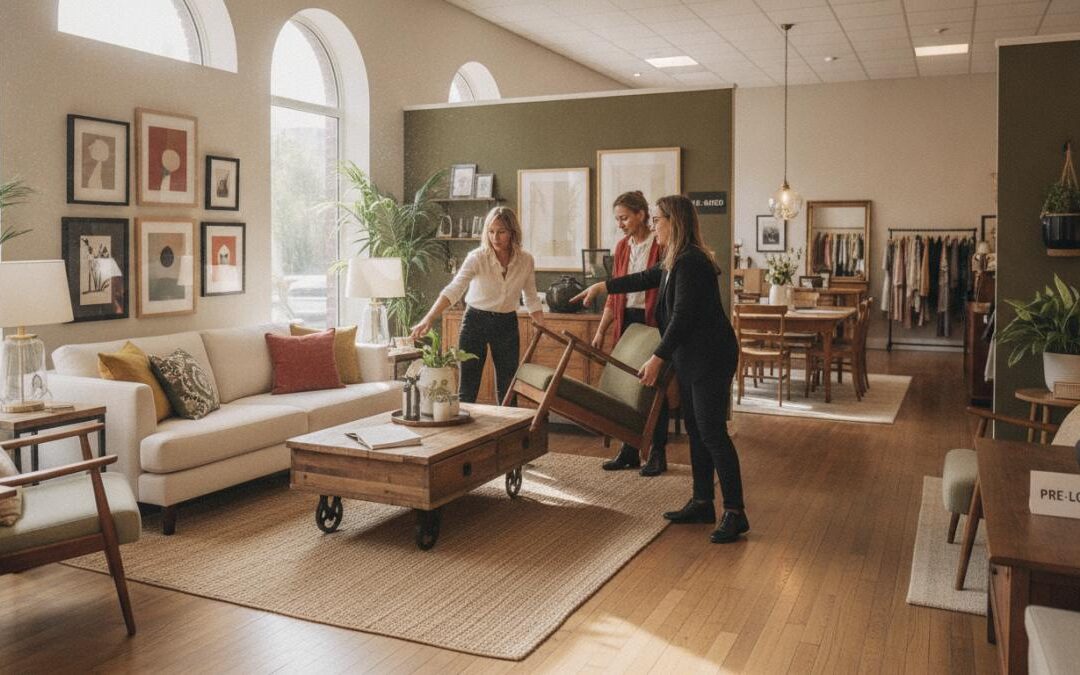
Consignment bridges selling and donating. You recover value without managing sales yourself. Le Rouge Tete’s consignment model displays quality furniture in "live in" layouts that help buyers visualize pieces in their own homes. Our 50/50 split means you keep half the sale price while we handle everything else.
The advantage is reduced hassle. You’re not photographing items or negotiating with strangers. The disadvantage is patience, items may take time to sell. Consignment works best when you’re not desperate to remove furniture immediately.
Donating Furniture Near Me: Local Charity and Community Options
Donation provides immediate removal without sales effort. Local charities accept furniture in nearly every community. Goodwill, The Salvation Army, and Habitat for Humanity ReStore all maintain networks with pickup services.
Community-specific options often provide better outcomes. Local women’s shelters, transitional housing programs, and refugee resettlement organizations frequently need furniture and place items directly with families who need them immediately.
Churches and community centers sometimes coordinate furniture banks that collect and redistribute furniture to families in transition. These programs often offer free pickup and ensure furniture reaches people who genuinely need it.
Organizing Furniture for Small Spaces: Maximize Your Layout
Removing excess furniture is only half the solution. Arranging remaining pieces strategically determines whether your space feels open or cramped.
Start by measuring your room and creating a floor plan. This prevents keeping furniture that overwhelms the space collectively. Prioritize multipurpose pieces: a storage ottoman serves as seating, footrest, and hidden storage. A coffee table with shelves adds storage without additional furniture.
Vertical space matters more than floor space in small rooms. Wall-mounted shelves, floating desks, and tall bookcases draw the eye upward and create the illusion of more space.
Multi-Functional Furniture and Vertical Storage Solutions
Multi-functional furniture is essential for small spaces. A bed with built-in drawers eliminates the need for a separate dresser. A desk that folds down from the wall provides a work surface without permanent space consumption. A storage bench at the foot of your bed adds seating and hidden storage simultaneously.
Floor-to-ceiling bookcases make use of wasted wall space. Wall-mounted cabinets keep items accessible without consuming floor area. Every piece should serve at least two purposes.
Dealing with Emotional Attachment to Furniture
This is where most decluttering efforts fail. The furniture itself is fine, but memories and guilt create paralysis.
Acknowledge the emotion and separate it from the object. A chair from your grandmother’s house holds memories, but the chair itself isn’t the memory. The memory exists in your mind regardless of whether the chair occupies your living room.
Consider photographing sentimental pieces before letting them go. This preserves the visual memory without the physical burden. Some people create photo albums or digital galleries of furniture they’ve released, maintaining the memory while reclaiming space.
For truly irreplaceable pieces, consignment offers a middle path. You’re not keeping the furniture, but you’re ensuring it goes to someone who will appreciate it.
The “just in case” mindset prevents decluttering. Furniture kept for hypothetical future use almost never gets used. If you haven’t used a piece in two years, release it.
Common Mistakes When Decluttering Furniture
Understanding what doesn’t work accelerates your progress.
Keeping furniture for "someday" use. That dining table for large dinners, the guest bed for visitors who never come, someday rarely arrives. If you’re not using it now, release it.
Underestimating the effort required. Furniture is heavy and awkward. Moving pieces, arranging for photos, coordinating pickups takes time. Overestimating your energy leads to abandoned projects.
Not measuring before keeping pieces. A dresser you love might not fit through your bedroom door or leaves no walking space. Measure your space before deciding to keep items.
Mixing decluttering with rearranging. Decluttering means removing items. Rearranging means repositioning what stays. Do decluttering first, then arrange remaining pieces.
Expecting to sell everything. Most used furniture moves slowly and sells for less than anticipated. Price realistically and have a backup plan for unsold pieces.
Starting with the most emotional room. Begin with neutral spaces, home offices, guest rooms, entryways, to build confidence before tackling emotionally charged areas.
| Mistake | Better Approach |
|---|---|
| Keeping "someday" furniture | Ask: Have I used this in 2 years? If no, release it. |
| Underestimating effort | Break into smaller projects, allow more time than expected |
| Not measuring space | Measure doorways and room dimensions before keeping items |
| Mixing decluttering with rearranging | Complete decluttering first, then arrange remaining pieces |
| Expecting high resale value | Research actual selling prices, not asking prices |
| Starting with emotional rooms | Begin with neutral spaces, build momentum |
The best ways to declutter home furniture come down to choosing a method that matches your personality, setting realistic timelines, and following through consistently.
Decluttering furniture creates immediate results, but maintaining clarity requires a system. Rather than managing sales listings or coordinating multiple donation pickups, consider consignment as your ongoing solution. Le Rouge Tete makes this seamless: bring quality furniture to our Morehead City location, we handle pricing and sales with our 50/50 split policy, and you recover value without effort. With convenient $50 local pickup for large items and over 16 years serving our community, we’ve helped hundreds transition furniture to new homes while recovering real value. Contact Le Rouge Tete today to discuss consigning your furniture or shopping for pre-loved pieces that fit your newly organized space.
Frequently Asked Questions
How do I decide which furniture to keep when decluttering?
Focus on functionality and current value. Ask yourself: Does this piece serve a purpose in my home right now? Does it fit my space and lifestyle? Does it bring me satisfaction or stress? Use the Four-Box Method to make decisions systematically. For sentimental items, photograph them before letting go. This preserves the memory without keeping the physical clutter. Consider your actual daily habits, if you haven't used a piece in a year, it's likely taking up valuable space.
What's the best way to get rid of old furniture without paying disposal fees?
Donation is the most cost-effective option. Habitat for Humanity ReStore, The Salvation Army, and ReSupply all offer free pickup for furniture in good condition. If your furniture is damaged, consignment stores like Le Rouge Tete accept quality pre-loved pieces and handle the sale for you with a 50/50 split. For items in poor condition, LoadUp offers transparent, upfront pricing for removal. Local charities often provide free pickup, making donation the most budget-friendly choice for decluttering furniture.
How can I declutter furniture in a small apartment with limited space?
Start by assessing what furniture actually fits your layout. Measure doorways and rooms before deciding what stays. Prioritize multi-functional pieces, ottomans with storage, nesting tables, and murphy beds maximize utility in small spaces. Vertical storage solutions like tall shelving reduce floor clutter. Remove one item before bringing in new ones using the one-in-one-out rule. Consider consigning or selling pieces online rather than donating, so you recover some value in a tight space situation.
How long does it take to sell furniture through consignment, and when do I get paid?
Consignment timelines vary by store. Le Rouge Tete has no end dates on consignments, meaning your items stay listed until they sell without pressure to remove them. Payment timing depends on when the piece sells, some items move quickly, others take months. Ask your consignment store about their payment schedule before consigning. Quality, in-demand pieces typically sell faster. Consignment is ideal if you're not in a rush and want to recover value from your decluttering furniture rather than giving it away.
This article was written using GrandRanker