
Table of Contents
- How to Find Unique Home Decor: Start With Your Design Aesthetic
- Sourcing Unique Home Decor Websites and Online Marketplaces
- Thrifting and Vintage Home Decor Ideas for Budget-Conscious Sourcing
- How to Spot Mass-Produced vs. Artisanal and Handcrafted Pieces
- DIY Unique Home Decor: Creating One-of-a-Kind Pieces
- Local vs. Online Hybrid Sourcing: Logistics and Delivery Strategies
- Supporting Small Businesses and Global Artisans
- Common Mistakes When Finding Unique Home Decor
Last Updated: July 25, 2026
Finding truly unique home decor means exploring curated boutiques, vintage sources, and independent makers that deliver one-of-a-kind pieces. This guide from Le Rouge Tete shows you how to source distinctive furnishings and home accents that reflect your personal aesthetic without settling for mass-produced options.
How to Find Unique Home Decor: Start With Your Design Aesthetic
Before hunting for pieces, understand what appeals to you. Save 15-20 images from Pinterest, Instagram, or design blogs that catch your eye, then look for patterns. Do you gravitate toward warm woods and earth tones? Sleek modern lines? Eclectic pieces from different eras?
Write down three words describing the feeling you want: "warm and inviting," "modern minimalist," "collected over time," or "global and adventurous." These three words become your filter when evaluating pieces.
The most common mistake is confusing “I like this piece” with “This piece belongs in my home.” Your three-word aesthetic prevents impulse purchases you’ll regret.
Finding Your Home Decor Style Quiz and Self-Assessment
Ask yourself: Do you prefer a curated, intentional look or an eclectic, layered approach? How much visual clutter energizes versus overwhelms you? Are you drawn to historical pieces, contemporary design, or a blend?
Your answers shape where you’ll source pieces. Someone who loves eclectic decor thrives at flea markets and estate sales. Someone seeking cohesive, modern design does better with curated boutique shops or consignment stores with a clear aesthetic vision.
Defining Eclectic vs. Cohesive: Building Your Design Framework
Successful eclectic design mixes styles and eras but isn’t random, it’s carefully curated and held together by color, material, or a unifying design principle. Cohesive design uses a consistent color palette, similar materials, and a clear style direction.
If you want eclectic design, establish a unifying element: a consistent color palette, shared material like wood and natural fibers, or a design era focus. If you prefer cohesive design, define your style clearly, mid-century modern, farmhouse, contemporary minimalist, or bohemian, and source pieces that fit that framework.
The best unique home decor collections aren’t random. They’re built on intentional aesthetic choices, whether that’s a specific color palette, material palette, or design era.
Sourcing Unique Home Decor Websites and Online Marketplaces
Online shopping for unique decor offers convenience and access to pieces you’d never find locally. Specialized home decor websites curate collections with care, featuring independent makers and artisanal producers. Look for detailed product photography, clear material descriptions, and honest condition information.
Marketplaces like Etsy, 1stDibs, and Chairish connect buyers with handcrafted and vintage piece sellers. Facebook Marketplace and Craigslist offer local options without shipping costs.
| Platform Type | Best For | Key Advantage | Consideration |
|---|---|---|---|
| Specialty boutique sites | Curated, artisanal pieces | Aesthetic consistency | Higher prices |
| Etsy/1stDibs | Handcrafted and vintage | Direct maker access | Shipping costs and delays |
| Facebook Marketplace | Local, no-ship items | See before buying | Less seller accountability |
| Consignment platforms | Pre-loved furniture | Lower prices than retail | Limited inventory |
Curated Boutique Shops and Independent Makers
Independent makers offer pieces you won’t find anywhere else. Many operate online with Instagram shops or personal websites. Supporting small businesses means paying slightly more than mass-produced alternatives, but you’re investing in quality, authenticity, and often sustainability.
Expect longer lead times for custom or made-to-order pieces, typically 8-12 weeks. Ask about customization options; many makers will adjust colors, sizes, or finishes to fit your space.
Consignment and Pre-Loved Furniture Platforms
Consignment stores offer a middle ground between retail and secondhand shopping. Items are typically inspected for condition and quality, prices are lower than retail, and you support sustainable shopping by keeping furniture out of landfills.
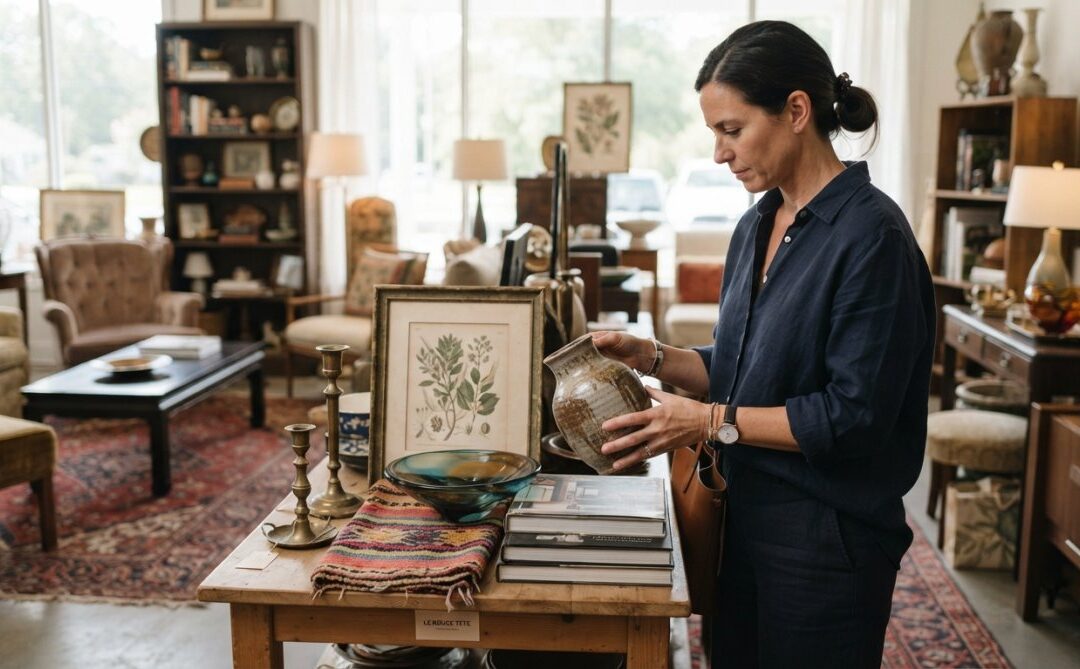
At Le Rouge Tete, we’ve spent over 16 years helping customers find stylish, pre-loved pieces at prices significantly lower than retail. Our "live in" store layout lets you visualize items in realistic settings before committing. We add new inventory weekly, and our 50/50 consignment split means we’re invested in finding the right home for every piece.
Online consignment platforms like Chairish and The RealReal offer authenticated vintage and designer furniture with buyer protection. When shopping consignment, understand condition grading: "Excellent" means minimal wear; "very good" means light use with possible small imperfections; "good" means visible wear but full functionality.
Never assume consignment items are “as is” without return options. Reputable consignment stores stand behind their merchandise. Check return policies before purchasing.
Thrifting and Vintage Home Decor Ideas for Budget-Conscious Sourcing
Thrifting requires patience, but rewards are significant. Thrift stores, Goodwill, and Salvation Army offer affordable options. Visit frequently; inventory changes daily and best pieces are claimed quickly.
Know your space dimensions and target color palette. Take photos of your room and bring them on thrifting trips to prevent impulse purchases that don’t fit your vision. Learn to spot quality beneath surface presentation, a piece with worn upholstery might have a solid frame worth reupholstering.
Budget-conscious sourcing means being strategic. Invest more in anchor pieces, the sofa, dining table, or bed frame, and find smaller accents through thrifting and online marketplaces.
Estate Sales, Flea Markets, and Local Treasure Hunting
Estate sales offer curated collections from single homes or collections. Arrive early on the first day for best selection, or come late on the final day for deals.
Flea markets bring together multiple vendors. Talk to experienced dealers; they can tell you about an item’s era, maker, and authenticity and often negotiate prices. Local antique shops offer vetted collections at prices higher than flea markets but lower than specialty vintage retailers.
Authentication and Condition Grading for Vintage Finds
Learning to authenticate vintage pieces prevents expensive mistakes. Start with maker’s marks and signatures. Examine construction methods, hand-joinery and dovetail joints indicate quality craftsmanship and often signal genuine vintage pieces.
Condition grading affects both price and value. Be honest about what restoration you’re willing to undertake; professional upholstery or refinishing adds significant cost. Document condition with photos before purchase.
Many vintage pieces improve with proper care and cleaning. A wood table that looks dull might shine after proper oiling. Understanding the difference between permanent damage and neglect saves you from passing on truly great pieces.
How to Spot Mass-Produced vs. Artisanal and Handcrafted Pieces
Mass-produced furniture is designed for cost efficiency, not longevity. Handcrafted pieces are built to last generations.
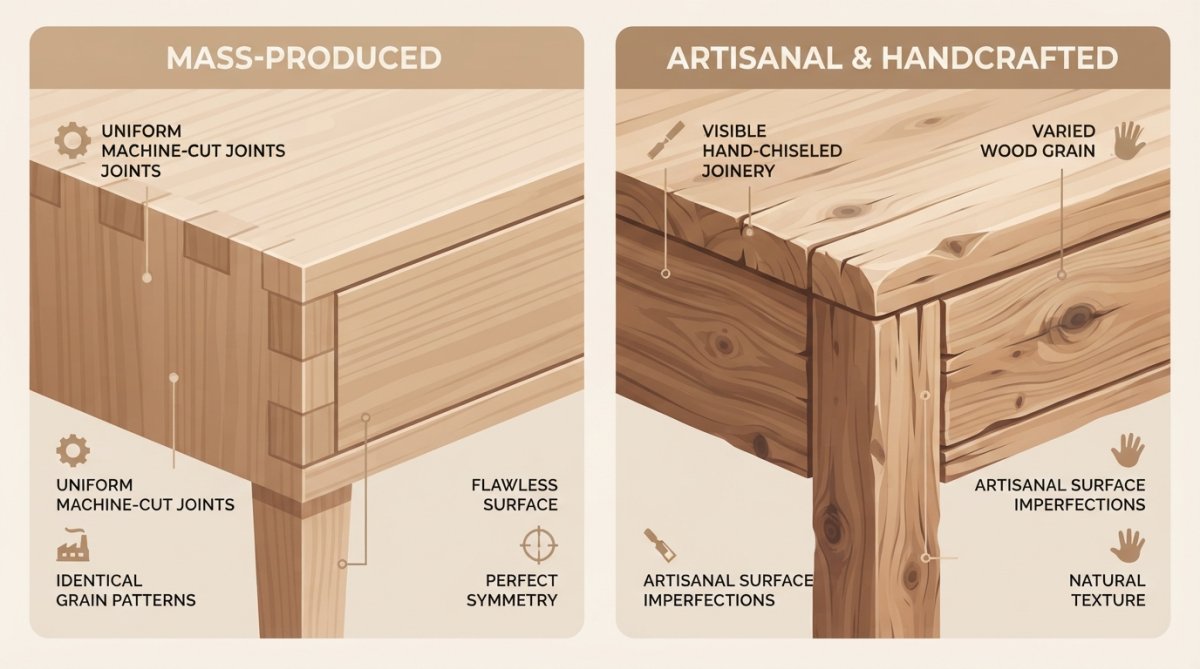
Mass-produced items often use particle board or MDF instead of solid wood. Look at joinery, mass-produced furniture uses staples, nails, or simple butt joints, while handcrafted pieces use dovetail joints or mortise and tenon construction. Run your hand over surfaces; mass-produced finishes feel uniform and plastic-like, while artisanal finishes show variation and texture.
Evaluating Materials, Craftsmanship, and Quality
Solid wood is superior to veneers, which are superior to particle board. Natural fabrics like linen, wool, and cotton age beautifully and are easier to clean than synthetic blends. Genuine leather develops character over time.
Craftsmanship shows in details, seams should be straight and even, upholstery should be taut without wrinkles, and wood finishes should be smooth and consistent. Ask makers and sellers about their process. Consider longevity: a handcrafted piece costing three times more than a mass-produced alternative might last 20 years instead of five.
DIY Unique Home Decor: Creating One-of-a-Kind Pieces
You don’t need to buy every piece; creating some yourself adds personality and saves money. Start with low-stakes projects: paint a thrifted frame, stain a wooden side table, or add new hardware to old drawers.
Reupholstering furniture transforms dated pieces. A solid mid-century frame with new fabric becomes a statement piece. Refinishing wood furniture removes years of wear and reveals the wood’s beauty.
Local vs. Online Hybrid Sourcing: Logistics and Delivery Strategies
The smartest sourcing strategy combines local and online shopping. Start locally for anchor pieces, the sofa, dining table, or bedroom furniture, where you need to see items in person. Local consignment stores let you evaluate condition and fit in your space. Le Rouge Tete’s convenient $50 local pickup for large items makes acquiring substantial pieces manageable without expensive shipping.
Use online sources for smaller accent pieces and items where condition is easier to verify through photos.
Moving Large Items and Handling Logistics Challenges
Shipping large furniture is expensive and risky. A sofa shipped across the country might cost $500-1000 in shipping alone. Local sourcing eliminates these headaches. When you find a piece locally, arrange pickup yourself or use local moving services.
For pieces ordered online, understand shipping costs before purchasing. Consider total cost: purchase price plus shipping plus any restoration needed.
Visualizing Pieces Before You Commit
The biggest risk with online shopping is pieces looking different in your space than in photos. Measure your space precisely and note ceiling heights, doorway widths, and furniture dimensions to visualize scale.
Take photos of your space in different lighting conditions and match these to product photos. If uncertain, ask sellers if they offer returns or trial periods.
Supporting Small Businesses and Global Artisans
Buying from independent makers supports sustainable practices and fair wages. Global artisans offer pieces with cultural significance and authentic craftsmanship. Research sellers’ practices, do they work directly with makers? Are workers paid fairly? Do they use sustainable materials?
Unique home decor sourced from independent makers costs more than mass-produced alternatives, but you’re investing in quality, authenticity, and often sustainability. Pieces last longer, look better, and feel meaningful.
Common Mistakes When Finding Unique Home Decor
The most common mistake is buying without a plan. Always evaluate pieces against your aesthetic framework before purchasing. Another mistake is overestimating your DIY skills, be honest about your abilities and budget accordingly for professional work.
Ignoring condition issues is costly. Ask detailed questions and see high-resolution photos before committing. Prioritizing price over quality leads to disappointment. Finally, losing sight of your aesthetic creates a disjointed space, if a piece doesn’t fit your vision, pass, no matter how beautiful it is.
Finding truly unique home decor requires patience, intentionality, and knowing where to look. The pieces that make your space feel like home aren’t mass-produced options found everywhere; they’re discovered through thrifting, sourced from independent makers, and sometimes created by your own hands. At Le Rouge Tete, we understand that finding one-of-a-kind pieces means having access to carefully curated pre-loved furniture displayed in realistic settings where you can visualize them in your own home. Our 50/50 consignment split, weekly new inventory, and convenient local pickup services make sourcing unique decor seamless. Discover how building an intentional, beautiful space starts with the right pieces.
National Association of Home Builders design trends report
Sustainable Furnishings Council guide to quality furniture
American Society of Interior Designers standards for home decor
Frequently Asked Questions
Where can I find unique home decor that isn't mass-produced?
Unique home decor exists across multiple sourcing channels. Thrifting at flea markets and estate sales offers vintage and one-of-a-kind pieces. Online, consignment platforms and boutique shops specializing in handcrafted items provide curated selections. Supporting independent makers through artisanal marketplaces and small online shops ensures authentic, sustainable pieces. Local consignment stores like Le Rouge Tete display items in 'live in' layouts so you can visualize them in your space before purchasing, reducing the risk of online-bought pieces looking different than expected.
How do I find my personal home decor style before shopping for unique pieces?
Start by identifying your design preferences through self-assessment. Gather inspiration from Pinterest boards, Instagram, and design magazines to spot patterns in colors, materials, and aesthetics you're drawn to. Ask yourself: Do you prefer eclectic and funky or cohesive and minimal? Are you drawn to rustic, modern, or global treasures? Once you've identified your design aesthetic, you can shop more strategically, whether sourcing vintage finds, browsing unique home decor websites, or exploring artisanal makers. This clarity prevents impulse purchases that won't fit your overall vision.
What are affordable ways to get unique home decor without compromising on quality?
Consignment shopping offers significant savings compared to retail while providing quality-vetted pieces. Thrifting at flea markets and estate sales yields budget-friendly finds with character. DIY unique home decor projects, refinishing vintage pieces or upcycling materials, reduce costs while creating personalized items. Online consignment platforms like Le Rouge Tete offer pre-loved furniture at reduced prices with transparent condition grading. Shopping at small online shops during sales, visiting local vintage stores with new inventory weekly, and mixing high-impact anchor pieces with budget finds creates a curated look without overspending.
How do I know if a unique piece will actually fit my space and look good before buying?
Measure your space carefully and photograph it from multiple angles before shopping. When sourcing online, request additional photos from multiple angles and ask about dimensions, materials, and condition. Local consignment stores solve this problem by displaying items in 'live in' room settings so you can visualize scale and styling. Many stores offer 24-hour holds, allowing you to bring fabric swatches or photos of your space to verify compatibility. For large items, some local shops provide pickup services, letting you see pieces in person before committing. Always verify return or exchange policies before purchasing, especially with vintage or one-of-a-kind items.
This article was written using GrandRanker