
Table of Contents
- How to Evaluate Used Furniture Condition: A Framework
- Structural Integrity and Stability Testing
- Identifying Quality Wood Furniture vs. Particle Board
- Red Flags When Buying Used Furniture
- Checking Moving Parts: Drawers, Hinges, and Slides
- Used Furniture Pest Inspection Checklist
- Upholstery Inspection and Fabric Wear Assessment
- Determining Fair Market Value and Repair Costs
Evaluate Used Furniture Condition: A 2026 Guide
Last Updated: July 30, 2026
When shopping for used furniture, knowing how to evaluate condition separates savvy buyers from those who end up with hidden damage and regret. At Le Rouge Tete, we’ve spent over 16 years helping the Carteret County community navigate consignment purchases. Proper inspection is the difference between finding a steal and inheriting someone else’s problem. This guide walks you through systematic evaluation that protects your investment and ensures pieces will last.
A wobbly chair becomes a safety hazard. Upholstery can hide bed bugs or structural damage. Surface damage might indicate water exposure that weakens the frame. Below, we show you how to evaluate used furniture condition like a professional, covering structural integrity, pest detection, and fair market pricing.
Why Proper Inspection Matters
Buying used furniture without thorough inspection is like purchasing a used car without test-driving it. A $300 couch with hidden bed bug infestation becomes a $1,500 problem when you must discard it and treat your home. Understanding how to evaluate condition gives you negotiating power. When you identify specific issues, loose drawer glides, worn seams, surface scratches, you know exactly how much to negotiate down and whether a piece is worth your money.
What You’ll Need Before Inspecting
Physical tools to bring:
- Flashlight or phone light (for dark corners and interior spaces)
- Magnifying glass (for spotting small defects or pest droppings)
- Measuring tape (to verify dimensions)
- Notebook or phone notes app (to document issues and prices)
Information to have ready:
- Photos of your space
- Your budget and must-have features
- Retail prices for similar pieces
Plan to spend 10-15 minutes thoroughly evaluating a single piece.
Structural Integrity and Stability Testing
The frame is the skeleton of furniture. If compromised, everything becomes unstable and unsafe.
Testing for Wobble and Movement
Push firmly on different parts from multiple angles. A chair should not rock or shift. A table should feel solid when pressed on corners. Test drawers and doors several times, they should glide smoothly without binding or sticking. Pay special attention to the back frame, running your hand along it to feel for loose panels, cracked wood, or separating joints.
Examining Frame Construction and Fasteners
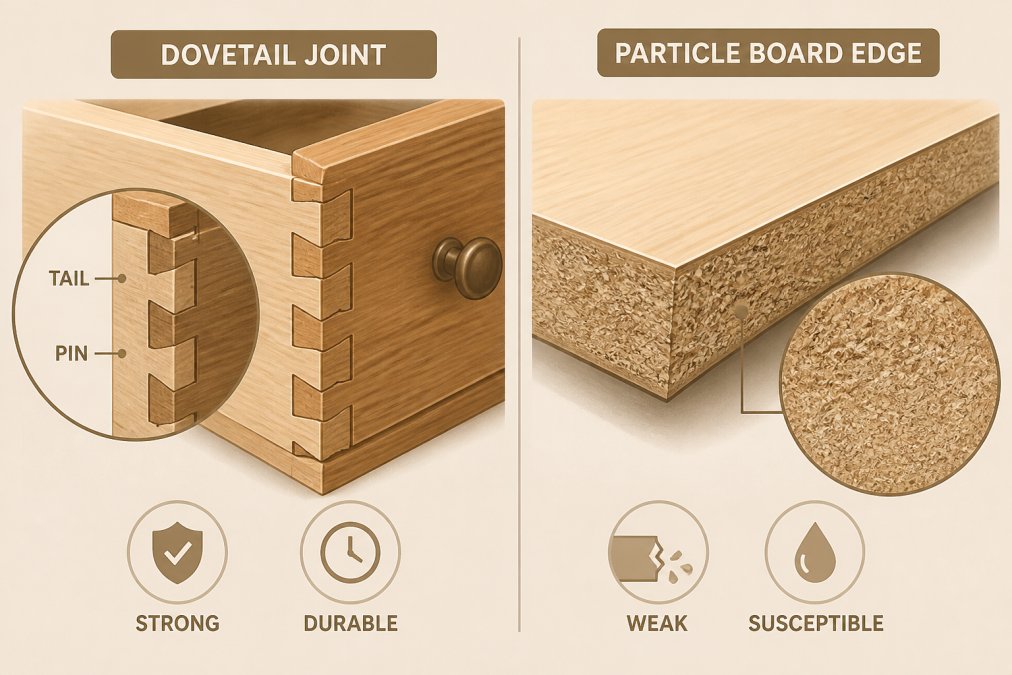
Flip the furniture or look underneath to inspect frame construction. Quality furniture uses solid wood joinery with mortise-and-tenon or dovetail joints. Lower-quality pieces rely on staples or cheap fasteners that fail over time.
Dovetail joints (interlocking wooden fingers) indicate quality craftsmanship. Mortise-and-tenon joints (one piece fitting into a hole in another) are solid and common in pre-1990 furniture. Staples and nails suggest budget construction that loosens over time.
Check all visible fasteners. Bolts should be tight. Wood screws should be intact. Look at the bottom for repair signs, patches of new wood, mismatched fasteners, or reinforcement braces indicate the piece has been damaged and repaired.
Identifying Quality Wood Furniture vs. Particle Board
Material matters enormously for durability. Solid wood furniture lasts decades. Particle board often deteriorates within 5-10 years, especially in humid environments.
Solid Wood vs. Veneer: What to Look For
Solid wood is actual wood throughout. It’s heavier, more durable, and more valuable. The wood grain runs through edges and all surfaces.
Veneer is a thin quality wood layer glued to cheaper substrate (usually particle board or plywood). High-quality veneer over plywood is durable. Veneer over particle board is fragile and fails when moisture causes swelling and delamination.
Look at edges and corners. Solid wood shows consistent grain on all surfaces. Veneered pieces show the thin veneer separating from substrate, especially on worn edges. Check for water damage on veneered pieces, water causes particle board to swell and delaminate. Look for bubbling, peeling, or soft spots.
Spotting Dovetail Joints and Quality Construction
Dovetail joints appear primarily in drawer construction. Open drawers and look at corners from inside, dovetails indicate the drawer is built to last. Look inside drawers and cabinets. Quality furniture has finished interiors. Check drawer bottoms. Quality pieces have solid panels fitting into grooves, distributing weight evenly.
Red Flags When Buying Used Furniture
Certain signs indicate problems that will follow you home.
Surface Damage: Scratches, Water Rings, and Stains
Minor scratches are acceptable on used furniture. But certain damage indicates deeper problems.
Water rings show water has penetrated the finish and affected wood underneath. Water stains that are dark, large, or accompanied by warping suggest significant moisture exposure, especially problematic on particle board. Deep gouges expose raw wood, compromising the protective finish. Stains on upholstery can sometimes clean, but large or set-in stains suggest absorbed liquids. Press a white cloth against stains; if color transfers, the stain is surface-level. Discoloration patterns that don’t match the rest suggest water exposure or staining.
Chemical and Odor Detection
Trust your nose. If a piece smells musty, smoky, or chemical, investigate.
Musty smells indicate mold or mildew and pose health risks. Smoke smell suggests a smoking environment and often lingers for months. Chemical smells suggest recent pest treatment. Pet odors indicate animal exposure that can cause permanent odor. Smell the underside, interior spaces, and seams where odors concentrate.
Checking Moving Parts: Drawers, Hinges, and Slides
Furniture with moving parts requires specific attention. These components fail regularly and can be expensive to repair.
Drawer Glides and Hardware Function
Drawer glides are the tracks and rollers allowing drawers to open and close. They’re among the first parts to wear out, and replacing them costs $50-150 per drawer.
Open and close each drawer slowly. Quality glides should be smooth and quiet. Look at the glides themselves. Metal ball-bearing glides are most durable and indicate quality furniture. Wooden glides wear quickly. Plastic glides are budget construction and often crack.
Check alignment. Pull a drawer out fully and look at how it sits. It should be level and centered. Test the stops, most quality drawers have stops preventing complete slide-out. Inspect hardware, knobs, handles, and pulls. Tighten any loose hardware by hand. Check hinges on doors. They should move smoothly without binding or creaking. Look for rust or damage.
Used Furniture Pest Inspection Checklist
Pest infestation is the nightmare scenario. Bringing bed bugs or termites into your home is costly and stressful.
Identifying Bed Bugs and Termite Damage
Bed bugs hide in seams, folds, and crevices of upholstered furniture. They’re small (about apple seed size), reddish-brown, and move quickly when exposed to light.
Look for:
- Live bugs (though they hide during the day)
- Dark spots in seams and folds (droppings)
- Shed skin (tiny translucent shells in crevices)
- Musty, sweet odor (in heavily infested furniture)
Use your flashlight and magnifying glass. Pull back cushions and examine seams carefully. Look inside zipper openings and along piping. If you find any evidence of bed bugs, do not bring the piece into your home.
Termite damage appears as small holes in wood, sawdust-like frass (droppings), or hollow-sounding wood. Tap wooden areas with your knuckles. Solid wood sounds dense. Termite-damaged wood sounds hollow. Look for mud tubes on the underside and wood that crumbles easily when pressed.
Mold and Moisture Assessment
Mold indicates moisture exposure and poses health risks. Look for visible mold (black, green, or white growth) in corners, seams, and underneath. Check the underside carefully, moisture and mold accumulate on surfaces contacting floors or walls. Press your finger on suspect areas. If wood feels soft or spongy, moisture has penetrated and weakened structure. Ask about storage history. Was it stored in a basement, garage, or outdoor space?
Upholstery Inspection and Fabric Wear Assessment
For upholstered furniture, fabric and padding condition determine comfort and longevity. Reupholstering is expensive, so understanding what you’re buying is critical.
Evaluating Cushion Density and Springs
Press on cushions firmly. Quality cushions have high-density foam resisting compression and returning to shape quickly. Press down hard on a cushion and hold for 10 seconds. Release and watch how quickly it returns. If it springs back within 2-3 seconds, the foam is quality. Check for sagging. Sit on cushions and notice if you sink significantly or feel the frame. Feel for lumps or uneven areas, which indicate foam breakdown or shifting.
Assessing Upholstery Fabric Condition and Cleaning Potential
Examine the fabric closely. Look for tears, holes, or pulled seams. Run your hand over the fabric. Feel for worn spots, pilling, or areas where the nap has been rubbed away. Check seams carefully, they should be tight and secure. Test for colorfastness. Rub a white cloth against the fabric. If significant color transfers, the dye isn’t set. Assess cleaning potential. Light stains on durable fabrics often clean well. Delicate fabrics are difficult and expensive to clean professionally.
| Fabric Type | Durability | Cleaning Difficulty | Best For | Wear Lifespan |
|---|---|---|---|---|
| Microfiber | High | Easy | Families, pets | 7-10 years |
| Performance fabric | High | Easy | High-use areas | 8-12 years |
| Cotton | Medium | Moderate | Living rooms | 5-8 years |
| Linen | Medium | Moderate | Formal spaces | 5-8 years |
| Velvet | Low | Difficult | Low-use areas | 3-5 years |
| Leather | High | Moderate | Formal settings | 10-15 years |
Determining Fair Market Value and Repair Costs
Knowing what a piece is worth prevents overpaying. Fair market value for used furniture is typically 40-60% of original retail price, depending on age, condition, and demand.
Using Comps and Resale Value Research
Research comparable pieces online. Search for the same brand and model on Facebook Marketplace, Craigslist, and consignment websites. Look at sold listings, not just active ones, sold prices tell you what buyers actually paid. Factor in condition differences. Excellent condition commands 50-60% of retail. Good condition is 40-50%. Fair condition is 25-40%. Poor condition is 10-25%.
Consider the brand. Designer and high-quality brands hold value better than budget brands. Account for local demand. Trendy styles command higher prices. Outdated styles are harder to sell, so sellers price them lower.
Estimating Refinishing and Repair Expenses
Before making an offer, estimate repair costs. This determines whether a discounted price makes financial sense.
Common repair costs:
- Reupholstering a sofa: $800-2,500
- Replacing drawer glides: $50-150 per drawer
- Refinishing wood surfaces: $300-1,000+
- Replacing springs or cushion foam: $200-800 per cushion
- Professional furniture cleaning: $150-500
Add up estimated repairs. If repairs exceed 30-40% of the piece’s fair market value, the deal isn’t worth it. For example: A $400 sofa needing $300 in repairs and cleaning is actually a $700 investment. If new comparable sofas cost $1,200, the used option saves money.
At Le Rouge Tete, we inspect every piece carefully and price items to reflect their true condition. Our 50/50 consignment split means sellers have incentive to be honest about condition, and our commitment to quality ensures you’re buying vetted pieces. With over 16 years of experience, we understand that transparent evaluation protects both buyers and sellers.
Evaluating used furniture thoroughly takes time, but it protects your investment and home. By systematically checking structural integrity, identifying quality construction, spotting red flags, and researching fair market value, you make informed decisions that lead to great purchases. Contact Le Rouge Tete to explore our collection of pre-loved furniture, each piece carefully evaluated and priced fairly for the Carteret County community.
Frequently Asked Questions
What should I look for when evaluating used wooden furniture?
When evaluating used furniture condition, inspect the frame construction for solid wood versus particle board or veneer. Check for dovetail joints (a sign of quality), examine fasteners and hardware, and test for wobble or movement. Look at the wood grain and weight, solid wood feels heavier and more substantial. Also assess any surface damage like water rings, scratches, or stains that may indicate poor care or potential structural issues beneath the finish.
How do you check for bed bugs and other pests in used furniture?
Inspect seams, crevices, and the underside of cushions carefully using a flashlight. Look for small dark spots (fecal matter), shed skin, or live insects. Check the frame joints and any fabric-covered areas thoroughly. Bed bugs hide in tight spaces and are difficult to spot. If you notice musty odors, unexplained stains, or small holes in wood, these may indicate termite damage or mold. When in doubt, ask the seller about the furniture's history or consider professional pest inspection before bringing it home.
What are the red flags when buying used furniture I should never ignore?
Red flags include persistent odors (chemical, musty, or unpleasant smells that suggest mold or damage), visible pest damage, structural wobble or instability, broken hinges or drawer glides that don't function, deep stains or water rings indicating moisture exposure, and cracks in the frame or veneer. Also watch for signs of water damage, warping, or soft spots in wood. If a piece smells off or feels unstable, it's likely hiding costly repair needs. Trust your instincts, quality secondhand furniture should feel solid and smell neutral.
How can I determine fair market value and estimate repair costs for used furniture?
Research comparable pieces online (comps) on resale platforms to understand current market pricing. Factor in the furniture's age, condition, brand, and style. For repair cost estimation, get quotes from refinishing professionals for sanding, staining, or upholstery cleaning. Minor wear and tear reduces value slightly, but structural damage or significant stains can require expensive restoration. Calculate whether the purchase price plus estimated repairs equals good value compared to new furniture. Local consignment stores can also provide guidance on realistic resale value and condition-based pricing.
What tools or supplies do I need to properly inspect used furniture?
Bring a flashlight to inspect joints, crevices, and hard-to-see areas for pests or damage. Use a magnifying glass to examine fabric weave and wood grain detail. Bring a small hammer or mallet to gently test structural integrity by tapping joints. A moisture meter helps detect hidden water damage. Wear gloves when inspecting upholstery. Take photos or video for reference. A tape measure ensures the piece fits your space. Consider bringing a digital odor detector if you're concerned about chemical or mold smells, and don't hesitate to ask the seller about the item's history and any known issues.
How do I assess upholstery condition and determine if cleaning will restore it?
Inspect the fabric for tears, stains, and general wear. Press on cushions to feel the density and firmness, quality upholstery foam should compress and spring back. Check springs underneath for rust or damage. Light surface stains may clean well, but deep set-in stains, odors, or deteriorated fabric may require professional upholstery cleaning or reupholstering (expensive). Examine seams for fraying or separation. Test the fabric by rubbing it gently, excessive pilling or fading suggests age and heavy use. If the frame is solid but upholstery is worn, factor in professional cleaning or reupholstery costs before buying.
This article was written using GrandRanker