
Table of Contents
- Why Staging Matters When Selling Furniture
- Step 1: Assess and Prepare Your Furniture
- Step 2: Choose the Right Background and Setting
- Furniture Flipping Photography Tips for Maximum Impact
- Step 3: Use the Best Staging Props for Furniture
- Step 4: Apply Color Theory and Visual Balance
- Virtual Staging for Furniture Resale and Online Listings
- How to Price Flipped Furniture for Maximum Profit
Last Updated: August 6, 2026
Why Staging Matters When Selling Furniture
Staging furniture for resale directly impacts what buyers are willing to pay. When furniture is presented in context rather than isolation, buyers see potential instead of just an object. A chair photographed alone tells them nothing; that same chair staged with a side table, lamp, and background tells a story about lifestyle and comfort. Research from the National Association of Realtors on staging effectiveness consistently shows that staged items command higher prices and sell faster than unstaged alternatives.
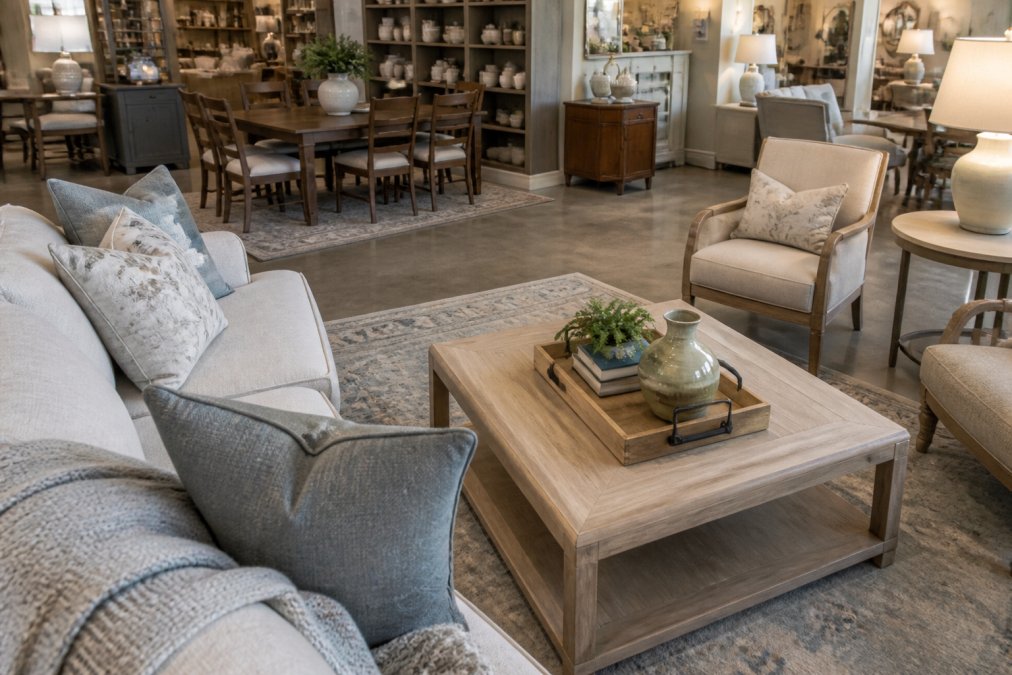
For anyone looking to flip furniture for profit, staging is where the real money is made. At Le Rouge Tete, we’ve spent over 16 years helping Carteret County residents understand that how you present a piece matters as much as the piece itself. Our "live in" store layout lets customers immediately envision how furniture functions in an actual home setting.
This guide covers the complete process of staging furniture for resale, from initial assessment through final photography and pricing strategy.
Staged furniture sells 30-50% faster and commands premium pricing because buyers connect emotionally with styled spaces, not empty rooms.
Step 1: Assess and Prepare Your Furniture
Before staging, conduct an honest assessment of what you’re working with. Examine the furniture in strong natural light and look for damage that affects function and appearance: loose joints, stains, scratches, dents, or worn upholstery. Small cosmetic issues can often be hidden through strategic styling and photography angles. Structural problems typically require repair before staging will help.
Test all moving parts. Drawers should slide smoothly, hinges should open without resistance, and mechanical elements should work as intended. A single non-functional element can tank resale value regardless of staging.
Clean thoroughly. Dust, pet hair, and odors kill sales fastest. Vacuum upholstered pieces, wipe all surfaces, and air out any mustiness. A clean piece looks newer and more valuable, even if decades old.
Consider minor repairs if cost-effective. A loose knob, scuffed wood touched up with furniture markers, or a loose seam warrant quick fixes that pay for themselves through higher resale value.
Check furniture dimensions carefully and note them down. Buyers shopping online often filter by size, and accurate measurements prevent returns and disputes.
Step 2: Choose the Right Background and Setting
Your background is the foundation of visual merchandising. Neutral backgrounds work best for most furniture pieces. Plain white, soft gray, or warm beige walls keep focus on the item itself. If your walls are bold or patterned, use a backdrop like poster board or fabric.
Natural lighting transforms furniture photography. Position furniture near a window with diffused light. Overcast days are ideal because clouds act as natural diffusers. If indoor lighting is poor, invest in affordable LED panels or softbox lighting.
The setting context matters enormously. A dining chair photographed alone looks incomplete. That same chair staged with a table, place settings, and a centerpiece tells a complete story. The buyer envisions themselves using the piece.
Scale and proportion are critical. Don’t crowd a small piece with too many props or stage it in a cavernous space. A petite accent chair needs an intimate corner setup; a large sectional needs enough surrounding space to feel proportional.
Consider the era and style of your furniture. A mid-century modern chair belongs in a setting that honors that aesthetic with clean lines and minimal clutter. Victorian furniture staged in a stark minimalist setting creates confusion that depresses prices.
Avoid staging furniture in spaces with visible distractions: unmade beds, clutter on shelves, or personal items that date your photos. These details signal amateur listing and inexperienced seller.
Furniture Flipping Photography Tips for Maximum Impact
Photography is where staging meets commerce. Even perfectly staged furniture fails if photos don’t capture that staging effectively.
Shoot from multiple angles: straight-on, three-quarter view, detail shots of texture or craftsmanship, and a wide shot showing the piece in its full setting. Different buyers connect with different perspectives.
Use the rule of thirds. Position furniture off-center rather than dead-center in the frame. This creates visual interest and makes photos feel more intentional and professional.
Capture texture. Close-up photos of fabric weave, wood grain, or metal details help buyers assess quality. These detail shots are especially important for upholstered pieces.
Edit minimally but strategically. Adjust brightness and contrast to match real-world appearance, but don’t oversaturate colors or use filters that misrepresent the piece.
Take photos in the best light of the day. Morning light is often cooler and crisper; afternoon light becomes warmer. Choose whichever flatters your particular piece.
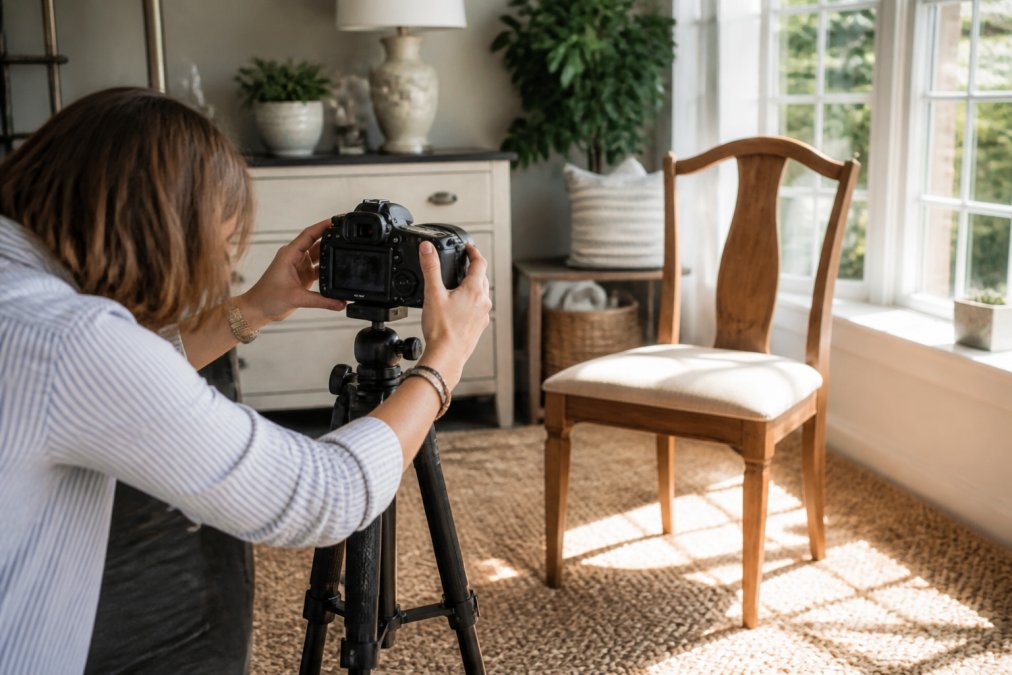
Furniture flipping photographers who want to maximize resale value through professional-quality images without expensive equipment.
Step 3: Use the Best Staging Props for Furniture
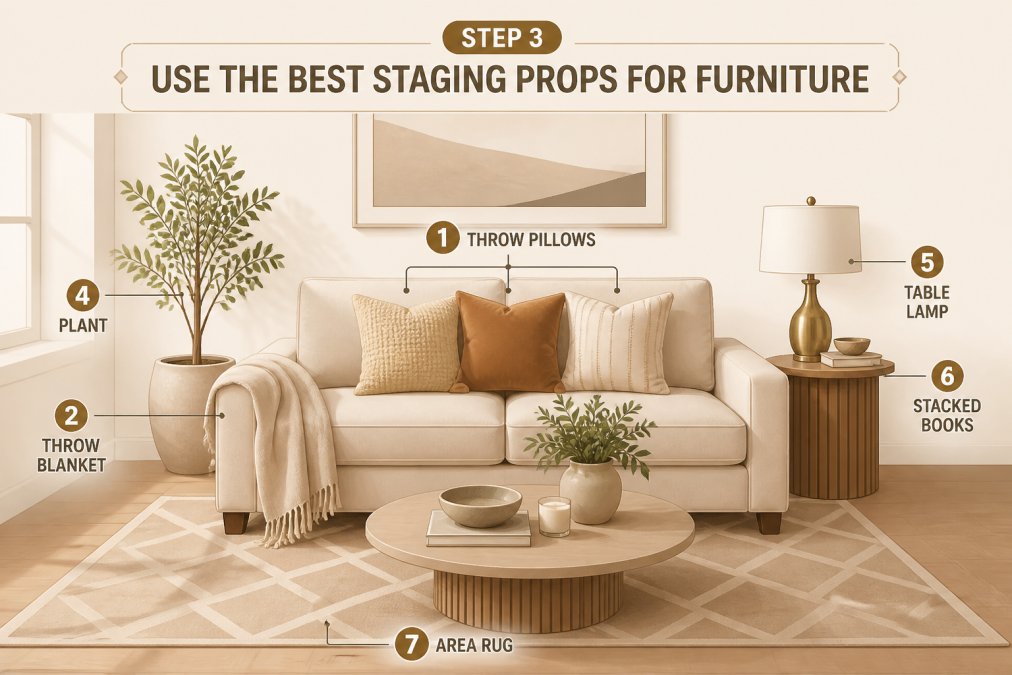
Props transform furniture from isolated objects into lifestyle aspirations. For seating, throw pillows and blankets are essential. A bare sofa looks cold and incomplete. Add 2-3 pillows in complementary colors and textures, then drape a throw blanket over one arm. These additions cost $20-50 total but increase perceived value by hundreds.
Lighting props matter. A floor lamp beside a chair or table lamp on a side table shows how the furniture functions in a real home. Books, candles, and decorative objects add personality without overwhelming the space. Stack 3-4 coffee table books, place a candle nearby, add a small plant or vase.
Area rugs define space and add warmth. A rug under a sofa or dining table grounds the furniture and shows scale. For dining furniture, a simple place setting with dishes, glasses, and a centerpiece shows function.
Budget-friendly prop sourcing is entirely possible. Check your own home first; most people have books, candles, pillows, and vases unused. Thrift stores and discount retailers stock affordable pillows and accessories. The goal isn’t expensive staging; it’s thoughtful staging that tells a coherent story.
Avoid over-styling. Too many props create visual chaos that competes with your furniture. Aim for 5-7 key props maximum per setup.
Step 4: Apply Color Theory and Visual Balance
Color choices drive emotional responses and affect perceived value. Complementary colors create visual excitement. If your furniture is warm wood tone, stage it with cool-toned accessories like blues or grays. If it’s upholstered in emerald, pair it with warm neutrals or metallics.
Neutral palettes with strategic pops of color are safest for resale. Buyers project their own preferences onto neutral spaces. A sofa staged in cream, gray, and white with one jewel-toned pillow allows buyers to imagine it in their own color scheme while showing visual interest.
Avoid color trends that date quickly. Buyers reselling furniture want pieces that feel timeless.
Visual balance means distributing visual weight evenly. A sofa staged entirely on one side looks unfinished. Distribute props across the composition so no single side dominates.
Contrast draws the eye. A dark pillow against a light sofa creates focal points that guide viewer attention and prevent monotony.
Color psychology in staging triggers buyer emotions that translate to willingness to pay. Warm, inviting color combinations consistently outperform cold or chaotic palettes in resale metrics.
Virtual Staging for Furniture Resale and Online Listings
Virtual staging software allows you to digitally place furniture in different room settings without physical props or location changes. AI-powered background removal tools isolate your furniture, allowing you to place it in multiple contexts digitally. A single chair photo can be staged in five different room settings, showing buyers how versatile the piece is.
These tools work best as supplements to real staging, not replacements. Buyers respond more strongly to authentic photos of real spaces than to obviously digital renderings. However, for online marketplaces where photos are small and viewed on mobile devices, virtual staging can increase click-through rates.
Mobile optimization is critical because 70-80% of online furniture shoppers browse on phones. Your staging must look good at thumbnail size. Test your photos on your phone before uploading to any marketplace.
The key limitation of virtual staging is authenticity. Experienced buyers recognize digital manipulation, and it can backfire if the real furniture looks significantly different from the virtual version. Use virtual staging transparently, and always include at least one photo of the furniture in its actual staging environment.
How to Price Flipped Furniture for Maximum Profit
Pricing is where staging strategy meets financial reality. Staged, well-photographed furniture commands 20-40% premiums over unstaged equivalents, but only if you price strategically.
Research comparable pieces. Search your specific furniture type, style, and condition on major resale platforms. Look at what similar items actually sold for, not just asking prices. Sold listings show real market value.
Factor in condition accurately. Excellent condition means no visible wear and full functionality. Good condition allows minor cosmetic wear. Fair condition includes visible wear or possible minor repairs. Your staging can improve perceived condition, but it can’t change actual condition.
Consider where you’re selling. Facebook Marketplace and Craigslist typically yield lower prices than specialty resale platforms. Consignment through stores like Le Rouge Tete often results in higher prices because the store’s curation adds perceived value.
Account for your staging investment. If you’ve invested $200 in staging and photography, price high enough to recoup that investment and make profit.
Vintage and designer pieces command premiums. Mid-century modern furniture and designer brands can sell for 50-70% of original retail price if in good condition. Mass-produced contemporary furniture typically sells for 20-40% of original retail.
Test pricing by starting slightly high and dropping if you don’t get interest within a week. If you’re getting multiple inquiries immediately, you priced too low.
Seasonal pricing matters. Spring and summer see higher furniture demand. Winter sees lower demand. Price accordingly.
Bundle similar pieces when possible. Selling a sofa and matching chairs together typically yields better total revenue than selling them separately.
Transparency about condition builds trust and reduces returns. Detailed descriptions of any wear, damage, or quirks prevent buyer disappointment.
Staging furniture for resale requires intentionality at every step. Each decision impacts your bottom line. The pieces that sell fastest and for the highest prices aren’t necessarily the newest or most expensive; they’re the ones presented most thoughtfully. When you’re ready to consign or sell quality furniture, Le Rouge Tete brings 16 years of experience in presenting pieces that tell buyer stories. Our team helps you stage for maximum impact, and our 50/50 consignment split ensures you capture the value your preparation creates. Contact us today to discuss your furniture resale goals.
Frequently Asked Questions
What is the rule of thumb for pricing furniture when you stage it for resale?
Pricing depends on the furniture's condition, age, original retail value, local demand, and current market trends. Generally, expect to recover 30-50% of the original purchase price for quality pieces in good condition. Staging and professional photography can justify prices at the higher end of this range by increasing buyer confidence and perceived value. For consignment sales, understand your split arrangement, Le Rouge Tete offers a 50/50 split, meaning you receive half of the final sale price after the item sells.
How does virtual staging for furniture resale improve online listings?
Virtual staging tools allow you to show how furniture looks in different room settings without physical props or location changes. These AI-powered apps let buyers visualize pieces in their own homes, reducing purchase hesitation. Virtual staging is especially useful for online marketplace listings where photos alone may not convey scale or style fit. You can stage the same piece multiple ways to appeal to different buyer demographics, increasing your chances of a faster sale at your target price.
What furniture flipping photography tips will help my pieces sell faster?
Use natural lighting from windows whenever possible, it shows true colors and texture without harsh shadows. Photograph from multiple angles (front, side, detail shots) to build buyer confidence. Include lifestyle shots showing the furniture in a styled room setting, not just isolated on white backgrounds. Take photos in good lighting conditions during midday when sunlight is even. Ensure images are sharp and well-composed, with the furniture as the clear focal point. Mobile-optimized photos are critical since most buyers browse listings on phones.
Is reselling furniture a profitable side hustle if I stage it properly?
Yes, strategic staging and presentation can significantly improve resale value and sale speed. Quality furniture pieces that are properly cleaned, photographed, and staged typically sell faster and at higher prices than unstaged items. Your profit margin depends on sourcing costs, the time invested in staging and photography, and your local market demand. Consignment through established retailers like Le Rouge Tete eliminates your selling responsibility, you provide the piece, they handle marketing and sales, and you split the proceeds 50/50 when it sells.
This article was written using GrandRanker