
Table of Contents
- Why Affordable Home Staging Matters in 2026
- Build Your DIY Home Staging Checklist: The Foundation
- Best Paint Colors for Home Staging 2026
- Room-Specific Budget Breakdown: Where to Spend Smart
- Virtual Staging vs. Physical Staging Cost: Which Works for You
- Home Staging ROI Statistics 2026: What Buyers Actually Respond To
- Maximize Natural Light and Create Visual Flow
- Sustainability and Eco-Friendly Staging Choices
Affordable Home Staging Tips 2026: Budget Strategies That Sell
Last Updated: August 4, 2026
When homeowners decide to sell, they face a critical choice: invest thousands in professional staging or take a DIY approach and keep costs down. Homes that are staged sell 73% faster than unstaged homes, according to real estate market data. At Le Rouge Tete, we’ve spent over 16 years helping homeowners understand how to present their spaces effectively without breaking the bank. This guide covers affordable home staging tips 2026 that generate real results, strategies that attract buyers, photograph well, and create emotional connections in minutes, not months.
The best part? Most of these tactics cost nothing or require only modest investment.
Why Affordable Home Staging Matters in 2026
Staging isn’t a luxury anymore, it’s a competitive necessity. Properties that sit on the market longer lose value with every passing week. First impressions happen in seconds, both in person and online through real estate photography. A staged home commands attention in a crowded listing feed and justifies higher asking prices.
Buyers don’t buy houses, they buy lifestyles. When they walk into a space, they’re imagining themselves living there. Clutter, personal items, and poor lighting short-circuit that mental process. Strategic staging removes obstacles to that mental purchase and accelerates decision-making.
Affordable home staging tips 2026 focus on high-impact, low-cost interventions. You’re not hiring a professional designer or replacing furniture, you’re optimizing what you already have and making smart, targeted purchases where they matter most.
Build Your DIY Home Staging Checklist: The Foundation
A staging checklist keeps you organized and prevents costly mistakes. The foundation of any successful staging project is decluttering and depersonalizing your space. This is where 80% of the work happens, and it costs nothing.
Decluttering and Depersonalizing First
Remove 30-50% of what’s currently in each room. This sounds aggressive, but it’s the single most effective tactic for making spaces feel larger and more appealing. Buyers need to envision their own belongings in your home, not admire your collection of family photos, sports memorabilia, or decorative objects.
Start with these categories: family photographs and personal artwork, collections, excess furniture that makes rooms feel cramped, visible clutter on countertops and shelves, and expired pantry items. A common mistake is keeping furniture because it’s expensive or sentimental. In staging, less is always more. If a piece doesn’t serve the room’s purpose or create visual flow, it goes. Consignment stores like Le Rouge Tete become valuable here, you can sell pieces you’re removing and recoup some of your investment through their 50/50 consignment split.
After decluttering, depersonalize aggressively. Remove religious items, political signage, family photos, and anything that might create unconscious bias against your home. Neutral, lifestyle-driven staging works because it lets buyers project themselves onto the space.
Quick Wins That Cost Nothing
Before spending a dollar, execute these free staging wins:
- Deep clean everything. Dust, vacuum, mop, and scrub. A spotless home reads as well-maintained.
- Rearrange furniture for open floor plans. Push furniture toward walls to maximize sightlines and create visual flow.
- Open all curtains and blinds. Maximize natural light during showings.
- Make beds with neutral bedding. Remove throw pillows and excess comforters.
- Clear kitchen countertops. Keep only a few high-end appliances visible.
- Stage entryways. A clean, uncluttered entry with good lighting sets the tone for the entire showing.
These tactics take time but zero budget. A weekend of deep cleaning and furniture rearrangement often produces results equivalent to hiring a professional stager.
| Task | Duration | Cost | Impact |
|---|---|---|---|
| Deep cleaning | 8-12 hours | $0 | High, shows maintenance |
| Decluttering | 12-16 hours | $0 | Very high, creates space |
| Furniture rearrangement | 2-4 hours | $0 | High, improves flow |
| Depersonalizing | 4-6 hours | $0 | High, helps buyer projection |
| Window treatment | 1-2 hours | $0 | Medium, improves lighting |
Best Paint Colors for Home Staging 2026
Paint is the single most cost-effective staging investment. A fresh coat of neutral paint transforms a dated space into a contemporary one and costs far less than new furniture.
Neutral Palettes That Attract Buyers
The safest staging colors are warm neutrals: soft whites, warm grays, beige, and taupe. These colors are universally appealing and make spaces feel larger. Avoid bold colors, dark walls, or trendy hues, they date quickly and alienate buyers.
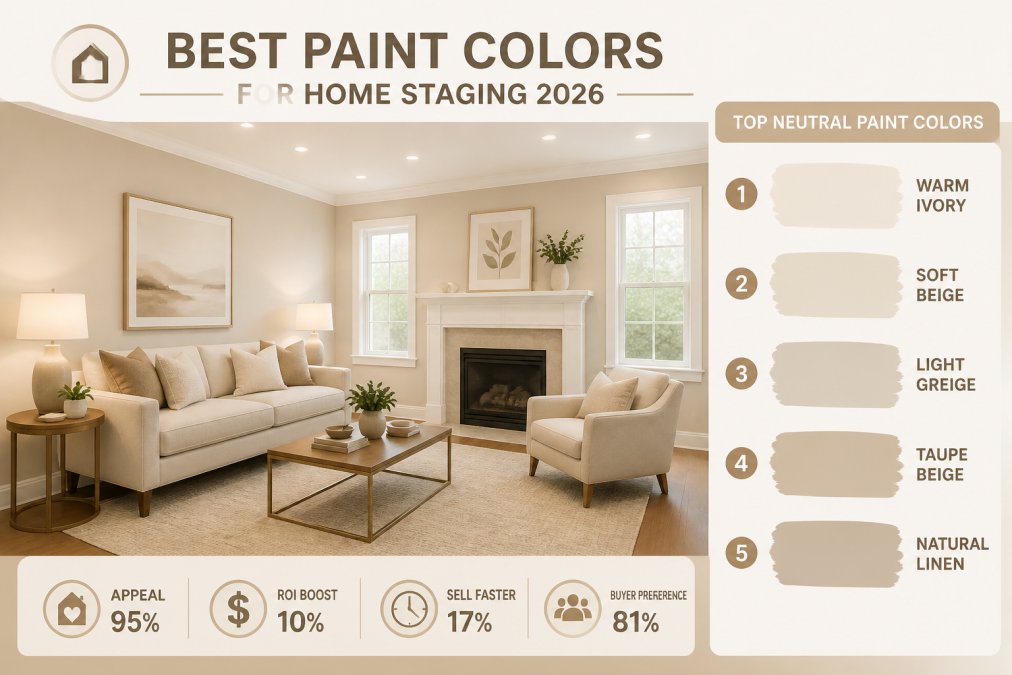
Best paint colors for home staging 2026 emphasize cohesion across rooms. A consistent neutral palette throughout the main living areas creates a cohesive aesthetic that feels intentional and sophisticated.
Top choices: Sherwin-Williams Accessible Beige, Benjamin Moore Pale Oak, Farrow & Ball Wimborne White, and Behr Swiss Coffee. Paint only the most visible areas first: living room, kitchen, primary bedroom. One freshly painted room often convinces buyers that the entire home is well-maintained.
Accent Colors and Warm-Toned Lighting
While walls should be neutral, strategic accent colors add visual interest without overwhelming buyers. A single accent wall in a soft gray or muted blue works in bedrooms or offices. Keep accents subtle.
Warm-toned lighting is equally important as paint color. LED bulbs in the 2700K-3000K range create inviting spaces that feel lived-in and comfortable. Replace all visible bulbs with warm-toned LEDs, this costs $20-40 and dramatically improves perceived warmth.
Paint one accent wall in a secondary bedroom or office in a soft, muted tone. Pair it with warm-toned LED lighting fixtures, and the room immediately feels more intentional and designed.
Room-Specific Budget Breakdown: Where to Spend Smart
Not all rooms deserve equal staging investment. Focus your budget where it generates the highest return on investment.
Living Room Staging on a Budget
The living room is where buyers spend the most time during showings. This is where you should concentrate your staging effort and modest budget.
Essential living room staging: declutter ruthlessly by removing 40-50% of furniture and accessories, arrange furniture for conversation, add a few statement pieces (one quality accent chair, a side table, or a large mirror), invest in lighting ($30-60 for a floor or table lamp with warm-toned bulbs), and use textiles strategically (a neutral throw blanket and two coordinating pillows).
Budget allocation for living room: $150-300 for lighting, textiles, and minor accessories.
Kitchen and Bathroom Essentials
Kitchens and bathrooms are decision-drivers. Buyers scrutinize these spaces closely, so staging here pays dividends.
Kitchen staging on a budget: Clear countertops completely except for a coffee maker and utensil holder, clean and organize cabinet interiors, stage the sink area, add a small potted plant or fresh flowers, and ensure all lighting works. Cost: $0-50.
Bathroom staging on a budget: Remove all personal items from countertops, organize under-sink cabinets, replace shower curtain with a neutral option ($15-25), add fluffy white towels rolled in a basket ($20-30), and ensure lighting is bright and warm-toned. Cost: $35-55.
These rooms don’t require expensive renovations, they require meticulous organization and cleanliness.
Virtual Staging vs. Physical Staging Cost: Which Works for You
Virtual staging uses digital tools to add furniture, paint colors, and decor to photographs of empty or sparsely furnished rooms. Cost typically ranges from $10-30 per image, and results appear only in online listings.
Physical staging involves actually arranging, decluttering, and decorating your space. It costs more upfront but affects both online photos and in-person showings. For most homeowners, invest in physical staging first, it’s the foundation that makes photography better and showings more effective.
Virtual staging can mislead buyers if the furnished image doesn’t match the empty space they see in person. Use virtual staging only for vacant properties or clearly label staged images in listings.
Home Staging ROI Statistics 2026: What Buyers Actually Respond To
Homes that are staged and decluttered sell faster and command higher prices. The return on investment for modest staging expenses ($300-1,000) typically ranges from 5-10% in increased sale price.
Buyers respond most strongly to: clear, uncluttered spaces, natural light and bright interiors, neutral color palettes, well-lit entryways, and staged kitchens and bathrooms. What doesn’t move the needle: expensive furniture, trendy decor, or bold design choices.
Maximize Natural Light and Create Visual Flow
Light and spatial awareness are the invisible forces that drive buyer perception. A home that feels bright and spacious sells faster than an identical home that feels dark and cramped.
Lighting Fixtures and Color Temperature
Natural light is free and powerful. During showings, open all curtains and blinds to flood rooms with daylight. At night or in rooms without windows, artificial lighting becomes critical.
Warm-toned LED bulbs (2700K-3000K) create inviting, comfortable spaces. This single change costs $30-60 and dramatically improves perceived warmth. Consider these upgrades if budget allows: replace outdated ceiling fixtures with modern designs ($50-150 per fixture), add table lamps to dark corners ($30-80 each), or install dimmer switches ($15-30 per switch).
Lighting is one of the highest-ROI staging investments.
Furniture Arrangement for Open Floor Plans
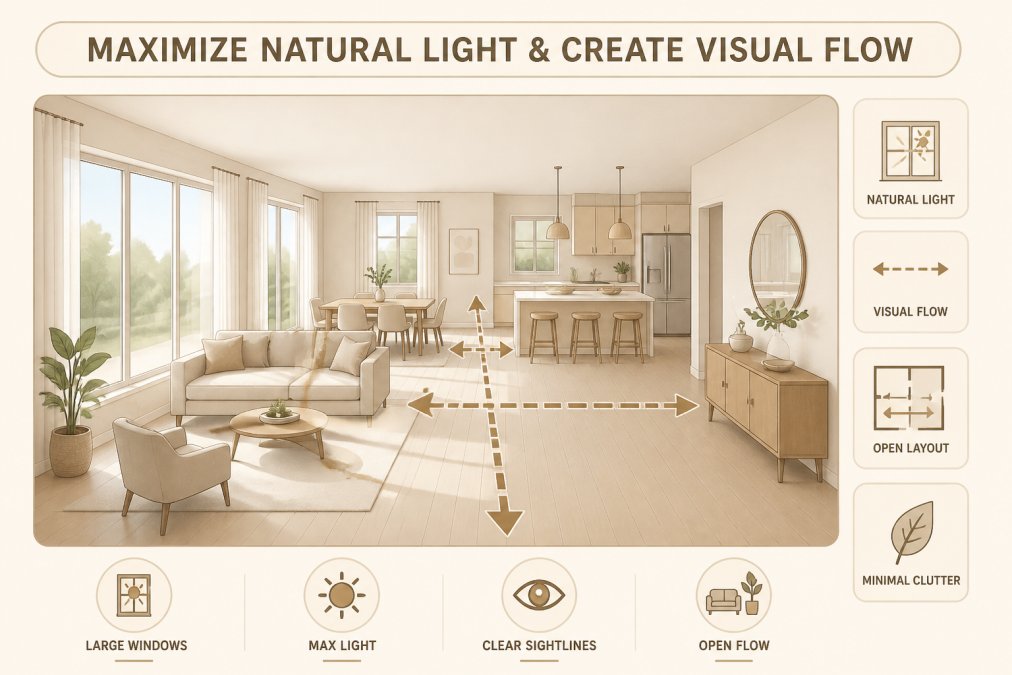
Intentional furniture arrangement creates visual flow and makes spaces feel larger. Push furniture toward walls to maximize the open floor plan, create focal points by arranging seating to face a fireplace or window, avoid blocking doorways, leave negative space, and use area rugs strategically.
This costs nothing. Spend an afternoon experimenting with furniture placement. The resulting open, flowing layout will improve both photography and showings.
The most underrated staging tactic is simply moving furniture to the walls and creating clear sightlines. This single change makes rooms feel 20-30% larger and costs nothing.
Sustainability and Eco-Friendly Staging Choices
Modern buyers increasingly value sustainability and eco-conscious homes. Staging with this in mind appeals to a growing market segment and aligns with 2026 buyer preferences.
Sustainable staging choices include: reuse and consignment (source staging furniture from consignment stores like Le Rouge Tete rather than buying new), natural textiles (cotton, linen, and wool), live plants, energy-efficient LED lighting, and minimal staging decor.
Sustainable staging tells a story to buyers: this home is well-maintained, thoughtfully designed, and owned by someone who cares about quality and the environment. This narrative increases perceived value and attracts conscientious buyers willing to pay premium prices.
Le Rouge Tete’s consignment model exemplifies this approach. Instead of purchasing new staging furniture, source pieces from their inventory, stage your home beautifully, and consign those pieces back after your home sells. This circular approach reduces costs, supports sustainability, and keeps money in your pocket.
Staging your home doesn’t require a large budget, it requires strategy and effort. By decluttering, depersonalizing, optimizing lighting, and arranging furniture intentionally, you can transform any space into a buyer’s dream. When you need quality furniture pieces for staging or want to source pre-loved items that reduce costs, Le Rouge Tete offers curated, affordable options with their 50/50 consignment split and convenient local pickup services. Start with the free tactics, invest modestly in paint and lighting, and watch your home sell faster and for a higher price.
Frequently Asked Questions
What's the difference between virtual staging and physical staging for 2026 home sales?
Virtual staging uses software to digitally add furniture and decor to photos, ideal for online listings and quick previews. Physical staging involves actual furniture arrangement and decor placement buyers can walk through. Virtual staging costs less upfront ($50-$200 per image) but may not convert as effectively as seeing a staged home in person. Physical staging requires higher investment but creates stronger buyer connection through first impressions and intentional design that photographs capture authentically.
How much does affordable home staging typically cost in 2026?
DIY staging costs range from $0 (decluttering and rearranging existing items) to $500-$2,000 for paint, lighting fixtures, and budget-friendly accent pieces. Professional staging runs $1,500-$5,000+ depending on home size and market. The return on investment typically ranges from 2-10% of home value, meaning staging can pay for itself if it shortens sale time or increases offer price. Prioritize curb appeal, neutral palettes, and lighting first for the best ROI on limited budgets.
Which rooms should I prioritize when staging on a budget?
Focus on the living room, kitchen, and primary bedroom first, these drive buyer connection and property presentation. Entry and bathrooms matter for first impressions and visual flow. Depersonalize these spaces completely, maximize natural light, and arrange furniture to show open floor plan potential. Skip expensive staging in guest rooms or storage areas. Use consignment or pre-loved furniture from local sources to fill key spaces affordably while maintaining cohesive aesthetic and market readiness.
Does home staging really help houses sell faster in the current market?
Yes. Homes with intentional design and decluttering foundation typically sell 10-30% faster and often command higher offers. Staging statistics show buyers respond strongly to neutral palettes, good lighting, and clear spatial awareness. Even budget staging, decluttering, fresh paint, and strategic lighting, improves market readiness and buyer perception. The psychology of color and visual flow directly influences purchase decisions. Staged homes photograph better for real estate photography, which drives online traffic before showings occur.
This article was written using GrandRanker