

Table of Contents
- What Makes a Consignment Shop Reputable
- Red Flags in Consignment Shop Operations
- Understanding Consignment Shop Commission Rates
- How to Prepare Furniture for Consignment
- Evaluating Furniture Consignment Store Policies
- Authentication and Quality Control Standards
- Shopping at Consignment Shops: What to Inspect
- Conclusion
- Frequently Asked Questions
Last Updated: September 3, 2026
What Makes a Consignment Shop Reputable
A reputable consignment shop maintains transparent operations, prioritizes quality control, and treats both sellers and buyers fairly. At Le Rouge Tete, we’ve spent over 16 years building trust by ensuring every piece meets our standards before it reaches the floor.
Reputation rests on three pillars: honest commission structures, clear policies, and genuine commitment to quality. Reputable shops publish commission rates upfront, explain consignment periods, and communicate clearly about what happens if items don’t sell. They invest in proper lighting, display techniques, and inventory management so customers see exactly what they’re getting. The best indicator is how they handle consignor items: Do they inspect for damage? Refuse substandard pieces? Clean and prepare items before displaying them? These practices signal respect for both merchandise and sellers.
Red Flags in Consignment Shop Operations
Not every consignment operation maintains the same standards. Watch for these warning signs before committing your furniture or money.
Vague or Hidden Commission Rates, If a shop won’t clearly state commission percentages, walk away. Reputable shops post rates prominently.
No Written Agreement, Consignment agreements protect both parties. If a shop refuses written terms about holding periods, condition expectations, or payment timing, that’s a major red flag.
Cluttered, Poorly Lit Displays, Reputable shops invest in presentation. Cramped, poorly lit furniture suggests the shop doesn’t prioritize quality control.
No Inspection or Quality Standards, If a shop accepts everything without examining for damage, stains, or missing parts, they’re not filtering for quality.
Pressure to Accept Items Quickly, Legitimate shops take time to evaluate offerings. Rushing inspections or pressuring immediate consignment signals lack of thoroughness.
Unclear Payment Timelines, Ask when you’ll be paid after a sale. Vague answers or extended holds are problems. Reputable shops pay promptly with clear processes.
No End Date or Buyback Policy, If a shop doesn’t specify how long items stay on the floor before removal, you could lose track of your furniture indefinitely.
Understanding Consignment Shop Commission Rates
Commission rates are how consignment shops stay in business, but contract terms surrounding payment and liability matter more than the structure itself.
Commission Structures: What to Expect
Most reputable consignment shops operate on splits ranging from 40/60 to 50/50, with the shop taking the smaller percentage (the FTC). Some use tiered structures where percentages change based on selling price or time in shop, for example, 40% commission for items selling within 30 days but 50% after that. Ask about these tiers in writing, as they directly affect your payout.
A few shops charge upfront consignment fees ($25-$75 per item) or monthly storage fees separate from commission. If charged both, calculate your total cost before agreeing. For example, a $50 consignment fee plus 50% commission on a $200 item means you net only $50 instead of $100.
Contract Red Flags: What to Look For in Writing
Before signing, review these critical terms. If a shop won’t provide a written contract or discuss these points, that’s a major warning sign.
1. Payment Hold Periods, Reputable shops pay within 7-14 days of sale (the FTC). Holds longer than 30 days suggest cash flow problems. Get the exact timeline in writing.
2. Payout Protection and Liability, Ask: “What happens if a customer returns an item after I’ve been paid?” A reputable shop absorbs return costs or has clear policies. If the contract allows indefinite deductions from future payouts, you’re bearing their sales risk. Negotiate a time limit like “returns must be claimed within 30 days of sale.”
3. Unsold Item Policies, The contract should specify how long items stay (typically 60-90 days), what happens to unsold items (returned, donated, discounted, or disposed of), whether you can extend consignment, and whether the shop can donate items without permission.
4. Price Adjustment Rights, Does the shop have unilateral rights to lower prices? The contract should specify when markdowns occur, how much they can be reduced, and whether you must approve them.
5. Damage and Liability Terms, The contract must clarify who’s responsible for damage, whether the shop carries insurance, how damage is documented, and whether you’re compensated.
6. Consignment Fee Transparency, If applicable, state the exact fee, when it’s due, whether it’s refundable if items don’t sell, and which categories it applies to.
7. Termination and Withdrawal Rights, Can you withdraw items early? The contract should specify whether early withdrawal is allowed, any associated fees, required notice, and how items are returned.
Comparing Commission Offers: The Full Picture
Don’t compare shops by commission percentage alone. A 50/50 split with a 30-day payment hold and unlimited return deductions may net you less than a 40/60 split with a 7-day payout and a 30-day return window. Calculate the true cost by comparing:
- Commission percentage
- Consignment fees
- Payment hold period
- Return liability window
- Price adjustment policies
- Early withdrawal fees
Request written terms from multiple shops and compare full contracts, not just commission rates.
Red Flags in Commission Discussions
- Vague or verbal-only rates, Walk away if a shop won’t state commission in writing.
- Rates varying by consignor, Legitimate shops apply consistent rates. Different quotes signal discrimination.
- Hidden fees revealed later, If storage fees, return deductions, or other charges emerge after consignment, you’ve been misled.
- Pressure to accept unfavorable terms, Reputable shops explain terms clearly and allow review time.
The Key Principle
The best indicator of fair commission is transparency. Reputable shops explain rates in writing, apply them consistently, and discuss contract terms openly. If a shop deflects commission questions, refuses written agreements, or won’t clarify unsold item policies, that’s a sign of unfair operations.
How to Prepare Furniture for Consignment
Preparing furniture properly increases selling chances and price. Well-prepared items move faster, meaning you get paid sooner.
Clean Thoroughly, Dust, vacuum, and wipe every surface. For upholstered pieces, use a lint roller and spot-clean stains. Polish wood furniture gently to restore shine. Clean pieces look more valuable and appeal to more buyers.
Repair Minor Issues, Fix loose legs, tighten knobs, and replace missing hardware if possible. Small repairs prevent rejection or heavy discounting. Major repairs like reupholstering usually aren’t worth the cost before consigning.
Document the Condition, Take clear photos from multiple angles, including any wear, stains, or damage. This documentation helps the shop assess value accurately and protects you if disputes arise.
Include Original Hardware and Instructions, Gather assembly instructions, hardware bags, or documentation. These increase perceived value and make pieces easier to sell.
Know Your Item’s History, Be ready to share where you bought the piece, its age, and brand if applicable. This helps the shop price and market it effectively.
Deliver Items in Good Condition, Transport furniture carefully to avoid new damage. Scratches or dents from transport may cause rejection or significant price reduction.
Evaluating Furniture Consignment Store Policies
Before consigning, understand specific shop policies. These details determine process smoothness and your ultimate earnings.
Consignment Period, Reputable shops typically hold items 60-90 days. Ask what happens to unsold items and whether you can extend the period.
Payment Schedule, When do you get paid after a sale? Some shops pay weekly, others monthly. Ask about payment holds. Shops paying within 7-14 days of sale operate fairly.
Return Policy for Unsold Items, Can you pick up unsold furniture free, or does the shop charge removal fees? At Le Rouge Tete, we offer convenient local pickup services.
Price Adjustment, Does the shop have rights to lower prices on slow-selling items? This is common but should be disclosed upfront. Some shops require your approval before markdowns.
Damage Liability, What happens if items are damaged in the shop? Reputable shops have clear terms about responsibility for damage on premises versus normal wear.
Holds and Sales, Can customers place holds? How long do holds last? This affects selling speed and payment timing.
Authentication and Quality Control Standards
Reputable consignment shops maintain strict quality standards, especially for high-end or designer pieces. Understanding authentication and evaluation processes protects you as both buyer and seller.
How Shops Verify Authenticity for Designer Goods
Ask directly: “How do you authenticate designer pieces?” Legitimate shops have documented processes including:
- Serial number and label verification, Cross-referencing manufacturer databases, checking consistent labeling, and examining stitching quality and font accuracy on tags.
- Provenance research, Investigating item history by requesting receipts, catalogs, or purchase documentation and researching designer production timelines.
- Material and construction assessment, Evaluating specific materials and construction methods authentic to the designer and era.
- Third-party authentication for high-value items, For pieces valued above $500-$1,000+, reputable shops may send items to independent authenticators or appraisers.
Red Flags in Authentication Practices
- No authentication process, If staff can’t explain verification methods, they’re not equipped for luxury goods.
- Reliance on seller’s word alone, Accepting designer pieces without verifying documentation is irresponsible.
- Vague or inconsistent pricing for similar items, Significant price differences suggest inconsistent authentication or lack of expertise.
- No written condition report for high-value items, Reputable shops document designer piece condition with photos and detailed notes.
Quality Control Beyond Authentication
Reputable shops also conduct structural assessments, test mechanical components, evaluate upholstery and finish, and document condition at intake with multiple photographs and damage notes.
Asking the Right Questions About Standards
- “What percentage of items do you reject, and why?”, Shops rejecting 10-20% filter for quality (the FTC).
- “Do you have written condition standards?”, Legitimate shops have documented criteria.
- “For designer pieces, what documentation do you require?”, Reputable shops request receipts, packaging, or authenticity certificates.
- “How do you handle items with damage discovered after display?”, Clear liability policies indicate professional operation.
Shopping at Consignment Shops: What to Inspect
Thorough inspection prevents disappointment and ensures quality pieces worth the price.
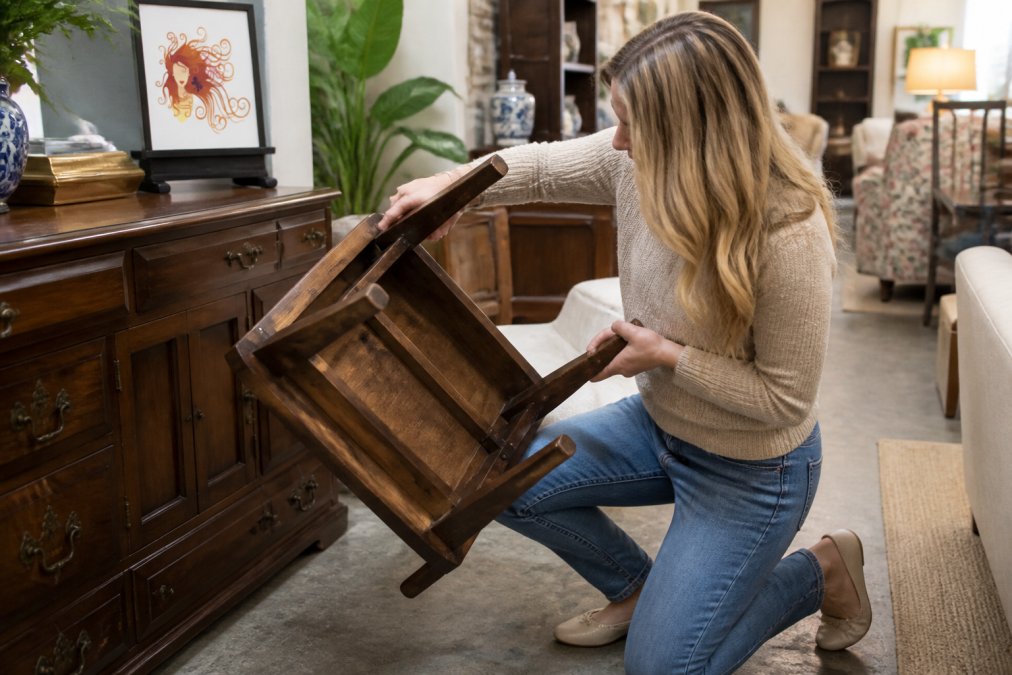
Check Structural Integrity, Sit on chairs and sofas to test stability. Rock gently to feel for loose joints or wobbling. Examine wooden frames for cracks, splits, or woodworm signs. Run your hand along legs and under surfaces for hidden damage.
Inspect Upholstery and Fabric, Look for stains, tears, or pilling. Check seams for fraying or separation. Smell pieces carefully; musty odors indicate moisture damage or mold. Press cushions to ensure they’re still supportive.
Examine Finish and Hardware, Check wood furniture for scratches, water rings, or finish damage. Inspect handles, hinges, and knobs for security and function.
Test Drawers and Doors, Open and close drawers smoothly. Verify doors align properly and latches work.
Verify Measurements, Bring a measuring tape and confirm dimensions, especially for larger pieces. Consignment shop layouts can distort perceived size.
Ask About History, Question staff about origin, age, and known issues. Reputable shops have documented information and share it honestly.
Look at Overall Store Condition, Clean, well-organized shops with thoughtful displays and knowledgeable staff reflect quality standards across inventory.
Conclusion
Finding a reputable consignment shop comes down to asking the right questions and observing operations. Look for transparent commission rates, clear policies, and genuine investment in quality control. Watch for red flags like vague terms, poor presentation, or pressure to rush decisions.
Le Rouge Tete has built trust over 16 years by maintaining a 50/50 split with no hidden fees, displaying furniture in a “live in” layout so you can visualize pieces in your own space, and offering convenient local pickup services. Our commitment to quality means every item meets our standards before reaching the floor, and our personalized assistance helps you find pieces that truly work for your home. Contact us today to experience the difference that genuine quality and fair practices make in consignment shopping.
Frequently Asked Questions
Q: What percentage does a typical consignment shop take from the sale price?
A: Most reputable consignment shops operate on a 50/50 split, meaning you receive half the sale price and the shop keeps half. Some shops may offer different percentages depending on item category, condition, or value. Before consigning, ask about the exact commission rate, whether it varies by item type, and confirm it in writing.
Q: How do I know if a consignment shop is authentic and trustworthy?
A: Look for shops with established track records, clear written policies, and professional displays. Reputable shops inspect items before accepting them, provide detailed consignment agreements with specific end dates, and offer transparent payout schedules. Ask about their authentication process, especially for designer or luxury items. Visit in person to assess cleanliness, organization, and staff knowledge, these reflect the shop’s commitment to quality.
Q: What should I look for when preparing furniture to consign?
A: Clean your furniture thoroughly, repair minor damage, and photograph items from multiple angles before drop-off. Remove personal items and ensure all parts are included. Document the original retail value if possible. Disclose any damage, wear, or repairs honestly, shops appreciate transparency and it affects pricing. For upholstered pieces, vacuum and spot-clean; for wood, dust and polish. Items in excellent condition attract buyers faster and command higher prices, directly affecting your payout.
Q: What consignment shop policies should I review before buying or selling?
A: Review the consignment agreement for end dates (some shops hold items indefinitely, others set time limits), payout schedules, and payment methods. Confirm the commission split, whether store credit offers different rates than cash, and the shop’s return or damage policy. Ask about their drop-off and pickup procedures, holding periods for purchases, and whether they assist with large item removal. Reputable shops provide written policies and explain them clearly before you commit.
This article was written using GrandRanker