
Table of Contents
- How to Arrange Furniture in Small Rooms: The Fundamentals
- Step 1: Establish a Clear Focal Point
- Step 2: Plan Traffic Flow and Pathways
- Step 3: Choose Space Saving Furniture for Small Spaces
- Step 4: How to Make a Small Room Look Bigger with Layout
- Small Living Room Layout Ideas: Practical Arrangements
- Step 5: Multi-Functional Furniture Solutions
- Step 6: Optimize Arrangement with Modular and Area Rug Strategies
How to Arrange Furniture in Small Rooms: 7 Proven Strategies
Last Updated: August 1, 2026
Learning how to arrange furniture in small rooms is one of the most practical skills a homeowner can develop. At Le Rouge Tete, we understand that maximizing limited square footage requires strategy, not just aesthetics. Whether you’re furnishing a studio apartment, a cozy bedroom, or a compact living room in the Crystal Coast area, the principles remain consistent: thoughtful placement, strategic scale, and intentional design choices transform cramped spaces into functional, inviting homes.
Small room furniture arrangement isn’t about fitting more in; it’s about creating the illusion of space while maintaining comfort and flow. According to National Association of Home Builders design standards, proper furniture placement can increase perceived room size by up to 40%, even without structural changes.
Before you move a single piece, take photos of your current layout from multiple angles. This simple step prevents decision fatigue and gives you a visual reference if you want to revert to the original arrangement.
How to Arrange Furniture in Small Rooms: The Fundamentals
Understanding the core principles of small space design prevents costly mistakes and saves time.
Understanding Scale and Proportion
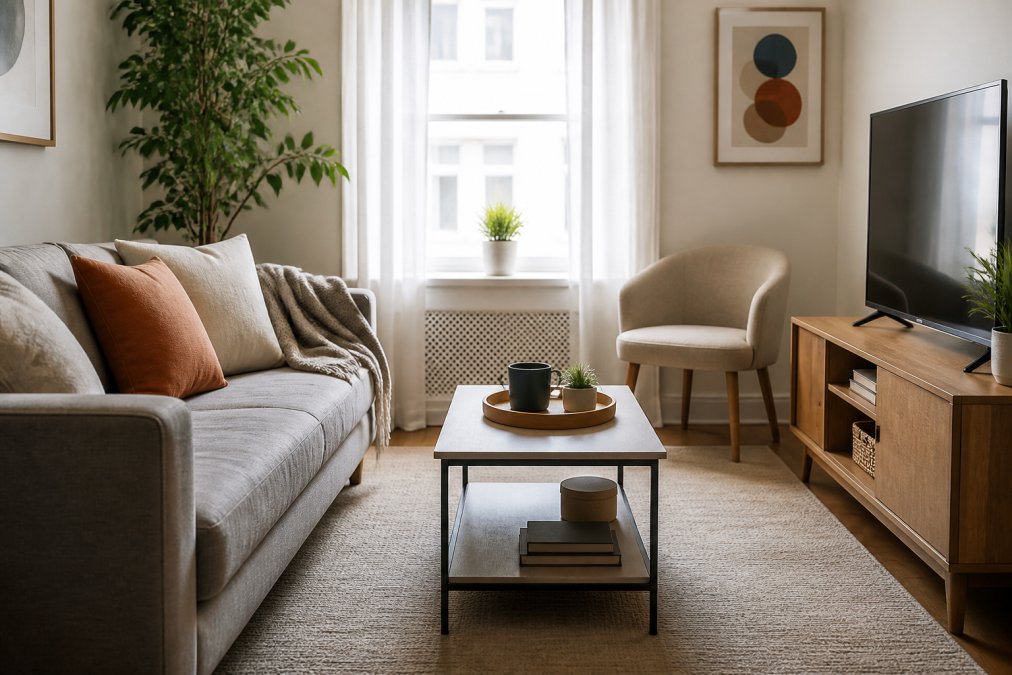
Scale refers to the size of furniture relative to the room itself. Proportion is how pieces relate to each other and the space they occupy. In small rooms, these two factors determine success or failure. A full-size sectional becomes a wall-to-wall obstacle in a 150-square-foot bedroom, making it feel suffocating rather than cozy.
Select furniture that leaves at least 18 inches of clearance on all sides when possible. This creates negative space, the empty areas that make rooms feel larger. A loveseat instead of a sofa, a slim console instead of a full-size dresser, and floating shelves instead of bulky bookcases all honor the principle of scale. Le Rouge Tete specializes in curated pre-loved furniture pieces that work beautifully in scaled-down spaces. Our "live in" display layout helps you visualize exactly how pieces will function in your home before you commit.
Assessing Your Spatial Constraints
Before selecting furniture or planning arrangements, measure your room precisely. Document ceiling height, wall length, window placement, door swing direction, and any architectural features. These constraints are your design parameters. A room with high ceilings can accommodate vertical storage solutions. A room with a single window requires thoughtful furniture placement to preserve sightlines and natural light.
Sketch your floor plan on graph paper or use a digital tool to test arrangements before moving anything. Mark traffic patterns, the natural pathways people walk through your space. Blocking these paths with furniture creates congestion and makes small rooms feel even smaller. Identify your focal point (typically a window, fireplace, or accent wall) because furniture arrangement should orient toward this anchor.
Step 1: Establish a Clear Focal Point
A focal point gives the eye a destination. Without one, small rooms feel chaotic and lack visual coherence. The focal point might be architectural (a window with a view, a fireplace) or created (an accent wall, a piece of art, a statement furniture piece). Your entire furniture arrangement should orient toward this anchor, creating a sense of intentional design.
In a bedroom, the focal point is typically the bed. In a living room, it’s often a window or television. In a home office, it might be a desk. Once you’ve identified your focal point, arrange seating and other pieces to face it. A small living room with seating angled toward a window overlooking the water feels infinitely larger than one where furniture faces a blank wall.
Your focal point should be the first decision you make. Everything else, furniture placement, lighting, accessories, flows from this single anchor.
Step 2: Plan Traffic Flow and Pathways
Traffic flow is how people naturally move through your space. In small rooms, blocking traffic pathways is the fastest way to create a cramped, uncomfortable environment. Identify the main entry point, secondary exits, and natural walking routes. Furniture should frame these pathways, not obstruct them.
A common mistake is pushing all furniture against walls to "open up" the room. Instead, use furniture to define zones and guide movement. In a studio apartment, a low-profile bookshelf can separate sleeping and living areas without blocking sightlines. In a narrow living room, floating furniture creates distinct seating areas and improves traffic flow. Maintain at least 3-4 feet of clear pathway width for comfortable movement.
Test your arrangement by walking through the space. Can you reach the door without stepping over furniture? Can you open cabinets and drawers fully? If not, adjust. Traffic flow is non-negotiable.
Step 3: Choose Space Saving Furniture for Small Spaces
Furniture selection makes or breaks small room arrangements. Space saving furniture for small spaces isn’t about buying less, it’s about buying smarter. Every piece should serve multiple purposes or occupy minimal footprint.
Floating Furniture vs. Wall Placement
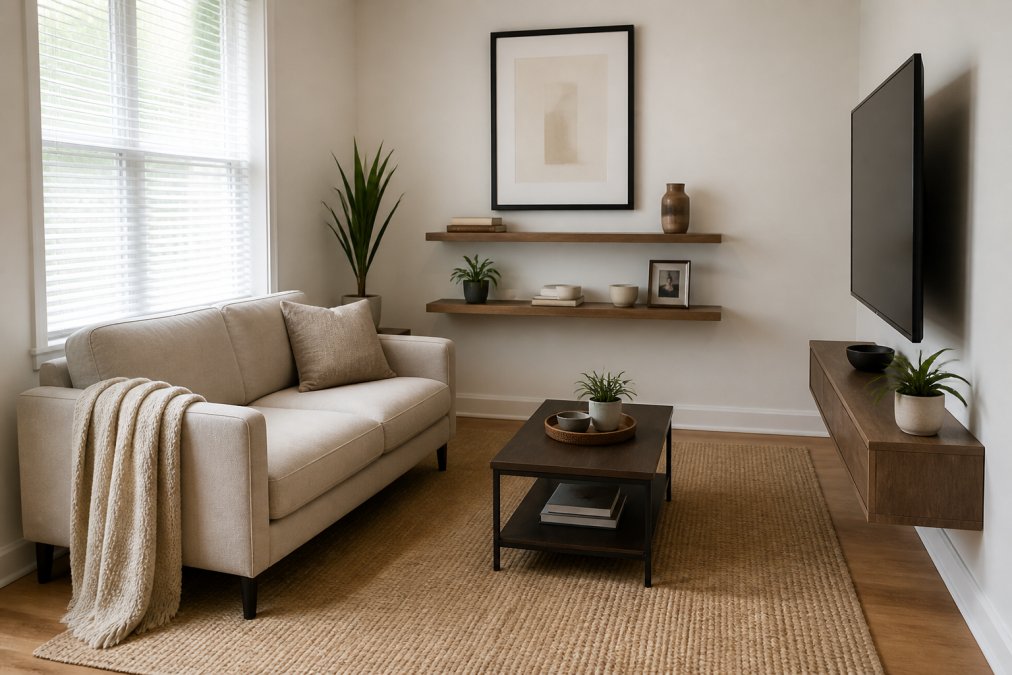
Floating furniture, pieces placed away from walls, creates visual separation and improves traffic flow. A floating sofa with a console table behind it creates a living area that feels intentional and spacious. Floating furniture also makes rooms easier to clean and allows air to circulate around pieces.
Wall placement works best for items that benefit from being anchored: tall bookcases, entertainment centers, and beds. Mounting shelves or using wall-mounted desks eliminates floor footprint entirely. The decision depends on your room’s shape and traffic patterns. Narrow rooms benefit from floating pieces that create breathing room. Square rooms work well with strategic wall placement that leaves the center open.
Low-Profile and Scaled-Down Options
Low-profile furniture, pieces with exposed legs and minimal bulk, creates visual lightness. A sofa with visible wooden legs feels smaller than one with a skirt or platform base. A bed frame with space underneath feels airier than a solid platform. Scaled-down furniture, like a loveseat instead of a sectional or a nesting table instead of a full-size coffee table, reduces visual weight while maintaining functionality.
Le Rouge Tete’s consignment inventory includes carefully selected low-profile pieces that work beautifully in compact spaces. Our 50/50 consignment split and convenient $50 local pickup make it easy to experiment with different pieces until you find the perfect fit for your layout.
Step 4: How to Make a Small Room Look Bigger with Layout
How to make a small room look bigger isn’t about illusion, it’s about strategic design that genuinely improves spatial perception.
Using Lighting and Vertical Space
Lighting dramatically affects perceived room size. Dark spaces feel smaller and more confined. Bright, layered lighting makes rooms feel larger and more welcoming. Combine overhead lighting with task lighting (desk lamps, reading lights) and accent lighting (wall sconces, uplighting). This creates depth and draws the eye upward, making ceilings feel higher.
Vertical space is often overlooked in small room arrangements. Floor-to-ceiling shelving and tall bookcases direct the eye upward, creating the illusion of height. Hanging artwork higher on walls (60 inches from floor to center of frame) also elongates the space. Avoid heavy, low-hanging light fixtures that visually compress the room.
Creating Depth with Negative Space and Sightlines
Negative space, intentional emptiness, is as important as the furniture itself. Resist the urge to fill every corner. An empty floor corner or a clear wall section all contribute to the feeling of spaciousness. Sightlines are the clear views across your room. Unobstructed sightlines make spaces feel larger because the eye can travel the full distance without interruption.
Arrange furniture to preserve sightlines toward windows, doors, and architectural features. If you must place furniture in front of a window, choose low-profile pieces (ottomans, benches) that don’t block the view. Mirrors strategically placed opposite windows reflect light and create the illusion of additional space.
Small Living Room Layout Ideas: Practical Arrangements
Small living room layout ideas vary based on room shape and function. The principle remains consistent: define zones, maintain traffic flow, and preserve sightlines.
Narrow and Long Room Configurations
Narrow rooms present unique challenges. Furniture arranged in a single line creates a corridor effect. Instead, create two distinct zones: a seating area at one end and a secondary function (dining, workspace, reading nook) at the other. A floating sofa perpendicular to the long wall, paired with a console table, breaks up the linear feel. An area rug under the seating area visually anchors the space.
Avoid pushing all furniture against walls, which amplifies the corridor sensation. Instead, pull the sofa out 12-18 inches from the wall and angle it toward your focal point. This creates intimacy and makes the space feel intentionally designed.
Open-Concept and Transitional Spaces
Open-concept layouts blur the line between living, dining, and kitchen areas. Furniture arrangement must define these zones without physical walls. Use area rugs to delineate spaces, a rug under the living area, another under the dining table. Floating furniture creates visual separation: a console table behind the sofa, a low bookshelf between the living and dining zones.
Height variation helps define zones in open spaces. A tall bookcase, a pendant light fixture, or a room divider creates visual separation without blocking sightlines. Keep transitional spaces (hallways, entryways) clear to avoid disrupting traffic flow.
In open-concept spaces, resist the temptation to use [large furniture](/how-to-transport-large-furniture-items/) pieces to define zones. Oversized sectionals and bulky entertainment centers overwhelm the space visually. Instead, use layered lighting, rugs, and low-profile dividers to create separation while maintaining the sense of openness.
Step 5: Multi-Functional Furniture Solutions
Multi-functional furniture solves the space problem by serving multiple purposes. A storage ottoman provides seating, a footrest, and hidden storage. A sofa bed accommodates guests without requiring a dedicated guest room. A desk that folds into the wall eliminates the need for a separate office space. A console table serves as a dining surface, workspace, or display area depending on time of day.
When selecting multi-functional pieces, prioritize quality and durability. A poorly made sofa bed that’s uncomfortable for sitting and sleeping serves neither purpose well. Le Rouge Tete’s curated selection includes quality multi-functional pieces at significantly lower prices than retail, perfect for testing different solutions without major financial commitment.
Storage is a form of function. Furniture with built-in storage (beds with drawers underneath, ottomans with hidden compartments, shelving units with closed cabinets) reduces visual clutter while maximizing usable space.
Step 6: Optimize Arrangement with Modular and Area Rug Strategies
Modular seating adapts to your space. Sectionals with removable pieces, sofa configurations with floating chaises, and mix-and-match seating units allow flexibility. Start small and add pieces as needed to prevent oversized furniture that dominates the space.
Area rugs define zones and create visual anchors. In small rooms, rugs should be large enough to ground furniture, at least 5×7 feet for a living area. A rug that’s too small makes the space feel fragmented. Light-colored rugs make spaces feel larger. Patterned rugs add visual interest without requiring additional accessories. In open-concept areas, multiple rugs delineate different zones.
| Strategy | Application | Impact |
|---|---|---|
| Focal point orientation | Arrange seating toward windows, fireplaces, or accent walls | Creates visual hierarchy and intentional design |
| Traffic flow preservation | Maintain 3-4 feet of clear pathways | Prevents cramped feeling and improves functionality |
| Low-profile furniture | Select pieces with exposed legs and minimal bulk | Increases perceived space and visual lightness |
| Vertical storage | Use floor-to-ceiling shelving and wall-mounted solutions | Draws eye upward and maximizes usable space |
| Negative space | Leave intentional empty areas and clear sightlines | Makes rooms feel larger and less cluttered |
| Multi-functional pieces | Choose furniture that serves multiple purposes | Reduces footprint while maintaining functionality |
| Area rugs | Use large rugs to ground and define zones | Anchors space and creates visual separation |
Small room furniture arrangement isn’t about working with less, it’s about working smarter. The strategies covered here apply whether you’re furnishing a studio in Morehead City, a vacation rental unit, or downsizing to a more manageable space. The challenge of arranging furniture in small rooms becomes an opportunity to create intentional, functional spaces that feel larger than their square footage suggests.
When you’re ready to source quality pieces for your small space, Le Rouge Tete offers a curated selection of pre-loved furniture at prices significantly lower than retail. Our 16 years of community service and unique "live in" store layout mean you can visualize exactly how pieces will work in your home before committing. With new items added weekly, convenient $50 local pickup for large items, and personalized assistance moving pieces for better visualization, finding the perfect furniture for your arrangement has never been easier. Contact Le Rouge Tete today and let our team help you transform your small space into a home that works beautifully.
Frequently Asked Questions
Should all furniture be against the wall when arranging furniture in small rooms?
Not necessarily. While wall placement saves floor space, floating furniture can actually create better traffic flow and make a room feel larger by defining distinct zones. The key is balancing your furniture footprint with open sightlines. Use wall placement for larger pieces and float smaller seating to create visual interest and improve room circulation without cluttering the center.
What kind of space saving furniture for small spaces works best?
Multi-functional pieces are ideal: ottomans with storage, nesting tables, murphy beds, and modular seating. Low-profile furniture reduces visual weight and maintains sightlines across the room. Look for items with exposed legs rather than solid bases, they allow negative space to flow underneath, making the room feel airier. Consignment stores often have quality, scaled-down pieces at better prices than new furniture.
How do I make a small room look bigger with furniture arrangement?
Use accent lighting to create depth, maintain clear sightlines by avoiding clutter in traffic pathways, and employ vertical storage to draw the eye upward. Area rugs define zones without closing off space. Asymmetrical arrangements feel more dynamic than rigid symmetry. Minimize visual weight by choosing furniture with legs, using lighter colors, and leaving negative space around your focal point.
How long does it take to see results after rearranging a small room's layout?
You'll notice immediate visual improvements once you establish a clear focal point and improve traffic flow. However, the psychological impact, feeling more spacious and organized, develops over a few days as you adjust to the new arrangement. If a layout isn't working after a week, make small adjustments to traffic patterns or furniture placement rather than a complete overhaul. Small tweaks often yield better results than drastic changes.
This article was written using GrandRanker