
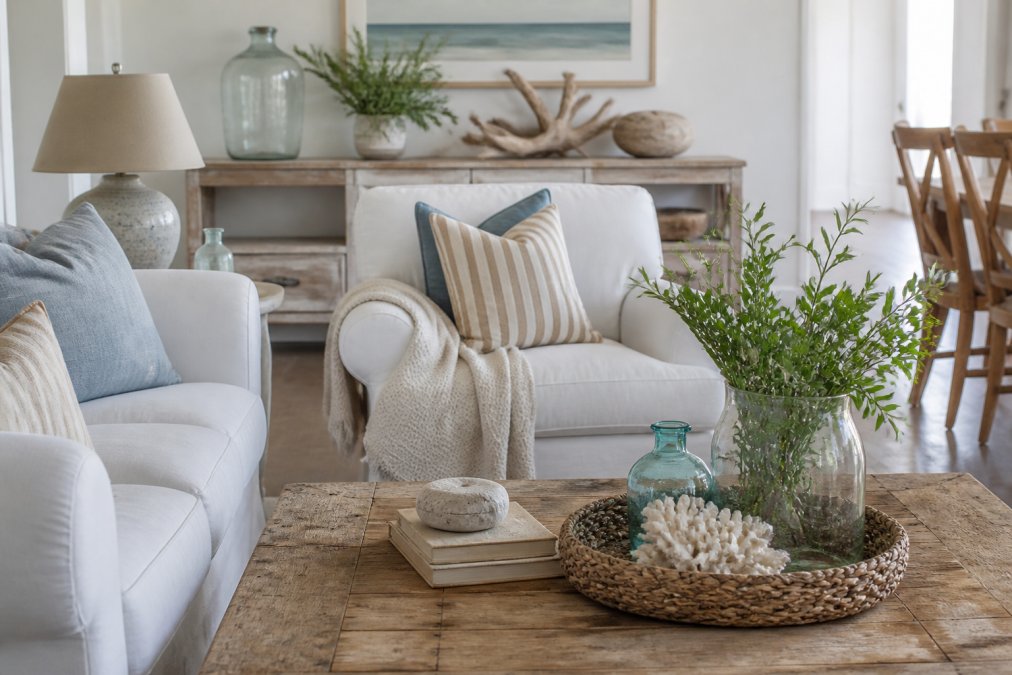
Table of Contents
- Understanding the Lived-in Coastal Aesthetic
- Selecting Modern Coastal Living Room Ideas and Color Palettes
- Layering Natural Textures and Weathered Wood
- Choosing Coastal-Inspired Furniture and Textiles
- How to Style Coastal Shelves and Display Areas
- Budget-Friendly DIY Coastal Transformations
- Adapting Coastal Style for Non-Coastal Homes
- Maintaining Your Coastal Aesthetic Long-Term
Last Updated: August 11, 2026
Understanding the Lived-in Coastal Aesthetic
A lived-in coastal aesthetic is a design approach that brings the relaxed, sun-washed beauty of seaside living into your home, whether you live near the ocean or inland. This style prioritizes natural textures, weathered finishes, and a breezy atmosphere that feels effortlessly comfortable rather than overly curated. What makes this style distinct from typical "coastal" design is its emphasis on authenticity, worn edges, sun-faded linens, and the patina that comes from real use, rather than pristine beach house decor. At Le Rouge Tete, we’ve spent over 16 years helping homeowners discover pre-loved furniture and decor pieces that embody this aesthetic, items with character that anchor a room in genuine comfort. You don’t need to live on the coast to embrace it, and you don’t need to start from scratch. Layering existing pieces with intentional new selections creates the most authentic lived-in coastal aesthetic.
Selecting Modern Coastal Living Room Ideas and Color Palettes
Modern coastal living room ideas balance clean lines with organic warmth, stripping away nautical clichés to focus on functional beauty and visual lightness.
Building Your Neutral Foundation
Start with a neutral palette as your foundation: soft whites, warm beiges, pale grays, and natural sand tones. These muted tones recede visually, allowing natural light to dominate and making spaces feel larger and more serene. When selecting wall colors, consider your light. Rooms with abundant natural light can handle cooler neutrals, while spaces with limited sun benefit from warmer beige or cream. Avoid pure white, which can feel clinical; instead opt for whites with warm undertones, ivory, cream, or soft linen white.
Your main furniture pieces, sofa, chairs, storage, should anchor this neutral foundation. Upholstery in natural linen, canvas, or linen blends provides both visual softness and practical durability, aging beautifully over time. Weathered wood frames, whether oak, pine, or reclaimed pieces, add warmth and texture without competing with your palette.
Adding Soft Accents and Muted Tones
Once your foundation is established, introduce soft accents through textiles and decor in muted tones: dusty blues, sage green, soft terracotta, and pale gray-green. The key is restraint. Choose 2-3 accent tones and repeat them throughout the room, the same soft blue in pillows, a wall hanging, and a ceramic piece, creating visual flow without monotony.
Layering Natural Textures and Weathered Wood
Texture is where the lived-in coastal aesthetic truly comes alive. Layering different natural materials, jute, rattan, wicker, sisal, and driftwood, creates visual interest and tactile warmth. Weathered wood is essential; unlike polished wood, weathered finishes show age and character. A coffee table with a weathered top, shelving made from reclaimed wood, or driftwood branches displayed in a corner all contribute to the lived-in feel. The patina on these pieces is proof of authenticity, not a flaw.
Woven materials add both texture and function. Jute rugs provide softness underfoot while maintaining visual lightness. Rattan baskets offer beautiful storage that doesn’t feel like clutter. Wicker chairs bring organic curves that soften the room. Sisal accents in rugs, wall hangings, or decorative objects add another layer. Mix these materials rather than relying on just one for a rich, intentional feel.
Choosing Coastal-Inspired Furniture and Textiles
Selecting the right furniture pieces is crucial to achieving an authentic lived-in coastal aesthetic. Your pieces should prioritize function and comfort over trend-chasing. A coastal-inspired sofa should invite lounging; chairs should be comfortable enough to sink into. Pre-loved pieces often have that broken-in comfort that new furniture takes months to develop.
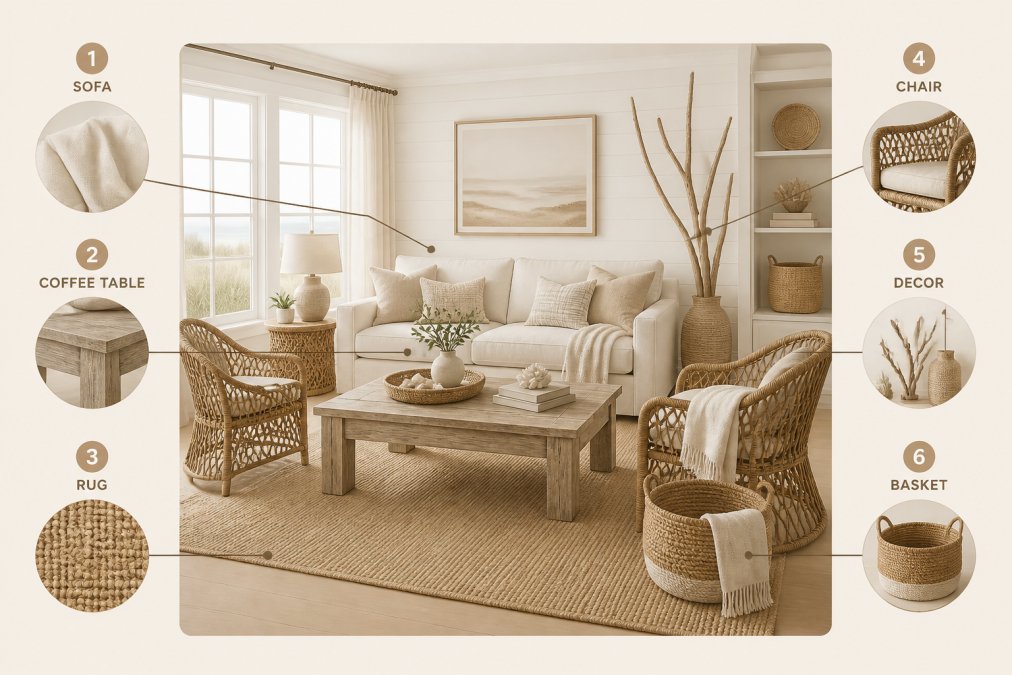
Look for furniture with clean lines and simple frames. Ornate details don’t align with the coastal aesthetic. Instead, seek pieces with straightforward construction, a sofa with simple arms, a dining table with tapered legs, chairs with minimal ornamentation. Vintage and pre-loved pieces often fit this aesthetic better than new furniture, carrying authenticity that new reproductions struggle to achieve. Le Rouge Tete‘s approach of displaying items in a "live in" layout helps you visualize how a pre-loved piece will actually function in your home.
Fabric Choices: Linen, Jute, and Sisal
Natural fibers are non-negotiable for the lived-in coastal aesthetic. Linen is the gold standard for upholstery, it’s breathable, durable, and develops beautiful softness with age. Linen wrinkles slightly, which enhances the relaxed feel. Jute and sisal work best for area rugs and accent pieces. Jute is softer underfoot for living areas, while sisal is more durable for high-traffic zones. Both age gracefully and are sustainable and affordable. Cotton canvas works beautifully for upholstery and slipcovers, offering durability while maintaining a similar aesthetic. When shopping for textiles, touch the fabric, it should feel natural, slightly textured, and comfortable against skin.
How to Style Coastal Shelves and Display Areas
Styling shelves in a coastal aesthetic requires restraint and intentionality. The goal is a curated but lived-in look, shelves that appear naturally arranged rather than meticulously styled.
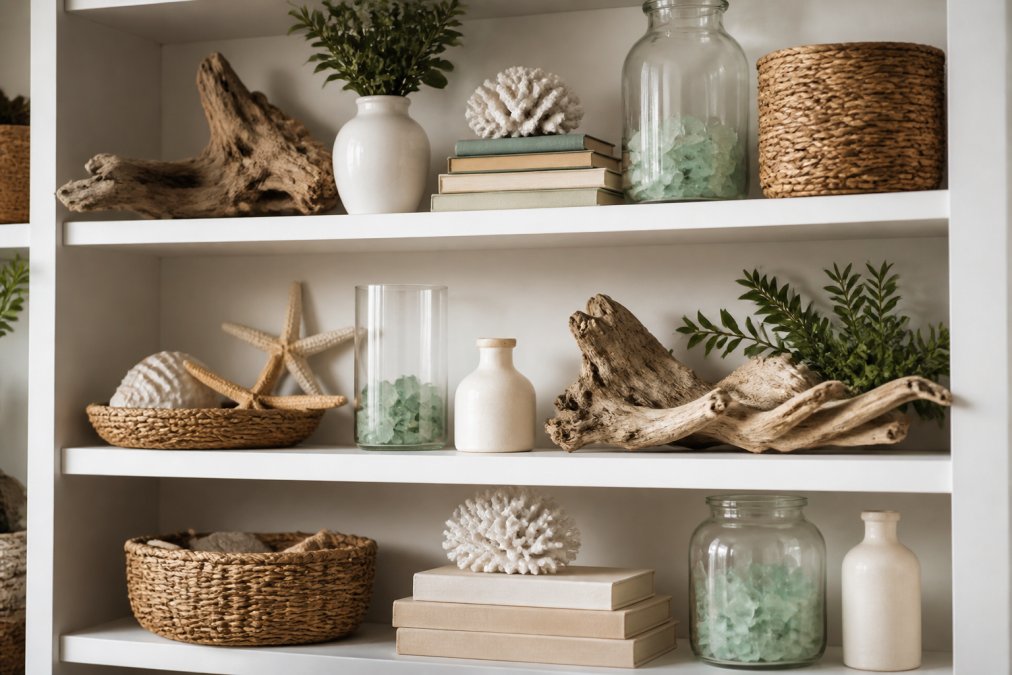
Start by grouping items in odd numbers, three books stacked horizontally, five small ceramic pieces, two woven baskets. Leave negative space; don’t fill every inch. An empty shelf space makes displayed items more impactful. Incorporate functional items that also look beautiful: glass containers holding sea glass, wooden boxes for storage, woven baskets for blankets. Stack books horizontally and choose neutral covers or arrange spines showing muted tones. A few green plants or branches in simple ceramic vessels add life without requiring much maintenance. Driftwood pieces deserve their own space, a large branch leaning against a shelf, smaller pieces on a floating shelf, or driftwood frames for artwork. Each piece should earn its place through either function or genuine beauty.
Budget-Friendly DIY Coastal Transformations
Creating a lived-in coastal aesthetic doesn’t require a complete renovation or luxury price tags. Start by identifying which pieces in your current space can stay and be refinished. Paint wooden furniture with coastal-appropriate colors: soft whites, pale blues, or natural wood stain. This single change transforms a piece from dated to coastal at a fraction of replacement cost.
Textile swaps are among the most budget-friendly transformations. Replace heavy curtains with lightweight linen or cotton. Swap throw pillows to feature natural fabrics and muted tones. Add a jute or sisal rug over existing flooring. Thrift stores and consignment shops like Le Rouge Tete offer affordable textiles that already carry the worn-in aesthetic you’re seeking.
DIY projects add character without expense. Create driftwood wall art by arranging branches on a canvas or wooden backing. Make a simple shelf using reclaimed wood and basic brackets. Paint old picture frames in soft whites or weathered finishes. Focus your budget on one or two statement pieces, a quality pre-loved sofa in natural linen, a beautiful wooden dining table, or a substantial mirror in a driftwood frame, and fill around these pieces with budget-friendly finds and DIY touches.
Adapting Coastal Style for Non-Coastal Homes
The lived-in coastal aesthetic isn’t limited to beachfront properties. Interior designers and homeowners in landlocked regions successfully create this look by understanding the aesthetic’s core principles rather than copying literal beach references. Focus on the feeling rather than the setting. Coastal style evokes relaxation, openness, and connection to natural materials, feelings that don’t require an ocean view.
In cooler climates, lean into warmer neutrals and richer textures. Where coastal homes in warm regions might use pale linen and light colors, northern homes can incorporate cream, warm beige, and soft gray with heavier natural fabrics like wool-linen blends. Incorporate local natural elements rather than trying to replicate coastal ones. A living room with weathered local wood, regional pottery, and indigenous plants captures the essence of the lived-in coastal aesthetic while reflecting your actual environment.
Lighting becomes even more important in non-coastal homes. Maximize natural light through window treatments that don’t block sun. Add warm, layered artificial lighting with fixtures that feel natural, linen shades, wooden bases, woven elements, creating the bright, airy feeling that defines coastal spaces.
Maintaining Your Coastal Aesthetic Long-Term
The lived-in coastal aesthetic requires ongoing maintenance that preserves its authentic character. Natural fabrics need regular but gentle care. Linen and cotton upholstery should be vacuumed regularly and spot-cleaned as needed. Avoid heavy-duty chemical cleaners; use gentle, natural alternatives. Jute and sisal rugs benefit from regular vacuuming and occasional light brushing.
Weathered wood requires minimal intervention. Avoid refinishing pieces to a high polish; that removes the patina that makes them beautiful. Dust regularly and occasionally clean with a soft, damp cloth. If wood becomes too rough, a light sanding followed by a natural oil finish preserves the weathered appearance while improving functionality.
Rotate and refresh your display pieces seasonally. Swap out textiles, rotate artwork, and refresh plant selections. This keeps the space feeling alive rather than static. Address damage thoughtfully, a small hole in linen upholstery or a crack in a wooden piece doesn’t require immediate replacement. Only repair damage that affects function. Cosmetic imperfections are features, not flaws.
Creating a lived-in coastal aesthetic is about building spaces that feel comfortable and authentic rather than designed for display. Source quality pre-loved pieces that already carry character, layer natural materials intentionally, and embrace the imperfections that make spaces feel genuinely lived-in. At Le Rouge Tete, our curated selection of pre-loved furniture and home decor makes this process accessible, you’ll find pieces with the weathered finishes, natural fabrics, and authentic patina that anchor this aesthetic, displayed in a "live in" layout so you can visualize exactly how they’ll work in your home. Start with your neutral foundation, layer in textures and natural materials, and let your space develop its own character over time.
Frequently Asked Questions
What are the essential elements of a lived-in coastal aesthetic?
A lived-in coastal aesthetic combines natural textures, weathered wood, neutral color palettes, and layered fabrics that feel relaxed rather than staged. Key elements include jute and sisal rugs, linen textiles, rattan or wicker furniture, driftwood accents, soft lighting, and organic decor pieces. The style emphasizes comfort and authenticity over perfection, so items don't need to match exactly, they should feel collected over time and invite you to actually use and enjoy your space.
How do I avoid common coastal decorating mistakes?
Common mistakes include using too many bright blues or beachy clichés, overcrowding shelves with nautical trinkets, choosing furniture that's purely decorative rather than functional, and neglecting to layer textures. Instead, stick to muted tones, choose pieces that serve a purpose, and mix textures throughout. Avoid making your space feel like a themed resort, the goal is a home that happens to have coastal inspiration, not a costume. Quality, well-maintained pieces matter more than quantity.
Can I achieve a coastal aesthetic in a non-coastal climate?
Absolutely. The lived-in coastal aesthetic works anywhere by focusing on natural materials, light, and airy layouts rather than literal beach references. Use warm lighting to create that breezy atmosphere indoors, incorporate plants for organic feel, and choose textiles and wood that evoke relaxation. The key is capturing the feeling of the style, calm, timeless, and inviting, rather than trying to replicate actual beach surroundings. Many inland homes pull off coastal style beautifully by emphasizing comfort and natural elements.
Where can I find affordable coastal furniture and decor pieces?
Consignment stores, thrift shops, and local secondhand furniture retailers offer quality pieces at significantly lower prices than retail. Pre-loved items often have character and patina that fits coastal style perfectly. Online marketplaces and estate sales also yield weathered wood, vintage textiles, and unique finds. Shopping secondhand is budget-friendly and sustainable, allowing you to curate an authentic lived-in look without the cost of new furniture.
This article was written using GrandRanker