
Table of Contents
- What Defines Coastal Interior Design Furniture
- Essential Materials: Wicker, Rattan, Driftwood & Natural Fibers
- Coastal Color Palettes That Work
- Best Coastal Living Room Furniture & Layout Ideas
- Beach House Furniture for Every Room
- Coastal Style Decor: Small Spaces & Sustainability
- Maintenance & Durability: Keeping Coastal Furniture Looking New
- Budget vs. Investment: Coastal Furniture Tiers Explained
Last Updated: July 22, 2026
What Defines Coastal Interior Design Furniture
Coastal interior design creates serene, light-filled spaces that evoke seaside living. The core philosophy centers on choosing pieces that breathe, age gracefully, and withstand salt air and natural light. The best coastal furniture shares specific characteristics: natural materials, weathered finishes, soft color palettes, and an overall sense of ease.
What separates coastal furniture from generic "beach house" décor is intentionality. Real coastal design respects its environment. Materials resist humidity and salt spray. Finishes develop character rather than deteriorate. Colors reflect the natural palette of sand, sea, and sky.
Core Principles of Coastal Style
Successful coastal interiors rest on five foundational principles: authenticity (choosing pieces that genuinely belong in seaside settings), texture (layering different tactile surfaces), light (maximizing natural illumination), durability (selecting materials that withstand coastal conditions), and restraint (avoiding overcrowding).
The best approach combines investment pieces with budget-friendly finds. High-quality slipcovered sofas anchor living rooms; affordable wicker side tables add character without breaking the budget. Mixing price points creates authenticity, real coastal homes aren’t showrooms.
Essential Materials: Wicker, Rattan, Driftwood & Natural Fibers
Coastal furniture relies on specific materials because they perform in demanding environments while delivering the desired aesthetic. Wicker, rattan, and natural fibers dominate for good reason: they’re lightweight, naturally weather-resistant, and develop beautiful patina over time.
Wicker is woven from plant materials like willow or cane. It’s breathable, resists moisture better than solid wood, and offers the visual lightness coastal spaces require. Quality hand-woven pieces outlast machine-made alternatives and can last decades with proper maintenance.
Rattan, from a climbing palm, shares similar properties but is more flexible, making it ideal for curved furniture like barrel chairs. It develops a warm honey patina as it ages, adding character without refinishing.
Driftwood appears throughout coastal interiors as coffee tables, shelving, or accents. Furniture makers often use wood finished to mimic its weathered appearance, offering durability with authentic aesthetics.
Natural fibers, jute, sisal, seagrass, and linen, appear in rugs, upholstery, and wall treatments. These materials breathe in humid environments and resist mildew better than synthetics.
Why Weathered Wood & Whitewashed Finishes Matter
Weathered wood and whitewashed finishes dominate coastal design because they embrace the aging process rather than fighting it. Weathered surfaces hide salt spray damage and sun bleaching, the natural wear coastal furniture experiences.
Whitewashed finishes involve applying diluted white paint or stain to wood, creating a pale, mottled appearance. This technique originated in Scandinavian and Mediterranean coastal regions. The finish reflects light, making spaces feel larger and brighter, while providing protection from salt air and developing a naturally distressed look over time.
Distressed wood finishes serve similar purposes. Intentional distressing mimics the wear coastal furniture actually experiences, so a distressed dining table won’t show scratches and dings the way a pristine finish would.
When shopping for coastal furniture, prioritize construction quality over finish perfection. A solidly built piece with rough edges will age better than delicate furniture with pristine finishes.
Coastal Color Palettes That Work
Color selection determines whether a space feels authentically coastal or artificial. The best furniture draws from nature’s actual palette: colors you see at the beach.
Neutrals dominate: whites, creams, soft grays, warm beiges, and sand tones form the foundation. These colors reflect light and provide visual rest.
Accent colors come from the sea and sky: navy blue, slate blue, soft teals, and seafoam greens. These should feel natural, not artificial. Navy works because it’s the color of deep water. Teal echoes shallow tropical waters.
Warm accents include warm grays, soft taupe, and muted terracotta, appearing in sand and driftwood.
The principle: limit your palette to three primary colors plus neutrals. A room with white walls, navy upholstery, and cream accents feels cohesive.
| Color | Best Use | Undertone | Pairs With |
|---|---|---|---|
| Ivory | Walls, large furniture | Warm | Navy, soft gray, warm wood |
| Soft Gray | Walls, upholstery | Cool | White, navy, pale blue |
| Navy Blue | Upholstery, accents | Cool | Ivory, cream, driftwood gray |
| Seafoam Green | Accents, smaller pieces | Cool | White, warm gray, natural wood |
| Warm Taupe | Accent furniture, textiles | Warm | Ivory, navy, weathered wood |
Best Coastal Living Room Furniture & Layout Ideas
Living rooms anchor coastal homes. Start with seating as your foundation. A quality slipcovered sofa, positioned to face windows or views, becomes your anchor piece. Add two accent chairs (wicker, rattan, or upholstered in linen) to create conversation areas without blocking sightlines.
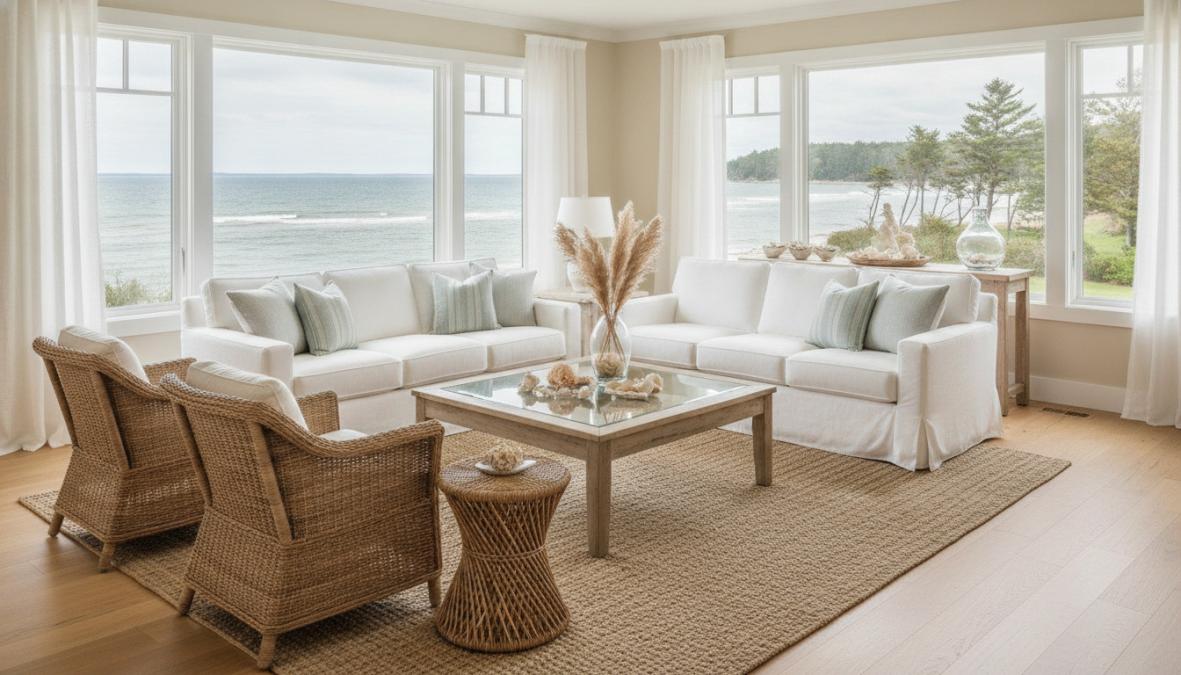
Coffee tables should feel light and open. Driftwood tables, glass tops on natural wood bases, or wicker with glass tops maintain visual airiness. Shelving and storage should emphasize open display. Floating shelves in whitewashed wood create interest while maintaining lightness. Display baskets woven from natural fibers provide practical storage while reinforcing the aesthetic.
Lighting matters significantly. Floor lamps with linen shades, pendant lights with natural materials, and table lamps with organic bases work better than recessed lighting alone.
Slipcovered Sofas & Tufted Seating
Slipcovered sofas represent the best choice for coastal living rooms. Removable covers allow easy cleaning, essential in salt-air environments. Quality slipcovered sofas feature tailored construction that resists sagging while maintaining a relaxed silhouette.
Tufted seating adds visual interest when executed correctly. Subtle tufting, not deep diamond patterns, works best. Tufted chairs in natural linen or performance fabrics provide comfortable seating while adding texture.
For coastal living rooms, consider:
- Slipcovered sofa (primary seating): Creates flexible, easily-maintained anchor piece
- Wicker or rattan accent chairs (2-3): Adds natural material and visual lightness
- Linen-upholstered ottoman (optional): Provides flexible seating and footrest functionality
- Coastal-style bench (near windows): Creates informal seating and visual interest
Position seating to face windows, create multiple conversation areas, and maintain open sightlines.
The best coastal living room furniture prioritizes natural light and open sightlines. Every piece should feel like it belongs in a relaxed seaside setting.
Beach House Furniture for Every Room
Coastal design extends beyond living rooms into bedrooms, dining areas, and accent spaces.
Bedroom Furniture & Nautical Accents
Coastal bedrooms should feel like peaceful retreats. Bed frames should be substantial but not ornate. Whitewashed wood, natural wood with weathered finishes, or upholstered frames in natural linen work beautifully.
Bedding should feature natural fibers: linen, cotton, or linen-cotton blends. These materials breathe in humid environments and develop a soft, lived-in appearance. Layer textures with quilts, throws, and pillows in varying natural tones.
Nightstands should be simple and functional. Wicker bedside tables, natural wood stands, or rattan pieces maintain the aesthetic while providing practical storage.
Nautical accents, when used thoughtfully, enhance coastal bedrooms without creating theme-park aesthetics. A ship’s wheel as wall art, vintage maritime prints, or rope-wrapped mirrors add character. The key is restraint: one or two accent pieces per room.
Dining & Accent Pieces
Dining tables work best in natural wood with weathered or whitewashed finishes. Reclaimed wood tables develop character. Round or oval tables encourage conversation better than rectangular ones in smaller spaces.
Dining chairs should mix comfort with style. Upholstered chairs in natural linen pair beautifully with natural wood tables. Wicker chairs add lightness and texture. Mixing chair styles (same color, different materials) feels more authentically coastal.
Sideboards and buffets provide storage while creating visual interest. Whitewashed wood pieces with simple hardware work beautifully.
Coastal Style Decor: Small Spaces & Sustainability
Not every coastal home is a sprawling beach house. Small-space coastal living requires strategic furniture selection and thoughtful layout.
Maximizing Small Spaces with Light-Filled Layouts
Small coastal spaces benefit from specific strategies. Vertical storage becomes essential: floating shelves, tall bookcases, and wall-mounted organizers maximize space without consuming floor area.
Multi-functional furniture serves double duty. Ottomans provide seating, storage, and footrests. Coffee tables with shelves underneath add storage. Benches at the foot of beds offer seating and storage.
Color choices matter even more in small spaces. Light, neutral palettes make rooms feel larger. Furniture scale requires attention. Choose scaled-down versions: loveseats instead of full sofas, smaller accent chairs, compact dining tables.
Open floor plans work better than dividing small spaces. Position furniture to define zones without creating barriers.
Eco-Friendly & Sustainable Coastal Sourcing
Sustainability increasingly matters to coastal homeowners. Reclaimed and recycled materials reduce environmental impact while adding authenticity. Recycled plastic outdoor furniture provides durability without depleting forests.
Natural, untreated materials avoid chemicals that harm coastal ecosystems. Untreated teak, sustainably harvested bamboo, and naturally-finished wood minimize environmental impact.
Consignment and secondhand furniture represents the most sustainable option. Purchasing pre-loved pieces extends furniture lifespans and reduces waste.
Local sourcing reduces transportation emissions. American-made furniture from companies like Maine Cottage and Highwood USA minimizes shipping distances.
Durability as sustainability: Investing in quality pieces that last decades is more sustainable than replacing cheap furniture annually.
Maintenance & Durability: Keeping Coastal Furniture Looking New
Coastal environments present specific challenges: salt air accelerates corrosion, humidity promotes mildew, intense sun fades finishes, and sand infiltrates everything.
Wicker and rattan require regular cleaning and occasional sealing. Dust weekly with soft brushes. Clean monthly with mild soap and water. Every 1-2 years, apply clear sealant to protect against moisture.
Whitewashed and weathered wood develops patina naturally. Light cleaning maintains appearance without removing character. Dust regularly; clean with barely damp cloths.
Upholstered furniture in coastal settings requires attention to humidity. Use slipcovers and wash regularly. Vacuum cushions weekly to remove salt residue and sand. Rotate cushions quarterly.
Outdoor furniture demands more rigorous maintenance. POLYWOOD and Highwood pieces require minimal care but benefit from annual cleaning. Teak furniture develops silver-gray patina; preserve this with occasional sealing or allow natural weathering.
Salt air protection applies universally. Choose stainless steel or coated hardware over standard steel. Rinse furniture occasionally with fresh water to remove salt deposits.
Ignoring humidity in coastal spaces leads to mildew growth, wood rot, and upholstery deterioration. Poor air circulation creates conditions where furniture degrades rapidly.
Budget vs. Investment: Coastal Furniture Tiers Explained
Coastal furniture exists across multiple price tiers, each offering distinct advantages.
Where to Find Quality Pieces Without Breaking the Bank
Budget tier ($200-$800 per piece): Mass-market retailers offer affordable entry points. These pieces typically feature particle board construction and finishes that don’t age gracefully. Expect 3-5 year lifespan.
Mid-range tier ($800-$2,500 per piece): Pottery Barn coastal collections and quality consignment pieces occupy this space. Construction improves significantly with solid wood frames and quality upholstery. These pieces last 10-15 years with proper care.
Investment tier ($2,500+ per piece): Serena & Lily and Maine Cottage offer heirloom-quality furniture. American-made construction, premium materials, and timeless design justify higher prices. These pieces last 20+ years.
Consignment and secondhand: This model offers unique advantages. Customers access investment-tier and mid-range pieces at 30-50% below retail prices. New items arrive weekly.
| Tier | Price Range | Lifespan | Best For | Trade-offs |
|---|---|---|---|---|
| Budget | $200-$800 | 3-5 years | Renters, temporary setups | Limited durability, synthetic materials |
| Mid-Range | $800-$2,500 | 10-15 years | Homeowners, quality-conscious buyers | Solid construction, natural materials |
| Investment | $2,500+ | 20+ years | Long-term residents, heirloom pieces | Higher upfront cost, longer lead times |
| Consignment | 30-50% below retail | Varies by original tier | Budget-conscious buyers, unique pieces | Limited selection, inventory rotation |
The strategic approach combines tiers. Invest in anchor pieces (sofas, dining tables, bed frames) that you’ll keep for decades. Use mid-range or consignment pieces for accent furniture that can be swapped or replaced.
The challenge with furnishing a coastal home isn’t finding options, it’s selecting pieces that balance aesthetics, durability, and value. With curated pre-loved furniture displayed in realistic settings, expert personalized assistance, and pricing that makes quality accessible, you’ll find stylish, unique pieces at prices significantly lower than retail. Contact Le Rouge Tete to start your coastal design journey today.
Frequently Asked Questions
What materials are best for coastal interior design furniture?
The best furniture for coastal interior design uses natural materials like wicker, rattan, driftwood, linen, jute, and cotton. These materials create a relaxed, breezy aesthetic and withstand humid coastal climates. Weathered wood finishes and whitewashed surfaces add authentic seaside charm. Natural fibers also age beautifully, developing character over time while maintaining durability in salt-air environments.
How do I choose the right coastal color palette for my home?
Coastal color palettes typically feature ivory, soft whites, cool grays, and navy blue as anchors, with accents of seafoam, sand, and driftwood tones. These colors create a serene, light-filled atmosphere. Avoid overly saturated colors; instead, opt for muted, organic tones that evoke the beach naturally. Layer textures with neutral fabrics to add visual interest without overwhelming the space.
Can I create coastal style decor in a small space?
Yes. Small-space coastal living works best with open-concept layouts, light colors, and minimal clutter. Choose multi-functional pieces like storage ottomans or nesting tables. Use vertical space for shelving with nautical accents. Keep furniture low-profile and avoid oversized pieces. Large windows and mirrors amplify light, making compact coastal rooms feel more spacious and breezy.
How do I maintain and protect coastal furniture from salt air and moisture?
Regular maintenance keeps coastal furniture durable. Wipe down pieces monthly with a soft, damp cloth to remove salt residue. For natural wood, use furniture polish designed for coastal climates. Linen and cotton slipcovers should be washed seasonally. Store cushions in waterproof containers during off-season. Consider furniture with weather-resistant finishes or pre-treated fabrics for high-moisture areas like porches and decks.
What's the difference between buying new coastal furniture versus consignment or pre-loved pieces?
New furniture offers current styles and warranties but carries higher costs. Pre-loved or consignment pieces provide unique, often heirloom-quality items at significantly lower prices. Consignment stores like Le Rouge Tete curate selections and display pieces in 'live in' layouts, helping you visualize them in your home. Pre-loved pieces also support sustainability. The trade-off: selection varies, and you may need to hunt for specific items.
How do I blend coastal furniture with other design styles?
Coastal design pairs well with transitional, farmhouse, and minimalist styles. Use natural textures and neutral colors as your base, then add pieces from your preferred style. For example, combine coastal wicker with modern clean lines, or mix beach house furniture with traditional elements like vintage rugs. The key is maintaining the relaxed elegance and organic lines that define coastal aesthetics while respecting your personal style.
This article was written using GrandRanker