
Table of Contents
- Yes, You Can Mix Vintage and Modern, Here’s How
- Building a Neutral Foundation First
- How to Style Vintage Furniture in a Modern Home
- Best Practices for Mixing Decor Styles
- How to Balance Scale and Proportion in Interior Design
- Budget-Friendly Sourcing for Vintage Pieces
- Maintenance and Restoration Basics
- Small-Space Solutions for Mixed Styles
Last Updated: August 28, 2026
Can You Mix Vintage and Modern? A Design Guide
Yes, you absolutely can mix vintage and modern styles, and when done thoughtfully, the result is far more interesting than a room designed in a single era. At Le Rouge Tete, we’ve spent over 16 years helping homeowners and designers discover how pre-loved pieces create depth and character that new furniture alone cannot achieve. This guide walks you through the principles that make vintage-modern mixing work, from building a neutral foundation to sourcing pieces that bridge eras.
The most common mistake is treating vintage and modern as opposing forces. Both styles share a commitment to quality, proportion, and purposeful design. Vintage pieces bring patina, history, and craftsmanship. Modern pieces bring clarity, function, and clean lines. When these elements coexist, they create a harmonious, curated space with genuine depth.
Yes, You Can Mix Vintage and Modern, Here’s How
Mixing vintage and modern isn’t just possible; it’s one of the most effective ways to create a home that feels both sophisticated and lived-in. Both styles prioritize quality materials, thoughtful proportion, and honest design. The difference is context: vintage pieces carry the aesthetic of their era, while modern pieces strip away ornament in favor of function and form.
The real challenge is knowing the principles that prevent the result from feeling scattered or disjointed. A room filled with random old and new pieces reads as cluttered. A room where vintage and modern elements speak to each other, balanced by scale, color, and intentional negative space, reads as curated and confident.
Start by committing to one truth: mixing styles works best when you have a clear editorial point of view. You’re not just collecting; you’re composing. Every piece, whether a mid-century credenza or a contemporary side table, should feel like it belongs to the same conversation. That conversation is set by your foundation.
Building a Neutral Foundation First
A neutral foundation is non-negotiable when mixing vintage and modern. Without it, the eye has nowhere to rest, and the space becomes visually chaotic instead of cohesive. Your foundation is the backdrop: walls, flooring, and large upholstery pieces that don’t demand attention.
Think of neutrals as the stage on which your curated pieces perform. Soft whites, warm grays, natural wood tones, and muted beiges create a visual pause that allows both vintage and modern elements to coexist without competing. This doesn’t mean boring; a neutral foundation can include texture through natural linen, wool, concrete, or whitewashed wood.
When sourcing vintage furniture for a mixed-era room, a neutral sofa or bed frame becomes your anchor. Whether it’s a contemporary platform bed in soft gray or a vintage mid-century sofa in cream upholstery, this piece sets the tone. From there, everything else has permission to exist because it’s resting against a calm, undemanding background.
The neutral foundation also serves a practical purpose: it makes your space feel larger and more serene. In small spaces especially, a neutral backdrop prevents visual overwhelm while allowing you to add character through accessories, artwork, and statement pieces.
How to Style Vintage Furniture in a Modern Home
Vintage furniture in a modern home works when it’s styled with intention, not nostalgia. The piece should feel like it was chosen for how it functions and looks today, not because it’s old.
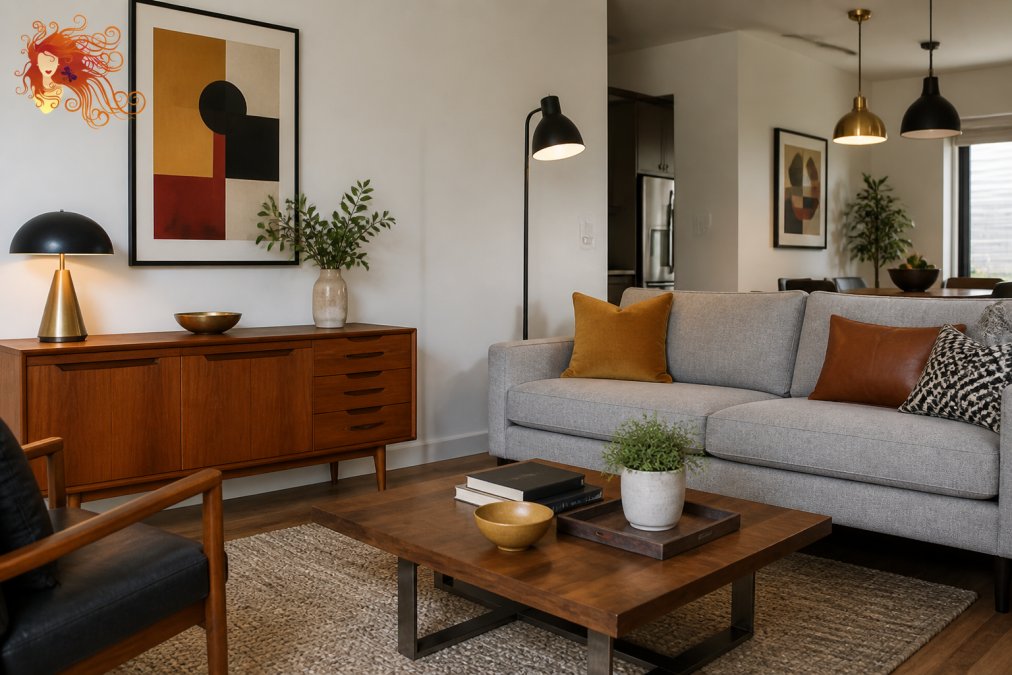
Choose vintage pieces that have strong bones and clean lines. Mid-century furniture works particularly well in modern homes because it already shares modernism’s philosophy of form following function (peer-reviewed research). A 1960s credenza with tapered legs and minimal ornamentation fits seamlessly into a contemporary space.
The scale of the vintage piece matters enormously. A oversized vintage sectional can overwhelm a modern room; a delicate vintage side table might disappear. Pair a substantial vintage sofa with minimal, contemporary accessories. Pair a smaller vintage accent chair with a larger modern rug and contemporary side tables that give it context.
Styling vintage furniture also means considering its relationship to negative space. A vintage piece should have breathing room. Don’t surround it with too many other vintage items; let it anchor a section of the room, then build around it with modern, simpler pieces that create visual rest.
Choosing Statement Pieces That Bridge Eras
A statement piece is an object that commands attention and sets the tone for how other pieces relate to it. In a mixed-era room, your statement piece should feel like the bridge between old and new.
A vintage mid-century credenza with clean lines and warm wood tone is an excellent statement piece. Its era is clear, but its aesthetic, honest materials, functional design, no unnecessary ornament, speaks the language of modernism. Pair it with contemporary pieces and the room reads as intentional.
Alternatively, a bold contemporary artwork or modern sculptural light fixture can serve as the bridge. A striking modern pendant above a vintage dining table forces a conversation between eras. The modern fixture’s clean geometry and contemporary materials acknowledge the table’s age without pretending to match it. Instead, the contrast becomes the point.
The key to a successful statement piece is that it should feel chosen, not accidental. It should be something you’d defend if someone questioned its presence.
Pairing Vintage Textiles with Contemporary Frames
Textiles are where many people successfully blend vintage and modern without overthinking it. A vintage kilim rug under a contemporary glass coffee table creates immediate visual interest. The rug’s pattern and handmade quality bring warmth and history; the modern table’s transparency and minimal form keep the space feeling current.
When styling vintage textiles, the frame matters as much as the textile itself. A vintage quilt hung in a contemporary metal frame reads as intentional curation. The frame says: "This object is valuable, and I’m presenting it as art."
Vintage artwork benefits from the same principle. An antique print in a sleek, modern frame bridges the era gap. The artwork’s age is respected; the frame’s modernity prevents the piece from feeling stuck in the past.
Best Practices for Mixing Decor Styles
Mixing decor styles successfully requires understanding a few non-negotiable principles.
First, commit to a color palette. A cohesive palette, say warm neutrals with touches of deep blue, gives the room visual coherence even when furniture styles vary. Every piece, vintage or modern, should either belong to that palette or be neutral enough to work within it.
Second, vary scale and proportion intentionally. Distribute visual weight throughout the space. A large vintage mirror balanced by a contemporary console table balanced by a smaller vintage side table creates rhythm.
Third, use texture strategically. A smooth vintage leather sofa, rough linen chair, sleek glass table, and natural wood credenza create depth and sophistication through varied textures.
The 80/20 Rule and Visual Weight
The 80/20 rule is one of the most useful frameworks for mixing styles. Eighty percent of your room should feel cohesive and calm, while 20 percent can be bold, eclectic, or surprising. This might look like: a neutral sofa, neutral walls, natural wood flooring, and simple modern accessories (your 80 percent of calm). Then, one vintage credenza, one bold piece of artwork, and a few curated accessories (your 20 percent of personality).
Visual weight is the perceived heaviness of an object. A dark, large, ornate piece has high visual weight. A light, small, minimal piece has low visual weight. Mixing visual weights prevents monotony. A vintage mid-century credenza in dark walnut (high visual weight) paired with contemporary pieces in light wood and metal (low visual weight) creates equilibrium.
Using Color and Texture as a Bridge
Color is the fastest way to make disparate pieces feel like they belong together. A vintage rug in warm earth tones, a modern sofa in a complementary neutral, and contemporary accessories in similar warm wood tones create instant coherence.
Texture works similarly. If your vintage pieces feature natural materials (wood, leather, wool), your modern pieces should also prioritize natural materials. Mixing a vintage leather chair with a contemporary linen sofa and natural wood tables creates a cohesive material story.
How to Balance Scale and Proportion in Interior Design
Scale and proportion are the foundation of whether a mixed-era room feels sophisticated or chaotic. Scale refers to the size of objects relative to the room; proportion refers to the size of objects relative to each other.
Balance a large vintage sofa with smaller, more minimal modern pieces. A substantial vintage dining table benefits from contemporary chairs with slender legs and minimal backs. A large vintage credenza pairs well with a delicate modern side table.
Proportion also governs how pieces relate vertically. In a room with 9-foot ceilings, a low vintage coffee table needs a tall modern floor lamp or tall artwork to create visual balance. Vary silhouettes intentionally. A vintage sofa with a high back pairs well with modern side tables with low profiles.
The rule of thirds is useful here: imagine your wall divided into three equal sections vertically. Place focal points across these thirds rather than centering everything. This creates a more dynamic, less formal feel.
Budget-Friendly Sourcing for Vintage Pieces
Sourcing vintage pieces doesn’t require a large budget if you know where to look and what to prioritize. Buy quality, not quantity. One well-made vintage piece is worth more than five cheap new pieces.
Focus on solid wood furniture from the mid-20th century. Pieces from the 1950s-1970s tend to be well-made, affordable, and aesthetically compatible with modern design (peer-reviewed research). Teak, walnut, and oak age beautifully. A vintage credenza in solid walnut from this period is likely to cost less than a new piece of similar size and quality.
Look for pieces with good bones: solid joinery, no major structural damage, and original hardware. A worn finish or missing paint adds character. Structural problems, loose joints, sagging frames, and broken springs are expensive to fix.
Consignment stores like Le Rouge Tete offer a significant advantage: pieces are already vetted for quality and condition. You can see the piece in person, assess its condition, and understand how it looks in a real space. For homeowners and rental property owners alike, this eliminates guesswork and the risk of purchasing damaged goods.
Maintenance and Restoration Basics
Vintage pieces require different care than new furniture, but the care is straightforward. Most vintage wooden furniture needs only regular dusting and occasional polishing with appropriate wood oil or furniture cream.
Upholstered vintage pieces should be vacuumed regularly with an upholstery attachment (the American Academy of Dermatology). Test any cleaner on a hidden area first, as many vintage textiles are delicate.
Leather vintage pieces benefit from occasional conditioning with leather cream. This prevents the leather from drying out and cracking.
Restoration is different from maintenance. If a vintage piece has structural damage, professional restoration may be worth the investment. However, assess whether the piece justifies the expense before committing.
The beauty of vintage pieces is that minor wear, a slightly faded finish, small scratches, and patina add character rather than detract from it. You’re preserving authenticity while ensuring the piece functions well.
Small-Space Solutions for Mixed Styles
Small spaces demand more intentional mixing because there’s no room for visual chaos. Every piece must earn its place.
In a small room, aim for 90 percent calm foundation and 10 percent personality. Choose one or two statement pieces and keep everything else minimal and neutral. A small space with a vintage credenza, a modern sofa, and contemporary accessories works. A small space crowded with multiple vintage and modern pieces feels cluttered.
Scale becomes everything in small spaces. In a small bedroom, a delicate vintage side table with slender legs feels more appropriate than a substantial credenza. In a small living room, a vintage sofa with a low profile works better than a high-backed sectional.
Vertical storage is your friend. Wall-mounted shelving, tall narrow bookcases, and floating shelves create the illusion of more space while providing places to display curated pieces. A small vintage mirror reflects light and makes the room feel larger.
For vacation rental owners furnishing small units, each piece should be multifunctional. A vintage coffee table with storage, a modern sofa that doubles as a guest bed, a credenza that serves as both storage and display surface work harder in small spaces.
Mixing vintage and modern isn’t a design trend, it’s a timeless approach to creating homes that feel both sophisticated and genuinely lived-in. The challenge isn’t whether you can do it; it’s understanding the principles that make it work. Start with a neutral foundation, choose statement pieces with intention, and let color and texture create visual coherence. At Le Rouge Tete, we’ve helped homeowners and rental property owners discover how pre-loved pieces transform a space. Our curated selection, displayed in live-in room layouts, makes it easy to visualize how vintage and modern elements work together. Whether you’re furnishing your primary residence, a vacation property, or simply looking to add character to your home, our team is here to help you find pieces that belong. Contact Le Rouge Tete to explore our current inventory or discuss consigning pieces from your own collection.
Frequently Asked Questions
Q: What is the best ratio for mixing old and new decor?
A: The 80/20 rule is a popular guideline: let one style dominate (80%) while the other provides accent pieces (20%). However, the exact ratio depends on your personal preference and the specific pieces you're working with. Some designers prefer 70/30 for a more balanced feel. The key is ensuring neither style overwhelms the other, creating a cohesive rather than chaotic appearance. Start with your preferred dominant style and layer in complementary pieces gradually until the space feels intentional.
Q: How can I make vintage furniture look modern?
A: Pair vintage pieces with contemporary accessories, lighting, and artwork to update their appearance. Reupholster vintage furniture in modern fabrics or solid colors that match your current palette. Display vintage items in minimalist frames or on clean shelving with plenty of negative space. Choose mid-century or industrial vintage styles, which naturally align with modern aesthetics. Avoid clustering too many ornate vintage pieces together; instead, use them as focal points within a predominantly contemporary room.
Q: How do you keep a room from looking like a thrift store when mixing styles?
A: Curate carefully rather than collect indiscriminately. Select pieces with intentional purpose, focusing on quality and condition. Ensure your vintage items share a common thread, similar wood tones, era, or design aesthetic, rather than mixing random decades. Use a neutral foundation and a cohesive color palette to tie everything together. Invest in proper styling with good lighting, fresh upholstery, and thoughtful arrangement. Group similar items rather than scattering them, and leave negative space to let each piece breathe and stand out as curated rather than cluttered.
Q: What is the 3-5-7 rule in decorating?
A: The 3-5-7 rule suggests grouping decorative items in odd numbers, typically three, five, or seven pieces, to create visual balance and avoid a too-symmetrical or sparse appearance. Odd-numbered groupings feel more natural and dynamic to the eye. This works well when styling shelves, arranging artwork, or clustering vintage and modern accessories together. The rule helps prevent the scattered, thrift-store look by creating intentional vignettes that feel curated and purposeful rather than random.
This article was written using GrandRanker