

Table of Contents
- What Is Furniture Consignment and How Does It Work
- The Consignment Process: Step-by-Step
- Furniture Consignment Commission Rates and Profit Splits
- How to Prepare Furniture for Consignment
- Consignment vs. Selling Furniture Online: Which Is Right for You
- Condition Standards and What Consignment Shops Accept
- Logistics, Transportation, and Pickup Options
- Tax and Legal Considerations for Consignors
Last Updated: August 30, 2026
What Is Furniture Consignment and How Does It Work
Furniture consignment allows you to sell pieces through a retail partner without handling the sale yourself. You bring items to a consignment shop, they display and market them, and when a customer buys your piece, you split the proceeds based on an agreed-upon commission rate.
This model removes friction from traditional furniture sales. Instead of listing items online, managing inquiries, arranging shipping, and waiting for payment, you hand off logistics to a professional retailer. The consignment shop handles pricing strategy, display, and payment disbursement. For buyers, it offers curated pre-owned furniture at lower prices, with pieces already vetted for quality and presented in a professional setting.
Le Rouge Tete, an upscale consignment store with over 16 years of community experience, exemplifies modern consignment. Rather than treating it as a transactional arrangement, they’ve built a partnership model. Items are displayed in a "live in" layout that helps you visualize pieces in your own space, and their 50/50 commission split ensures both shop and consignor benefit fairly from a sale.
The Consignment Process: Step-by-Step
Furniture consignment works through a structured four-stage process that moves items from your home to a customer’s living room.
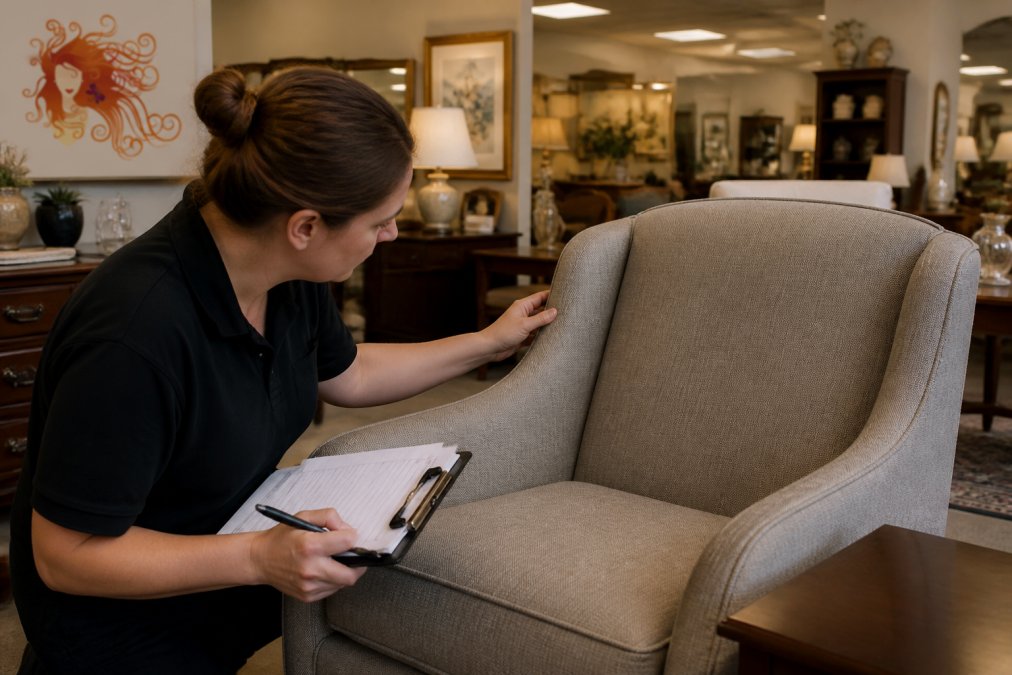
Step 1: Item Intake and Inspection
The process begins when you bring furniture to the shop. Professional consignment shops conduct thorough inspections, checking structural integrity, upholstery condition, stains, odors, and design trends. Items that pass inspection move forward; those with significant damage, musty smells, or outdated styles get declined. This filtering protects the shop’s reputation and ensures pieces have a realistic chance of selling.
Once accepted, your furniture enters the inventory system with documentation of the agreed-upon retail price and commission split. This paperwork protects both parties.
Step 2: Valuation and Pricing
The consignment shop researches comparable pieces, assesses condition honestly, and sets a retail price that balances sellability with fair compensation for you. Experienced shops understand their local market and know which styles move quickly. A well-priced piece sells within weeks; an overpriced one becomes invisible.
The retail price determines your net proceeds. If a sofa is priced at $800 with a 50/50 split, you’ll receive $400 when it sells. Le Rouge Tete’s straightforward 50/50 model removes ambiguity about what you’ll earn.
Step 3: Display and Marketing
Your furniture gets positioned on the sales floor in room-like settings so customers can envision pieces in their own homes. A chair gets paired with a side table and lamp. Marketing happens through customer traffic, social media, email lists, and online listings.
Items stay in the shop during the consignment period. Le Rouge Tete’s approach of having no end dates removes the pressure of a ticking clock, allowing your item to stay until it sells.
Step 4: Sale and Payment Disbursement
When a customer purchases your item, the shop records the transaction and begins the payment process. Timing varies, some shops pay weekly, others monthly. You’ll receive your share of the sale price minus the commission. With a 50/50 split on an $800 couch, you get $400.
Payment methods vary: check, direct deposit, or store credit. Store credit often comes with a discount incentive, encouraging repeat business.
Furniture Consignment Commission Rates and Profit Splits
Most consignment shops operate on a 40/60 to 50/50 split, with the shop taking 40-50% and the consignor receiving 50-60%. Some shops use tiered rates, with higher-priced items having a 60/40 split in the shop’s favor.
A 50/50 split means you receive half the retail sale price. This is straightforward and transparent. Compare this to private sales, where you might spend 10-15 hours photographing, responding to inquiries, and negotiating. The consignment shop’s cut is payment for handling that labor.
A piece you think is worth $500 might be priced at $400 by the shop. At 50/50, you’d receive $200. If you could sell it privately for $500, you’d net more, but only after spending significant time and effort. Many consignors find that the certainty and convenience of consignment outweighs a slightly lower final payout.
Le Rouge Tete’s model avoids consignment fees with straightforward commission splits and no end dates, removing hidden costs from the equation.
How to Prepare Furniture for Consignment
Your furniture’s condition dramatically affects whether shops accept it and how quickly it sells.

Start with deep cleaning. Dust, vacuum, and wipe down every surface. For upholstered pieces, use fabric cleaner or hire professional cleaning if there are visible stains or odors. For wood, use appropriate cleaner and polish. For leather, use conditioner.
Check structural integrity next. Tighten loose screws, fix wobbly legs, and test all drawers and doors. These minor repairs take an hour but dramatically improve appeal and the shop’s confidence in accepting the piece.
Address damage honestly. Small scratches can be touched up with furniture markers. Upholstery tears should be professionally repaired if possible. Remove odors completely, musty smells, pet odors, and smoke are deal-breakers. Air out pieces in sunlight, use baking soda for upholstered items, and let air circulate through wood pieces.
Be realistic about style and trends. Consignment shops are more likely to accept modern, minimalist, or classic pieces than heavily dated styles. Understand what the shop specializes in; Le Rouge Tete focuses on upscale, curated pieces, so they’re more selective than general outlets.
Consignment vs. Selling Furniture Online: Which Is Right for You
Consignment advantages: You avoid logistics entirely. No shipping coordination, damage claims, or buyer disputes. The shop handles photography, pricing, customer service, and payment. Items are displayed professionally in a curated setting. For local shoppers, seeing furniture in person eliminates uncertainty about condition and fit.
Consignment disadvantages: You have less control over pricing. You wait for payment until the item sells. Commission splits mean you net less than a private sale. Your item competes with dozens of others in the shop’s inventory.
Online sales advantages: You set the price and keep 100% of proceeds (minus platform fees). Sales can happen quickly. You reach a much larger audience. You control the narrative through photos and descriptions.
Online sales disadvantages: Shipping furniture is expensive, complicated, and risky. Buyers often negotiate aggressively. You handle customer service, disputes, and returns. Photography and listing consume significant time. Scams and no-shows are common.
Donation advantages: Tax deduction. Immediate removal from your home. Supports your community.
Donation disadvantages: You receive no money. Tax deduction value depends on the piece’s assessed fair market value.
For most people, the choice depends on time availability, the piece’s value, and urgency. High-value pieces worth $500+ might justify the effort of online sales. Mid-range pieces ($200-500) often suit consignment well. Low-value pieces under $200 might be better donated.
Condition Standards and What Consignment Shops Accept
Structural soundness is non-negotiable. Furniture must be sturdy and safe. A chair with a cracked frame, a table with a wobbly leg, or a sofa with broken springs gets declined.
Upholstery condition matters significantly. Consignment shops look for pieces without stains, tears, or odors. Minor wear is acceptable; deep stains, large tears, or persistent odors typically result in rejection. Professional cleaning can sometimes salvage borderline pieces.
Wood furniture standards vary by shop. Scratches and minor dings are normal and usually acceptable. Deep gouges, water damage, or veneer separation are more problematic. Finish quality matters too.
Style and design trends influence acceptance. Consignment shops want pieces that appeal to their customer base. A modern minimalist sofa is easier to place than a heavy, ornate Victorian settee. Understanding the shop’s aesthetic before bringing items in saves you a rejection.
Age itself isn’t a barrier; vintage and antique pieces are often desirable. What matters is condition and current marketability.
Logistics, Transportation, and Pickup Options
Getting furniture to a consignment shop is often the biggest practical hurdle. Some consignors drive their own pieces, which works for smaller items. For larger pieces, you might need to rent a truck or hire movers.
Many consignment shops offer local pickup services for a fee. Le Rouge Tete provides convenient $50 local pickup for large items, significantly cheaper than hiring independent movers. This removes the barrier of transportation and makes consigning accessible to people without trucks.
Understanding pickup policies before consigning is important. Some shops pick up only items above a certain value. Others require you to bring pieces in. Clarify expectations upfront to avoid surprises.
For items that don’t sell, clarify return procedures. Le Rouge Tete’s policy of no end dates means your item stays until sold, but understanding return logistics protects you if circumstances change.
Tax and Legal Considerations for Consignors
Money you receive from consignment sales is technically income (irs.gov). The consignment shop may issue a 1099 form if your annual sales exceed certain thresholds. Keep records of all consignment sales for tax filing.
Sales tax varies by state and shop. Some consignment shops collect sales tax from the buyer and remit it to the state. Others require the consignor to handle sales tax reporting. Clarify the shop’s policy before consigning.
Always request a written consignment agreement specifying:
- Retail price and commission split
- Consignment period (or confirmation of no end date)
- What happens to unsold items
- Payment schedule and method
- Condition assessment and any deductions
- Liability if the item is damaged while in the shop’s possession
A clear agreement prevents disputes. If a shop is reluctant to provide written terms, that’s a red flag.
Consignment shops typically carry liability insurance for items in their possession, but coverage limits vary (naic.org). Ask about the shop’s insurance and what it covers. You retain ownership of consigned items until they sell; the shop is a bailee holding your property temporarily for sale.
Some states have specific consumer protection laws governing consignment arrangements. Familiarize yourself with your state’s requirements.
Furniture consignment works because it solves a real problem: how to sell used furniture without the time, effort, and uncertainty of private sales. Le Rouge Tete makes the process seamless with a 50/50 commission split that’s transparent and fair, convenient local pickup services that eliminate transportation barriers, and a "live in" store layout that helps customers visualize pieces in their homes. With over 16 years of community experience, they’ve refined how furniture consignment works to benefit both consignors and shoppers. If you’re looking to declutter while earning money, or searching for affordable, curated furniture pieces, consignment shops offer a sustainable alternative to traditional retail that benefits everyone involved.
Frequently Asked Questions
Is consigning furniture worth it?
Consigning furniture is worth it if you want to avoid the hassle of selling privately and prefer a hands-off approach. You won't handle shipping, photos, or buyer communication. However, you earn less per item than selling directly, typically 40-50% of the sale price after commission. The trade-off is convenience: the consignment shop handles marketing, display, and payment collection. For bulky items like sofas or dressers, consignment often makes more financial sense than trying to move them yourself.
What percentage do furniture consignment shops take?
Most furniture consignment shops take 40-60% commission, meaning you receive 40-60% of the final sale price as net proceeds. Some shops offer 50/50 splits, while others adjust commission rates based on item category, price point, or consignment period length. Always review the consignment agreement before signing, commission rates directly impact your profit margin. Ask whether the shop charges additional fees for items that don't sell or if there are markdown schedules that reduce the price over time to move inventory faster.
How do I prepare my furniture for a consignment shop?
Clean your furniture thoroughly, dust, vacuum, wipe down surfaces, and polish wood if applicable. Repair minor damage like loose screws or small tears; major repairs may disqualify items. Take clear photos from multiple angles showing condition. Note any wear, stains, or imperfections honestly when you bring items in. Remove personal items and ensure drawers slide smoothly. Check that all legs are stable and cushions are firm. Most shops inspect items upon intake, so arriving in excellent condition increases your chances of acceptance and higher valuation.
Is it better to consign or sell furniture online?
Consigning is better if you want to avoid shipping logistics, photography, and buyer communication. Online selling (Facebook Marketplace, Craigslist, eBay) gives you a larger audience and potentially higher prices, but you handle all coordination, shipping costs, and buyer disputes. Consignment shops handle display, marketing, and payment collection, you earn less per item but invest less time and effort. For large, heavy furniture, consignment eliminates shipping complications. For smaller, high-value items, online selling may yield better returns if you're willing to manage the process yourself.
This article was written using GrandRanker