
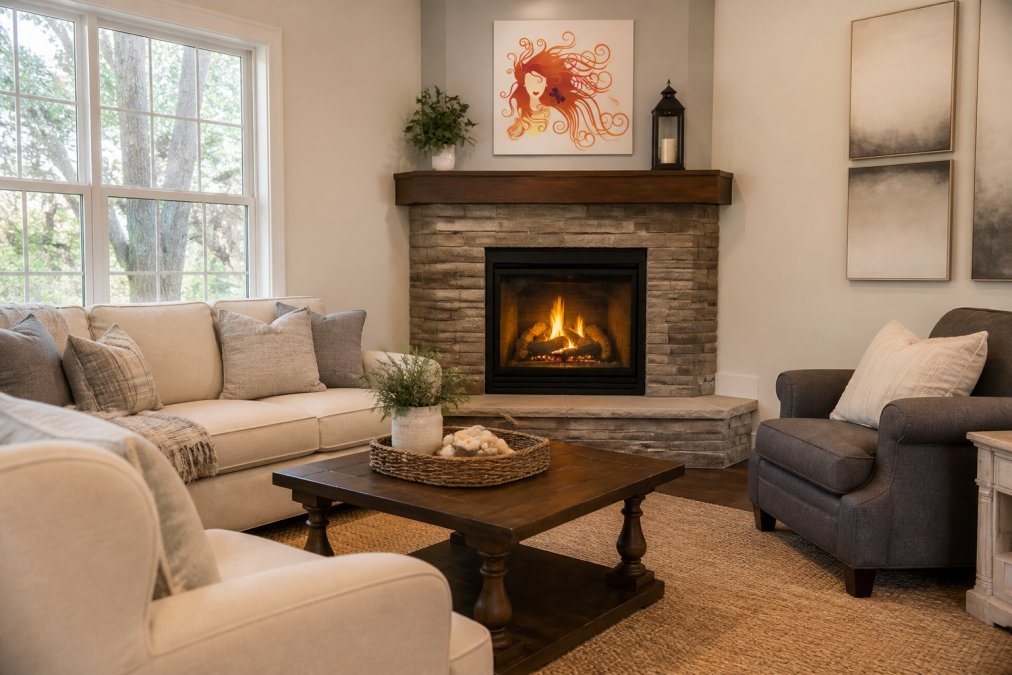
Table of Contents
- Assess Your Room and Establish the Focal Point
- How to Position a TV With a Corner Fireplace
- Arrange Seating to Create Conversation Areas
- Living Room Layout Ideas With Corner Fireplace
- Zoning a Living Room With a Corner Fireplace
- Manage Electrical Outlets and Cable Routing
- Budget-Friendly Layout Hacks and DIY Solutions
- Common Mistakes to Avoid
Last Updated: August 26, 2026
Assess Your Room and Establish the Focal Point
A corner fireplace fundamentally changes how you approach living room layout. Unlike a wall-mounted or centered fireplace, a corner fireplace demands that you think about the room’s geometry differently. The fireplace becomes an anchor point that pulls the eye and defines spatial balance, but it also creates constraints on where seating can logically flow.
Before moving a single piece of furniture, measure your room and identify what you’re actually working with.
Measure Your Space and Note Architectural Features
Start with a floor plan. Measure the length and width of your living room in feet, then note the exact position of the corner fireplace, doors, windows, and any built-in features. Mark electrical outlets and cable access points, these details influence furniture placement significantly.
Pay attention to ceiling height, natural light sources, and traffic patterns. If your room has an open-plan layout connecting to a kitchen or dining area, note where people naturally walk through. These walkways become constraints that shape how you arrange seating without blocking movement.
Sketch your room on paper or use a free layout tool to visualize proportions. Most people underestimate how much space a sectional consumes or overestimate how many accent chairs fit comfortably.
Define the Corner Fireplace as Your Anchor
Your corner fireplace is the focal point, but it may not be the only one. A television, a large window with a view, or an accent wall can compete for visual attention. Decide which element should dominate.
If the fireplace is your primary focal point, arrange seating to face it. If the television matters equally or more, position seating to balance both. A room that tries to serve two equal focal points often feels visually confused.
The fireplace’s visual weight affects spatial balance. A dramatic stone or brick corner fireplace draws more attention than a simple gas unit. Asymmetrical layouts often work better with corner fireplaces because they allow you to balance the fireplace’s visual pull with strategic furniture placement on the opposite side of the room.
How to Position a TV With a Corner Fireplace
Television placement is where most people struggle with corner fireplace furniture arrangement.
Opposite Wall Placement vs. Adjacent Wall Placement
Mounting the TV on the wall opposite the corner fireplace works if your seating faces that wall. This setup creates two focal points but requires careful balance.
Adjacent wall placement puts the TV perpendicular to the fireplace. This works well for open-plan spaces where the TV serves the living room and dining area. Seating can angle toward the TV while still enjoying the fireplace’s warmth and ambiance.
Avoid mounting a TV directly above the corner fireplace. The viewing angle forces your neck upward uncomfortably, and heat from an active fireplace can damage electronics over time.
Avoiding Neck Strain and Optimizing Viewing Distance
Sit in your proposed seating location and look straight ahead at where the TV will be. Your eyes should be level with the screen’s center, not tilted up or down.
The ideal viewing distance is 1.5 to 2.5 times the TV’s diagonal screen size (the CDC). A 55-inch TV should sit 6 to 9 feet from your primary seating. Measure the distance from your sofa to the TV’s proposed location before installing anything.
For corner fireplace setups, placing the TV on a wall adjacent to the fireplace rather than above it improves both comfort and sightlines.
Arrange Seating to Create Conversation Areas
Conversation areas anchor a living room’s function. With a corner fireplace, you can arrange seating to face the fireplace or create a secondary conversation area that faces away from it.
Sectional Sofas and Multi-Piece Seating Arrangements
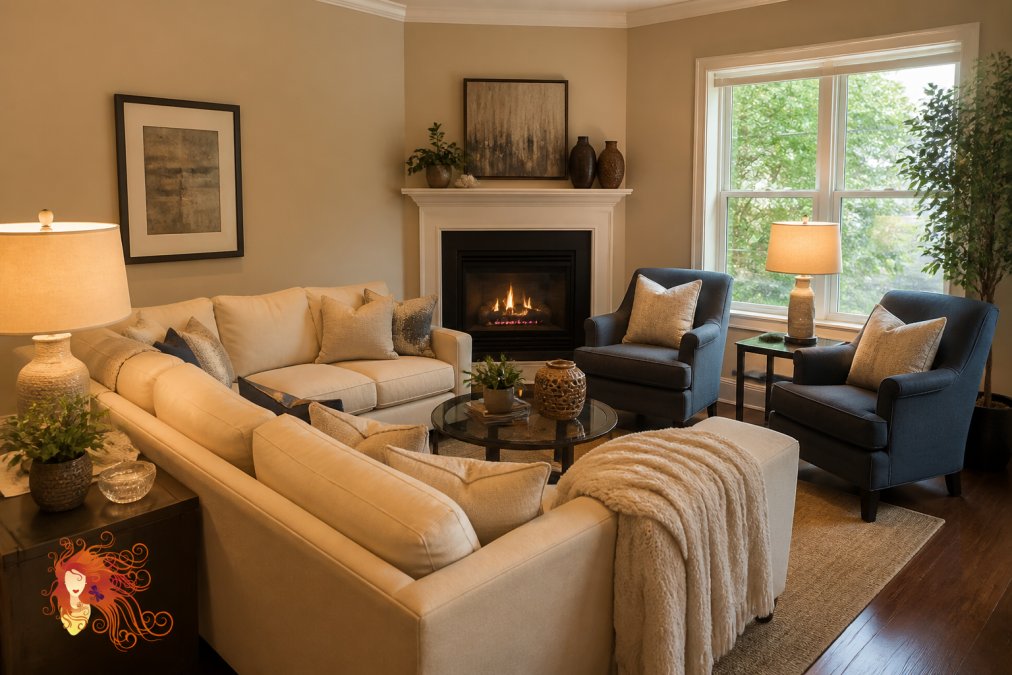
A sectional sofa is often the best choice for corner fireplace furniture arrangement because it fills space efficiently and creates natural conversation zones. Position an L-shaped or U-shaped sectional to angle toward the fireplace while leaving one side open for traffic flow.
A sectional with one end facing the fireplace and the other angled into the room creates a layered effect. People sitting on the side facing the fireplace enjoy the view and warmth. People on the perpendicular section can still see the fireplace while facing toward the center of the room for conversation.
Avoid placing a sectional directly against the corner fireplace. Leave at least 18 inches of clearance for safety and to prevent heat damage to upholstery (cpsc.gov).
Accent Chairs and Secondary Seating Placement
Accent chairs work best positioned across from or perpendicular to the main sectional. A pair of chairs facing each other with a small table between them creates an intimate conversation zone while the sectional anchors the larger space.
Position accent chairs to create sightlines toward the fireplace or television. Chairs angled at 45 degrees toward the fireplace create visual interest without blocking traffic flow. Floating furniture into the room creates better conversation dynamics and makes the space feel larger than lining chairs against walls.
Oversized chairs or recliners work well in corner fireplace layouts because they define personal zones without requiring as much floor space as a sofa.
Living Room Layout Ideas With Corner Fireplace
Three proven layouts work well with corner fireplaces. Your room’s size, shape, and whether it’s open-plan or enclosed will determine which suits you best.
The Floating Layout for Open-Plan Spaces
A floating layout positions all furniture away from walls, creating distinct zones within a larger open space. This works especially well in open-plan living rooms that connect to kitchens or dining areas.
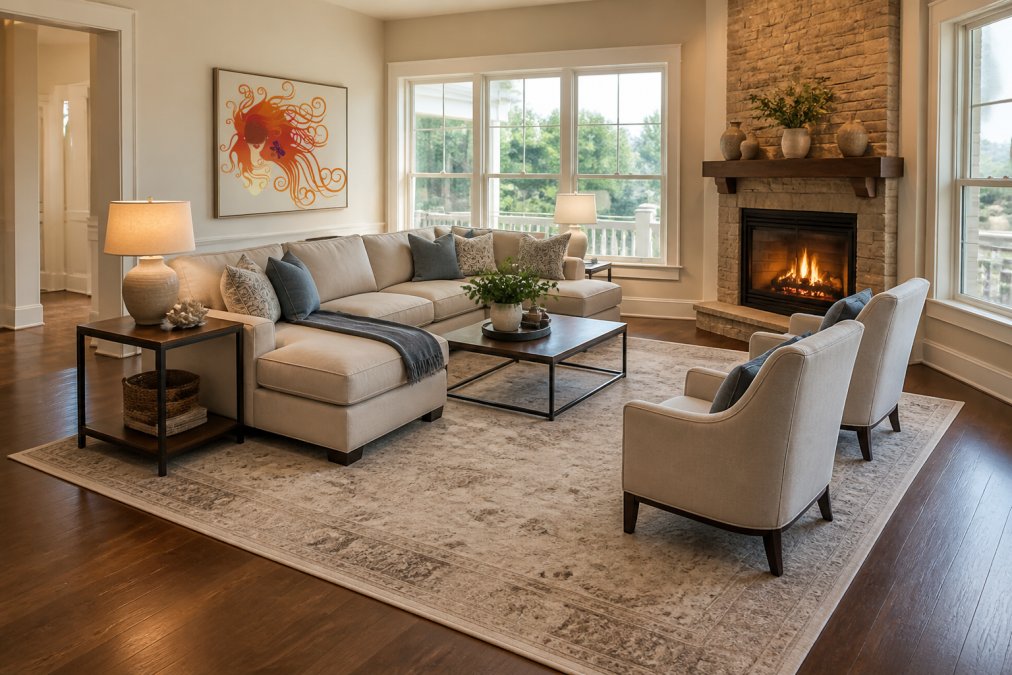
Arrange a sectional and accent chairs in a loose cluster facing the corner fireplace, leaving space between the furniture and walls. A large area rug anchors the floating furniture and visually separates the living area from adjacent spaces.
The floating layout requires enough floor space to work effectively, typically at least 250 square feet for the living room alone (aia.org).
The Symmetrical Arrangement for Balanced Rooms
Symmetrical layouts create calm, formal living rooms. Position matching accent chairs on either side of the fireplace with a console table or bookshelf between them. A sofa faces the fireplace from the opposite side of the room.
This arrangement works best in rectangular rooms where the fireplace sits at one end. The symmetry creates visual balance and a sense of order. Symmetrical arrangements work well with traditional or transitional decor but are harder to achieve in open-plan spaces.
The Asymmetrical Layout for Awkward Spaces
Asymmetrical layouts embrace the corner fireplace’s natural visual weight and work well in rooms with odd proportions, multiple doorways, or architectural quirks.
Position larger furniture pieces on the opposite side of the room from the fireplace to balance its visual pull. A sectional on one side and a pair of chairs on the other creates dynamic balance without mirror-image repetition. This approach gives you more flexibility with furniture sizing and placement.
Zoning a Living Room With a Corner Fireplace
Zoning defines separate functional areas within a single room. In open-plan spaces, zoning becomes essential for creating a coherent living room despite the lack of walls.
Using Area Rugs to Define Zones and Anchor Furniture
An area rug is your most powerful tool for visually anchoring a living room’s focal point and defining its boundaries. Place a rug in front of the fireplace and extend it under the primary seating pieces. The rug creates a visual "room within a room" that signals where the living area begins and ends.
Choose a rug size that accommodates your seating arrangement. A 5×8 rug works for most living rooms with a corner fireplace and modest seating. The rug’s front edge should sit at least 18 inches away from the fireplace for safety.
Rug placement matters for traffic flow. The rug should not block natural walkways. In open-plan spaces, position it so people can walk around the edges without stepping on it.
Creating Traffic Flow and Walkway Patterns
Traffic flow determines whether a room feels open or cluttered. Map the natural pathways through your living room, from the entrance to the kitchen or dining area to other rooms. Furniture should never block these routes.
Position your primary seating cluster to create a natural boundary for traffic. Arrange pieces so people naturally walk around the living zone rather than through it. In open-plan spaces, this creates a subtle visual separation without walls.
Avoid placing large pieces directly in line with doorways or natural walking routes. Main traffic routes should be at least 3 feet wide. Secondary paths around furniture can be narrower, but anything under 2 feet feels cramped.
Manage Electrical Outlets and Cable Routing
Identify all electrical outlets in your living room before arranging furniture. Outlets are usually spaced 6 feet apart along walls. Note which outlets work for your TV, lamps, and any other powered devices.
Position your TV and entertainment equipment near existing outlets when possible. If you need power in the middle of the room, use a power strip rated for the total wattage of connected devices. Run cables along the back of furniture or under the rug using cable protectors to prevent tripping hazards.
For corner fireplace layouts, electrical management is especially important if your fireplace is electric or gas with electronic ignition. Ensure the fireplace has a dedicated outlet and that cables don’t run across high-traffic areas.
Consider installing additional outlets if your current setup forces you to use long extension cords or overloaded power strips. It’s far safer than improvised cable solutions.
Budget-Friendly Layout Hacks and DIY Solutions
You don’t need expensive furniture to create a well-arranged living room with a corner fireplace. Strategic placement and creative solutions can transform a space on a modest budget.
Rearrange furniture you already own before buying new pieces. Many rooms feel cramped simply because furniture placement is inefficient. Moving a sofa 3 feet away from a wall can dramatically change how spacious the room feels.
Use furniture from different sources and mix styles intentionally. A vintage sofa paired with modern accent chairs creates visual interest without matching sets. Area rugs are affordable zone-creators that anchor a living room and define the living area without requiring new furniture.
DIY solutions for cable management cost far less than professional installation. Paint or refinish existing furniture to refresh a tired space. If you’re shopping for new pieces, consignment stores and second-hand furniture markets offer quality items at a fraction of retail prices. At Le Rouge Tete, a local consignment store with over 16 years of community service, you’ll find curated pre-loved furniture displayed in live-in layouts that help you visualize how pieces work in actual spaces. The 50/50 consignment split and convenient local pickup service make acquiring quality pieces affordable and practical.
Common Mistakes to Avoid
Understanding what doesn’t work helps you avoid costly rearrangement later.
Placing all furniture against walls is the most common mistake. Wall-hugging layouts make rooms feel smaller and create awkward sightlines. Float furniture into the room to create conversation areas and make the space feel larger.
Ignoring traffic flow creates cramped, awkward rooms. Always map walkways before arranging furniture. Choosing TV placement before considering the fireplace’s role creates visual confusion. Decide which element should dominate, then arrange seating accordingly.
Oversizing furniture is another frequent error. A sectional that fills 60% of your floor space leaves no room for accent pieces, side tables, or movement. Aim for furniture that occupies 40-50% of the living area.
Neglecting cable management creates safety hazards and visual clutter. Plan for power needs before arranging furniture. Forgetting to account for the fireplace’s heat output can damage furniture and create comfort issues. Leave adequate clearance around active fireplaces and avoid placing flammable materials nearby.
Arranging a living room with a corner fireplace requires balancing focal point hierarchy, traffic flow, and practical constraints like electrical access and heat management. Start by measuring your space, deciding which focal point matters most, and mapping traffic patterns. Then arrange seating to create conversation areas while keeping walkways clear. At Le Rouge Tete, our team can help you visualize how furniture pieces work together in real living spaces. Our consignment inventory includes quality options at prices significantly lower than retail, with convenient local pickup and personalized assistance moving items for better visualization of your design.
Frequently Asked Questions
How do you arrange furniture when you have a corner fireplace?
Start by establishing the corner fireplace as your focal point and anchor. Position your primary seating (usually a sofa) to face or angle toward the fireplace. Place accent chairs and secondary seating to create a conversation area. Use an area rug to define the seating zone and anchor the furniture grouping. Consider your TV placement, either on the opposite wall or adjacent wall, depending on your room layout. Ensure traffic flow paths remain clear around the perimeter of your arrangement.
Should the sofa face the fireplace or the TV in a corner layout?
This depends on which element you want as your primary focal point. If the fireplace is your priority, angle the sofa toward it and place the TV on an adjacent or opposite wall at a comfortable viewing angle. If the TV is primary, position the sofa to face it while still acknowledging the fireplace as a secondary focal point. Many rooms work well with the sofa angled between both elements, creating balanced visual weight and functional seating. Test the arrangement before committing to ensure comfortable viewing distances and sightlines.
What is the biggest mistake in furniture placement with a corner fireplace?
The most common error is pushing all furniture against the walls, which creates a cramped, uninviting space and wastes the room's functional area. Another major mistake is ignoring traffic flow, which forces people to walk through seating areas. Equally problematic is failing to establish scale and proportion, using furniture pieces that are too small or too large for the room, or positioning them at awkward distances that disrupt spatial balance. Finally, many people neglect the corner fireplace as a focal point, treating it as background rather than a design anchor.
How can I use area rugs to define zones in a room with a corner fireplace?
Place a large area rug (typically 8×10 feet or larger) under your primary seating arrangement to anchor the conversation area and define the zone visually. The rug should extend far enough that at least the front legs of sofas and chairs rest on it, creating a cohesive grouping. This approach works especially well in open-plan spaces where you need to separate the living room from adjacent areas. The rug's color and texture also help establish visual weight and balance around the corner fireplace, making the space feel intentional and organized.
This article was written using GrandRanker