
Table of Contents
- Prepare Your Space and Furniture Before Moving
- Disassembling Furniture for Moving: When and How
- Essential Tools for Moving Heavy Furniture Safely
- Proper Lifting Techniques and Ergonomic Safety
- How to Move Heavy Furniture Upstairs Without Injury
- Securing Furniture in the Moving Truck
- Hiring Movers for Heavy Furniture: DIY vs. Professional Help
- Common Mistakes When Transporting Heavy Furniture
Last Updated: July 20, 2026
Moving heavy furniture safely requires preparation and proper technique. At Le Rouge Tete, we’ve helped countless customers relocate pre-loved furniture pieces, and we’ve learned that success depends on what you do before you touch a single piece.
Prepare Your Space and Furniture Before Moving
Start by measuring doorways, hallways, stairwells, and your furniture itself, length, width, height, and diagonal measurements. This prevents discovering your sectional won’t fit through the front door. Check ceiling height in hallways and around corners where furniture might tilt.
Walk the entire route from the furniture’s current location to its destination. Identify hazards: loose rugs, narrow doorways, low-hanging fixtures, or tight corners. Clear pathways completely and ensure stairs are well-lit; poor visibility causes most moving injuries. Take photos and measurements of narrow passages, you may need to disassemble furniture or hire professionals.
Finally, assess the furniture itself for loose parts, sliding drawers, or glass tops that need protection.
Take photos of your furniture before disassembling it, especially for pieces with complex hardware. These photos save hours when reassembling and prevent the “leftover hardware” problem.
Disassembling Furniture for Moving: When and How
Bed frames, dining tables with removable leaves, shelving units, and sofas with removable legs are prime candidates for disassembly. Modern upholstered pieces, glass tables with integrated bases, and items held together with dowels are risky to disassemble.
Gather tools: cordless drill, socket wrench set, screwdrivers, Allen keys, and flashlight. Document everything as you disassemble by photographing each step. Use small labeled plastic bags for hardware, "Dining Table, Leaf Bolts" or "Bed Frame, Corner Brackets." Place all bags in a larger container and photograph the organized hardware before packing.
Never force a bolt or screw that doesn’t turn easily. You’ll strip the threading and damage the furniture. If something resists, stop and investigate.
Essential Tools for Moving Heavy Furniture Safely
A moving dolly handles items up to 1,000 pounds on flat surfaces. A hand truck works better for narrow hallways and stairs. Furniture sliders let you glide heavy pieces across hardwood or tile with minimal effort. For stairs, use a hand truck or stair dolly.
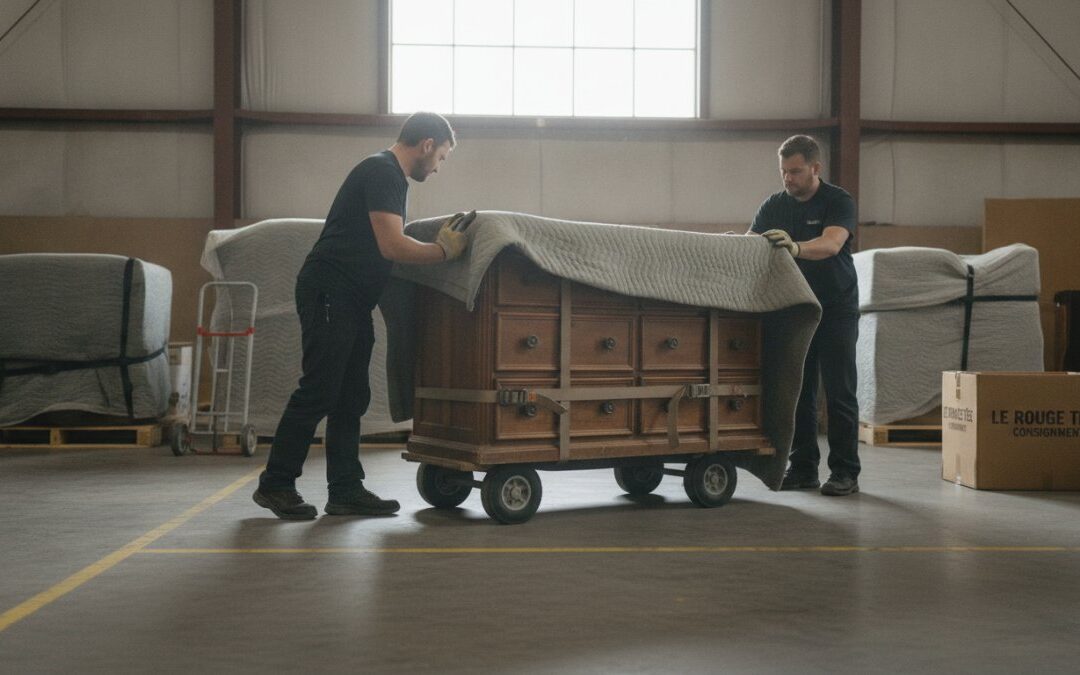
Lifting straps distribute weight across your shoulders and back, reducing injury risk. Stretch wrap protects furniture from dust and scratches. Moving blankets protect furniture and walls. Tie-down straps (ratchet straps) prevent shifting during transport.
Protective gear includes work gloves with good grip, closed-toe shoes with ankle support, and a back support belt if you have any history of back issues.
Proper Lifting Techniques and Ergonomic Safety
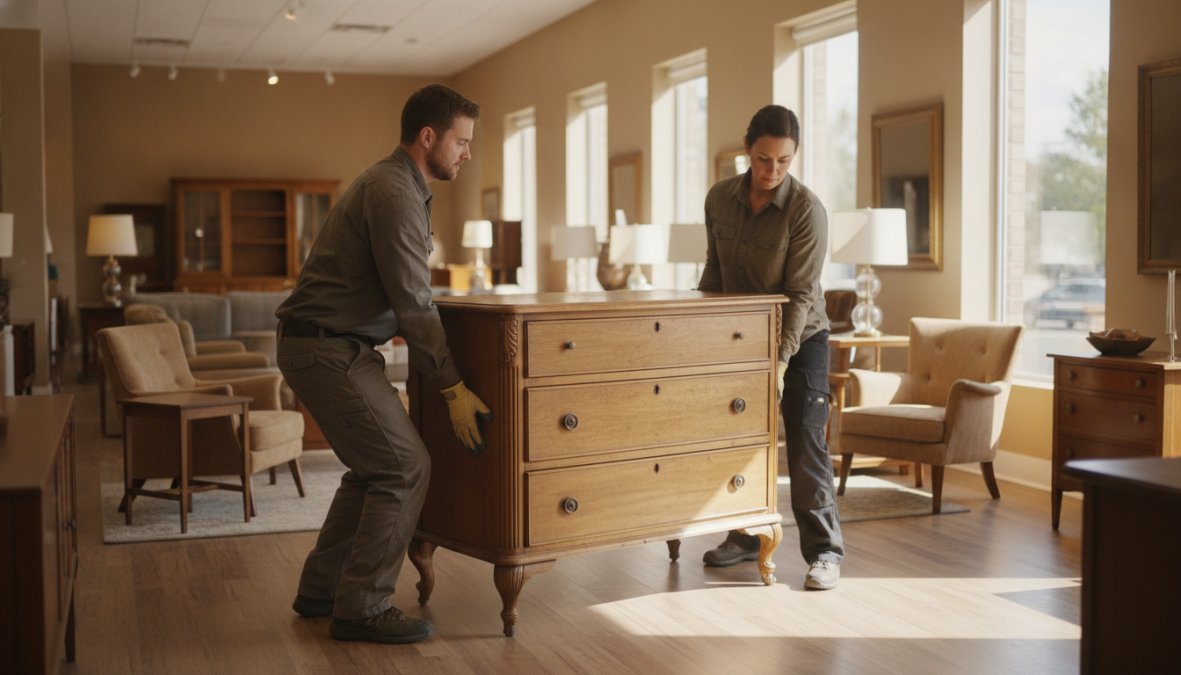
Stand with feet shoulder-width apart, one foot slightly ahead for balance. Squat by bending at knees and hips, keeping your back straight. Grip the furniture firmly on opposite sides, close to your body. Engage your core and push through your heels, letting your legs do the work.
Keep the load close to your body. An object held six inches away requires three times more back force than the same item held against your torso. Never twist your spine while holding weight; move your feet and rotate your entire body instead.
Team lifting is always safer than solo lifting. When two people lift together, each handles roughly half the weight. Coordinate movements and count "one, two, three, lift" so you both apply force simultaneously. For very heavy items, three people is better than two.
Proper lifting technique is the single biggest predictor of preventing moving-related injury, not the weight of the object.
How to Move Heavy Furniture Upstairs Without Injury
If furniture can be disassembled, do it. If not, use a hand truck or stair dolly designed for stairs. These have special wheels that grip each step.
The pivot technique works for large pieces. Stand the furniture on one corner and rotate it around that point as you move up the stairs. Have one person guide from above, another from below, and a third steady the furniture. Pivot slowly and deliberately.
Understand the fulcrum concept: when tilting a dresser, the bottom edge becomes your fulcrum. Apply pressure at the top to tilt it slightly, just enough that one edge lifts. Slide a furniture slider or dolly underneath. Never tilt so far that the furniture becomes unstable.
Protect stairs during the move with cardboard, plywood sheets, or heavy blankets taped down securely. The cost is minimal compared to repairing gouged stairs.
Securing Furniture in the Moving Truck
Use ratchet straps to secure large pieces to the truck walls or frame. Wrap straps around the furniture and secure them to anchor points. For a sofa, run straps across the top and around the sides. Don’t over-tighten.
Pack smaller items around larger pieces to fill empty space and prevent movement. Use moving blankets or cardboard to line the truck bed, protecting both the truck and your furniture from scuffs.
Arrange heavier items low and toward the front of the truck to lower the center of gravity. Never stack heavy furniture high; a tall, top-heavy load is unstable.
| Security Method | Best For | Difficulty | Cost |
|---|---|---|---|
| Ratchet straps | Large furniture, long distances | Easy | $15-30 |
| Furniture pads | Preventing scuffs and scratches | Very easy | $20-50 |
| Cardboard dividers | Separating pieces, filling gaps | Easy | $10-20 |
| Blankets and tape | Full truck protection | Easy | $30-60 |
Hiring Movers for Heavy Furniture: DIY vs. Professional Help
DIY moving makes sense for small loads, short distances, and furniture under 300 pounds. Renting a truck and doing it yourself is often cheaper for a few items within the same city.
Professional movers are worth considering when furniture is very heavy, when navigating multiple flights of stairs, when the distance is long, or when the furniture is valuable. A single drop from a professional mover’s truck is covered by their insurance; a drop from your rented truck is your responsibility.
Get quotes from at least three local moving companies. Most offer free estimates. Professional movers typically charge by the hour or by weight. For a single large sofa, expect $100-$300 depending on distance and complexity. Compare this to rental truck fees, equipment rental, and the risk of injury or damage.
Le Rouge Tete offers convenient local pickup services for large items at a flat rate, eliminating the guesswork of renting a truck or coordinating with friends.
Professional movers make the most sense for items worth over $1,000, furniture requiring stair navigation, or when you have physical limitations that make heavy lifting risky.
Common Mistakes When Transporting Heavy Furniture
Not measuring doorways. Measure twice, move once. This prevents discovering your sofa is three inches too wide for the front door.
Attempting solo lifts. One person should never lift anything over seventy-five pounds alone. Call for help, rent equipment, or hire professionals.
Skipping disassembly. A bed frame that takes ten minutes to disassemble saves thirty minutes of awkward maneuvering up stairs.
Using wrong equipment. The right tool costs less than a doctor visit.
Ignoring protective gear. Work gloves, a back support belt, and proper footwear are cheap. A herniated disc is expensive and painful.
Overpacking the truck. Stability matters more than fitting everything in one trip.
Not protecting surfaces. Blankets and cardboard cost almost nothing compared to repair bills.
Rushing the process. Moving injuries spike when people hurry. Take breaks and move deliberately.
Moving heavy furniture doesn’t have to be stressful or dangerous. The difference between a smooth move and a disaster is preparation, proper technique, and knowing when to call professionals. If you’ve purchased quality pre-loved furniture and need reliable help getting it home, Le Rouge Tete’s local pickup service handles the logistics with care, ensuring your pieces arrive safely and ready to enjoy. With over 16 years of experience helping customers find and move beautiful furniture, we understand what it takes to protect your investment. Contact us to learn more about our convenient moving options.
Frequently Asked Questions
What are the best tools for moving heavy furniture without professional help?
Moving dollies, hand trucks, furniture sliders, and lifting straps are essential tools for transporting heavy furniture safely. A moving dolly works best for items with a stable base, while a hand truck is ideal for tall pieces. Furniture sliders reduce friction on floors, and lifting straps distribute weight evenly across your body. Moving blankets protect your furniture and floors during transit. Combine these tools with proper lifting technique to minimize injury risk and make the process manageable.
How do you move heavy furniture upstairs safely without causing damage?
When moving heavy furniture upstairs, pivot the piece rather than lifting it straight up. Tilt one corner slightly and rotate it in a walking motion. Use lifting straps to manage weight distribution and reduce back strain. Protect the stairs with cardboard or moving blankets to prevent scuffs. Measure your furniture against stairway width and ceiling height before attempting the move. If the piece won't fit or the angle is too steep, disassembling it or hiring professionals may be necessary to avoid injury and property damage.
When should you hire professional movers instead of moving heavy furniture yourself?
Hire professional movers when furniture exceeds 100 pounds, requires navigation through narrow doorways or multiple flights of stairs, or when you lack proper equipment like dollies and lifting straps. Professional movers have experience with weight capacity limitations and ergonomic safety. Consider hiring help if you have pre-existing back issues, limited team members, or valuable antique pieces requiring specialized care. The cost of professional assistance is often justified by injury prevention and protecting your furniture from damage during transport.
What's the correct lifting technique to prevent back injury when moving heavy furniture?
Use proper lifting technique by bending at your knees, not your back, keeping the furniture close to your body. Maintain a straight spine and engage your core muscles. Lift with your legs, which are stronger than your back. For team lifting, coordinate movements and communicate clearly. Never twist your torso while holding weight. Take breaks frequently to avoid fatigue, which increases injury risk. If a piece feels too heavy, use a moving dolly or hand truck instead. Proper ergonomics and load distribution protect your long-term health and prevent strain injuries.
This article was written using GrandRanker